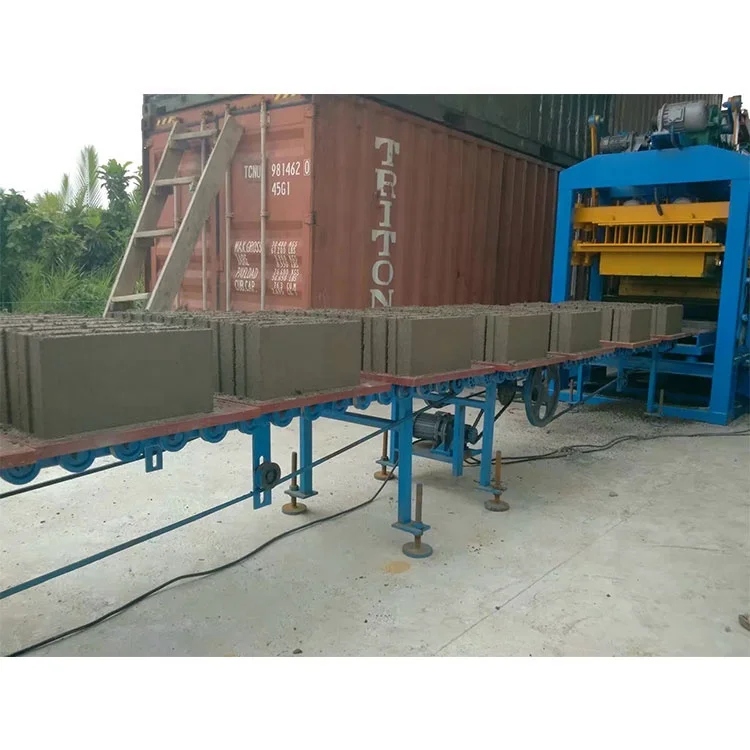
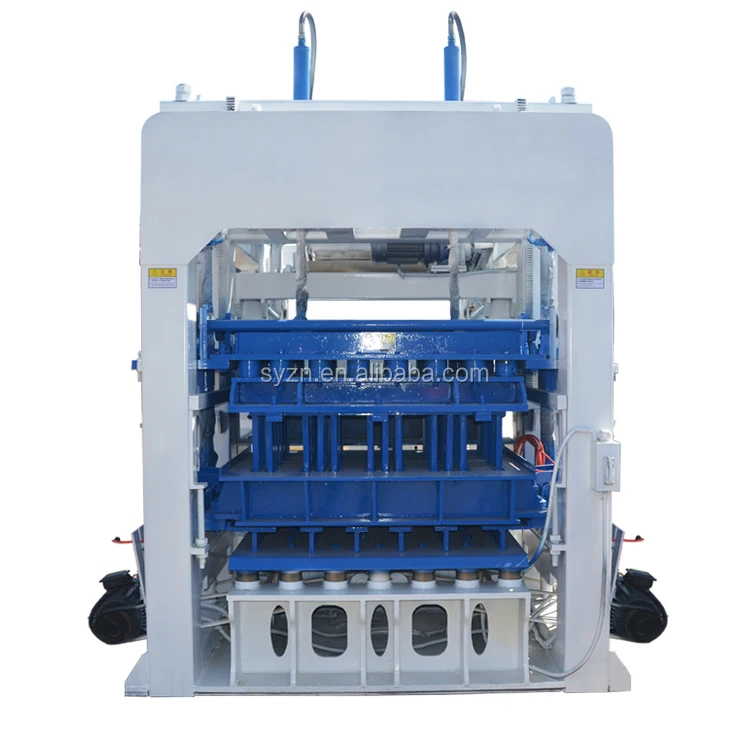
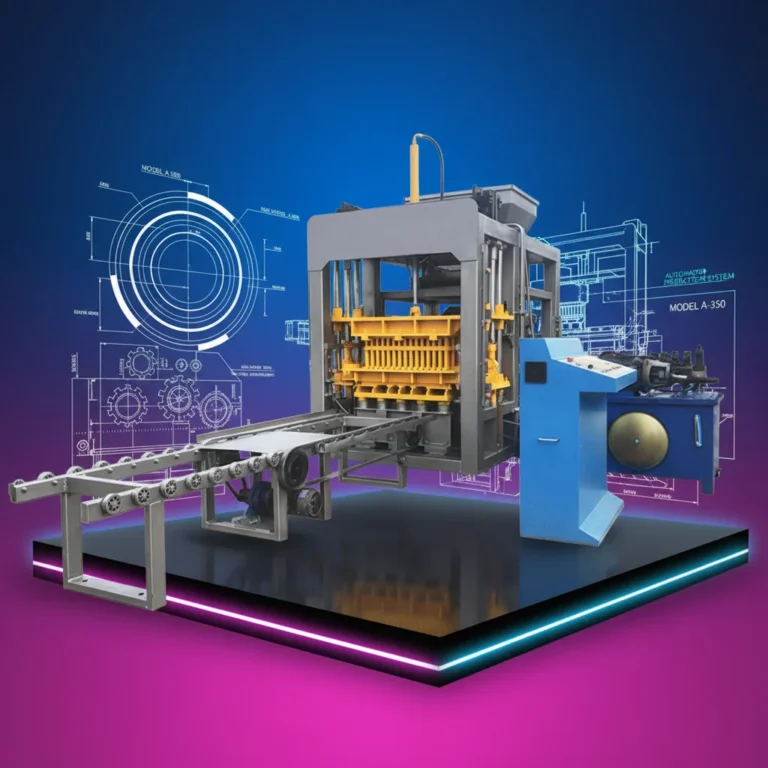
Matched System Sizing — we configure the QT4-25 against your actual aggregate and target block format before quoting capacity, not after.
Technical Specifications
| Parameter |
Value |
| Model |
QT4-25 |
| Product Type |
Automatic Concrete Block Making Machine |
| Control System |
PLC controlled, fully automatic |
| Machine Power |
16.58 kW |
| Molding Cycle |
25 seconds |
| Output Capacity |
4600 pcs / 8 hours (basis not stated in source) |
| Machine Weight |
5000 kg |
| Overall Dimensions (L×W×H) |
6400 × 1500 × 2700 mm |
| Pallet Size |
850 × 480 mm |
| Vibration System |
Vibration motor with large vibration box (non-hydraulic) |
| Frame Construction |
Thickened steel frame |
| Motor Brand |
Siemens motor |
| Block Formats |
Hollow blocks, solid blocks, paver stone bricks |
| Voltage |
Configured to buyer’s local voltage |
| Automation Level |
Full automatic — pallet feeding, material feeding and scraping, block stacking |
| Warranty |
1 year with free parts supply during warranty period |
Application Suitability
| Application |
Material or Output |
| Medium-capacity hollow block plant |
Concrete mix with crushed stone, sand, cement and water |
| Solid brick production line |
Sand-cement mix with fly ash or lime addition |
| Paver stone manufacturing |
Fine aggregate concrete with surface-layer option |
| Building material distributor stock |
Multiple block formats from one pallet size |
| Entrepreneur first block plant |
Semi-automatic baseline with full PLC automation |
Why "Pieces per Hour" Is Only Half the Conversation
Capacity only means something when you know which block format produced the number.
Many buyers receive a quotation that states cycles per hour or total output per shift without specifying the block size, wall thickness, or material density assumed in that calculation. The QT4-25 runs a 25-second molding cycle, but a 400×200×200 mm hollow block occupies the full pallet differently than a small interlocking paver, so the piece count per cycle changes entirely. When I visited a Middle East block plant whose actual daily output was half of what the sample capacity promised, the root cause was local sand with high clay content slowing compaction — not the machine itself. This is why we ask for your raw material sample and target block drawing before we commit to a capacity figure. An automatic block machine manufacturer who skips that step is quoting a catalogue number, not your production reality [NEED_CITE:].

Where the QT4-25 Sits in the Output Range
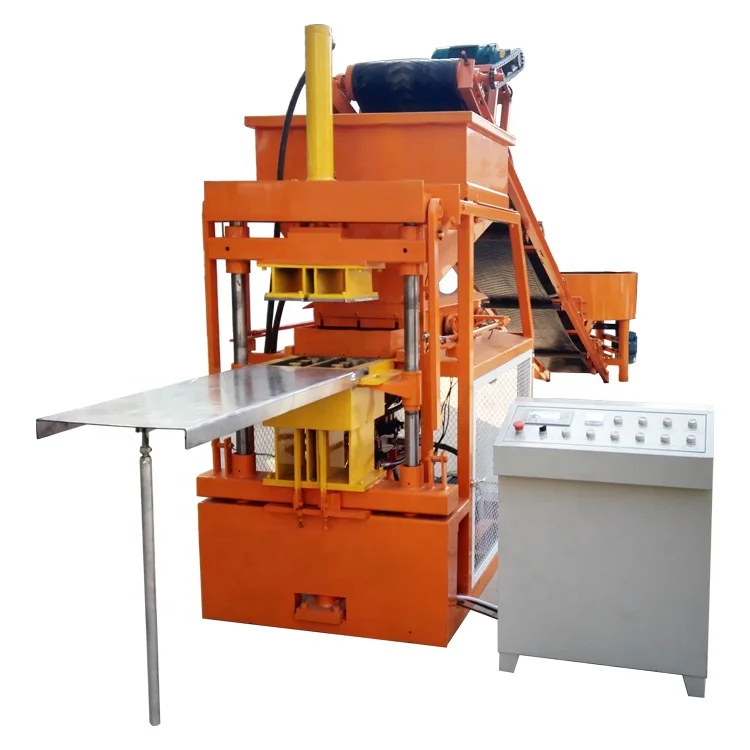
The QT4-25 occupies the mid-tier of our automatic block machine range, designed for plants that have outgrown manual pallet handling but do not yet need a high-capacity continuous line. Buyers moving from a semi-automatic egg-laying machine typically find this tier gives them PLC-controlled consistency without the footprint and capital of a fully cubed automatic plant. The 6400 mm machine length keeps the production cell compact enough for a single-bay workshop.
From Semi-Automatic to Full PLC Control
Full automation on the QT4-25 covers pallet feeding, material feeding and scraping, and block stacking at the exit — removing the three most labour-intensive points in the cycle. Operators no longer pull pallets by hand or level the feed box manually, which reduces batch-to-batch variation in block density. For a buyer running two shifts, the automatic stacker means cured blocks are grouped and ready for the forklift instead of scattered across the curing floor. This tier is where an automatic block machine manufacturer must prove the PLC logic matches the actual mould change sequence [NEED_CITE:].
Reading the Specs That Matter on the Shop Floor
The 16.58 kW machine power is split between the vibration motor and the feed system, so the vibration box receives enough energy to compact hollow block webs without crushing the outer shell. The 850 × 480 mm pallet size dictates the mould layout: a standard 400×200×200 mm hollow block fits four per pallet, while smaller solid bricks can run eight or more per cycle. Thickened steel frame construction keeps the vibration energy directed into the mould cavity rather than dissipated through frame flex — a detail you notice only after several thousand cycles when bolted joints on lighter frames begin to loosen. The Siemens motor specification matters for serviceability: replacement motors are available through local distributors in most export markets rather than requiring a direct shipment from the factory. Voltage is configured to the buyer’s local supply before the control panel is wired, avoiding the common problem of arriving machines that need a step-down transformer on day one.
The Hidden Cost of Skipping Pallet and Curing Alignment
When pallet size is chosen without checking the buyer’s existing curing racks and forklift tine width, the plant ends up restacking blocks twice — once off the machine and again onto racks that fit the forklift. I have seen curing areas designed for 900 mm pallets forced to handle 850 mm pallets, leaving gaps that tip loaded boards during transport. The QT4-25 ships with 850 × 480 mm pallets as standard, and confirming that dimension against your curing infrastructure before production begins avoids weeks of manual re-handling after commissioning [NEED_CITE:].
Why Buyers Place Repeat Orders Here
Block machinery is our single focus, so the QT4-25 is specified alongside its moulds, pallets, and stacking equipment as one matched line rather than assembled from separate suppliers. Configuration starts from the buyer’s actual mix design and local aggregate — not a default setting that assumes clean river sand. Mould design covers the formats the buyer’s market actually sells, including custom drawings when local block standards differ from Chinese norms. Automation level is selectable: a buyer can commission the QT4-25 with basic automatic stacking and add a cubing system later as volume grows. Installation support includes operator training on the PLC interface, and wear parts lists are provided so the first replacement order is not an emergency.
Documentation & Verification
- Line layout drawing showing pallet flow from feeder to stacker with block format assumed
- Machine specification sheet confirming voltage, frequency, and PLC language for your site
- Mould drawing and format list covering every block type in your quotation
- Pallet specification matched to your curing rack spacing and forklift capacity
- Factory test record on your target block format before container loading
- Packing photographs and customs documentation for smooth port clearance
Installation, Commissioning & Support
- Foundation plan drawn to the 6400 × 1500 mm footprint with anchor bolt positions marked
- Electrical single-line diagram showing the 16.58 kW load on a dedicated breaker circuit
- Machine shipped in bolted sections for container loading, reassembled on your slab before commissioning
- PLC display language and voltage confirmed in writing before the control panel is wired
- Operator training covers mould change procedure and vibration frequency adjustment for your mix
- Wear parts list with part numbers so first replacements can be ordered locally or shipped direct
What to Share Before Requesting a Quotation
Tell us the block formats your market moves fastest — hollow block dimensions, solid brick size, any paver profile — so we can confirm pallet layout and cycle count per format. Share your raw material source and, if possible, send a representative aggregate sample so we can set vibration and feed parameters before the machine leaves our workshop. Confirm your site voltage, frequency, and preferred PLC display language to avoid commissioning delays after arrival.
Frequently Asked Questions
Q: How is the 4600 pcs/8h capacity figure calculated for the QT4-25?
A: That number comes from the 25-second molding cycle running continuously across an eight-hour shift, but the actual piece count depends entirely on the block format on the pallet. A 400×200×200 mm hollow block yields fewer pieces per cycle than a small solid brick. We state capacity per format in our quotation so the figure matches your product mix.
Q: Where does the QT4-25 fit between semi-automatic and high-capacity lines?
A: It is our mid-tier automatic block machine, offering full PLC control with automatic pallet feeding and stacking while keeping the line footprint under seven metres. Buyers typically move to this tier from egg-laying or manual machines when daily volume justifies removing manual pallet handling from the cycle.
Q: Which voltage and PLC language options are confirmed before shipment?
A: Voltage and frequency are matched to your local grid — we confirm the exact values in writing before wiring the control panel. PLC display language is set to your operator preference so the interface is readable from day one of commissioning, eliminating the guesswork that delays first production runs.
Q: Can I add automatic cubing to the QT4-25 later?
A: Yes. The machine ships with automatic block stacking as standard, and the exit conveyor layout leaves space for a cubing station to be added when volume grows. The PLC program already includes the cubing sequence, so the upgrade is primarily mechanical installation and sensor wiring.
Q: What supporting equipment does a complete QT4-25 line require?
A: Beyond the press itself, the line needs a raw material batching and mixing station, a pallet return conveyor, and a curing rack system sized for the 850 × 480 mm pallet. We provide a line layout drawing showing station positions and material flow so your foundation work matches the equipment footprint.

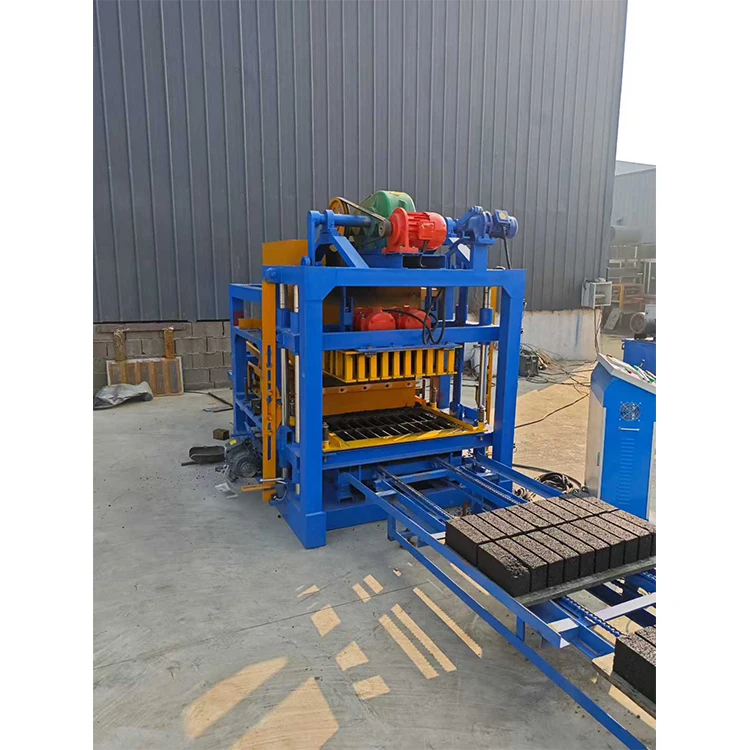
 Automatic block machine