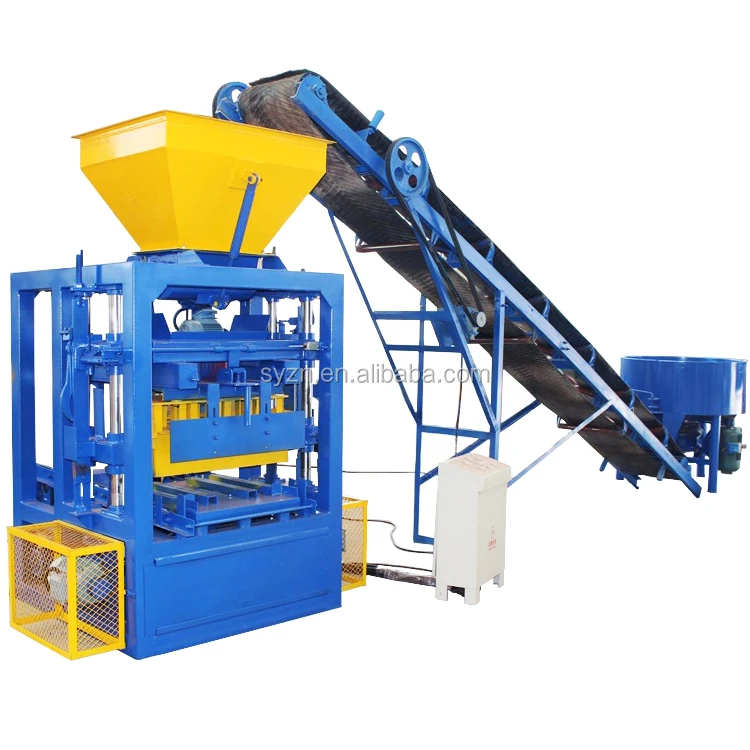
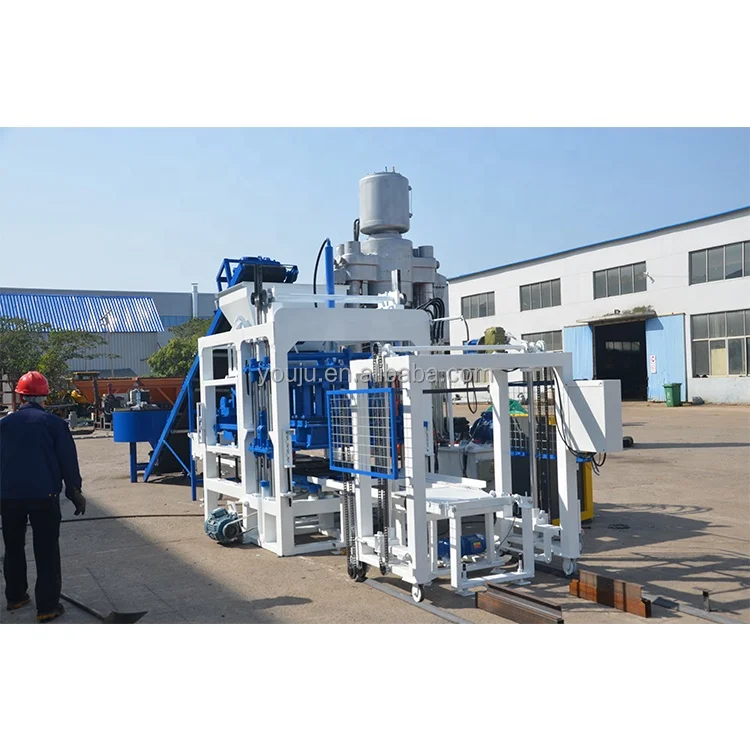
Matched System Approach — Every output tier in our automatic block machine range is configured around your actual block format, local aggregate, and curing setup, not a catalogue default.
Technical Specifications
| Parameter |
Value |
| Model |
QT5-15 |
| Product Type |
Automatic Hydraulic Concrete Block Making Machine |
| Rated Power |
26.5 kW |
| Voltage & Frequency |
According to your local voltage (basis to be confirmed) |
| Control System |
PLC Controller |
| Overall Dimensions (L×W×H) |
7400×1950×2800 mm |
| Net Weight |
6000 kg |
| Hydraulic Pressure |
16–21 MPa |
| Vibration Force |
45 kN |
| Main Vibration Form |
Platform Vibration |
| Pallet Size |
1100×550 mm |
| Cycle Time |
15–20 seconds (basis to be confirmed) |
| Output — Hollow Block |
7200–9600 pcs/day (based on 400×200×200 mm, 5 pcs/mould) |
| Output — Porous Block |
23000–28800 pcs/day (based on 240×115×90 mm, 16 pcs/mould) |
| Output — Standard Block |
61440–70400 pcs/day (based on 240×115×53 mm, 32 pcs/mould) |
| Applied Products |
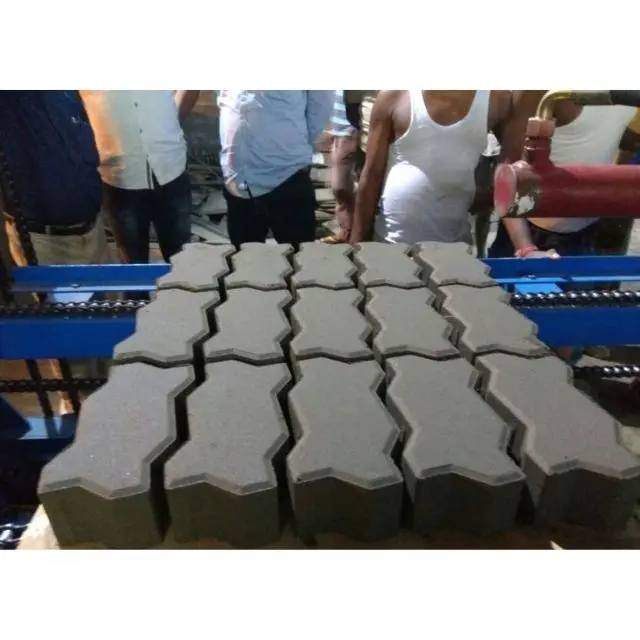
Concrete blocks, hollow/solid blocks, pavers, interlocking blocks, curbstone, porous blocks |
| Raw Materials |
Crushed stone, sand, cement, fly ash, gravel, slag, dust |
| Automation Level |
Automatic (electric and hydraulic system, interlocked procedures) |
Application Suitability
| Application |
Material or Output |
| Hollow block production for building walls |
Crushed stone, sand, cement on 400×200×200 mm format |
| Porous brick manufacturing for permeable paving |
Cement, fly ash, fine aggregate on 240×115×90 mm format |
| Standard solid block for load-bearing construction |
Gravel, sand, cement on 240×115×53 mm format |
| Paver and interlocking brick production |
Colored concrete mixes on format-specific moulds |
| Curbstone and kerb production |
High-density concrete mixes on dedicated moulds |
| Industrial waste utilisation in block making |
Coal ash, slag, fly ash blended with cement and aggregate |
What "Cycles Per Hour" Leaves Out About Your Automatic Block Machine
Output numbers mean nothing without the block format they assume.
Most quotations in this industry state capacity as a single figure — so many blocks per hour or per day — without telling you which block size that calculation is built on. A machine that produces over 70,000 standard bricks per day might yield fewer than 10,000 hollow blocks on the same shift, because each format carries a different mould cavity count and cycle time. I have watched buyers sign contracts based on a headline number, then discover on commissioning day that their target format runs at a fraction of the quoted throughput. The QT5-15 is positioned within our automatic block machine manufacturer range as a mid-tier unit, and every capacity figure we state is tied to a specific block dimension and mould cavity count so you can compare tiers honestly before committing. [NEED_CITE: block format impact on daily output calculations]
Where the QT5-15 Sits in the Full Range
The automatic block machine manufacturer lineup spans from semi-automatic workshop machines to fully automatic high-capacity lines with stacking and cubing. The QT5-15 occupies the middle tier: it delivers PLC-controlled automatic operation with interlocked electric and hydraulic procedures, suitable for a buyer moving beyond manual pallet handling but not yet requiring the output volume of a large-scale plant. For a first block plant, this tier balances investment level with production capability. For a contractor replacing an older machine, it offers format flexibility across hollow, porous, standard, paver, and curbstone products without the footprint of a top-tier line.
Comparing Output Tiers by Block Format

Across the range, each tier is rated on the same set of block formats so buyers can make a direct comparison. A lower-tier semi-automatic machine may share similar mould tooling but requires manual pallet feeding, which reduces effective daily output and increases labour dependency. A higher-tier fully automatic line adds raw material batching, automatic pallet feeding, stacking, and cubing — removing the operator from most of the material handling chain. The QT5-15 delivers platform vibration at 45 kN with hydraulic pressure between 16 and 21 MPa, matching the forming force of larger machines in a smaller plant footprint. The deciding factor between tiers is often not the press itself but the degree of automation around it [NEED_CITE: automation level selection criteria for block plants].
Pallet Size, Hydraulic Pressure, and Vibration Force in Practice
Platform vibration at 45 kN works together with hydraulic pressure in the 16–21 MPa range to compact concrete into the mould cavity. Higher vibration force improves particle rearrangement, while hydraulic pressure holds the mould head down during compaction to produce uniform block density. If either parameter is undersized relative to the mix design — for example, a stiff mix with coarse local aggregate — the block may crack at demoulding or fail a compressive strength test. The 1100×550 mm pallet size determines how many cavities fit per cycle and must align with the curing rack dimensions and forklift capacity already in your yard. A mismatch here means buying new pallets or reconfiguring the curing area before the machine can run. The 26.5 kW rated power covers the combined draw of the hydraulic pump, vibration motor, and PLC-controlled conveyors during continuous operation.
Mould Change Time and Format Flexibility
The QT5-15 supports multiple block formats — hollow, porous, standard, paver, interlocking, and curbstone — through mould changes on the same press frame. Mould change time depends on the block format, material, and thickness being produced, and this should be confirmed during the configuration phase. A machine advertised as "multi-format" is only flexible if the changeover can be completed within a practical window; otherwise the plant ends up dedicating full shifts to a single product. PLC control with interlocked procedures means the sequence of pallet feed, vibration, hydraulic press, and demoulding is automated, reducing operator error during format transitions.
The Cost of Choosing the Wrong Tier
Buyers who select a tier based only on the highest quoted daily output often discover that the supporting equipment — pallet feeding, stacking, curing rack handling — was not included in the quotation. The result is a fully automatic press surrounded by manual labour, with output stacked by hand and daily throughput constrained not by the machine cycle but by the bottleneck downstream. Similarly, choosing a pallet size without checking compatibility with existing forklifts and curing racks forces unplanned capital expenditure before the first production run. [NEED_CITE: hidden costs in block plant configuration]
Why Buyers Source This Range Here
Block machinery is the single focus of this operation, meaning the press, mould, pallet, and handling equipment are specified as one matched system rather than assembled from separate suppliers. Every configuration is set against the buyer’s actual mix design and local aggregate, not a catalogue default. Mould design covers the formats your market sells, with custom drawings available for non-standard sizes. The automation level is selectable, so a buyer can start at the semi-automatic tier and add stacking or cubing as production grows. Installation and commissioning include operator training on the specific PLC interface and language confirmed before shipment.
Documentation & Verification
- Line layout with capacity calculation stating the block format assumed for each tier
- Machine specification sheet including hydraulic and electrical schematics for the QT5-15
- Mould drawing and format list covering all block types in your quotation
- Voltage, frequency, and PLC display language confirmation document before production
- Factory test record demonstrating cycle time per block format on your chosen pallet size
- Operation and maintenance manual with wear parts and mould replacement schedule
Installation, Commissioning & Support
- Foundation plan sized for the QT5-15 at 7400×1950×2800 mm and 6000 kg operating weight
- Electrical supply confirmed for your local voltage and frequency with dedicated circuit for 26.5 kW load
- Machine arrives dismantled for container loading with reassembly supervised on site
- PLC controller configured to your confirmed display language before dispatch
- Operator training covers mould change procedures, cycle time adjustment, and fault diagnostics
- Wear parts list with hydraulic seals and mould liners identified for first reorder cycle
What to Include in Your Inquiry
To match you with the correct output tier, provide your target block format and dimensions, the daily output you need for that specific format, and details about your local raw materials including aggregate type and grading. Include your site voltage and frequency, preferred PLC display language, and the dimensions of your existing curing area and forklift capacity. If you are evaluating this as a replacement machine, note the model and output of your current equipment so the tier comparison is direct.
Frequently Asked Questions
Q: How is capacity verified and what block format does each output figure assume?
A: Every capacity figure is stated against a specific block dimension and mould cavity count. For the QT5-15, hollow block output of 7200–9600 pieces per day is based on 400×200×200 mm blocks with five cavities per mould and a 15–20 second cycle. Porous block and standard brick figures use their own dimensions and cavity counts. We provide a capacity calculation document naming the format assumed before you commit.
Q: Where does the QT5-15 sit within the full automatic versus semi-automatic range?
A: It occupies the mid-tier of the automatic block machine manufacturer lineup. Below it, semi-automatic machines share similar press capability but require manual pallet handling. Above it, higher tiers add automatic raw material batching, pallet feeding, stacking, and cubing. The QT5-15 gives PLC-controlled automatic operation with interlocked procedures, suited to a first plant or a replacement for an older manual setup.
Q: What plant footprint and investment level does each output tier require?
A: Footprint varies by automation level. The QT5-15 press itself measures 7400×1950×2800 mm, but total plant area depends on pallet feeding, stacking, and curing rack handling equipment added at each tier. Semi-automatic tiers need less space but more labour. Fully automatic tiers require larger floor area for conveyors and cubing systems but reduce manual handling. A line layout document maps the full footprint before ordering.
Q: Can I start with a semi-automatic tier and upgrade to full automation later?
A: Yes. The automation level is selectable across the range. A buyer can begin with a semi-automatic configuration where pallet handling is manual, then add automatic pallet feeding, stacking, and cubing equipment as production volume grows. The press frame and PLC controller on the QT5-15 support this upgrade path without requiring a complete machine replacement.
Q: How are voltage, frequency, and control language confirmed before shipment?
A: During the quotation stage, we request your site voltage, frequency, and preferred PLC display language. These are documented in a confirmation sheet signed before production begins. The factory test record then verifies that the electrical system and PLC interface match your specifications, avoiding commissioning delays after the machine arrives at your site.

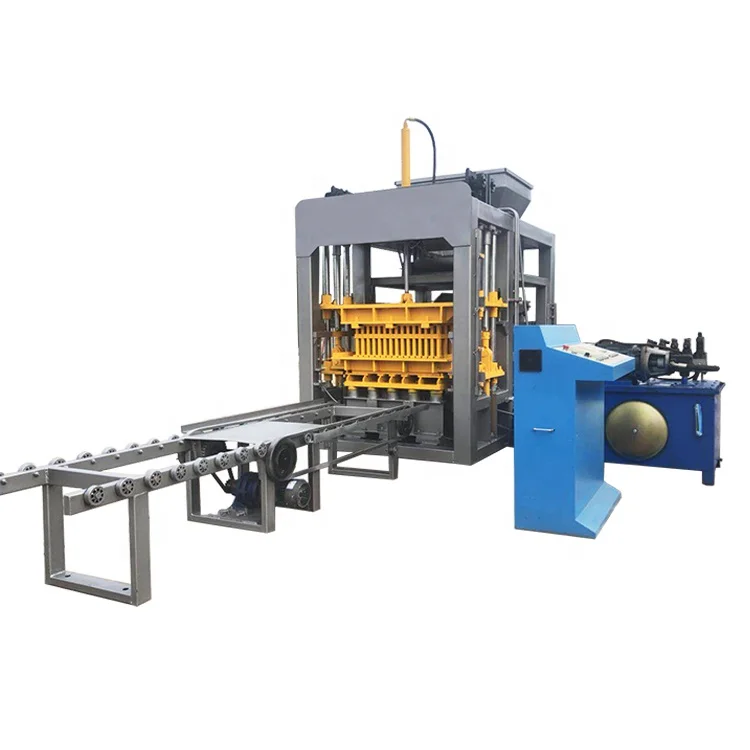
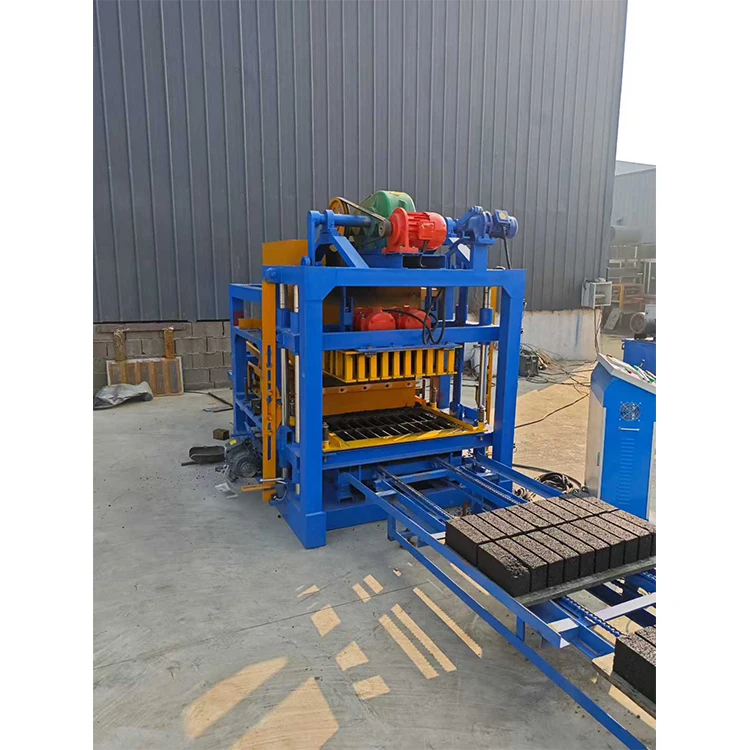 Automatic block machine