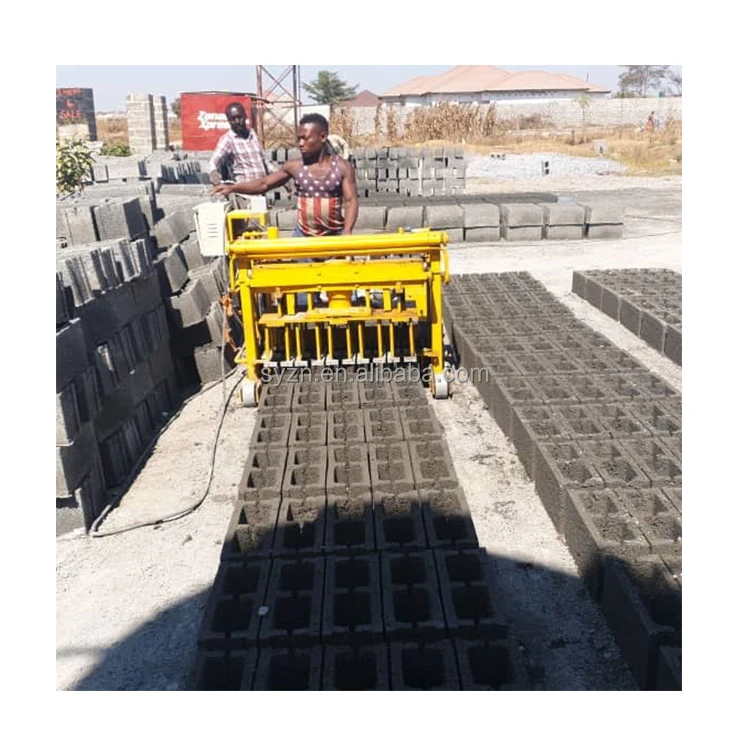
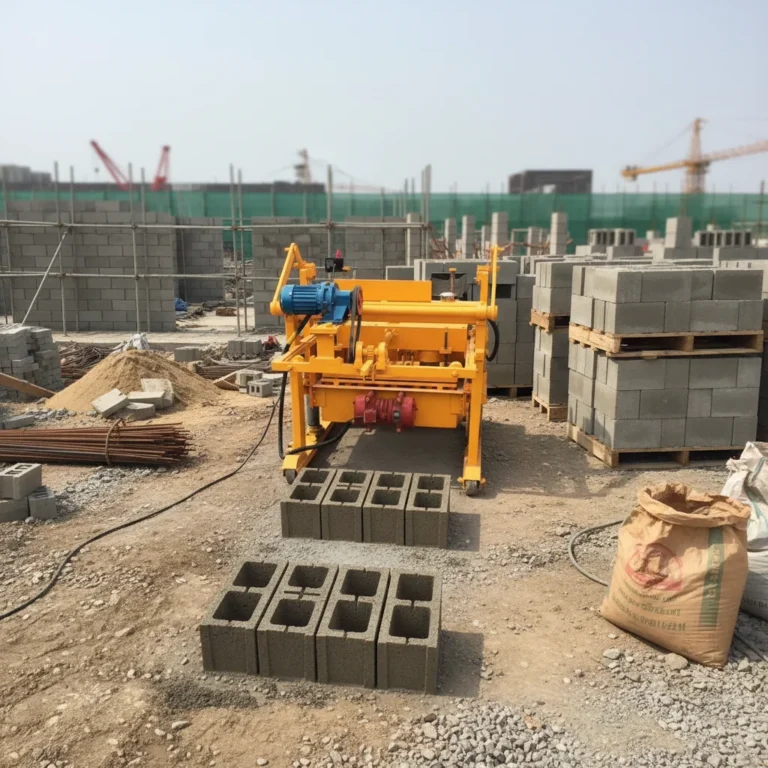
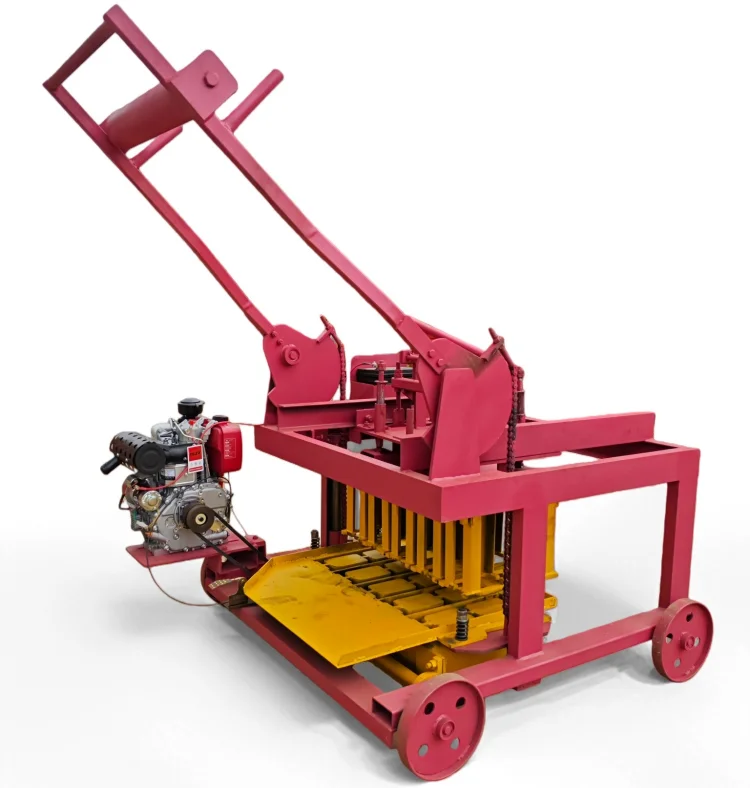
Single-focus design — every QMY4-30 parameter, from its 5 kW power draw to its interchangeable mould mounts, is specified as one matched system rather than assembled from separate suppliers.
Technical Specifications
| Parameter |
Value |
| Model |
QMY4-30 |
| Product Type |
Mobile Concrete Block Making Machine |
| Rated Power |
5 kW |
| Molding Cycle |
30 seconds |
| Overall Dimensions (L×W×H) |
1200×1200×1100 mm |
| Net Weight |
950 kg |
| Production Capacity |
480 pcs/h based on 400×200×200mm hollow block (4 pcs/mold) |
| Production Capacity |
600 pcs/h based on 400×150×200mm hollow block (5 pcs/mold) |
| Production Capacity |
840 pcs/h based on 400×100×200mm hollow block (7 pcs/mold) |
| Daily Output |
3,840 pcs per 8-hour shift based on 400×200×200mm hollow block |
| Daily Output |
4,800 pcs per 8-hour shift based on 400×150×200mm hollow block |
| Daily Output |
6,720 pcs per 8-hour shift based on 400×100×200mm hollow block |
| Mould Format |
Interchangeable moulds for hollow block and solid brick |
| Automation Level |
Mobile egg-laying type, no fixed plant required |
| Raw Materials |
Cement, sand, crushed stones, slag |
Application Suitability
| Application |
Material or Output |
| On-site block production without a fixed plant |
Hollow blocks from cement, sand, and crushed stone laid directly on ground |
| Small-scale or start-up block manufacturing |
Solid brick and hollow block in volumes suited to a first production line |
| Housing project contractors producing blocks locally |
Project-specific hollow block formats cast on-site using locally sourced aggregate |
| Entrepreneurs assessing block making viability |
Low-investment hollow and solid production before committing to a fixed plant |
What Capacity Figures Omit When No Format Is Named
Always ask which block size the hourly output assumes — the gap between formats on the QMY4-30 is nearly double.
A supplier quoting 840 pieces per hour sounds impressive until you discover that figure applies only to the smallest 400×100×200mm hollow block. Switch the mould to the larger 400×200×200mm format and output drops to 480 pieces per hour under the same 30-second cycle. I have sat across the table from buyers in Orlando who signed off on a daily target based on one format, only to find their actual production schedule running a third short because the quotation never specified the assumption. When you are evaluating any mobile block machine for sale, the first question should always be: capacity based on what? [NEED_CITE: block format assumptions in capacity quotations]

Where This Mobile Machine Sits in the Range
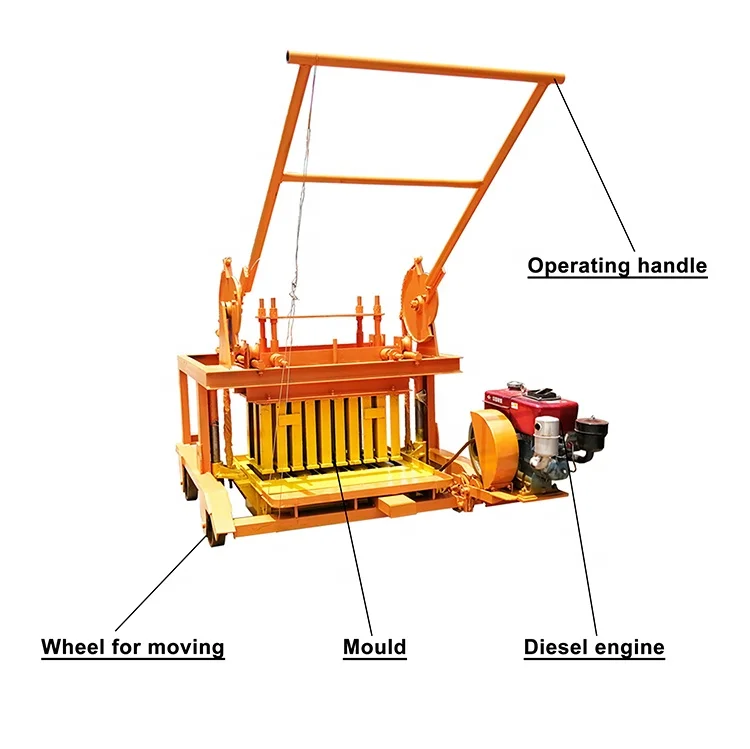
The QMY4-30 occupies the entry tier of the mobile block machine range. It is built for buyers who need to produce blocks at the construction site or a temporary yard without investing in a fixed plant, conveyor systems, or curing racks. Compared to semi-automatic and automatic tiers, the trade-off is clear: you give up pallet-based handling and automatic stacking in exchange for minimal site preparation, a compact 1200×1200 mm footprint, and the ability to start producing blocks the same day the machine arrives.
Mobility That Actually Matters on a Job Site
At 950 kg with overall dimensions of 1200×1200×1100 mm, the QMY4-30 can be relocated across a job site using a standard forklift or small crane. The egg-laying design means blocks are laid directly on the ground, eliminating the need for pallets, pallet return systems, and the curing area infrastructure that a stationary line demands. For a housing project contractor producing blocks in stages across a large site, this mobility removes the transport cost of moving finished blocks from a fixed yard to the point of use. [NEED_CITE: on-site block production logistics for housing developments]
Interpreting the Power and Cycle Specifications
The 5 kW rated power requirement is notably low for block production equipment, meaning the QMY4-30 can operate on sites with limited electrical infrastructure — a common condition in developing regions or remote project locations where a dedicated transformer for heavy machinery is not available. The 30-second molding cycle applies across all interchangeable moulds, so whether you are running 4-piece moulds for 400×200×200mm hollow blocks or 7-piece moulds for 400×100×200mm blocks, the cycle timing remains constant. What changes is the number of cavities per mould, which is why the production spread ranges from 480 to 840 pieces per hour depending on the format loaded. The use of cement, sand, crushed stones, and slag as raw materials means mix design can be adapted to locally available aggregate without requiring specialty inputs that drive up per-block cost.
When the Wrong Specification Choice Costs You Weeks
I once saw a block line sit idle for three weeks waiting for a transformer because the voltage specified at the factory did not match the site supply. With the QMY4-30, confirming voltage and frequency before production begins is essential, yet it is frequently skipped in the rush to meet a project deadline. A mismatch on a mobile machine is especially costly because there is no fixed plant to fall back on — the machine is supposed to be working the day it arrives. Buyers who skip the voltage confirmation step or fail to specify the control language they need often find that commissioning delays erase whatever time advantage a mobile setup was meant to deliver. [NEED_CITE: voltage and frequency standards by export market]
Why Buyers Source This Mobile Machine Here
Block machinery is the single product focus, which means the QMY4-30, its interchangeable moulds, and the recommended raw material mix are specified as a matched system rather than a press from one supplier paired with moulds from another. Machine configuration is set against the buyer’s actual target block format and local aggregate, not a catalogue default, so the capacity figures you receive correspond to the block your market actually buys. Mould design covers the formats listed — hollow block and solid brick — and custom mould drawings can be developed for additional sizes when your market requires them. The automation level is selectable across the range, so starting with this mobile machine does not lock you out of upgrading to a semi-automatic or automatic fixed-plant line later. Installation support includes operator training on mould change procedures and cycle management specific to the egg-laying workflow.
Documentation & Verification
- Line layout and capacity calculation stating which block format each output figure assumes
- Mould drawing and format list confirming included hollow block and solid brick sizes
- Voltage and control language confirmation document signed before production begins
- Factory test record showing cycle performance on your specified block format
- Packing photographs documenting machine condition at point of dispatch
Installation, Commissioning & Support
- Site requires a level, compacted ground surface — no foundation or curing rack infrastructure needed for this mobile egg-laying unit
- Confirm local voltage and frequency before production; the 5 kW draw suits limited-capacity site power supplies
- Machine arrives as a single unit at 950 kg; plan forklift or crane access for placement
- First-run commissioning includes cycle timing verification on your selected hollow block format
- Operator training covers mould change procedure between hollow block and solid brick formats
- Wear parts list provided at delivery covering vibration and hydraulic components
What to Share With Your Inquiry
To size the QMY4-30 correctly for your operation, share the block formats your market sells along with target daily volume for each. Include details on your available raw materials — particularly local aggregate type and grading — so the mix can be validated before quotation. Specify your site voltage and frequency, and note whether you plan to operate this machine as a standalone unit or eventually connect it to a broader production line.
Frequently Asked Questions
Q: How is the QMY4-30 output capacity calculated for each block format?
A: Output is calculated from the 30-second molding cycle multiplied by the number of cavities in each mould. The 400×200×200mm hollow block uses a 4-cavity mould yielding 480 pieces per hour, while the 400×100×200mm format uses a 7-cavity mould yielding 840 pieces per hour. Daily figures assume an 8-hour shift. Always confirm which format underpins any capacity claim you receive.
Q: Where does the QMY4-30 sit compared to semi-automatic and automatic machines?
A: It sits at the entry tier of the mobile block machine range. You trade pallet-based handling, automatic stacking, and higher throughput for site mobility, zero fixed-plant investment, and same-day production capability. It suits first-time entrepreneurs and project contractors who need blocks on-site before committing to a larger fixed-plant line.
Q: What voltage and power supply does this machine require?
A: The QMY4-30 draws 5 kW, which is low enough for sites with limited electrical capacity. Voltage and frequency must be confirmed before the machine enters production so that the motor and controls match your local supply. This confirmation is documented before dispatch to prevent commissioning delays on arrival.
Q: Can I upgrade from this mobile machine to a semi-automatic line later?
A: Yes. The range is structured so that automation level is selectable. Buyers often start with the mobile machine to validate their market and block format, then move to a semi-automatic fixed-plant line with pallet handling and stacking when volume justifies the investment.
Q: What mould formats are included, and can I add custom sizes?
A: Standard interchangeable moulds cover hollow block and solid brick in the formats listed in the specification table. Custom moulds can be designed to your drawings for additional block sizes your market requires, including paving blocks and interlocking bricks, subject to mould cavity feasibility on this machine class.

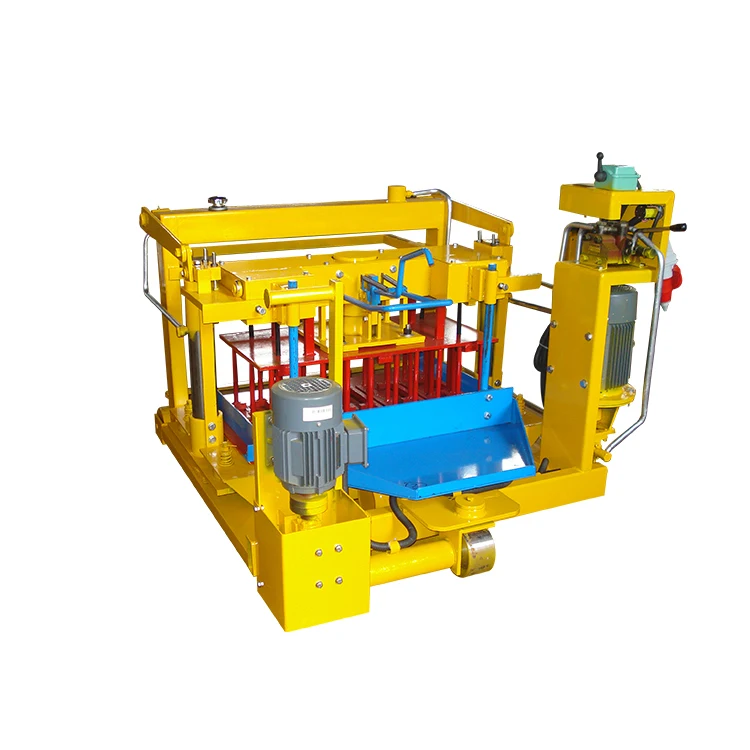
 Mobile block machine