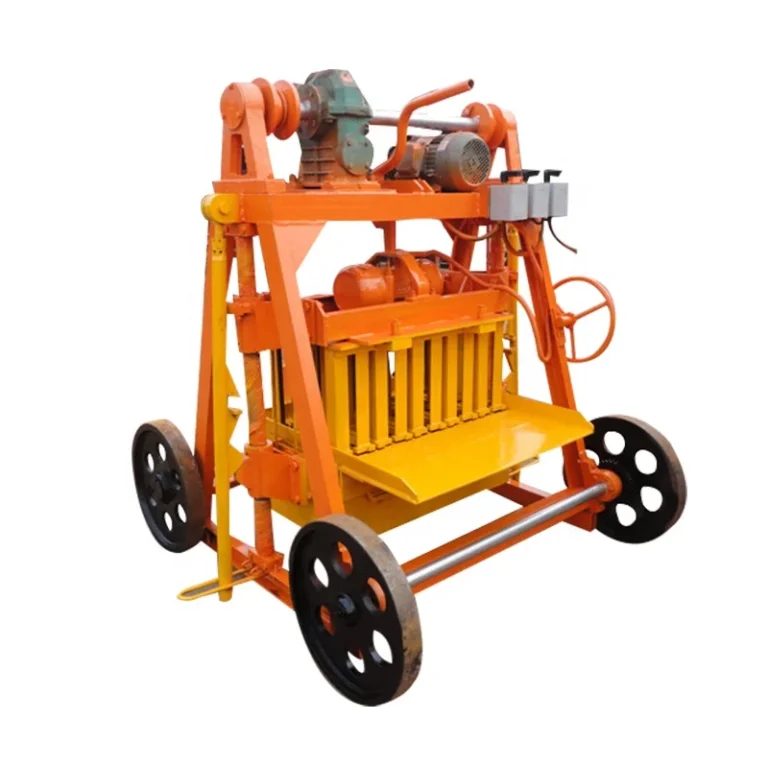
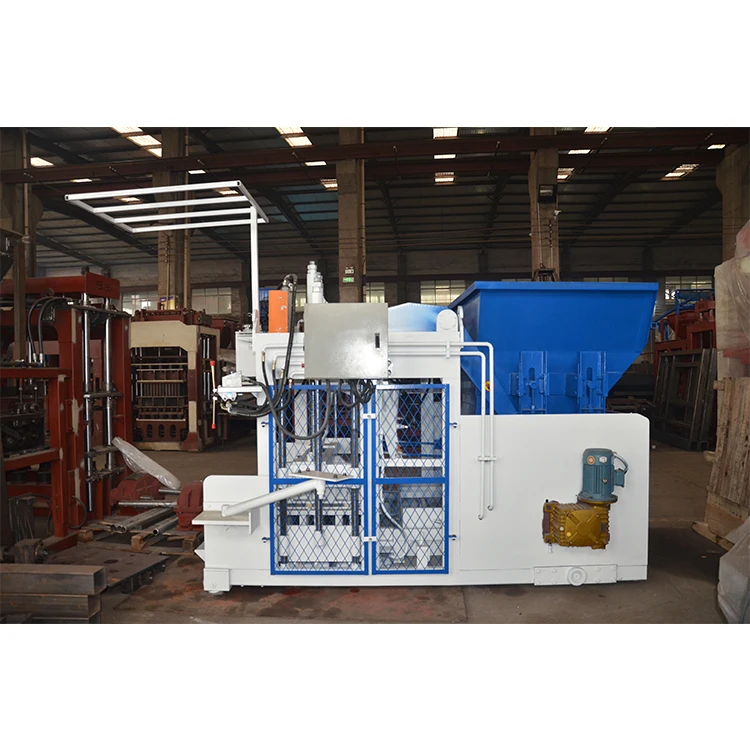
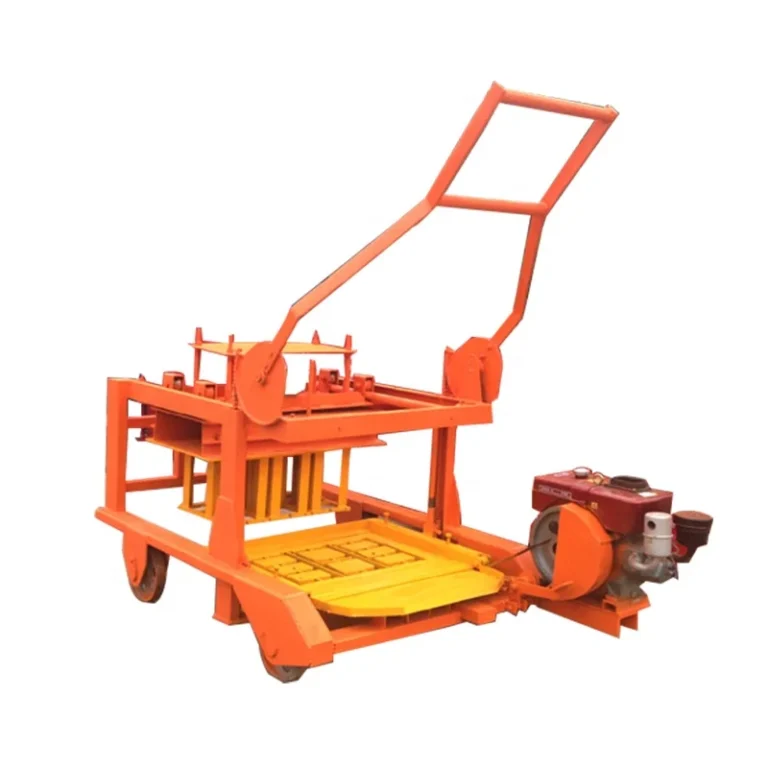
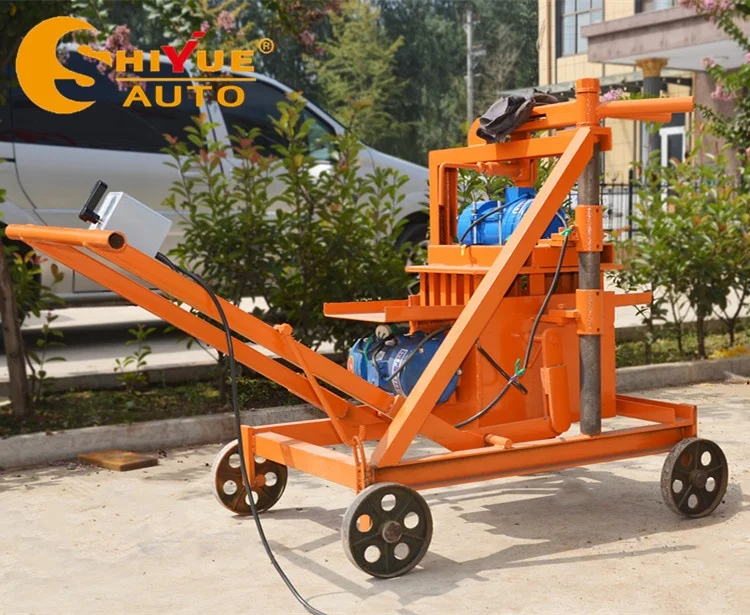
QMY4-30 Mobile Block Machine for Cement Hollow Brick – Manufacturer
Single-focus machinery scope — the QMY4-30 mobile block machine, its palletless curing logic, and where this tier belongs in the wider machine range are specified together so buyers can locate themselves before narrowing down.
Technical Specifications
| Parameter |
Value |
| Model |
QMY4-30 |
| Product Type |
Mobile Concrete Block Making Machine |
| Operation Type |
Mobile (egg-laying), palletless |
| Hydraulic Method |
Mould box excitation with hydraulic transmission |
| Demold Method |
Hydraulic |
| Molding Cycle |
30 seconds |
| Total Power |
5.95 kW |
| Output Capacity |
480 pcs/h based on 400×200×200mm hollow block, 4 pcs/mould |
| Output Capacity |
600 pcs/h based on 400×150×200mm hollow block, 5 pcs/mould |
| Output Capacity |
840 pcs/h based on 400×100×200mm hollow block, 7 pcs/mould |
| Daily Output (8hr) |
3840 / 4800 / 6720 pcs based on respective formats above |
| Pallet Requirement |
None (palletless mobile operation) |
| Automation Level |
Manual / semi-automatic mobile operation |
| Applicable Environment |
Mountainous, hilly, industrial mining, desert and coastal areas |
| Standards |
ISO9001:2000, CE |
Application Suitability
| Application |
Material or Output |
| On-site hollow block production without a fixed plant |
Crushed stone, sand, cement, and water mixes for 400×200×200mm hollow blocks |
| Construction contractors producing blocks at remote or difficult-terrain project sites |
400×150×200mm hollow blocks laid directly on leveled ground |
| Entrepreneurs setting up low-investment block production |
400×100×200mm hollow blocks with manual stacking and curing |
| Small-scale building material supply in areas without established block plants |
Multiple hollow block formats from a single machine footprint |
What "Pieces per Hour" Leaves Out When Choosing a Mobile Block Machine for Sale
Capacity means nothing without naming the block format behind it.
I once sent a QMY4-30 mobile block machine to a site where the buyer expected a single output number to cover every format. When the 400×200×200mm blocks came off at 480 per hour and the 100mm walls at 840, his crew planned shifts around the higher figure and fell short by mid-week. [NEED_CITE: common buyer misunderstanding of block machine output ratings] That mismatch is why every capacity figure here states the exact hollow block size and mould count it assumes, so a buyer evaluating a mobile block machine for sale can plan daily output against the format the local market actually purchases.

Where the Mobile Tier Sits in the Full Machine Range
The QMY4-30 occupies the entry tier of mobile block machines, below semi-automatic stationary lines and fully automatic plants. Buyers comparing a mobile block machine for sale against a stationary option should weigh the absence of pallets and curing-rack infrastructure against the lower daily volume each tier delivers. This machine suits projects where the site itself is the factory floor.
Terrain Reach Without a Fixed Foundation
Egg-laying design lets the QMY4-30 traverse mountainous, hilly, desert, and coastal ground without a poured slab or enclosed workshop. The hydraulic mould box excitation compacts each block in place, so the machine moves forward while the product cures behind it. [NEED_CITE: mobile block machine site preparation requirements in remote terrain] Contractors working across dispersed housing plots can relocate the unit between pours rather than hauling finished blocks over unpaved roads.
Reading the Spec Sheet Against Your Block Format
The 30-second molding cycle applies across all listed formats, but mould count per cycle changes the hourly result. A 400×200×200mm block yields 4 pieces per cycle for 480 per hour; switching to a 7-cavity mould for 100mm walls lifts the rate to 840. Total power stays at 5.95 kW regardless of format because the hydraulic transmission and vibration motor are sized for the maximum cavity load. Understanding this relationship prevents a buyer from assuming a single output covers every product in the catalogue.
When Palletless Operation Becomes a Hidden Cost
Skipping pallets saves upfront capital, but the curing area must still be flat, clean, and large enough for the daily output to stand undisturbed. I have seen crews on soft sand lose an entire day’s production because the ground settled under wet blocks overnight. [NEED_CITE: ground bearing requirements for palletless block curing] Where the site cannot provide a stable surface, the cost of laying a temporary concrete strip should enter the investment calculation before the machine order is placed.
Why Buyers Place Repeat Orders Here
Block machinery is our single focus, so the QMY4-30 arrives with mould, pallet guidance, and handling specified as one system rather than assembled from separate suppliers. We configure the machine against the buyer’s local aggregate and target block format, not a default catalogue setting. Mould design covers the hollow block sizes the buyer’s market sells, with custom drawings available for non-standard dimensions. Automation level is selectable, letting a buyer start with manual operation and add semi-automatic features later. Installation support includes operator training on-site so the first production run meets strength expectations.
Documentation & Verification
- Line layout showing curing area footprint matched to the selected hollow block format and daily output
- Machine specification sheet confirming hydraulic pressure, vibration force, and 5.95 kW total power
- Mould drawing and format list covering 400×200×200, 400×150×200, and 400×100×200mm hollow blocks
- Voltage and control language confirmation document signed before production begins
- Factory test record on the buyer’s specified block format before dispatch
Installation, Commissioning & Support
- Leveled ground strip at least 15 meters long required for palletless curing of QMY4-30 output
- 5.95 kW total power demands a dedicated circuit matching the buyer’s local voltage and frequency
- Machine ships partially assembled; hydraulic lines and mould box bolt on at site within one shift
- First-day commissioning includes cycle timing verification against the agreed hollow block format
- Operator training covers mould change procedure and hydraulic pressure adjustment for local aggregate
- Wear parts list supplied with initial hydraulic seals and vibration motor brushes for first-year maintenance
What to Include in Your Inquiry
Send the hollow block formats your market sells, the daily output you need, and a sample of your local aggregate so we can match the mix to the machine. Confirm your site’s voltage, frequency, and available curing area dimensions so the configuration arrives ready for the first shift.
Frequently Asked Questions
Q: How is daily output calculated for each hollow block format, and what cycle time is assumed?
A: Daily output assumes an 8-hour shift with a 30-second molding cycle. For the 400×200×200mm block the QMY4-30 produces 4 pieces per cycle, yielding 480 per hour and 3840 per day. The 150mm and 100mm formats increase cavity count to 5 and 7 respectively, raising hourly and daily totals proportionally while the cycle time remains constant.
Q: What block formats can the QMY4-30 produce, and can custom moulds be added later?
A: Standard moulds cover 400×200×200, 400×150×200, and 400×100×200mm hollow blocks. Custom moulds can be designed from buyer drawings for non-standard formats that fit within the mould box envelope. Adding a new mould later requires only a hydraulic quick-release swap, so format expansion does not mean buying a second machine.
Q: How does the mobile tier compare to semi-automatic and automatic stationary machines in output and investment?
A: The mobile tier eliminates pallet purchase and curing-rack infrastructure, lowering initial capital. Daily output is correspondingly lower than semi-automatic or automatic lines, which run higher cavity counts with pallet-based stacking. Buyers whose daily demand fits within the QMY4-30 range gain site mobility at a fraction of the stationary plant footprint.
Q: What site conditions does a palletless mobile machine require?
A: The curing surface must be flat, stable, and long enough to hold one day’s output without disturbance. A temporary concrete strip works on soft or sandy ground. Power supply must match the machine’s 5.95 kW demand at the local voltage and frequency, with a dedicated circuit to avoid voltage drop during the vibration cycle.

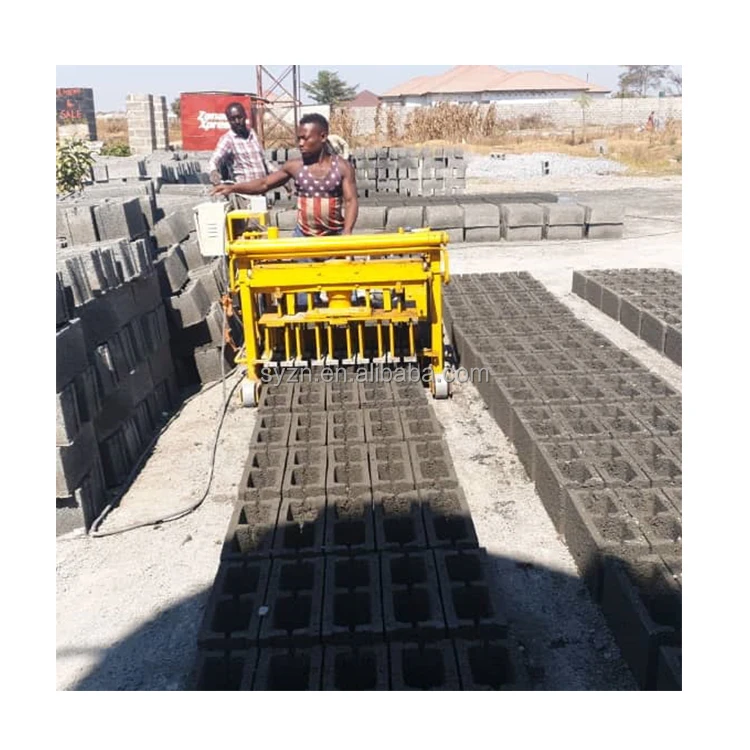
 Mobile block machine