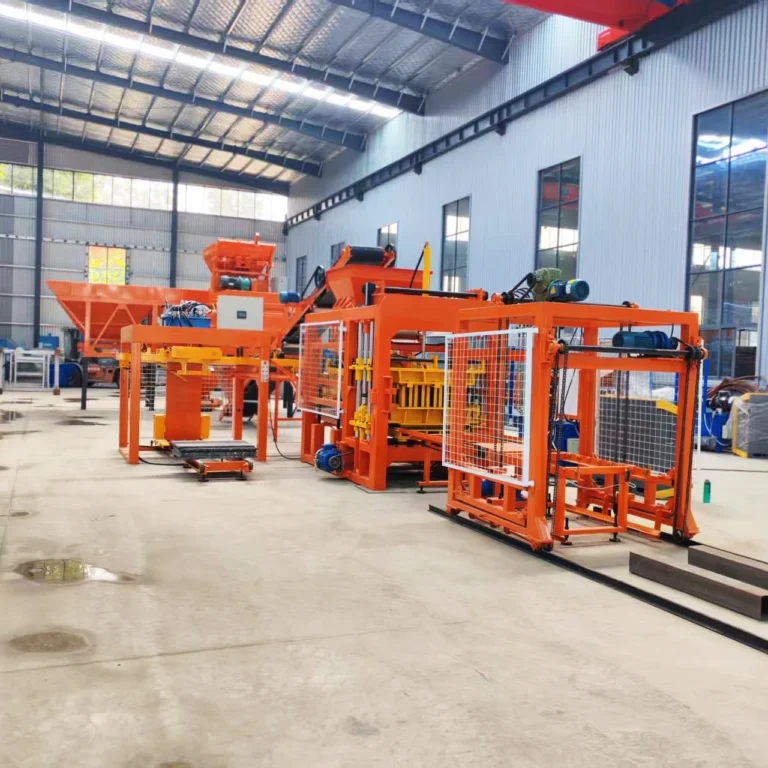
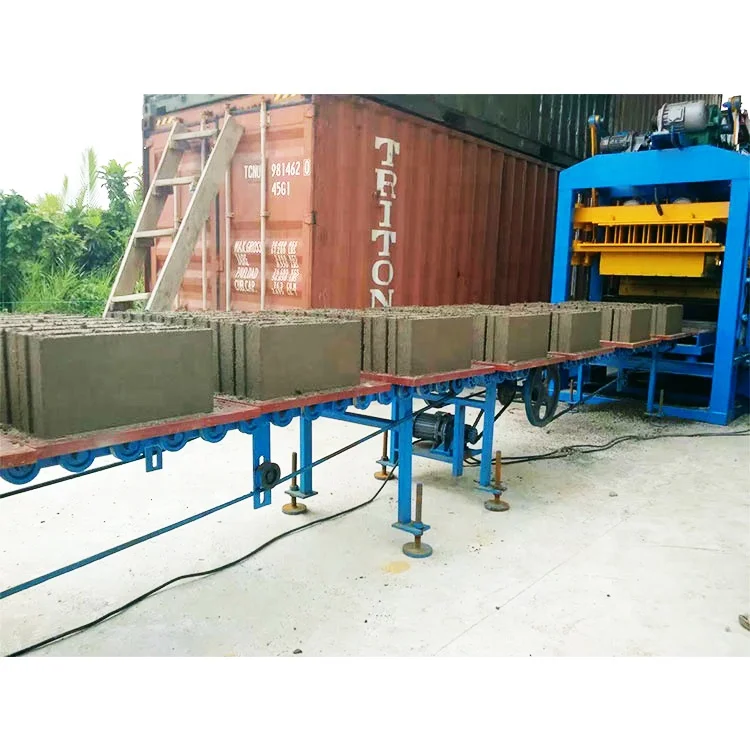
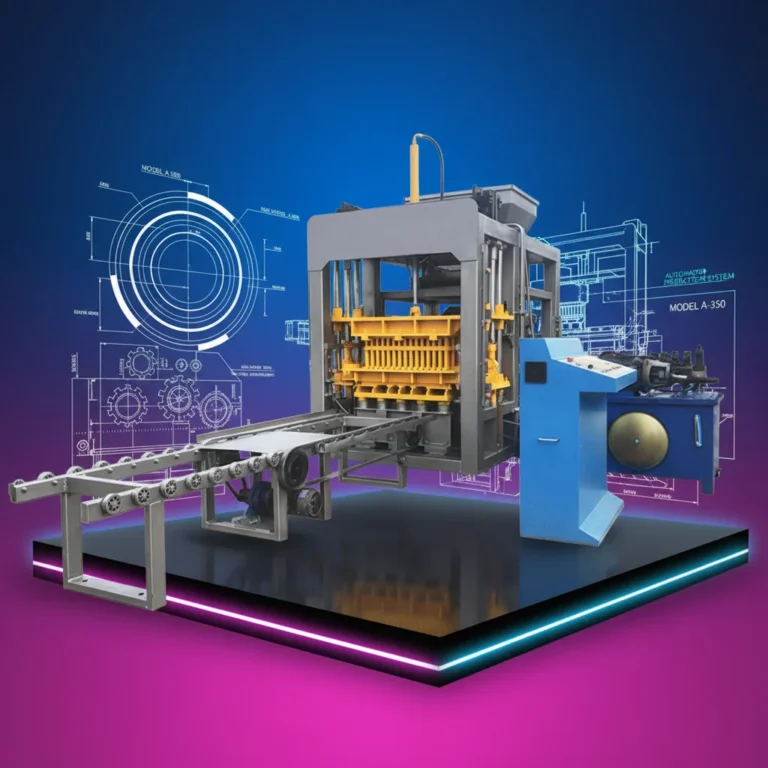
Matched System Approach — the Qt4 -26 semi-automatic block machine is specified with its mould, pallet and JQ350 mixer as one coordinated unit rather than a standalone press surrounded by mismatched auxiliaries.
Technical Specifications
| Parameter |
Value |
| Model |
Qt4 -26 |
| Product Type |
Semi-automatic Block Making Machine |
| Overall Dimensions (L×W×H) |
2060×1730×2580 mm |
| Rated Pressure |
26 MPa |
| Main Vibration Form |
Platform Vibration |
| Vibration Frequency |
4500 r/min |
| Vibration Force |
40 kN |
| Pallet Size |
880×480×25 mm |
| Molding Cycle |
15-20 s (basis not stated in source — confirm block format / material / thickness) |
| Total Power |
19.75 kW |
| Host Machine Power |
14.25 kW |
| Total Mass |
2 T |
| Demolding Method |
Semi-automatic |
| Mixer Model |
JQ350 |
| Applied Products |
Concrete blocks, hollow/solid blocks, pavers, interlocking blocks, curbstone, colored pavers |
| Raw Materials |
Crushed stone, sand, cement, dust, fly ash, gravel, slag |
| Automation Level |
Semi-automatic |
Application Suitability
| Application |
Material or Output |
| Hollow block production for residential walls |
Crushed stone, sand, cement mix |
| Solid block manufacturing for load-bearing structures |
Gravel, cement, fly ash blends |
| Interlocking paver forming for driveways and walkways |
Sand, cement, color pigment |
| Curbstone pressing for road and garden edging |
Coarse aggregate and cement |
| Colored paver production for landscaping and squares |
Pigmented concrete mixes |
What "15-20 Seconds per Cycle" Actually Means for Your Daily Output
Cycle time is not production capacity — the block format behind that number determines what you actually stack at the end of a shift.
Many semi-automatic block machine manufacturers quote a single molding cycle figure and let buyers assume it applies universally across every mould they install. The Qt4 -26 is rated at 15-20 s per cycle, but a hollow block, an interlocking paver and a curbstone each demand different vibration dwell, pressure hold and demolding behavior. [NEED_CITE: block format influence on cycle time and daily output] Without a capacity table that states the assumed format, pallet count and shift length, the number on the brochure stays theoretical and your crew ends up chasing targets the machine was never configured to hit.

Where the Qt4 -26 Sits in the Block Machine Range
The Qt4 -26 occupies the mid-tier of our semi-automatic block machine lineup, bridging small workshop units and fully automatic production lines. It targets buyers who have outgrown manual egg-laying machines but are not yet ready to invest in PLC-controlled stacking and cubing systems. The 19.75 kW total power requirement keeps electrical infrastructure demands within reach of typical three-phase workshop supplies, and the 2 T mass means the unit can be positioned without specialized heavy-lift equipment on most prepared concrete floors.
Pallet Handling Defines Your Real Workflow
With semi-automatic demolding, pallets move from the press to the curing area by hand or with a basic pallet truck. The 880×480×25 mm pallet size dictates how many blocks sit on each board, how your curing racks must be spaced, and what forklift tine width you need. Buyers who select a pallet dimension without measuring their existing curing yard often discover that standard racks cannot accommodate the boards, forcing a second investment in shelving or a complete layout redesign. [NEED_CITE: pallet sizing and curing yard compatibility in block plants]
Vibration and Pressure: Why Both Numbers Matter Together
Platform vibration at 4500 r/min delivers 40 kN of compaction force into the mix, while the 26 MPa hydraulic pressure compresses the material from above. These two forces must work in concert — vibration settles aggregate particles into a dense arrangement, and hydraulic pressure locks them in place before the cement matrix sets. If your local aggregate is angular volcanic stone rather than rounded river gravel, the vibration frequency and pressure timing may need adjustment to achieve consistent block density across the pallet. A mismatch shows up as weak corners or surface cracking that only appears after curing.
The Hidden Cost of Skipping Voltage and Language Confirmation
Arriving at a job site to find that the motor windings are wound for 380V/50Hz while the local supply runs 220V/60Hz turns a commissioning visit into a transformer sourcing expedition. Control panel labels and PLC display text in a language the operator cannot read add further delay. Confirming voltage, frequency and control language before the Qt4 -26 enters production avoids weeks of idle time after the container is unloaded. [NEED_CITE: voltage and frequency standards by export market]
Why Source the Qt4 -26 Here
Block machinery is our single product focus, so the press, mould, pallet and JQ350 mixer are specified together against your actual raw materials and target block format. Mould design covers interlocking, hollow, solid, paver and curbstone profiles, with custom drawings available when your market demands a format outside the standard catalog. The automation level is selectable — you can begin with semi-automatic demolding and move to higher tiers as your output targets grow. We supply the line layout and capacity calculation that states which block format each output figure assumes, not a single headline number. Factory testing runs your specified mix through the machine before dispatch, catching vibration and pressure mismatches before they reach your floor.
Documentation & Verification
- Line layout showing Qt4 -26 footprint with pallet flow direction and curing zone placement
- Capacity table listing cycle time and daily output per block format, not a single aggregate figure
- Mould drawing and format list for every profile included in your order
- Voltage, frequency and control language confirmation signed off before production
- Factory test record using your raw material sample or a documented standard mix
Installation, Commissioning & Support
- Concrete slab foundation sized to the 2060×1730 mm footprint with anchor bolt layout
- Dedicated three-phase circuit rated for 19.75 kW total draw with correct voltage and frequency
- Machine arrives partially assembled; press frame, vibration platform and mixer positioned separately
- First-run parameter tuning for vibration dwell and hydraulic hold matched to your aggregate type
- Operator training covering mould change procedure and semi-automatic pallet handling sequence
- Wear parts list and mould maintenance schedule provided at commissioning
What We Need to Configure Your Line Accurately
Tell us which block formats sell in your market and the daily volume you target per format. Share your local aggregate type and whether you can supply a sample for factory testing. Confirm your site voltage, frequency and the language your operators read on a control panel.
Frequently Asked Questions
Q: How does the 15-20 s cycle translate into daily output for different block formats?
A: The 15-20 s figure is a general range; actual cycle time varies with block height, mix stiffness and mould complexity. A hollow block typically completes faster than a dense interlocking paver. We provide a format-by-format capacity table showing pallets per hour and estimated shift output so you can plan production against real orders rather than a single brochure number.
Q: Where does the Qt4 -26 fit between smaller machines and full automatic lines?
A: It sits in the mid-tier of our range. Buyers moving up from manual or egg-laying machines choose the Qt4 -26 for its platform vibration and matched mixer without the investment in automatic stacking. When output targets grow, the line can be expanded with pallet feeders and stackers rather than replaced entirely.
Q: Can I start semi-automatic and add automation later?
A: The Qt4 -26 is designed to allow incremental automation. Pallet feeding, stacking and cubing stations can be added to the line as your volume justifies the investment. The core press and vibration platform remain unchanged, protecting your initial capital outlay.
Q: What pallet size does the Qt4 -26 use, and can it be changed?
A: The standard pallet is 880×480×25 mm. This dimension determines your curing rack spacing and forklift requirements. If your existing yard uses a different pallet size, we can discuss mould and press adjustments during the inquiry stage before configuration is finalized.

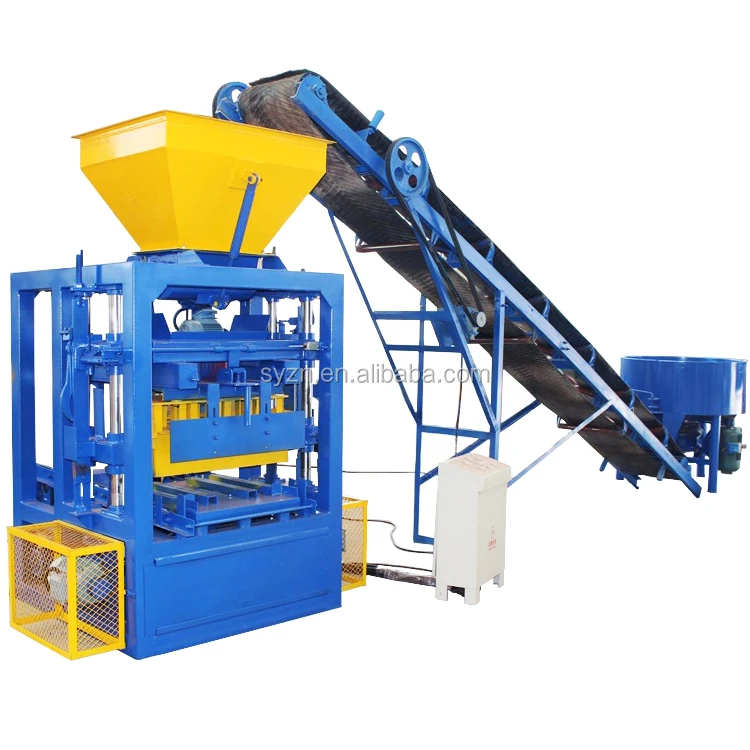
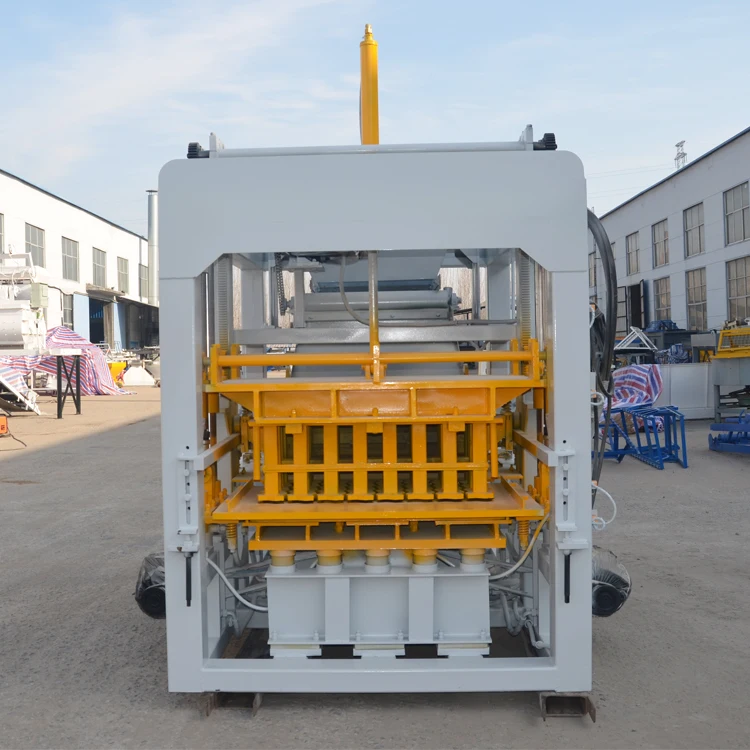 Automatic block machine