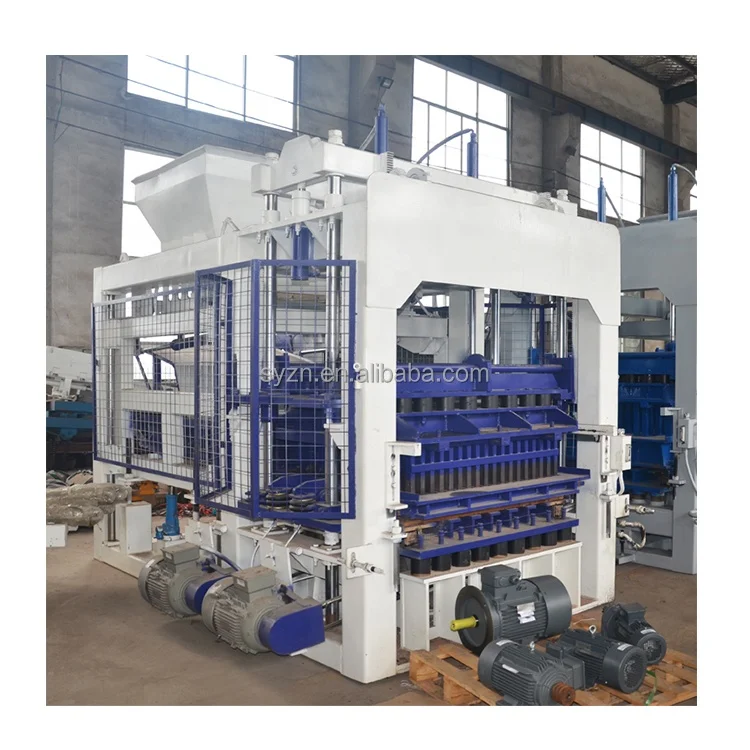
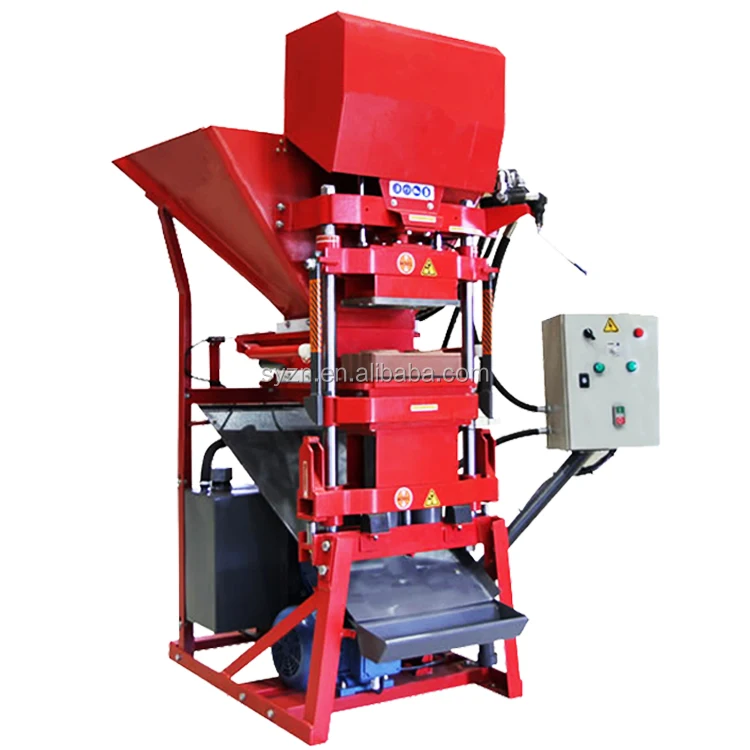
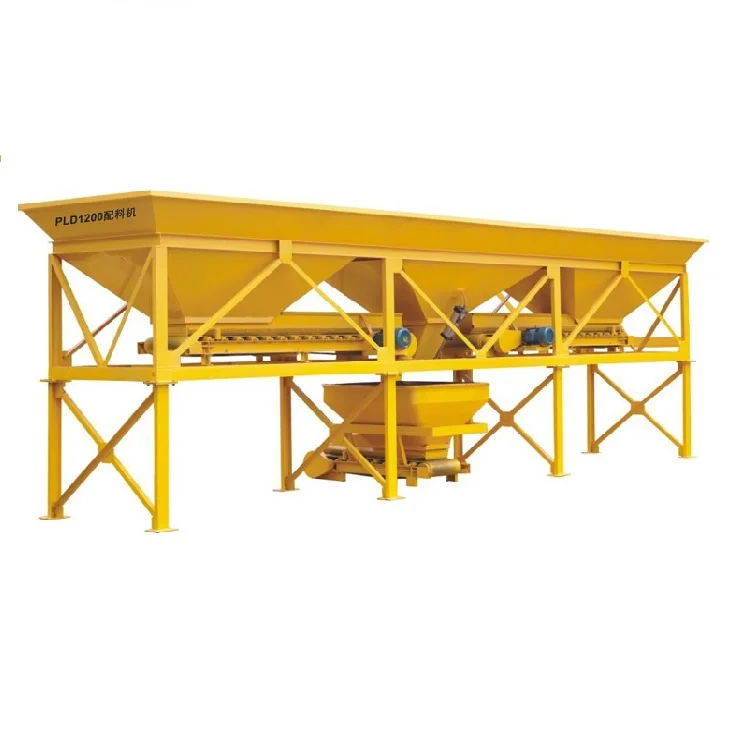
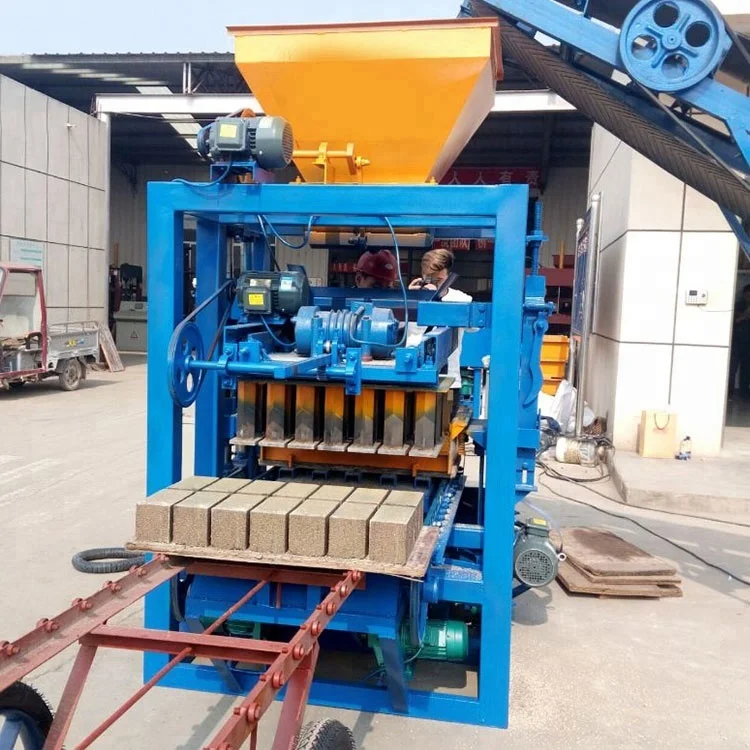
Positioning in the Lineup — The QTJ4-25 anchors the entry point of our semi-automatic range, configured as a complete host-mixer-conveyor line rather than a bare press, so first-time plant owners and on-site contractors can map this tier against higher-capacity automatic options before committing floor space and budget.
Technical Specifications
| Parameter |
Value |
| Model |
QTJ4-25 |
| Product Type |
Concrete Block Making Machine |
| Machine Dimension |
3060 × 1730 × 2580 mm |
| Total Weight |
4 T |
| Cycle Time |
25 s per mould |
| Vibration Force |
45 kN |
| Pallet Size |
850 × 550 mm |
| Block Height Range |
40–280 mm |
| Workshop Area |
50–150 m² |
| Material Storage Area |
300–500 m² |
| Belt Conveyor Length |
8 m |
| Mixer Model |
JQ500 |
| Motor Brand |
Germany SIEMENS or ABB |
| Voltage & Frequency |
380V, 3-phase, 50Hz (customizable to local voltage) |
| Control System |
Electric control |
| Automation Level |
Semi-automatic |
| Theoretical Output |
480 pcs/h (basis: 400×200×200mm hollow block, 4 pcs/mould) |
| Theoretical Output |
600 pcs/h (basis: 400×150×200mm hollow block, 5 pcs/mould) |
| Theoretical Output |
840 pcs/h (basis: 400×100×200mm hollow block, 7 pcs/mould) |
| Theoretical Output |
2880 pcs/h (basis: 240×115×53mm solid brick, 24 pcs/mould) |
| Mould Change System |
Manual mould change |
| Mould Formats Supported |
Hollow block, solid block, paver, interlocking block, curbstone, riverside brick, revetment brick, grassed brick, colored paver |
| Assembly State |
Full production line (host machine + mixer + belt conveyor) |
| Warranty |
1 year (excluding wearing parts) |
| PLC Display Language |
To be confirmed before production |
| Hydraulic Pressure |
To be confirmed with buyer’s mix design |
Application Suitability
| Application |
Material or Output |
| Small-to-medium block plant startup |
Cement, fly ash, crushed stone, river sand for hollow and solid blocks |
| On-site production for housing projects |
Local aggregate and cement mixed on the construction site |
| Format expansion for existing producers |
Swapping moulds for pavers, interlocking bricks, and curbstones |
| Grassed and revetment brick production |
Permeable concrete mixes for landscaping and erosion control |
| Colored paver runs |
Pigmented face-mix concrete on standard pallets |
What "Pieces per Hour" Leaves Out When Sizing a QTJ4-25 Block Machine Manufacturer
A cycle-time figure means nothing until the block format, mould cavity count, and local aggregate are pinned down.
Catalogue sheets for semi-automatic machines often quote a single headline number — 2880 pieces per hour — without stating that this assumes a 240×115×53mm solid brick with 24 cavities per mould. When the buyer actually needs 400×200×200mm hollow blocks, the same press delivers 480 pieces per hour on a 25-second cycle. The gap between expectation and reality shows up on day one of production, and the plant owner is left wondering why the shift output is a fraction of the brochure promise [NEED_CITE: capacity calculation methodology for concrete block machines]. A QTJ4-25 block machine manufacturer that specifies output per format, rather than a single peak figure, gives the buyer a planning baseline they can actually build a business case around.
Where the QTJ4-25 Sits in the Complete Machine Range
Buyers surveying options for a first or replacement press need a clear map of the tiers before narrowing down. The QTJ4-25 occupies the semi-automatic tier: a stand-alone host machine paired with a JQ500 mixer and an 8 m belt conveyor, requiring 50–150 m² of workshop floor. It sits below fully automatic lines that add pallet feeders, stackers, and cubing systems, and above mobile egg-laying units that produce directly on the ground without pallets. This QTJ4-25 block machine manufacturer positions the model as the entry point for entrepreneurs and contractors who need productive output without the footprint and capital outlay of a high-capacity automatic plant.
Automation Level and the Upgrade Path Forward
The semi-automatic configuration means pallet feeding, mould vibration, and block ejection are mechanized, while pallet handling after ejection and stacking in the curing area remain manual. This keeps the initial investment contained and the operator count low — typically two to three people per shift. The electric control panel manages cycle timing and vibration duration, and the motor specification — SIEMENS or ABB — is selected for reliability in continuous-duty environments. Buyers who later outgrow manual pallet handling can add automatic stackers and curing rack systems without replacing the host press, because the pallet size of 850 × 550 mm and the block height range of 40–280 mm remain compatible with downstream automation modules [NEED_CITE: upgrade paths from semi-automatic to automatic block production].
Reading the Specs That Actually Shape Daily Output
The vibration force of 45 kN must be evaluated together with the hydraulic pressure setting and the buyer’s specific mix design. A lean mix with coarse local aggregate needs higher vibration amplitude to achieve adequate compaction, while a rich mix with fine sand requires less force to avoid segregation. The 850 × 550 mm pallet size dictates how many blocks are produced per cycle and must align with the curing area dimensions and the forklift already on site — a mismatch here means pallets sit in the yard because the forklift tines cannot carry them. The manual mould change system allows format switching across hollow blocks, solid bricks, pavers, interlocking bricks, and curbstones, but the changeover takes operator time that must be factored into shift planning. Block heights from 40 to 280 mm cover most structural and landscaping formats, so a single host machine serves multiple product lines once the appropriate moulds are on hand.

The Hidden Cost of Skipping the Voltage and Language Conversation
Voltage, frequency, and control-display language are details that often surface only after the machine has arrived and the electrician is standing in front of the panel. A 380V three-phase 50Hz configuration works in many markets, but regions running 440V 60Hz or 220V three-phase will face motor rewinding or transformer procurement before the first block is pressed. The electric control panel language is equally easy to overlook — if the labels and relay indicators are in a script the operator cannot read, troubleshooting during the first weeks falls on the supplier’s remote support line instead of happening on the shop floor [NEED_CITE: voltage and frequency standards by export market]. Confirming these parameters during the quotation stage costs nothing; resolving them after container discharge costs time and money.
Why Buyers Place This Tier With a Single-Source Supplier
Block machinery is the sole product focus here, which means the host press, mould, pallet, and handling equipment are specified as one matched system rather than assembled from unrelated vendors. The configuration is set against the buyer’s actual mix design and target block format — not a catalogue default — so the vibration force, cycle time, and hydraulic pressure are tuned before the machine leaves the factory. Mould design covers every format the buyer’s market demands, including custom drawings when a standard mould does not exist. The automation level is selectable: a buyer can start with the semi-automatic QTJ4-25 and upgrade pallet handling and stacking later, because the machine platform and pallet dimensions are designed to accept downstream modules. Installation support includes on-site commissioning and operator training so that the first production shift runs under supervision rather than trial and error.
Documentation & Verification
- Line layout drawing showing workshop footprint and material flow for the QTJ4-25 host, mixer, and conveyor
- Capacity calculation sheet stating block format and cavity count for each output figure
- Mould drawing and format list confirming every block type before production begins
- Voltage, frequency, and control language confirmation signed off before assembly
- Factory test record on buyer’s specified block format before dispatch
- Packing photographs and customs documentation for smooth port clearance
Installation, Commissioning & Support
- Foundation slab leveled to 3060 × 1730 mm machine footprint with anchor bolt provisions
- Dedicated 3-phase circuit matching confirmed voltage and frequency before energizing the SIEMENS or ABB motor
- Host machine, JQ500 mixer, and 8 m belt conveyor assembled and aligned on site
- First-run parameter tuning — vibration duration, cycle timing, and mix moisture — calibrated to local aggregate
- Operator training covering mould change procedure, pallet loading sequence, and daily maintenance checks
- Wear parts and mould inventory list provided for first replacement planning
Planning Your Inquiry
Before requesting a quotation, gather the target block formats, daily output requirement, and the local aggregate and cement types available at the project site. Measure the workshop floor area and ceiling height, note the existing forklift capacity and curing space, and confirm the local voltage, frequency, and the control-display language the operators need. With this information on hand, the configuration proposal can match the QTJ4-25 block machine manufacturer’s offering to the real production environment rather than a generic catalogue entry.
Frequently Asked Questions
Q: How is the output capacity of the QTJ4-25 verified, and which block format does each figure assume?
A: Every capacity figure is tied to a specific block dimension and cavity count. For example, 480 pieces per hour assumes a 400×200×200mm hollow block with 4 cavities, while 2880 pieces per hour assumes a 240×115×53mm solid brick with 24 cavities. The quotation includes a capacity calculation sheet that lists each format, so daily output planning reflects the blocks actually being produced rather than a single peak number.
Q: Can the voltage, frequency, and control display language be customized before shipment?
A: Yes. The standard configuration is 380V three-phase 50Hz, but the motor and electric control panel can be set to match the buyer’s local supply — such as 440V 60Hz or 220V three-phase — when confirmed during the quotation stage. Control labels and indicator language are agreed upon before assembly so operators can read the panel from day one.
Q: What automation level does the QTJ4-25 offer, and is there an upgrade path later?
A: The QTJ4-25 is configured as a semi-automatic machine with mechanized vibration and ejection but manual pallet handling and stacking. The 850 × 550 mm pallet size and block height range of 40–280 mm are designed to remain compatible with automatic pallet feeders, stackers, and cubing systems that can be added as production volume grows, without replacing the host press.
Q: How do I confirm the pallet size and mould formats match my curing space and market?
A: Share the curing area dimensions and forklift specifications so the 850 × 550 mm pallet can be verified against existing equipment. Provide the list of block formats sold in the local market, and a mould drawing and format list will be issued for approval before production, ensuring every required block type — hollow, solid, paver, interlocking, or curbstone — is covered.

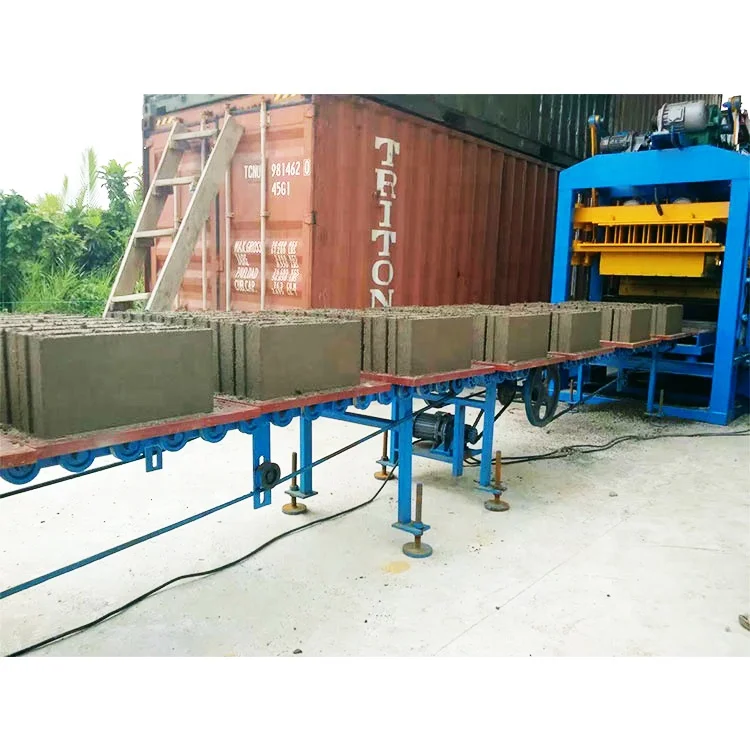
 Automatic block machine