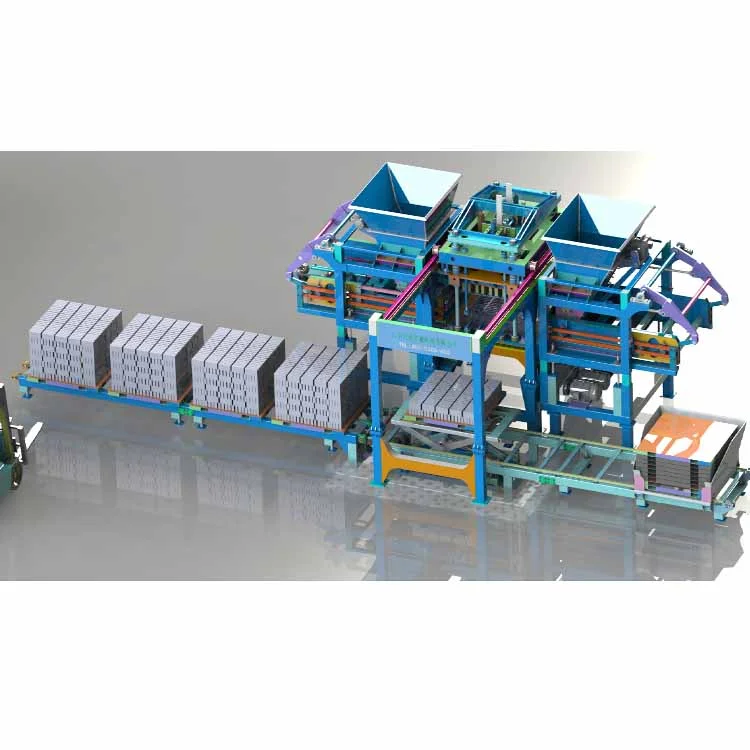
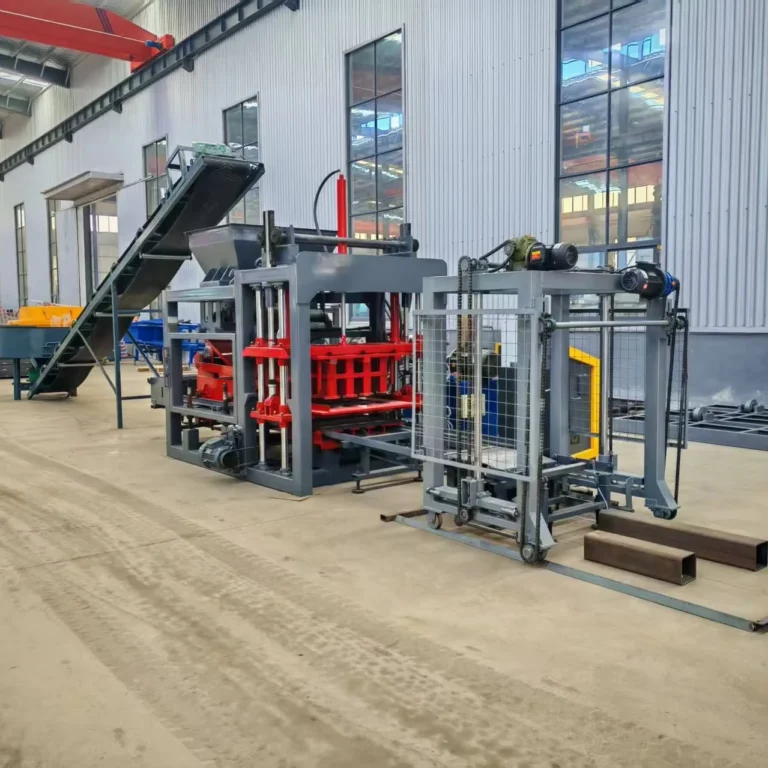
Matched System Specified as One — the QTJ4-40 block making machine, its moulds, pallets and manual handling workflow are configured together against your local aggregate and target block format, not pulled from separate catalogues.
Technical Specifications
| Parameter |
Value |
| Model |
QTJ4-40 |
| Product Type |
Semi-Automatic Concrete Block Making Machine |
| Overall Dimensions (L×W×H) |
1350×1460×1800 mm |
| Net Weight |
1.2 T |
| Rated Power |
10.4 kW |
| Voltage & Frequency |
Configurable to buyer’s local supply (basis to be confirmed before order) |
| Control System |
Semi-automatic with bed mould vertical vibration and upper mould compression vibration |
| Cycle Time |
40 s |
| Pallet Size |
850×450×20 mm |
| Mould Formats |
Hollow, solid, paver (standard: 8", 6", 5", 4") |
| Output Capacity |
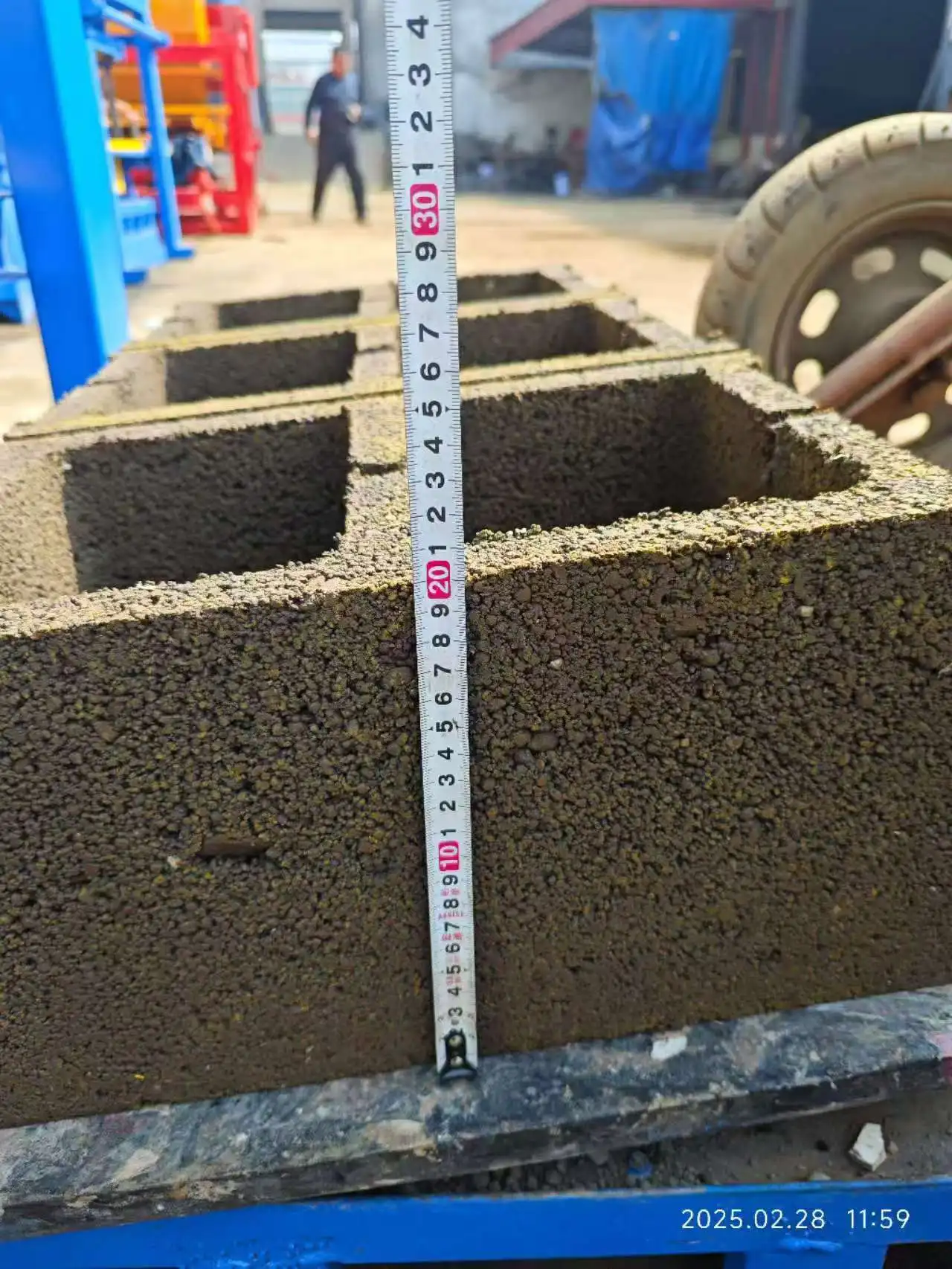
360 pcs/h based on 400×200×200 mm hollow block, 4 pcs/mould |
| Output Capacity |
2,800 pcs/day based on 400×200×200 mm hollow block, 8-hour shift |
| Output Capacity |
450 pcs/h based on 400×150×200 mm hollow block, 5 pcs/mould |
| Output Capacity |
800 pcs/h based on 225×112.5×60 mm interlocking paver, 9 pcs/mould |
| Mould Change Time |
Basis not stated in source — confirm with manufacturer |
| Raw Materials |
Concrete, sand, cement, fly ash, lime, gypsum |
| Assembly State |
Host machine + mixer + mould + pallets (mixer and pallets optional if sourced locally) |
| Stacking Method |
Manual — pallet with wet blocks moved to curing area by hand or forklift |
Application Suitability
| Application |
Material or Output |
| Small block yard producing 8-inch and 6-inch hollow blocks |
Crushed stone, sand, cement mix for load-bearing and partition walls |
| On-site production by housing contractors |
Hollow and solid blocks from locally available aggregate for immediate construction use |
| First-time plant setup by entrepreneurs |
Hollow, solid and paver blocks with low initial capital outlay |
| Paver and interlocking brick production |
Fine aggregate and cement for 225×112.5×60 mm interlocking formats |
| Building material distributors adding formats |
Multiple block sizes from a single host machine via mould change |
What "40-Second Cycle" Does Not Tell You About Real Output
The cycle time is constant, but what you actually ship at the end of the day depends entirely on which block format fills each mould.
Many buyers receive a single headline capacity number and assume it applies across every block size they plan to sell. With the QTJ4-40 semi-automatic block machine, a 40-second cycle produces 4 hollow blocks when running 400×200×200 mm moulds but 9 pavers when running 225×112.5×60 mm moulds. That difference reshapes your daily tally, your curing space requirement, and the labour needed to move pallets. I once saw a buyer in West Africa plan a block yard around a single hourly figure, only to find that switching to a smaller paver format doubled his pallet handling workload overnight because nobody had calculated the per-format output [NEED_CITE: block plant capacity planning assumptions by format].
When you survey options for a first or replacement machine, the honest starting point is the format you sell the most of — not the machine’s fastest theoretical cycle.

Where the QTJ4-40 Sits in the Stationary Range
The QTJ4-40 block making machine occupies the entry-to-mid tier of stationary equipment. It delivers more consistent output than a mobile egg-layer because the fixed bed and dual vibration system compact the mix under controlled conditions. Buyers who have outgrown portable machines but are not ready to commit to a fully automatic line with conveyor-fed batching and robotic stacking find this model a practical middle ground. The manual pallet handling keeps capital expenditure contained while leaving room to add automation stations later.
Planning Around the Pallet, Not Just the Press
The 850×450×20 mm pallet is the physical link between the press and your curing area. Every 40 seconds, an operator or forklift must move a loaded pallet away and slide a clean one in. If your curing racks are sized for a different pallet dimension, or if your forklift fork width does not match, the press sits idle while workers improvise. We specify pallet material — wood or fiberglass — alongside the machine so the entire handling loop closes before the equipment leaves the factory [NEED_CITE: pallet and curing area compatibility in block production].
Vibration, Pressure and the Mix That Actually Arrives
Bed mould vertical vibration combined with upper mould compression vibration gives the QTJ4-40 a dual-action compaction that generally produces more uniform block density than single-axis vibration alone. However, vibration force and hydraulic pressure must match the mix design. If your local sand carries high clay content, the same vibration setting that works with clean crushed stone will leave blocks under-compacted and weak. Before we finalise configuration, we ask for a sample of your actual aggregate and a target block strength so the vibration parameters can be set accordingly. A machine tuned to a catalogue-default mix will underperform on the material that actually arrives at your gate.
The Cost of Overlooking Voltage and Control Language
Confirming voltage, frequency and PLC display language sounds trivial until a machine arrives at site and cannot be powered on. A 10.4 kW motor configured for the wrong supply will either trip breakers immediately or run at reduced speed, cutting vibration force and producing blocks that fail strength tests. Buyers in regions with mixed 50 Hz and 60 Hz grids are particularly exposed [NEED_CITE: industrial motor frequency mismatch consequences]. We document voltage and frequency confirmation in writing before production begins, and we verify control panel labelling in the operator’s language so commissioning does not stall over an untranslated display.
Why Source the QTJ4-40 Here
Block machinery is our single focus, which means the QTJ4-40 host machine, mould, pallet and handling accessories are specified as a matched system rather than assembled from separate suppliers.
- Configuration is set against your actual mix design and target block format, not a catalogue default.
- Mould design covers the formats your local market sells, with custom drawings available when standard sizes do not match.
- Automation level is selectable — you can start with manual pallet handling and plan a future upgrade to automatic stacking.
- Capacity calculations state the exact block format assumed for each output figure, so your investment decision rests on real numbers.
- Factory testing runs your specified mould format before dispatch, not a generic test block [NEED_CITE: pre-shipment factory test protocol for block machines].
Documentation & Verification
- Line layout and capacity calculation naming each block format and its assumed output
- Machine specification sheet with voltage, frequency and pallet size confirmed per order
- Mould drawing and format list showing included and optional block sizes
- Pallet specification confirming material choice and dimensions matched to your curing setup
- Factory test record using your specified block format before shipment
- Operation and maintenance manual with wear parts and mould replacement schedule
Installation, Commissioning & Support
- Foundation pad sized to the 1350×1460 mm footprint with level tolerance for vibration stability
- Dedicated power circuit rated for the 10.4 kW motor plus mixer draw, voltage confirmed pre-production
- Host machine shipped assembled with mould and pallets; mixer connected on site
- First-run commissioning includes vibration tuning to your actual aggregate mix
- Operator training covers mould change procedure, pallet handling rhythm and daily greasing points
- Wear parts list and mould reorder reference supplied at handover
What We Need to Configure Your Line
To prepare an accurate proposal, share the primary block format you intend to produce, your target daily output based on an 8-hour shift, and the type of aggregate available locally. Include your site voltage and frequency, the language needed for the control panel, and whether you already have a mixer and curing racks. If you have an existing forklift, its fork dimensions help us confirm pallet compatibility before the QTJ4-40 block making machine leaves our floor.
Frequently Asked Questions
Q: How do I verify the real daily output of the QTJ4-40 for the specific block format I sell?
A: Request a capacity calculation that names your exact block dimensions and mould cavity count. For the QTJ4-40, a 400×200×200 mm hollow block yields 360 pieces per hour, while a 225×112.5×60 mm paver yields 800 per hour. We document the format assumption alongside every output figure so your planning rests on your actual product, not a generic headline number.
Q: Where does the QTJ4-40 sit compared to fully automatic models — when should I step up?
A: The QTJ4-40 serves buyers who need stationary press consistency but can manage manual pallet handling within their labour budget. If your daily volume grows to a point where pallet movement becomes the bottleneck, a fully automatic line with conveyor-fed stacking removes that constraint. The semi-automatic architecture allows a later upgrade path without replacing the press entirely.
Q: What plant footprint and site conditions does the QTJ4-40 require?
A: The machine itself occupies roughly 1350×1460 mm, but you must also allocate space for raw material storage, the mixer, pallet staging and the curing area. A level concrete foundation is needed to absorb vibration loads. Ceiling height should clear the 1800 mm machine height plus lifting space for mould changes. We provide a line layout showing each station before you commit to a foundation pour.
Q: Can I start with the QTJ4-40 semi-automatic and upgrade to automatic stacking later?
A: Yes. The semi-automatic configuration handles pallet movement manually, keeping initial investment lower. When your output volume justifies it, automatic pallet feeding and stacking stations can be added to the existing press. We plan the upgrade path during initial configuration so mechanical interfaces are ready when you decide to expand.
Q: What voltage and frequency options are available, and how is this confirmed?
A: The QTJ4-40 motor and control panel are configured to your local supply. We require written confirmation of voltage and frequency before production starts. The control panel language is also confirmed at this stage so the operator display matches your team’s working language, avoiding commissioning delays when the machine arrives on site.

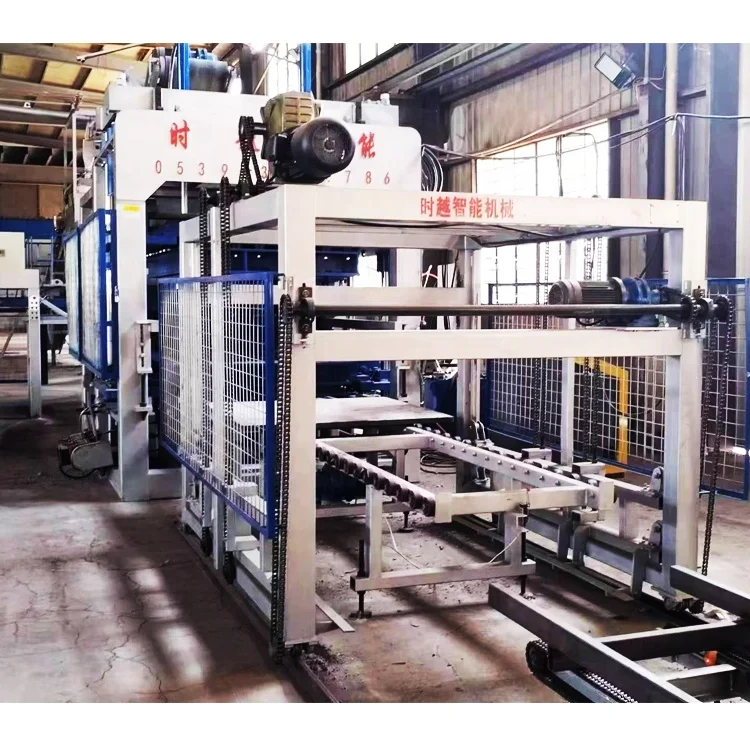 Stationary block machine