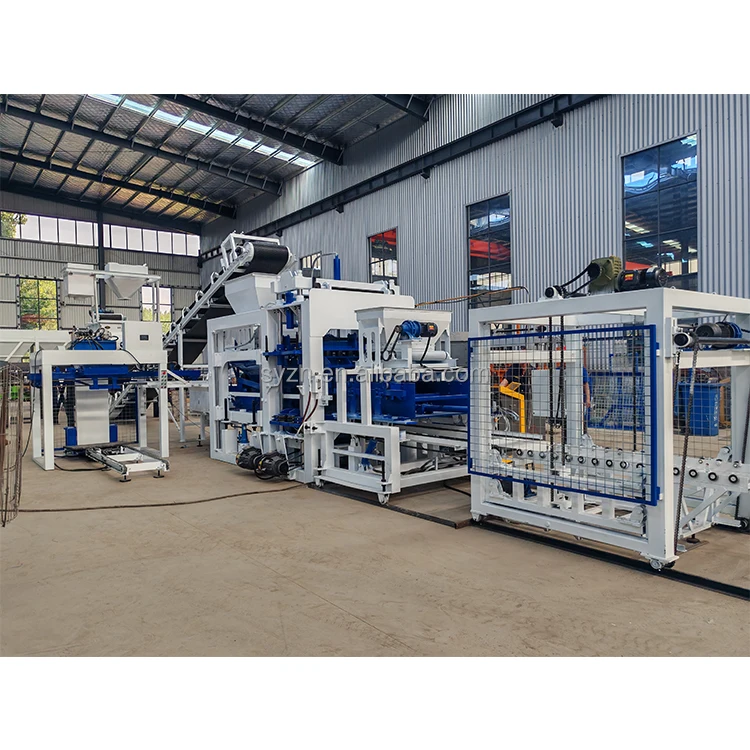
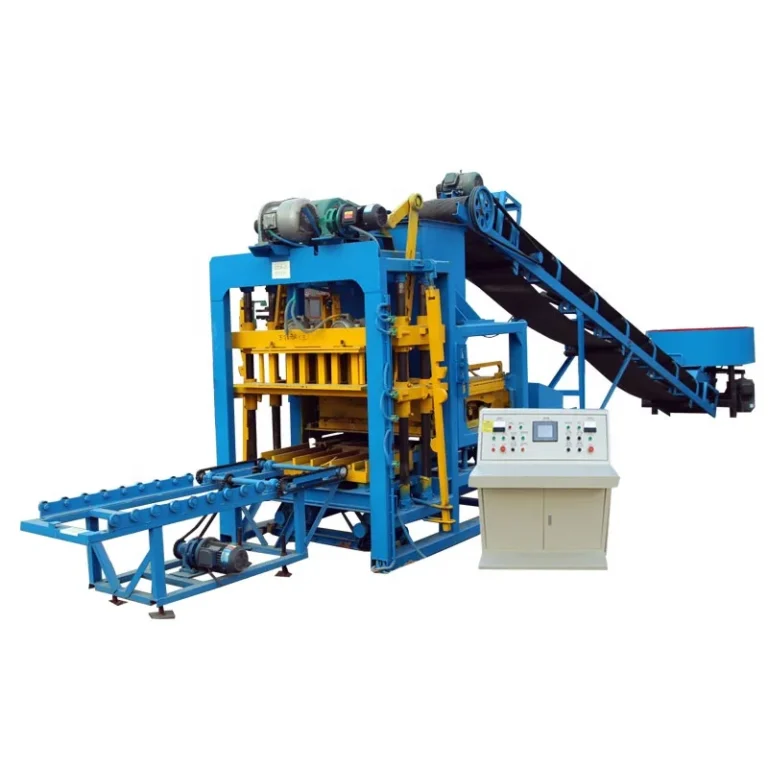
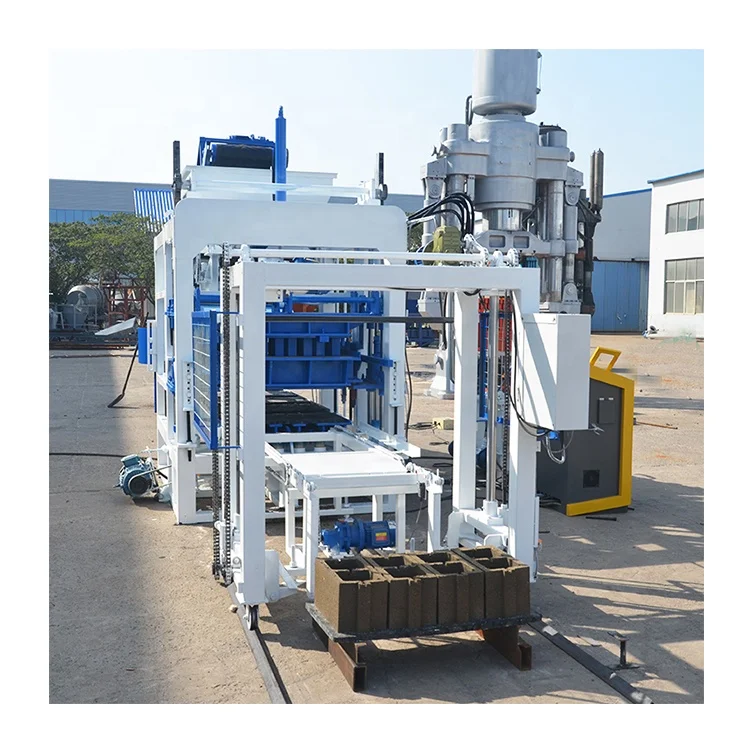
Matched System Approach — the QTJ4-25 block making machine is specified as a complete unit where press, mould, pallet and handling are configured together against your actual mix design rather than pulled from separate catalogues.
Technical Specifications
| Parameter |
Value |
| Model |
QTJ4-25 |
| Product Type |
Automatic Concrete Block Making Machine |
| Overall Dimensions (L×W×H) |
3000×1800×2680 mm |
| Total Mass |
3.5 T |
| Overall Power |
16.58 kW |
| Vibration Force |
60 kN |
| Main Vibration Form |
Platform Vibration |
| Vibration Frequency |
2800–4500 r/min |
| Pallet Size |
850×480 mm |
| Molding Cycle |
25 s |
| Demolding Method |
Mechanical |
| Guide Column |
Four chrome-plated columns, overlong guide design |
| Frame Material |
National standard manganese steel, chrome-plated surface |
| Factory Area Required |
300 m² |
| Output Capacity (Hollow Block) |
580 pcs/h based on 400×200×200 mm, 4 pcs/mould |
| Output Capacity (Multi-cellular Brick) |
1400 pcs/h based on 240×115×90 mm, 9 pcs/mould |
| Output Capacity (Solid Brick) |
3300 pcs/h based on 240×115×53 mm, 21 pcs/mould |
| Daily Output (Hollow Block) |
4640 pcs/day (8 h, 400×200×200 mm) |
| Daily Output (Multi-cellular Brick) |
11200 pcs/day (8 h, 240×115×90 mm) |
| Daily Output (Solid Brick) |
26400 pcs/day (8 h, 240×115×53 mm) |
| Automation Level |
Semi-automatic (mechanical demolding, manual pallet handling) |
| Voltage & Frequency |
Configurable to buyer’s site requirement (basis to be confirmed) |
| Control System |
Available with PLC or relay logic (basis to be confirmed) |
| Warranty |
1 year (excluding spare parts) |
Application Suitability
| Application |
Material or Output |
| Hollow block production for residential and commercial walls |
Crushed stone, sand, cement, fly ash mixes on 400×200×200 mm format |
| Solid brick manufacturing for load-bearing and partition masonry |
Sand, gravel, cement blends on 240×115×53 mm format |
| Multi-cellular brick for lightweight infill walls |
Lightweight aggregate and cement on 240×115×90 mm format |
| Paving block and interlocking paver production |
High-strength cement and fine aggregate mixes on custom mould formats |
| On-site block production for housing and development contractors |
Locally sourced aggregate, sand and cement at project locations |
| First plant setup for entrepreneurs entering block manufacturing |
Standard concrete mixes across hollow, solid and paver formats |
What "Pieces per Hour" Actually Means for the QTJ4-25
Every capacity figure for this QTJ4-25 block making machine manufacturer model is tied to a specific block format and mould cavity count — no standalone cycles-per-hour claim.
I spent years on the assembly floor before moving into machine configuration, and one pattern repeats across every market: buyers compare machines on a single throughput number, then discover the real daily output depends entirely on which block they are actually running. A QTJ4-25 block making machine manufacturer quoting 3300 pieces per hour is correct — but only when you are pressing 240×115×53 mm solid bricks at 21 pieces per mould. Switch to 400×200×200 mm hollow blocks and the same machine produces 580 pieces per hour because the mould holds four cavities instead of twenty-one. [NEED_CITE: block format impact on realistic daily output in concrete masonry production]
This matters because a contractor bidding a housing project in hollow block cannot plan labour, curing space and delivery trucks around the solid brick figure. The capacity calculation document we issue with every quotation states the assumed format so there is no gap between expectation and output on day one.

Where the QTJ4-25 Sits in the Machine Range
The QTJ4-25 occupies the entry-to-mid tier of the full block machine range. It is a step above mobile egg-laying machines in both output consistency and format variety, yet it does not demand the footprint, capital outlay or operator skill level of a fully automatic hydraulic line. For a buyer surveying options, this model answers the question: what is the smallest machine that can run multiple block formats on a standard pallet circuit?
The 300 m² factory area requirement keeps the QTJ4-25 block making machine manufacturer option viable for entrepreneurs and contractors who do not yet have a dedicated industrial plot. The semi-automatic configuration — mechanical demolding with manual pallet handling — means the line can start with a smaller crew and add automation stations later as demand grows.
Automation Tier and Upgrade Path
At its current configuration, the QTJ4-25 runs with mechanical demolding and manual pallet feeding. The operator places pallets, the press cycles, and finished blocks are moved to the curing area by hand or with a basic forklift. This keeps the initial investment contained and suits plants where labour cost is not the primary constraint. [NEED_CITE: semi-automatic versus fully automatic block plant labour requirements]
The platform vibration system, driven at 2800–4500 r/min with 60 kN of vibration force, delivers consistent compaction regardless of the automation level around it. When a buyer later adds automatic pallet feeding and stacking, the press itself does not need modification — the vibration and mould stations remain unchanged. This is how the QTJ4-25 earns its position as a starting point that does not become a dead end.
Reading the Specs That Matter on Site
The 60 kN vibration force working through platform vibration determines how densely the concrete mix compacts inside the mould cavity. Higher vibration force generally produces stronger blocks from the same cement content, but only if the mix design and aggregate grading match the machine’s frequency range. A mix that works on a lower-force machine may leave voids on the QTJ4-25, and vice versa.
The 850×480 mm pallet size must align with the curing racks and forklift the buyer already operates. I have seen pallets specified without this check, forcing a plant to rebuild its entire curing area after the machine arrives. The four chrome-plated guide columns with overlong guide design reduce lateral play during the vibration cycle, which directly affects block dimensional tolerance — a detail that matters when blocks must fit a structural engineer’s specification.
The Hidden Cost of Skipping Mix-Design Confirmation
A machine configured for a standard crushed-stone mix will underperform the moment it meets high-clay sand or lightweight aggregate. The molding cycle extends as the operator compensates for poor compaction, daily output drops, and block strength becomes inconsistent from batch to batch. [NEED_CITE: impact of local aggregate variation on concrete block strength and cycle time]
I worked on a case where a North African buyer received a machine set for clean river sand, but their local supply carried significant clay content. The 25-second cycle stretched well beyond specification, and the plant lost roughly half its expected daily output until the vibration parameters and mix proportions were re-matched. These are the failures that never appear in a catalogue comparison but dominate the first three months of real production.
Why Buyers Source This Tier From Shandong Shiyue
Shandong Shiyue Intelligent Machinery Co., Ltd focuses exclusively on block machinery, so the QTJ4-25 is specified as a matched system — press, mould, pallet and handling — rather than assembled from unrelated suppliers. Configuration is set against the buyer’s local aggregate and target block format, not a default catalogue setting.
Mould design covers the formats the buyer’s market actually sells, including custom drawings when standard moulds do not match local dimensions. The automation level is selectable, allowing a buyer to begin with semi-automatic operation and add pallet handling or stacking modules as volume justifies the investment. Installation support includes on-site commissioning and operator training so the first production run meets strength and dimensional targets.
Documentation & Verification
- Line layout drawing stating the block format assumed for each output figure
- Machine specification sheet with vibration force, pallet size and power confirmed
- Mould drawing and format list matching the buyer’s target block dimensions
- Voltage, frequency and control language confirmation signed before production
- Factory test record on the buyer’s specified block format before dispatch
- Packing photographs and customs documentation for container loading
Installation, Commissioning & Support
- 300 m² site preparation with level concrete foundation for the 3000×1800×2680 mm machine footprint
- Dedicated power circuit sized for 16.58 kW overall draw at confirmed voltage and frequency
- Mechanical demolding system calibrated on site against the buyer’s actual mix and aggregate
- Operator training on mould change procedure, vibration frequency adjustment and daily maintenance
- Wear parts list covering guide columns, vibration springs and mould liner replacement intervals
- Pallet handling workflow mapped to the buyer’s existing curing rack layout and forklift capacity
Before You Request a Quote
To size the QTJ4-25 correctly for your plant, share the block formats you intend to produce and the daily volume target for each. Tell us about your local raw materials — sand type, aggregate grading, cement source — and the available site area and power supply. If you already have curing racks or forklifts in place, send the dimensions so the pallet specification aligns from the start.
Frequently Asked Questions
Q: How is the output capacity verified and what block format does each figure assume?
A: Every output figure is tied to a specific block dimension and mould cavity count. The 580 pcs/h rate applies to 400×200×200 mm hollow blocks at four per mould, while 3300 pcs/h applies to 240×115×53 mm solid bricks at twenty-one per mould. The capacity calculation document included with your quotation states the assumed format so production planning starts from verified numbers.
Q: Where does the QTJ4-25 sit compared to semi-automatic and fully automatic tiers?
A: The QTJ4-25 is a semi-automatic platform-vibration machine positioned above mobile egg-layers and below fully automatic hydraulic lines. It requires a smaller factory footprint and lower initial investment while still supporting multiple block formats. Buyers can add automatic pallet feeding and stacking modules later without replacing the press.
Q: What voltage, frequency and control options are available for different markets?
A: Voltage and frequency are configured to match your site electrical supply before production begins. The control system is available with PLC or relay logic depending on your preference and local maintenance capability. We confirm language settings for the PLC display so operators can read parameters in their working language from day one.
Q: How much factory area does the QTJ4-25 require and what site conditions are needed?
A: The machine requires approximately 300 m² of factory area, including space for the press, pallet circulation and initial block staging. A level concrete foundation is needed to support the 3.5 T machine mass and absorb vibration. Power supply must accommodate the 16.58 kW total draw on a dedicated circuit at your confirmed voltage.
Q: Can I start with the QTJ4-25 and upgrade to higher automation later?
A: Yes. The semi-automatic configuration uses the same press, vibration platform and mould stations that higher-automation tiers use. When your production volume grows, you can add automatic pallet feeding, stacking and cubing modules without replacing the core machine. This keeps the initial investment manageable while preserving an upgrade path.

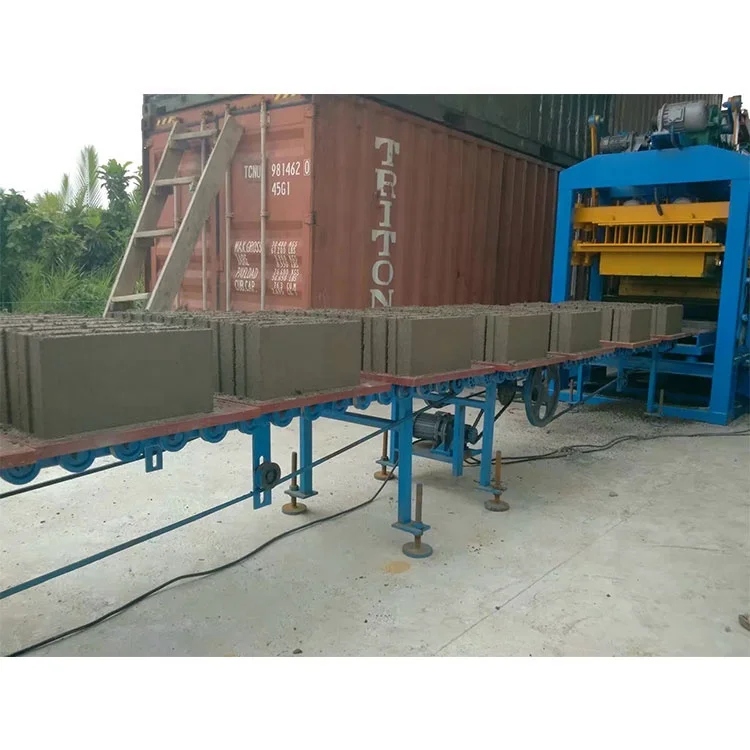
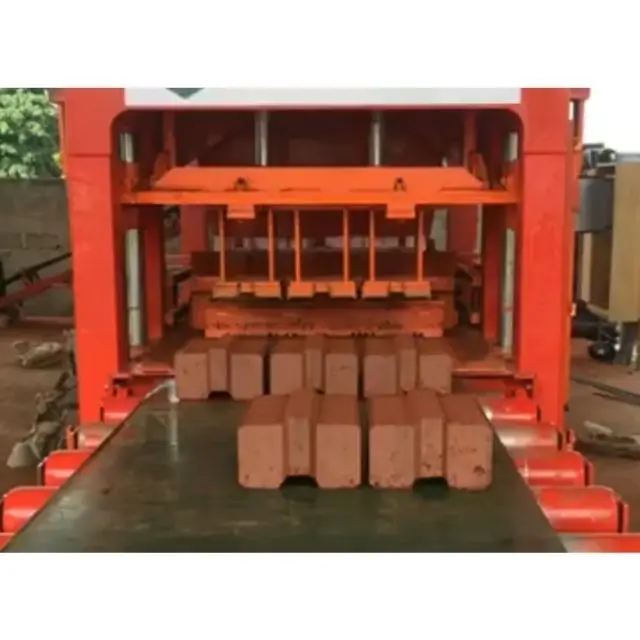 Automatic block machine