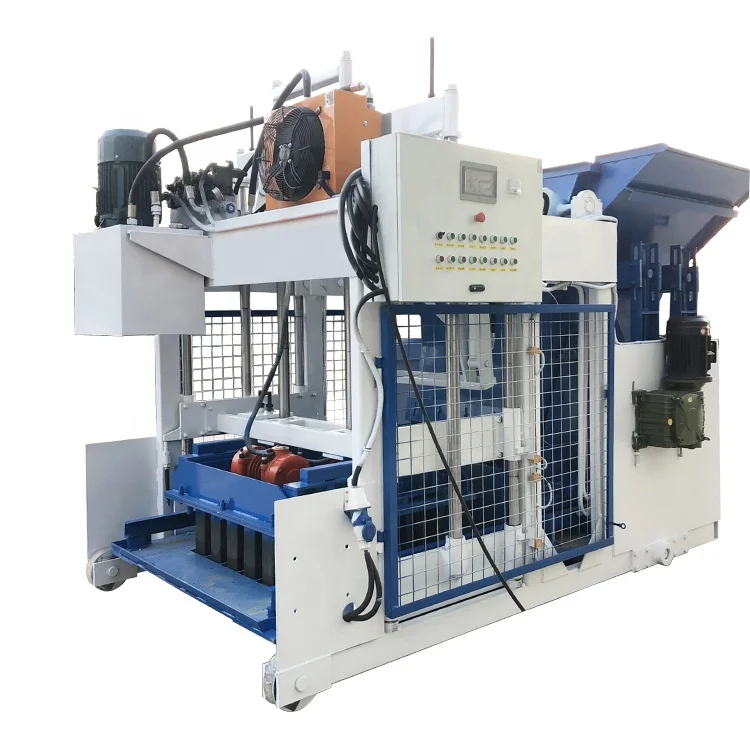
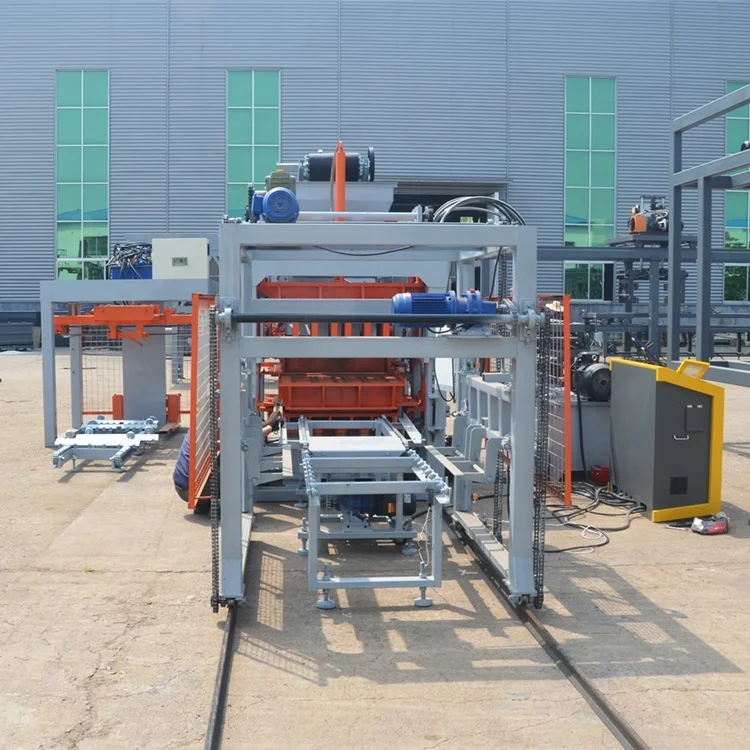
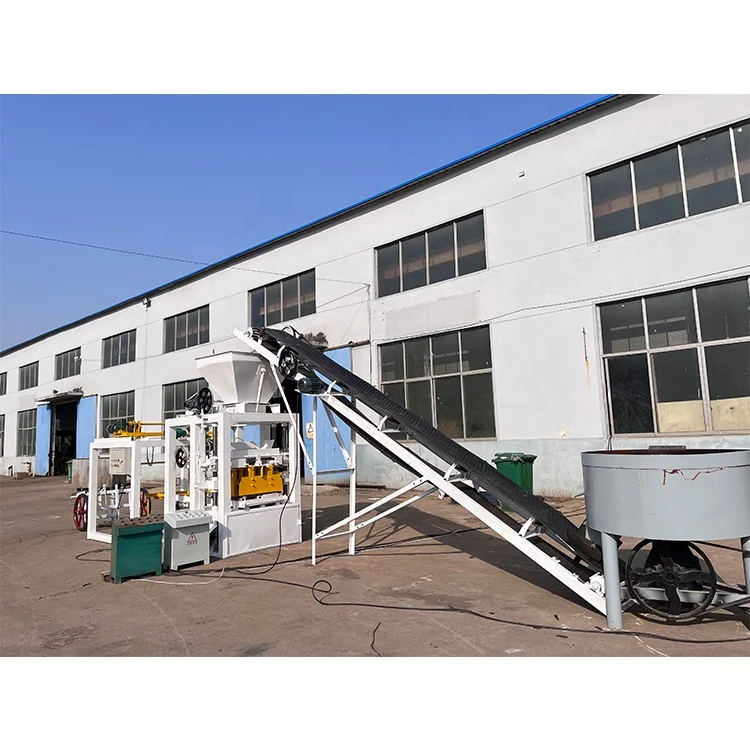
Mid-Tier Semi-Automatic Positioning — The QT4-18 hydraulic press is specified as a complete system with pallet feeder, conveyor and PLC control, so buyers stepping up from manual egg-laying machines know exactly which station is included and which remains manual.
Technical Specifications
| Parameter |
Value |
| Model |
QT4-18 |
| Product Type |
Hydraulic Concrete Block Making Machine |
| Overall Dimensions (L×W×H) |
3900×1600×2300 mm |
| Molding Cycle |
15–25 s (basis not stated in source — confirm block format / material / thickness) |
| Exciting Force (Vibration) |
40–50 kN |
| Rated Power |
24 kW |
| Mixer Model |
JQ350 |
| Pallet Size |
850×550×25 mm |
| Net Weight |
3 T (source value — verify against manufacturer catalog) |
| Applied Products |
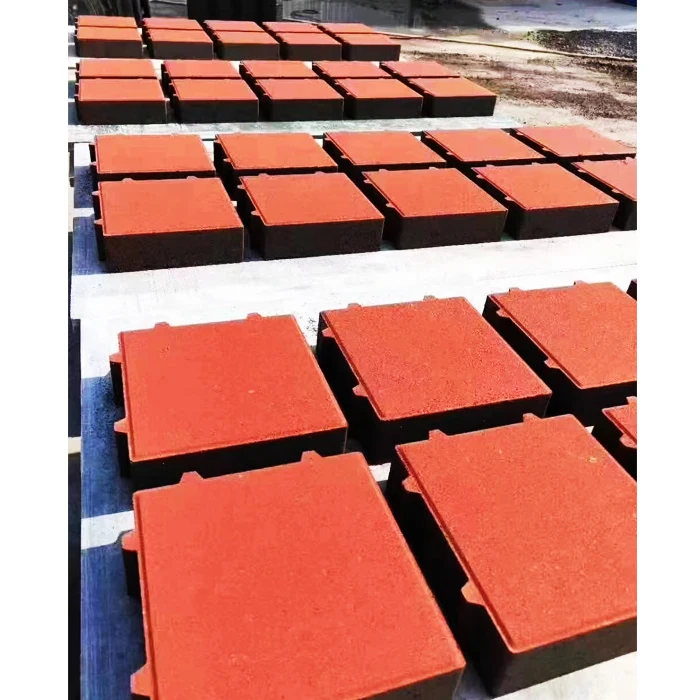
Paver, solid block, hollow block, curbstone (via mould change) |
| Raw Materials |
Crushed stone, sand, cement, dust, fly ash |
| Control System |
PLC control system (language options not stated — confirm display language) |
| Hydraulic Pressure |
Not stated in source — confirm hydraulic station rating |
| Voltage & Frequency |
Not stated in source — confirm target market voltage |
| Automation Level |
Semi-automatic with pallet feeder, brick conveyor, block sweeper |
| Included Equipment |
Block making machine, hydraulic station, PLC control system, pallet feeder, brick conveyor, block sweeper, manual hydraulic trolley, spare parts and tools |
| Output — Hollow 400×200×200 mm |
1,200–1,680 pcs/h (basis: 15–20 s cycle, 4 pcs/mould) |
| Output — Hollow 400×150×200 mm |
1,800–2,400 pcs/h (basis: 15–20 s cycle) |
| Output — Solid Brick 240×115×53 mm |
3,240 pcs/h (basis: 15–20 s cycle) |
| 8-Hour Shift — Hollow 400×200×200 mm |
9,600–13,440 pcs |
| 8-Hour Shift — Hollow 400×150×200 mm |
14,400–19,200 pcs |
| 8-Hour Shift — Solid Brick 240×115×53 mm |
16,200–19,440 pcs |
Application Suitability
| Application |
Material or Output |
| Hollow block production for housing projects |
Crushed stone, sand, cement and fly ash blends; 400×200×200 mm and 400×150×200 mm formats |
| Solid brick manufacturing for masonry walls |
Standard 240×115×53 mm format on local aggregate and cement |
| Paver and curbstone supply for infrastructure |
Interlocking paver and kerb formats via mould change on the same press |
| On-site block production by contractors |
Moderate daily volume with JQ350 mixer feeding the press directly |
What "1,200 Pieces per Hour" Leaves Out About QT4-18 Capacity
A cycle time figure only means something when the block format, mould cavity count and material are stated beside it.
Many quotations list a single headline capacity for the QT4-18 concrete block making machine manufacturer without revealing which block size was assumed. I have seen buyers compare two machines on that one number, only to discover after delivery that the figure was based on a small solid brick while their actual product was a 400×200×200 mm hollow block — where the real output was considerably lower. The QT4-18 specs above break output down by format so that the comparison is honest from the start [NEED_CITE: block machine capacity calculation standards by format]. When the format changes, the pieces-per-mould count and the cycle time both shift, and the daily tonnage shifts with them.

Where the QT4-18 Sits in the Full Machine Range
The Shiyue range runs from small mobile egg-laying units through mid-tier semi-automatic presses like the QT4-18 up to high-capacity fully automatic lines with stacking and cubing. This model occupies the middle ground: hydraulic pressing with PLC control and a pallet feeder, but manual stacking at the end of the line. For a buyer moving away from hand-fed machines, it removes the heaviest labour at the press while keeping the capital outlay within a moderate band.
Automation Level and the Upgrade Path
Semi-automatic on the QT4-18 means the pallet feeder, brick conveyor and block sweeper are included, so operators are not hand-loading pallets or clearing debris between cycles. Stacking and curing rack handling remain manual at this tier. The machine can later be paired with an automatic stacker and cubing station when daily volume justifies the investment, so the press itself does not need to be replaced when the plant grows [NEED_CITE: typical automation upgrade sequences in block plants].
Reading the Specs That Actually Shape Daily Output
The 40–50 kN exciting force and the hydraulic station work together to compact the mix — vibration alone settles the aggregate, while hydraulic pressure locks it at depth. If the pressure is too low for a stiff, low-cement mix, block edges crumble at demoulding. The 850×550×25 mm pallet size dictates how many cavities the mould can carry and therefore how many pieces drop per cycle. The JQ350 mixer must discharge fast enough to keep the press fed; a slower mixer turns the 15–25 s moulding cycle into idle waiting time. Mould change time is not published in the source data, so confirming that figure before order matters when the plant rotates between hollow block and paver formats across the same week.
The Hidden Cost of Skipping the Voltage Conversation
Voltage, frequency and PLC display language are not confirmed in the QT4-18 source specs. I once saw a machine arrive at a West African site wired for a frequency the local grid did not supply; the motor overheated on the first shift, and rewinding took longer than the original sea freight [NEED_CITE: electrical standard mismatches in machinery exports]. Confirming these three items in writing before production starts is a small step that prevents weeks of delay at commissioning. The PLC display language is equally easy to overlook until the operator is staring at an alarm screen they cannot read.
Why Source the QT4-18 Through This Range
Block machinery is the single focus here, so the press, mould, pallet and handling equipment are specified as one matched system rather than assembled from unrelated suppliers. Configuration is set against the buyer’s actual mix design, local aggregate and target block format — not a catalogue default. Mould design covers the formats the local market actually sells, and custom drawings are accepted when standard formats do not match. The automation level is selectable, so a buyer can begin with the QT4-18 semi-automatic setup and add stacking later. Installation, commissioning and operator training are part of the scope, not an afterthought.
Documentation & Verification
- Line layout showing QT4-18 station positions with capacity calculated per block format
- Mould drawing and format list matched to your local market product range
- Pallet specification confirming 850×550×25 mm size against your curing area and forklift
- Voltage, frequency and PLC display language confirmed in writing before production
- Factory test record and packing photographs supplied before container loading
Installation, Commissioning & Support
- Foundation plan sized to the 3900×1600×2300 mm press footprint and dynamic vibration load
- Dedicated power circuit rated for the 24 kW load with confirmed voltage and frequency
- Press arrives with hydraulic station and PLC cabinet separated for container loading
- First-run cycle tuning on your local aggregate and mix design during commissioning
- Operator training covering PLC navigation, mould change procedure and daily maintenance points
- Wear parts list with hydraulic seals and mould liner reorder codes included at dispatch
Before You Request a Quote
Send the block format your market actually buys, the daily volume you need to hit, and the raw materials available within hauling distance of your site. Include your local voltage and frequency so the electrical package is correct from the factory. If you already have pallets, a forklift or a curing yard in place, share the dimensions so the pallet feeder and conveyor are sized to match rather than replaced later.
Frequently Asked Questions
Q: How is QT4-18 capacity calculated and what block format does each figure assume?
A: Each output figure in the spec table is tied to a specific block size and cycle time range. The hollow 400×200×200 mm figure assumes a 15–20 s cycle with four cavities per mould. When the format or cycle changes, the pieces-per-hour number changes with it, so always match the capacity line to your actual product before comparing machines.
Q: Where does the QT4-18 sit compared to semi-automatic and fully automatic models?
A: It is the mid-tier semi-automatic press. The pallet feeder and conveyor are included, but stacking remains manual. Buyers who need automatic stacking and cubing move to a higher tier in the range, while those on a tighter footprint may choose a smaller semi-automatic or mobile machine instead.
Q: What voltage, frequency and PLC language options are available for my market?
A: These parameters are confirmed during the inquiry stage, not assumed from a catalogue default. You supply your local grid voltage, frequency and preferred PLC display language, and the electrical package is built to match before the machine enters production.
Q: What plant footprint and supporting equipment does the QT4-18 require?
A: The press itself occupies roughly 3.9 m by 1.6 m, plus space for the JQ350 mixer, pallet rack and curing yard. The included pallet feeder and brick conveyor reduce manual handling at the press, but you still need room for pallet circulation and block stacking downstream.
Q: Can I start with the QT4-18 semi-automatic configuration and upgrade later?
A: Yes. The press can be paired with an automatic stacker and curing rack handling system once daily volume justifies the added investment. The hydraulic station and PLC platform remain in place, so the upgrade adds stations around the press rather than replacing it.

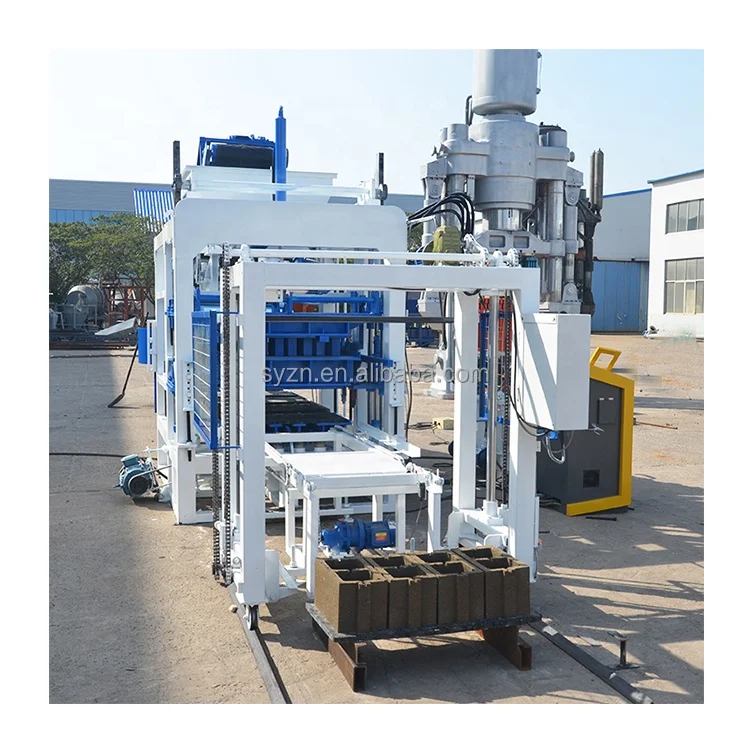
 High quality block machine