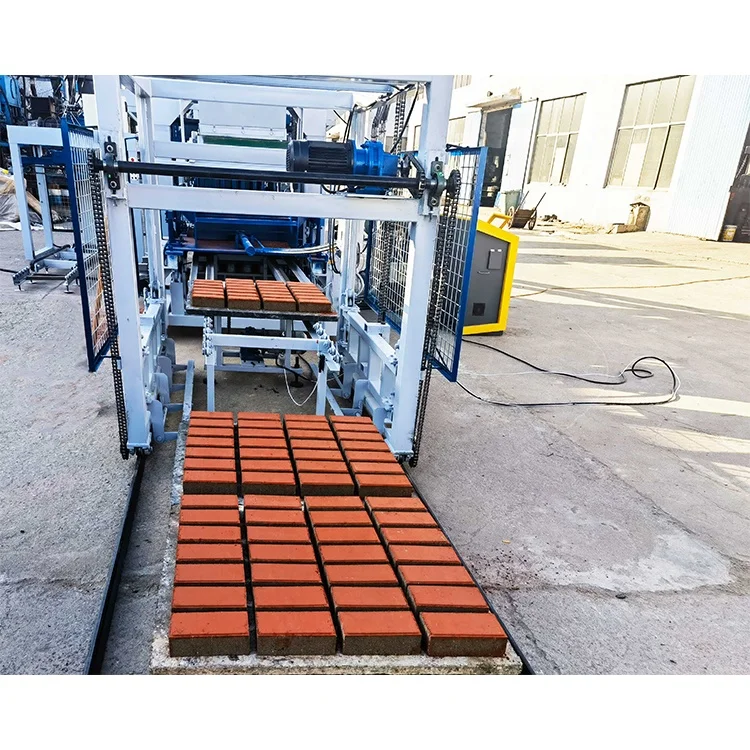
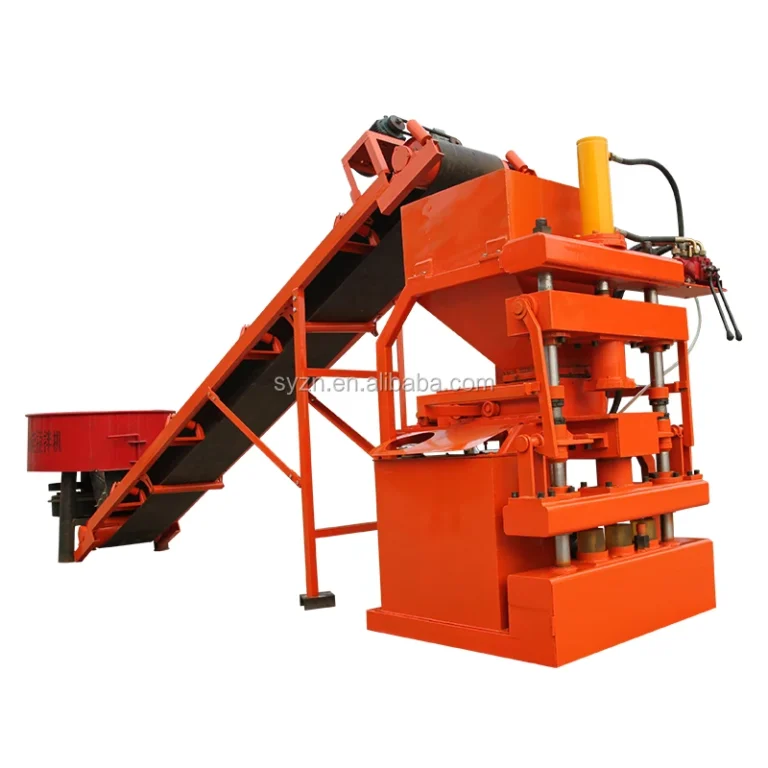
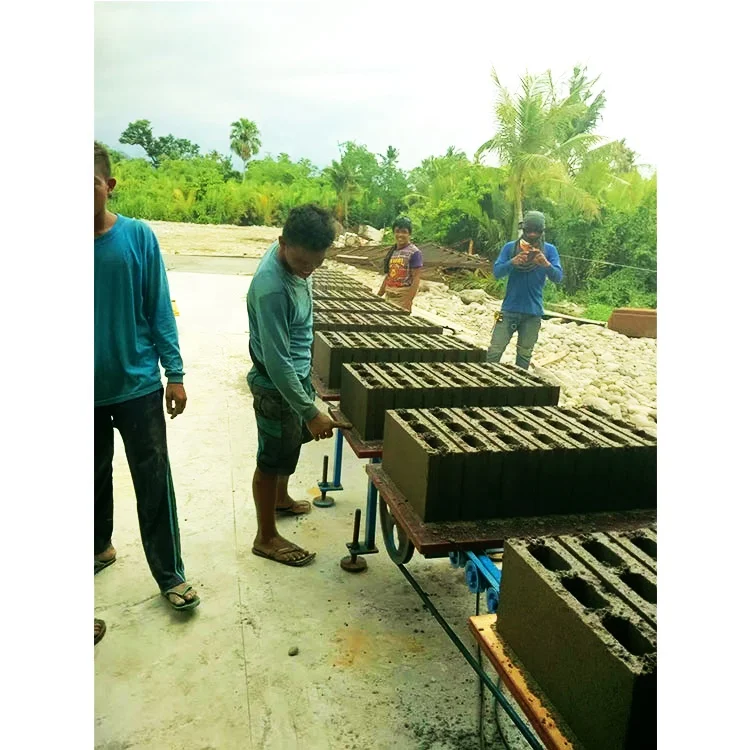
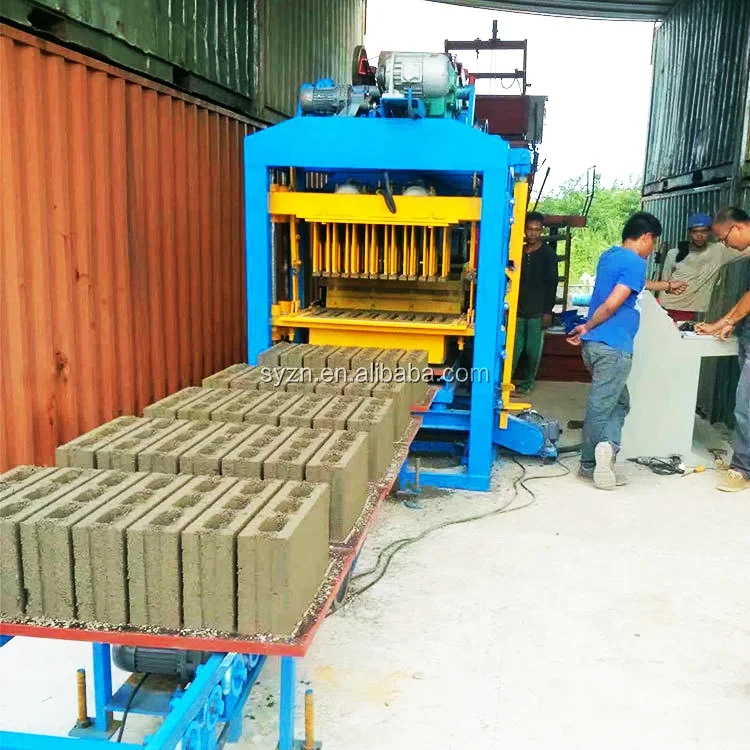
Matched System Design — the QT4-24 is specified as one coordinated press, mould, pallet and handling setup rather than a standalone machine dropped into an unprepared workshop.
Technical Specifications
| Parameter |
Value |
| Model |
QTJ4-24 |
| Product Type |
Semi-Automatic Concrete Block Making Machine |
| Overall Dimensions (L×W×H) |
2060×1730×2580 mm |
| Molding Cycle |
24 s |
| Vibration Frequency |
4200 r/min |
| Exciting Force |
35.5 kN |
| Rated Power |
14.25 kW |
| Mixer Model |
JQ350 |
| Pallet Size |
850×450×20 mm |
| Total Weight |
1800 kg |
| Hydraulic System |
Equipped (high pressure, stable operation) |
| Vibration Type |
Bed mould vertical vibration + upper mould compression vibration |
| Automation Level |
Semi-automatic |
| Standard |
CE |
Application Suitability
| Application |
Material or Output |
| Hollow block production (8 inch, 6 inch) |
Crushed stones, sand, cement, fly ash; 4 pcs/mould, 480 pcs/h (basis: 390×190×190 mm hollow block) |
| Hollow block production (alternate format) |
5 pcs/mould, 600 pcs/h (basis: 400×150×200 mm hollow block) |
| Solid brick production |
18 pcs/mould, 2100 pcs/h (basis: 240×115×53 mm solid brick) |
| Paving block production |
Concrete mix with crushed stone and cement; format-dependent cycle |
| On-site contractor production |
Local aggregate, cement and sand for housing project blocks |
Why "480 Blocks per Hour" Can Mislead a Buyer
Every output figure on this page states the exact block format it was measured against.
A catalogue that quotes a single hourly number rarely tells you which block size, which mix, or which pallet cycle that number assumes. When the machine arrives and the buyer starts running their actual 6-inch hollow block instead of the test format, daily output can fall well short of the quoted expectation. The Semi-Automatic Block Machine manufacturer approach here is to tie every capacity claim to a named format and mould — so the buyer can calculate real shift output before placing an order. [NEED_CITE: common block machine capacity misrepresentation in trade quotations]

Where the QT4-24 Sits in the Complete Range
Buyers stepping up from manual egg-laying machines or small mobile presses will find the QT4-24 occupies a clear middle tier. It delivers semi-automatic pallet handling and a fixed 24-second molding cycle without the capital outlay of a fully automatic stacking and cubing line. For a first block plant, this tier keeps initial investment contained while still producing hollow blocks and solid bricks at volumes that supply a local construction market. The machine footprint — just over two metres long — fits inside a standard workshop bay.
Choosing Between Semi-Automatic and Full Automatic
The decision hinges on pallet handling and stacking labour, not just press speed. In a semi-automatic setup, operators move cured pallets to the drying area by hand or with a basic cart system. When daily output climbs or shift labour becomes hard to source, the logical step is an automatic pallet feeder and stacker. The QT4-24 is designed so that upgrade path remains open — the press itself does not need replacement, only the upstream and downstream stations. [NEED_CITE: block plant automation upgrade paths from semi-automatic to full automatic]
What the Vibration and Hydraulic Numbers Mean on the Shop Floor
The 4200 r/min vibration frequency and 35.5 kN exciting force work together with the hydraulic station to compact the mix inside the mould cavity. Higher vibration frequency alone does not guarantee denser blocks — the force must travel through the full depth of the mould, which is why the QT4-24 uses both bed mould vertical vibration and upper mould compression vibration. When the mix contains a high proportion of fly ash or fine dust, the dual-vibration arrangement keeps the block face smooth and the core dense. The 14.25 kW rated power covers both the vibration motors and the hydraulic pump running simultaneously through the 24-second cycle. Pallet size at 850×450×20 mm was chosen to match standard curing rack widths in small to medium plants, so the buyer does not need to custom-build drying racks around an odd pallet dimension.
The Cost of Ignoring Local Aggregate Before Ordering
A block machine configured for clean, graded crushed stone will struggle the moment the buyer’s local sand carries high clay content. The mix sticks to the mould, block corners break during stripping, and the operator slows the cycle to compensate — losing the very output the quotation promised. This problem is not a machine defect; it is a specification gap. Every Semi-Automatic Block Machine manufacturer worth working with should ask for a sample of the buyer’s actual aggregate before finalising the vibration force and mould clearance. [NEED_CITE: effect of clay content in sand on concrete block compressive strength]
What Sets the Procurement Process Apart
Block machinery is the single product focus here, so the QT4-24 is never quoted as a bare press. Mould, pallet, mixer and handling stations are specified together against the buyer’s block format and local material. Machine configuration is adjusted to the buyer’s actual mix design rather than a catalogue default — meaning the vibration force and hydraulic pressure are matched before production starts. Mould drawings are reviewed with the buyer so that every block size the local market demands is covered in the first shipment. Voltage, frequency and PLC display language are confirmed before the machine enters assembly, eliminating the most common commissioning delays. The documentation package — including factory test records run on the buyer’s target format — arrives with the machine, not weeks later.
Documentation & Verification
- Machine specification sheet with vibration force and pallet size matched to your block format
- Mould drawing and complete format list showing cycle time for each block size
- Factory test record produced on your target hollow block or solid brick before dispatch
- Voltage, frequency and control language confirmation documented before assembly begins
- Hydraulic and electrical schematic for local maintenance team reference
- CE declaration and operation manual included with shipment
Installation, Commissioning & Support
- Foundation pad sized to the 2060×1730 mm footprint with anchor bolt template supplied
- Dedicated 14.25 kW circuit with voltage and frequency confirmed for your site
- Machine shipped in assembled sections for straightforward workshop positioning
- First-run parameter setting on your local aggregate mix during on-site commissioning
- Operator training covering mould change, pallet loading and daily maintenance routines
- Wear parts list and mould inventory sheet provided for first-year planning
What to Include in Your Inquiry
To size the QT4-24 correctly for your production line, share the exact block formats you plan to sell, the daily volume you need per format, and the raw materials available locally — including sand source and any fly ash or dust you intend to use. Confirm your workshop’s voltage and frequency, the language your operators will need on the control panel, and the pallet handling method you currently use. This information lets the configuration proposal reflect real shift output rather than a generic catalogue figure.
Frequently Asked Questions
Q: How is the QT4-24 positioned within the full block machine range?
A: It sits as a semi-automatic entry point between manual egg-laying machines and fully automatic lines. Buyers who need reliable hollow block output without the capital cost of automatic stacking and cubing typically start here. The press design allows a later upgrade to higher automation tiers without replacing the main machine.
Q: What block formats can the QT4-24 produce and what is the realistic output?
A: The machine handles 390×190×190 mm hollow blocks at 480 pcs/h, 400×150×200 mm hollow blocks at 600 pcs/h, and 240×115×53 mm solid bricks at 2100 pcs/h. Each figure is tied to a specific mould, so your actual daily output depends on the format you run most often.
Q: What voltage and frequency options are available?
A: Voltage and frequency are configured to match the buyer’s local supply before production begins. Control panel language is confirmed at the same stage so operators can read displays and fault codes in their own language from the first day of commissioning.
Q: What plant footprint and supporting equipment does the QT4-24 need?
A: The press itself occupies roughly 2060×1730 mm, plus space for the JQ350 mixer and pallet curing area. Pallet size is 850×450×20 mm, so curing racks and forklift dimensions should match. Raw material feeding and stacking can start manual and expand later.
Q: Can I upgrade from semi-automatic to higher automation later?
A: Yes. The QT4-24 press can be fitted with automatic pallet feeding, stacking and cubing stations as production volume grows. The core machine and moulds remain in use — only the upstream and downstream handling equipment is added.

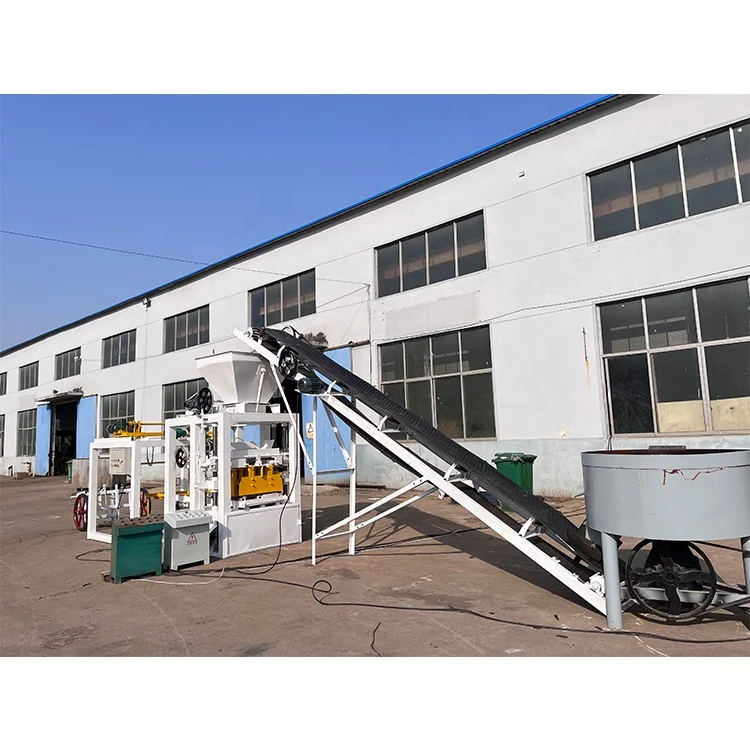
 High quality block machine