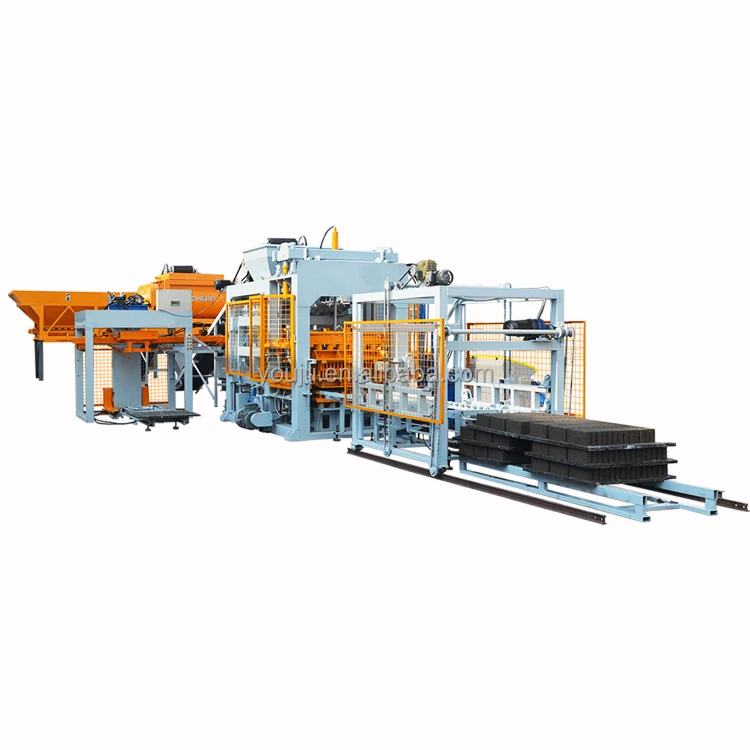
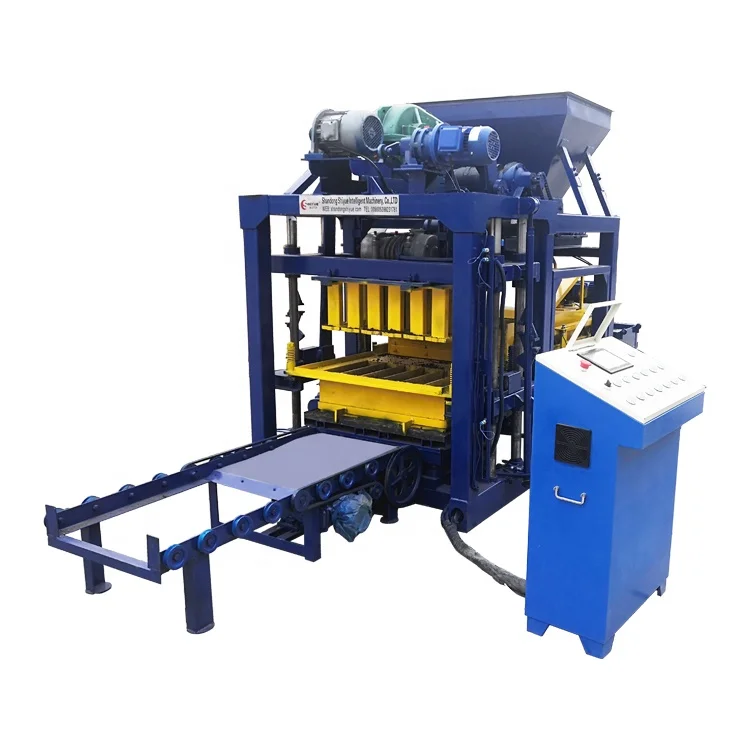
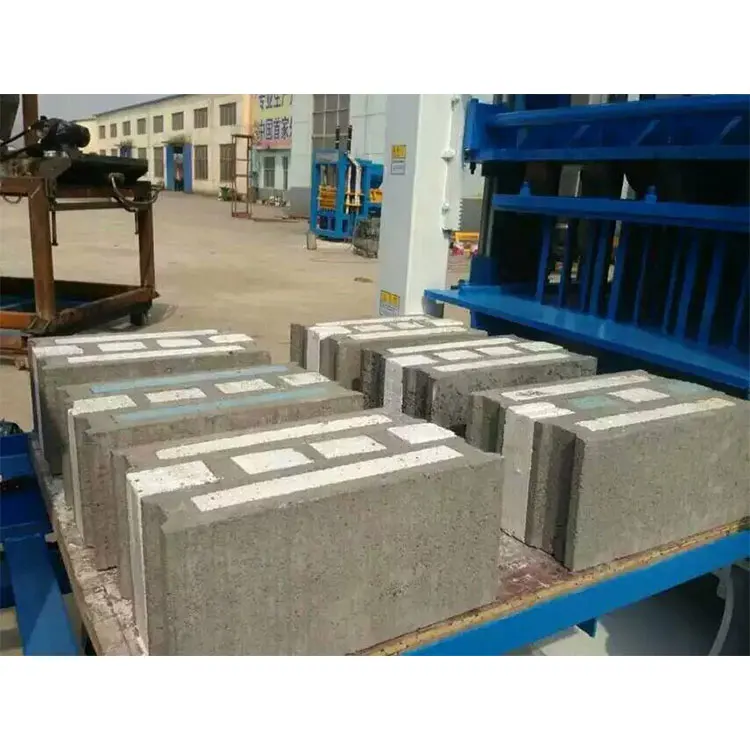
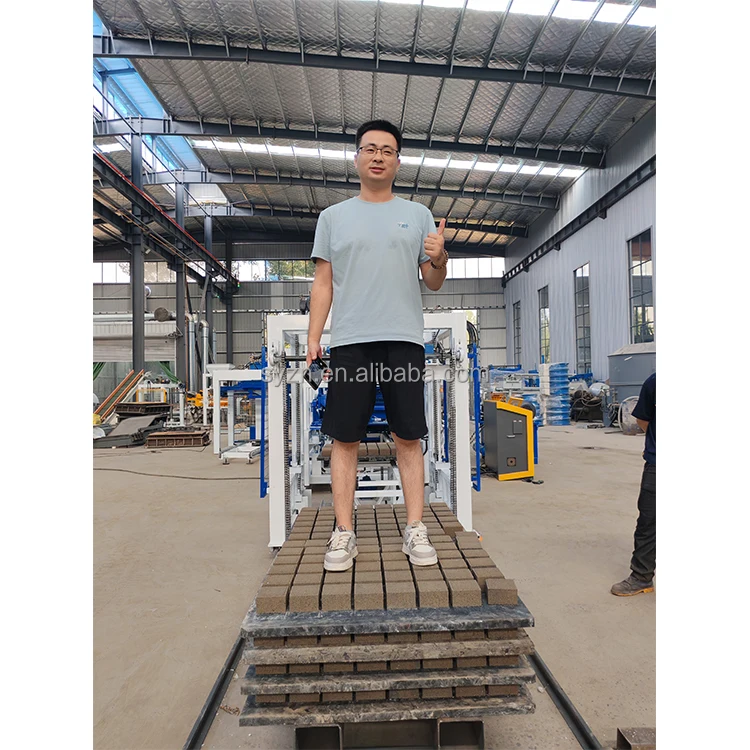
System-Matched Configuration — QT4-18 block machine, mould, pallet and handling specified as one coordinated production tier, not assembled from disconnected components.
Technical Specifications
| Parameter |
Value |
| Model |
QT4-18 |
| Product Type |
Automatic Block Making Machine |
| Overall Dimensions |
2500 × 1750 × 2200 mm |
| Rated Pressure |
16 MPa |
| Vibration Form |
Platform Vibration |
| Pallet Size |
950 × 550 mm |
| Molding Cycle |
18–25 s (basis not stated in source — confirm block format / material / thickness) |
| Overall Power |
27.5 kW |
| Control System |
PLC with frequency converter |
| Automation Level |
Automatic (pallet feeder, block conveyor, hydraulic station) |
| Material Feeder |
Distribution belt hopper |
| Mold Lifting Mechanism |
Double-sided synchronous gears |
| Electrical Components |
Schneider internationally renowned brands |
| Compatible Support Equipment |
JQ500 pan mixer, 8 m / 6 m belt conveyor, stacker, block clamper, cement silo, batching plant |
| Standards |
CE compliant documentation available |
Application Suitability
| Application |
Material or Output |
| Hollow block production |
Crushed stone, sand, cement, fly ash blends |
| Solid block production |
Dense aggregate and cement mixes |
| Paving block production |
Fine aggregate with pigment and cement |
| Interlocking and kerbstone formats |
Specialty mixes with mold change on the same platform |
Why "Cycles per Hour" Means Nothing Without the Block Format
A cycle count only becomes real output when tied to the exact block dimensions and wall thickness you intend to produce.
I have watched buyers compare two machines on a single number — cycles per shift — and choose the one with the higher figure, only to discover after commissioning that the number assumed a thin paving block while their market demands a 200 mm hollow block with a longer press and cure window. The QT4-18 molding cycle spans 18 to 25 seconds, and where your product sits inside that range depends entirely on the format, the mix, and the density target. [NEED_CITE: relationship between block geometry and vibration dwell time] An Automatic Block Making Machine manufacturer should always state capacity against a named block drawing, not a generic stroke count.

Where the QT4-18 Sits in the Output Tier Range
The QT4-18 occupies the mid-range automatic tier, positioned for producers moving past semi-manual operation but not yet requiring high-capacity continuous lines. Buyers entering their first automated block plant typically start here because the platform vibration and PLC control remove the heaviest manual variables while keeping the capital outlay within reach of a growing operation. The 950 × 550 mm pallet footprint is small enough to cure in a modest yard yet large enough to mold four to six standard hollow blocks per stroke depending on the cavity layout chosen.
Automation Boundaries You Should Understand Before Ordering
This automatic block making machine handles pallet feeding, material distribution, vibration pressing, and block conveyance out of the press area. What remains on your side is the decision on stacking method — manual, semi-automatic clamp, or full cubing line — and how cured product moves from the rack to the dispatch area. [NEED_CITE: automation tier definitions in concrete block production] Specifying the boundary clearly at quotation stage prevents the common frustration of assuming the line ends at stacking when the quotation stopped at the conveyor.
Platform Vibration, Pressure, and What They Mean for Block Density
The 16 MPa rated pressure works together with platform vibration to compact the mix from below, driving air voids out and forcing aggregate particles into tight contact. Higher pressure alone does not guarantee strength; the vibration frequency must match the gradation of your local aggregate so that fines fill the spaces between coarse particles. The double-sided synchronous gear mold lifting mechanism keeps the mold box level during withdrawal, reducing edge chipping on freshly pressed blocks — a detail that matters more as block height increases. Electrical components from Schneider and a PLC with frequency converter allow the operator to adjust vibration duration and pressure dwell in small increments, which is essential when switching between a lightweight hollow block mix and a dense paving mix on the same shift. The distribution belt hopper feeds material evenly across the mold cavity, reducing density variation from one side of the pallet to the other.
The Hidden Cost of Skipping Voltage and Frequency Confirmation
Arriving at a job site and discovering the local supply is 415 V / 60 Hz when the motor and PLC were wound and programmed for 380 V / 50 Hz can stall commissioning for weeks. Transformer rental, rewinding delays, and idle labor accumulate fast. [NEED_CITE: voltage and frequency standards by export market] Locking in the exact supply specification, the control cabinet wiring diagram, and the PLC display language during contract stage — not after production has started — is the single most effective step to protect your timeline.
Why Source This Machine Here
Block machinery is the sole focus of this production facility, which means the QT4-18 press, its mold, the 950 × 550 mm pallet, and the upstream mixer and conveyor are specified as a matched set rather than pulled from unrelated catalogs. Configuration starts from your actual mix design and local aggregate, not a default brochure setting. Custom mold design is available to buyer drawings, so the formats your market actually sells are the ones the machine is set up to run first. Automation level is selectable, allowing a buyer to begin with automatic pressing and manual stacking, then add a cubing system later without replacing the press. Installation support includes on-site commissioning and operator training, so the crew running the machine on day one has already practiced mold change and cycle adjustment under supervision.
Documentation & Verification
- Line layout showing QT4-18 placement with pallet flow and curing yard dimensions
- Capacity calculation sheet naming the block format and cycle time assumed
- Mold drawing and format list with cavity count per pallet for each block type
- Hydraulic and electrical schematic matching the confirmed voltage and frequency
- Factory test record on your specified mix before dispatch
Installation, Commissioning & Support
- Foundation pad sized to the 2500 × 1750 mm footprint with anchor bolt template provided
- Dedicated 27.5 kW circuit with breaker rating confirmed against local code
- Machine shipped partially dismantled; reassembly and leveling completed on site
- PLC language and frequency converter parameters set to operator preference during commissioning
- Mold change procedure trained with double-sided synchronous gears under supervised production runs
- Wear parts list covering hydraulic seals, vibration springs, and mold liner plates
Before You Send an Inquiry
Tell us the exact block formats your market moves — dimensions, wall thickness, and target compressive strength — along with the daily volume you need to sustain. Share your local aggregate source and any existing mixer or curing rack setup so the line layout accounts for equipment already on your floor. Confirm the site voltage, frequency, and the language your operators read on a screen, and we will build the configuration around those facts.
Frequently Asked Questions
Q: How do I confirm the real daily output of the QT4-18 for my block format?
A: Provide the exact block drawing — length, width, height, and wall thickness — along with your target mix density. We return a capacity calculation that states the molding cycle and pallet count for that specific format, not a generic strokes-per-hour figure. This way your production plan is built on a number tied to your actual product.
Q: What happens if my site voltage differs from the standard machine configuration?
A: We confirm voltage, frequency, and phase during contract stage and configure the motor winding, transformer, and PLC power supply to match. The control cabinet is wired and labeled to your site standard before the machine leaves the factory, so your electrician connects to a panel built for your supply, not an adapter added on site.
Q: Does the 950 × 550 mm pallet fit my existing curing yard and forklift?
A: That pallet size is common for mid-tier block plants, but you should measure your curing rack spacing and forklift tine width before confirming. If your yard is set up for a different pallet dimension, we discuss whether a mold adjustment or a rack modification is the simpler path to keep handling efficient.
Q: What does the QT4-18 automate, and what still needs manual labor?
A: The machine automates pallet feeding, material distribution, vibration pressing, and block conveyance. Stacking and curing rack handling depend on the automation level you select. You can start with manual stacking and add an automatic cubing unit later, since the press and conveyor are already configured to feed downstream equipment.

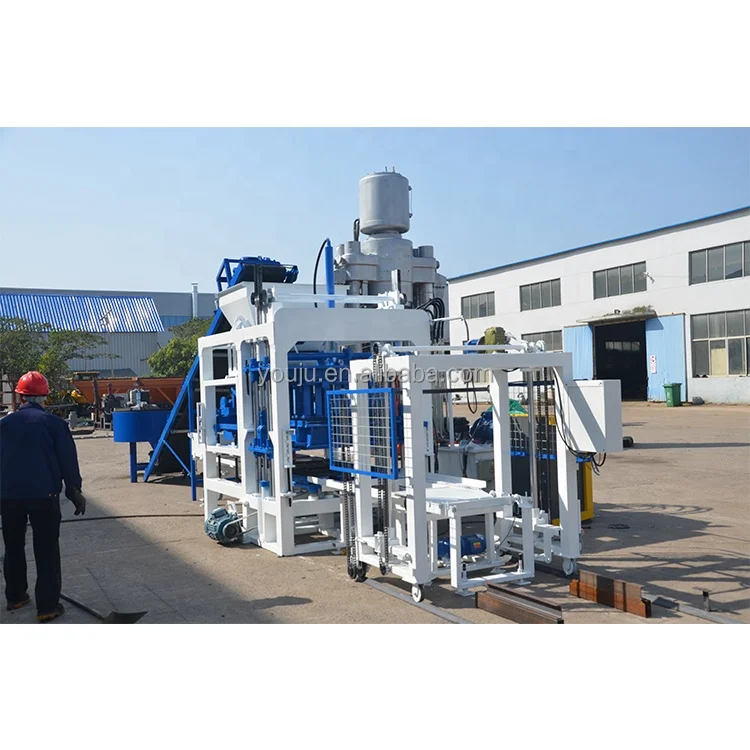
 Automatic block machine