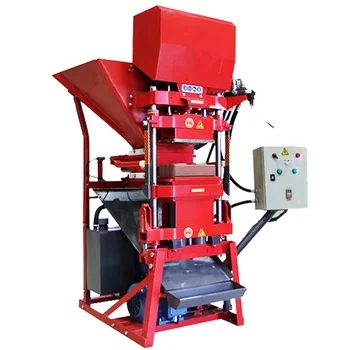
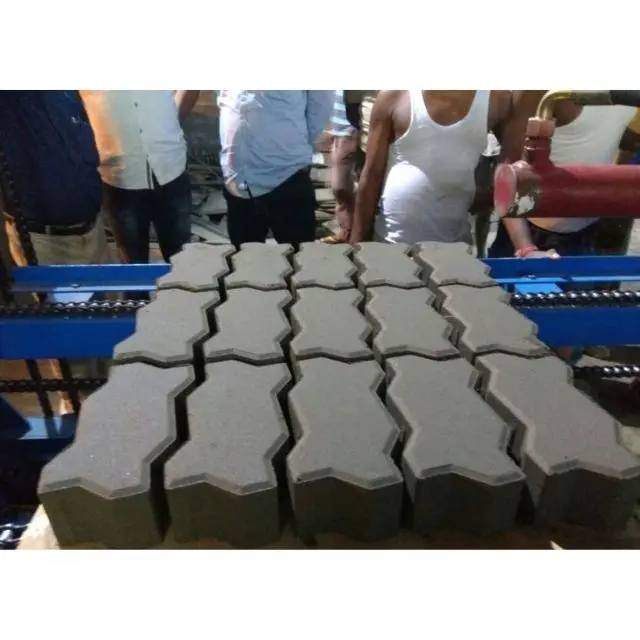
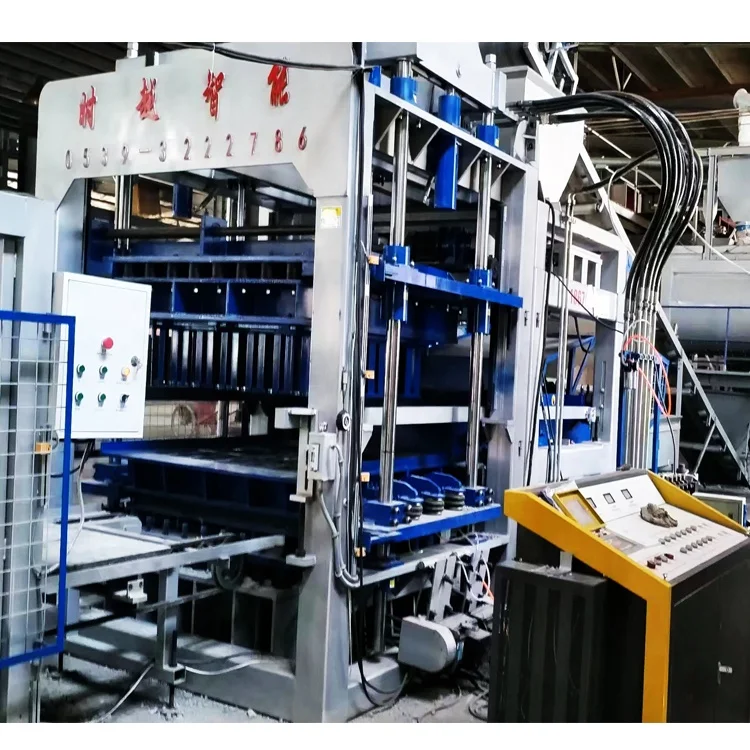
Complete Range Positioning — the QTJ4-25 anchors the semi-automatic tier, letting first-time buyers start here and scale through mould changes instead of replacing the entire press.
Technical Specifications
| Parameter |
Value |
| Model |
QTJ4-25 |
| Product Type |
Semi-Automatic Concrete Block Making Machine |
| Overall Dimensions (L×W×H) |
3060×1730×2580 mm |
| Net Weight |
4 T |
| Vibration Force |
45 kN |
| Cycle Time |
25 s |
| Pallet Size |
850×550 mm |
| Block Height Range |
40–280 mm |
| Mixer Model |
JQ500 |
| Belt Conveyor Length |
8 m |
| Workshop Area Requirement |
50–150 m² |
| Material Storage Area |
300–500 m² |
| Motor Brand |
Siemens or ABB |
| Automation Level |
Semi-automatic |
| Output (400×200×200 mm hollow block) |
480 pcs/h, 3840 pcs/8h |
| Output (400×150×200 mm hollow block) |
600 pcs/h, 4800 pcs/8h |
| Output (400×100×200 mm hollow block) |
840 pcs/h, 6720 pcs/8h |
| Output (240×115×53 mm solid brick) |
2880 pcs/h, 23040 pcs/8h |
| Voltage & Frequency |
380V, 3-phase, 50Hz (customizable) |
| Mould Change System |
Manual, interchangeable formats |
| Assembly State |
Fully assembled, nude or plastic film packing |
| Warranty |
1 year (excluding wearing parts) |
Application Suitability
| Application |
Material or Output |
| Hollow block production |
Crushed stone, sand, cement, fly ash aggregate |
| Solid brick production |
Quarry dust, river sand, cement blend |
| Paving block production |
Colored face mix with standard base aggregate |
| Interlocking block production |
Graded aggregate with cement binder |
| Curbstone and kerb production |
Coarse aggregate, higher cement content |
| Grassed and revetment brick |
Standard concrete mix with void geometry |
| On-site contractor production |
Locally sourced sand and gravel |
| Small plant startup |
Multi-format output from a single press |
Why "Pieces per Hour" Without a Format Is Meaningless
Every output figure on this page is tied to a specific mould size, because that is the only honest way to quote capacity.
A semi-automatic block machine for sale listed at "up to 3,840 blocks per shift" sounds solid until you learn that number assumes 400×200×200 mm hollow blocks. Switch to a smaller solid brick and the count climbs past 23,000. Switch to a large paver and it drops. Buyers who skip this step end up with a machine that cannot meet the daily volume their business plan depends on. [NEED_CITE: block format assumptions in capacity quotations across the industry]
I remember quoting a West African buyer who needed 6,000 hollow blocks daily. The machine he almost bought from another supplier showed "6,000 per day" on the brochure — based on a 100 mm cavity block he had no market for. When we re-ran the numbers on his actual 200 mm hollow format, the daily figure was half that. Catching this before the order saved him from a machine that would never pay for itself.

Where the QTJ4-25 Sits on the Full Range
The Shiyue range runs from mobile egg-laying units at the bottom through high-capacity fully automatic lines at the top. The QTJ4-25 sits firmly in the semi-automatic block machine tier — above mobile machines in output consistency and below automatic presses in labour requirement. For a buyer surveying options, this model answers a specific question: can I produce commercially viable volumes with a modest workshop footprint and grow into new formats by swapping moulds rather than buying a second press?
When to Stay Here and When to Step Up
If your daily target stays within a few thousand hollow blocks or a few tens of thousands of solid bricks, and you are comfortable with manual pallet handling, this concrete block making machine manufacturer tier keeps investment lean. The moment you need multiple shifts of continuous running with automatic stacking, the next tier up removes operator fatigue from the equation. The key decision is not about the press itself but about how much labour you want surrounding it. [NEED_CITE: automation tier selection for block plant investment]
How Vibration, Pressure and Cycle Time Shape the Block
The 45 kN vibration force and 25-second cycle time were paired for a reason. In block making, vibration compacts the aggregate while hydraulic pressure holds the mould box steady. Too little vibration and the block crumbles at the edges; too much and the fine material separates from the coarse. At 25 seconds the QTJ4-25 gives a mid-range mix enough time to consolidate without bottlenecking output. The 850×550 mm pallet size means each cycle produces a manageable batch that one operator can move to the curing area with a standard hand trolley or small forklift. Matching that pallet dimension to your existing curing racks prevents the common problem of blocks sitting on the floor because the rack slots are the wrong width.
The Hidden Cost of Skipping Electrical Confirmation
Voltage, frequency and control language sound like paperwork details until the machine sits in a container on the dock and the local electrician says the supply is 415V 60Hz. The QTJ4-25 ships with motors configurable to the destination market, but only if the buyer confirms the exact specification before production starts. [NEED_CITE: voltage and frequency standards by export market]
I once shipped a machine to a job site where the buyer assumed 380V 50Hz was universal. The local grid was 440V 60Hz. The motor burned through its insulation in the first hour. Three weeks of rewinding and re-shipping before the line could run. That single oversight cost more than the price difference between two suppliers. Now every order I handle locks down voltage, frequency and display language before the first weld.
Why Buyers Source This Tier Through Shiyue
Block machinery is the single focus here, which means the press, mould, pallet and conveyor are specified as one matched system. The QTJ4-25 configuration starts from your actual mix design and local aggregate, not a catalogue default. Mould design covers every format your market sells, including custom drawings when a buyer needs a shape no standard catalogue carries. The semi-automatic level is selectable, so a plant can start with manual pallet handling and add automatic feeding later without replacing the press. Installation support includes operator training on the specific block formats the buyer intends to produce first.
Documentation & Verification
- Line layout and capacity calculation stating the block format assumed for each output figure
- Machine specification sheet with motor brand and voltage confirmed to destination market
- Mould drawing and format list included with quotation, custom designs to buyer drawings
- Factory test record on buyer’s target block format before dispatch
- Packing photographs and customs documentation support for smooth clearance
Installation, Commissioning & Support
- Workshop floor must support 4 T static load across the 3060×1730 mm footprint with level tolerance
- Dedicated 3-phase circuit matching confirmed voltage and frequency before the QTJ4-25 arrives
- Machine ships fully assembled; only belt conveyor and mixer require on-site positioning
- First production run supervised to dial in vibration time against the buyer’s aggregate blend
- Operator training covers mould change procedure, daily greasing points and belt tension checks
- Wear parts list with reorder codes provided so spares arrive before the first change-out is due
What We Need From You to Quote Accurately
To size the QTJ4-25 correctly, tell us the exact block formats your market demands, the daily volume target for each, and the raw materials available locally — sand type, aggregate grading, cement source. Confirm your site voltage, frequency and preferred control display language. Share your workshop dimensions and curing area layout so we can match pallet size to your existing racks and forklift. If you have a specific project deadline, state the date so we can align production and shipping to your timeline.
Frequently Asked Questions
Q: How is the output capacity calculated and which block format does each figure assume?
A: Every output number on this page is paired with a specific mould dimension. The 3,840 pieces per 8-hour shift assumes 400×200×200 mm hollow blocks; the 23,040 figure assumes 240×115×53 mm solid bricks. Your actual daily volume depends on the formats you plan to produce and the cycle time each mould requires.
Q: Where does the QTJ4-25 sit on the full Shiyue range and when should I step up?
A: This model anchors the semi-automatic tier — above mobile egg-laying machines in consistency, below fully automatic lines in throughput. Step up when you need continuous multi-shift running with automatic stacking and cubing, or when daily volume exceeds what manual pallet handling can keep pace with.
Q: What voltage, frequency and control language options are available for my market?
A: Motors and controls are configurable to the destination country’s grid standard. We confirm exact voltage, phase, frequency and display language before production begins. This step prevents the commissioning delays I have seen when a machine arrives matched to the wrong electrical supply.
Q: Which mould formats come with the QTJ4-25 and how do I order a custom shape?
A: Standard moulds cover hollow block, solid brick, paving block, interlocking block and curbstone formats. Custom moulds are designed to your drawings or market samples. We provide a mould drawing and format list with the quotation so you can verify dimensions before tooling begins.
Q: What workshop footprint and curing area do I need to run this machine at rated capacity?
A: The press itself needs 50–150 m² of workshop space, plus 300–500 m² for material storage. Curing area depends on the 850×550 mm pallet size and your daily output target. Share your site plan and we will lay out pallet flow from press to curing rack to finished stack.

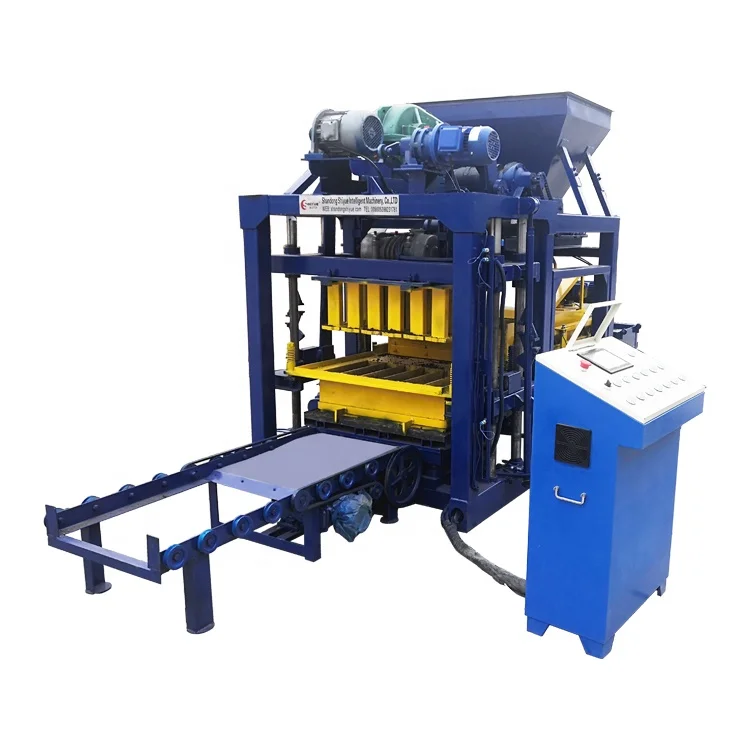
![QTJ4-25 Automatic Block Making Machine – Manufacturer 字符数:53(含空格) 结构匹配:0 → [品类词] for [应用或物料] – [站点修饰词],其中机型号前置保留(规则2) 站点修饰词:Manufacturer(全品类目录类角色,shiyueblockmachine.com)](https://shiyueblockmachine.com/wp-content/uploads/2026/04/H82ccaca512804203b7142f1a1233c7bf1.webp) Automatic block machine
Automatic block machine