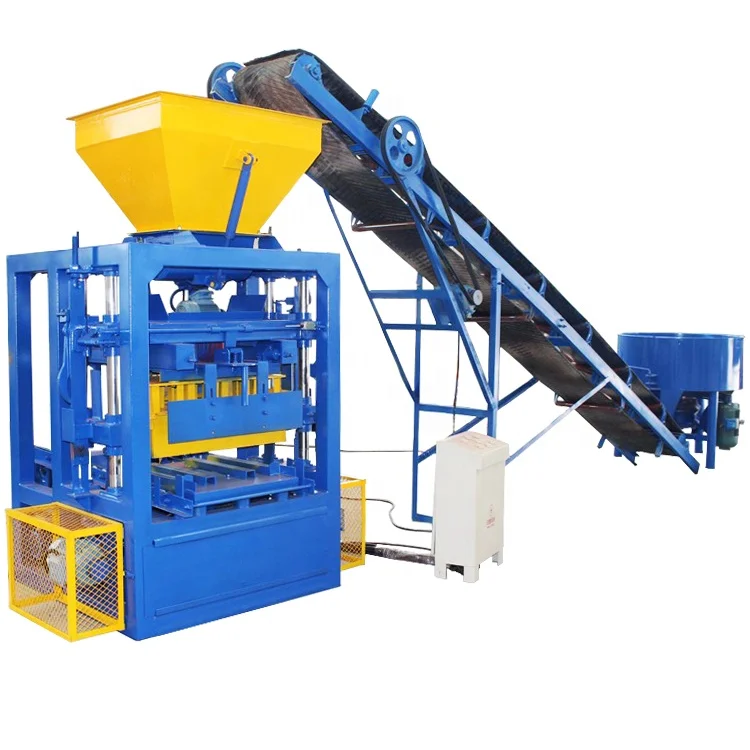
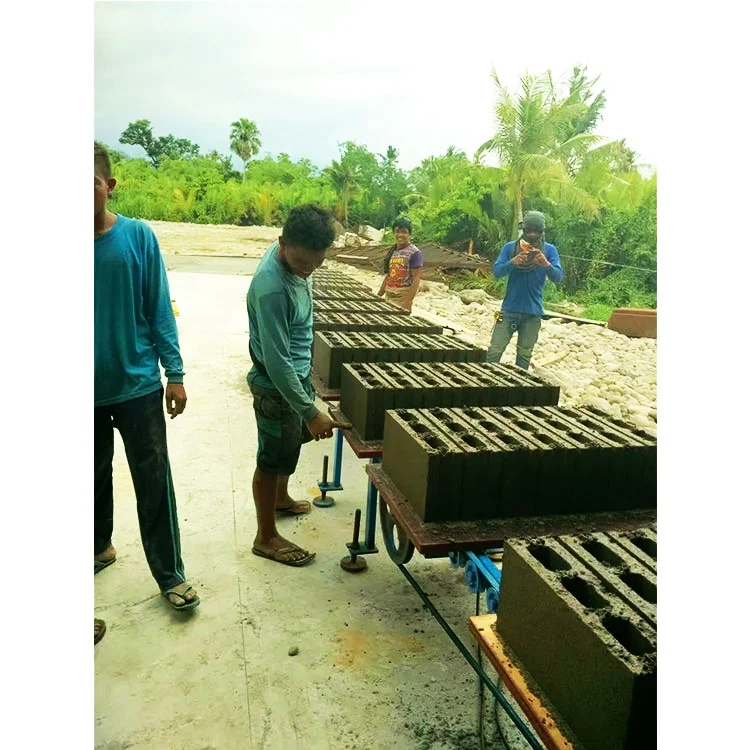
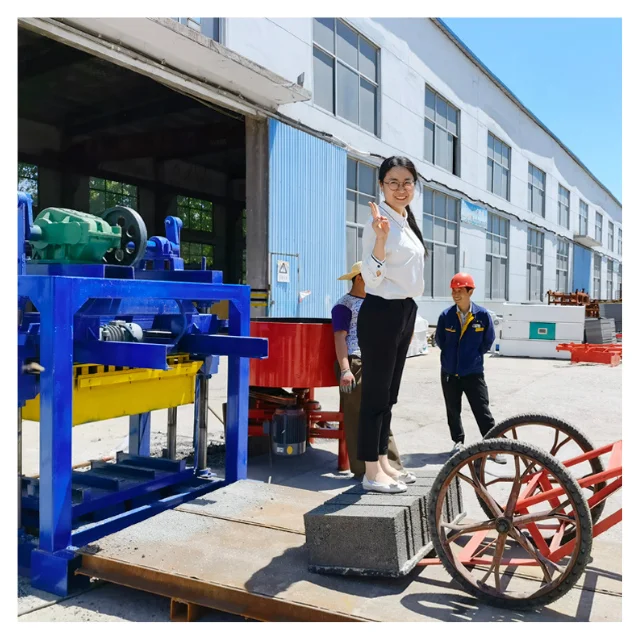
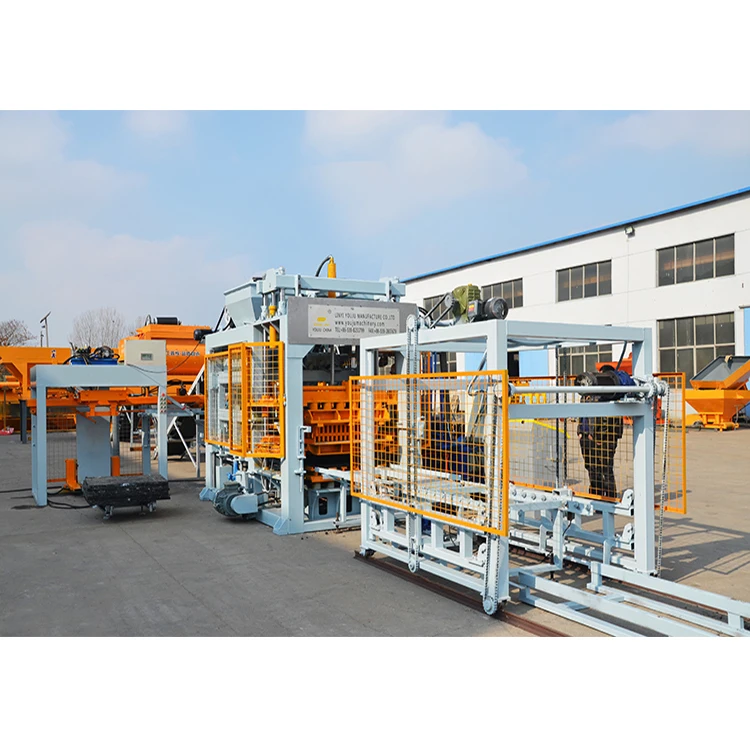
Matched System Configuration — the QT4-15A block making machine, mould, pallet and handling equipment are specified as one coordinated unit, not sourced from separate suppliers and bolted together on site.
Technical Specifications
| Parameter |
Value |
| Model |
QT4-15A |
| Product Type |
Automatic Concrete Block Making Machine |
| Overall Dimensions (L×W×H) |
7100×1600×2610 mm |
| Molding Cycle |
15–25 s (basis not stated in source — confirm block format and material) |
| Vibration Frequency |
4600 r/min |
| Vibration Force (Exciting Power) |
40–50 kN |
| Total Power |
18.45 kW |
| Mixer Model |
JQ350 |
| Pallet Size |
850×550×25 mm |
| Net Weight |
3 T |
| Applied Products |
Paver, solid brick, hollow block, curbstone |
| Raw Materials |
Crushed stone, sand, cement, dust, fly ash |
| Control System |
PLC control system |
| Included Equipment |
Block making machine, hydraulic station, PLC control system, pallet feeder, brick conveyor, block sweeper |
| Output Capacity |
408 pcs/hr for 400×200×200 mm hollow block; 510 pcs/hr for 400×150×200 mm hollow block; 2100 pcs/hr for 240×115×53 mm solid brick |
| Voltage & Frequency |
To be confirmed before order |
| Automation Level |
Automatic (PLC, pallet feeder, conveyor, sweeper) |
Application Suitability
| Application |
Material or Output |
| Hollow block production for building walls |
Crushed stone, sand, cement, fly ash (400×200×200 mm or 400×150×200 mm format) |
| Solid brick manufacturing |
Cement, sand, stone dust (240×115×53 mm format) |
| Paver and curbstone production for landscaping |
Crushed stone and cement mixes for heavy-duty surface formats |
| On-site block production for housing projects |
Locally sourced aggregate and cement adapted to regional mix designs |
Why "Pieces per Hour" Means Nothing Without the Block Format
Real daily output depends entirely on which mould is loaded and what the local aggregate allows.
I once watched a buyer celebrate a quoted cycle time, only to discover the number assumed a solid brick format while his market demanded hollow blocks. The same automatic block making machine manufacturer had given him an honest figure — for the wrong product. Without the format stated next to the capacity, the number on the brochure becomes decorative [NEED_CITE: capacity calculation standards for concrete block machinery].

Where the QT4-15A Sits in the Full Machine Range
Buyers evaluating a first block plant or replacing an ageing egg-laying machine need to see where this model lands before they commit capital. The QT4-15A occupies the mid-tier of the SHIYUE automatic range, sitting above small workshop semi-automatic units and below high-capacity lines designed for continuous two-shift operation. It gives a growing producer room to increase volume without jumping straight to a fully automated stacking and cubing system.
Mapping the Tier to Your Plant Footprint
At this tier, the line includes the JQ350 mixer, a pallet feeder, a brick conveyor, and a block sweeper — enough supporting equipment to run without manual pallet handling, yet compact enough for a modest yard. The 7100×1600 mm machine footprint plus mixer and curing area typically fits within a standard industrial plot. Buyers moving up from mobile machines find the step change in consistency comes from the fixed press platform and matched vibration, not just the automation itself [NEED_CITE: block plant layout planning for small to medium producers].
Reading the Specs That Actually Shape Your Output
The vibration force of 40–50 kN at 4600 r/min determines how densely the concrete is packed into the mould cavity, which directly governs block compressive strength. Pair that with the hydraulic station’s pressure, and you get the two forces that decide whether a hollow block survives the journey from press to curing rack intact. The 850×550×25 mm pallet size is chosen to align with standard curing rack dimensions and common forklift tine spacing — get this wrong and you spend weeks rebuilding your curing area. The PLC control system manages the cycle sequence across the pallet feeder, press, conveyor, and sweeper so the operator monitors rather than manually stages each step. Total power draw of 18.45 kW across the full line means most sites with a standard industrial supply can run without a dedicated transformer upgrade.
What Happens When the Mould Change Takes All Morning
Buyers pay for format flexibility — hollow block on Monday, paver on Tuesday — but if the mould swap consumes most of a shift, that flexibility is theoretical. A poorly guided changeover means re-aligning the vibration table, resetting the feed shoe stroke, and trial-running until dimensional tolerance returns. On a mid-tier machine like the QT4-15A, the time spent changing moulds must be factored into weekly production planning, not treated as a footnote [NEED_CITE: mould change procedures on hydraulic block presses].
Why Buyers Source This Tier from SHIYUE
The block machinery focus means the press, moulds, pallets, and handling stations arrive as a single engineered line rather than a collection of compatible parts. Configuration is set against your actual mix design and local aggregate — I have seen machines ship with default vibration settings that simply did not match a buyer’s volcanic aggregate, costing two weeks of failed batches. Mould design covers the formats your market actually purchases, including custom drawings when standard catalogues fall short. The automation level is selectable: start with the included pallet feeder and conveyor, then add automatic stacking later when volume justifies it. Installation and commissioning include operator training on the PLC interface, not just a manual left on the control cabinet.
Documentation & Verification
- Line layout and capacity calculation stating the block format assumed for each output figure
- Machine specification sheet confirming voltage, frequency, and PLC display language before production begins
- Mould drawing and format list covering every block type your market requires
- Factory test record demonstrating cycle time and block quality on your target format
- Hydraulic and electrical schematic for local maintenance teams
- Packing photographs and customs documentation support for shipment
Installation, Commissioning & Support
- Foundation pad leveled to tolerance for the 7100 mm machine length to prevent vibration drift during pressing
- Dedicated electrical circuit sized for 18.45 kW total draw with voltage and frequency confirmed before dispatch
- Machine ships with hydraulic station and pallet feeder pre-assembled; conveyor and sweeper bolt on at site
- First-run parameter setting on your local aggregate mix, adjusting vibration frequency and hydraulic pressure to target block density
- Operator training on PLC display in confirmed language, covering cycle start, fault reset, and mould change sequence
- Wear parts and mould list provided so first replacements are ordered before the original tooling reaches end of life
What We Need Before Quoting Your Configuration
Send us the block formats your market sells — hollow, solid, paver, curbstone — along with your target daily output for each. Tell us the raw materials available locally and any aggregate sample analysis you have. Confirm the voltage, frequency, and preferred PLC display language at your site so the control panel arrives ready to run.
Frequently Asked Questions
Q: How does the QT4-15A compare to semi-automatic and higher-tier automatic models in the SHIYUE range?
A: The QT4-15A bridges workshop-scale semi-automatic output and high-capacity fully automatic lines. It includes a pallet feeder, conveyor, and sweeper as standard, removing manual pallet handling without requiring the full stacking and cubing system of the upper tier. This makes it a practical step for producers who have outgrown mobile or egg-laying machines but do not yet need two-shift continuous capacity.
Q: What block format is assumed when quoting cycles per hour, and how does output change across formats?
A: Each output figure is tied to a specific mould — 408 pieces per hour assumes a 400×200×200 mm hollow block, while 2100 pieces per hour assumes a 240×115×53 mm solid brick. Switching formats changes the cycle time and the number of cavities per press stroke. Always confirm the format you actually sell before comparing capacity numbers across suppliers.
Q: What voltage, frequency, and PLC language options are available for my target market?
A: Voltage and frequency are confirmed during the proposal stage to match your local grid, and the PLC display language is set before production. This prevents commissioning delays that occur when a control panel arrives in an unsupported language. Share your site specifications early so these details are locked before the build begins.
Q: What plant footprint and supporting equipment does the QT4-15A require at this tier?
A: The machine itself measures 7100×1600×2610 mm, and the included line adds the JQ350 mixer, pallet feeder, brick conveyor, and sweeper. You will need a curing yard sized for the 850×550 mm pallets and a forklift matched to that pallet dimension. A flat, reinforced concrete pad is required under the press to maintain vibration alignment.
Q: Can I start with this machine and upgrade automation level later?
A: Yes. The QT4-15A can be commissioned with manual pallet return and stacking, then upgraded with automatic stacking and cubing modules when production volume justifies the investment. The PLC platform supports these additions without replacing the main control system, protecting your initial capital outlay.

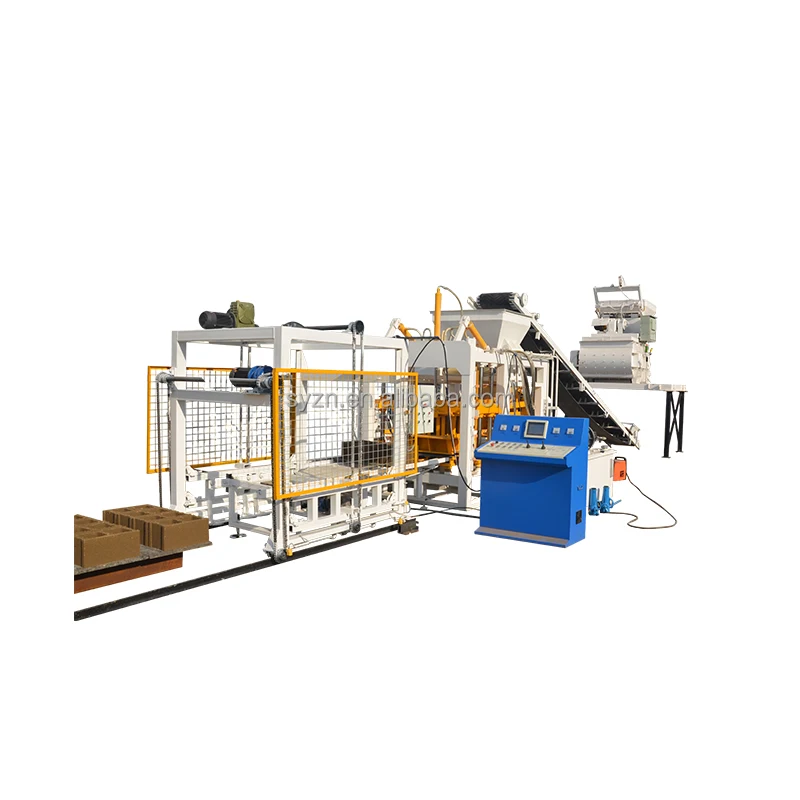
 High quality block machine