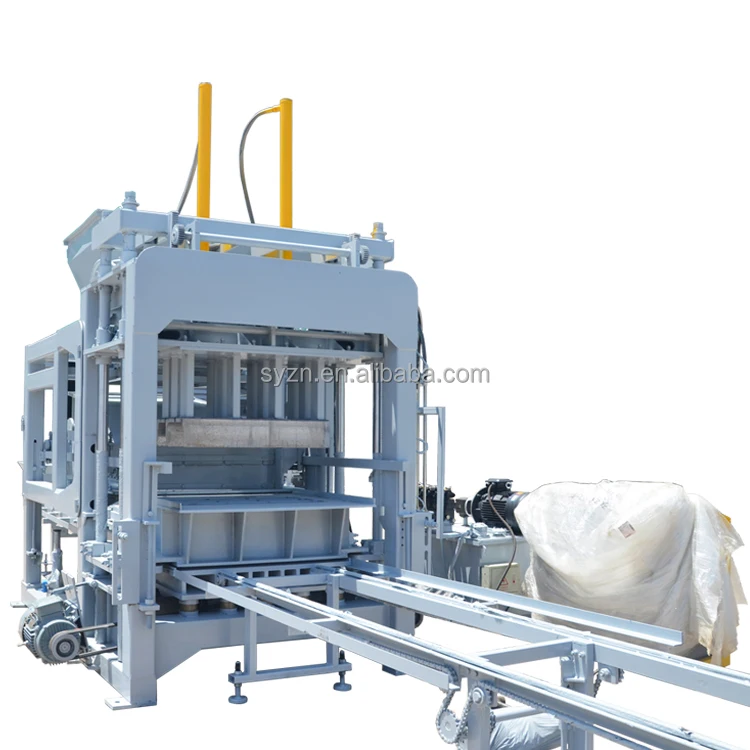
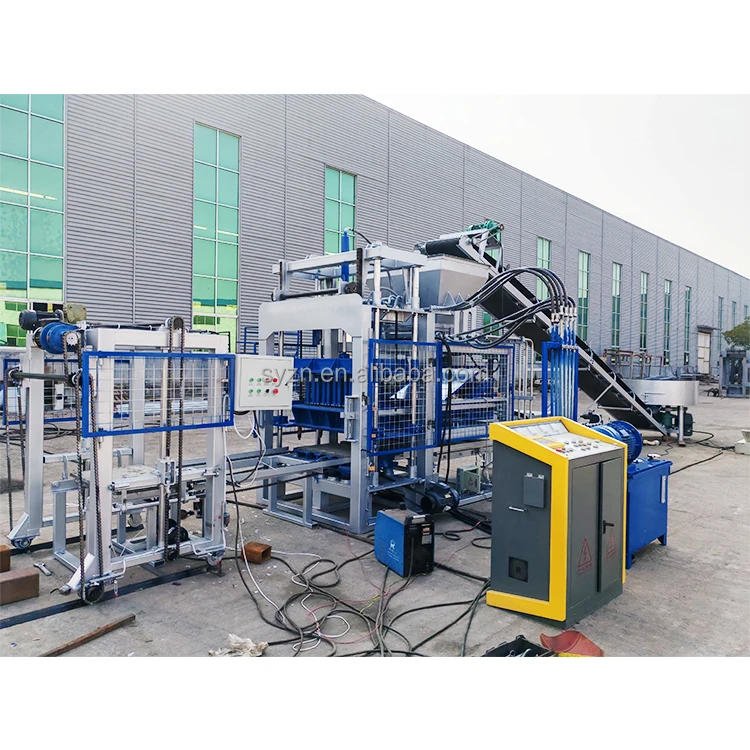
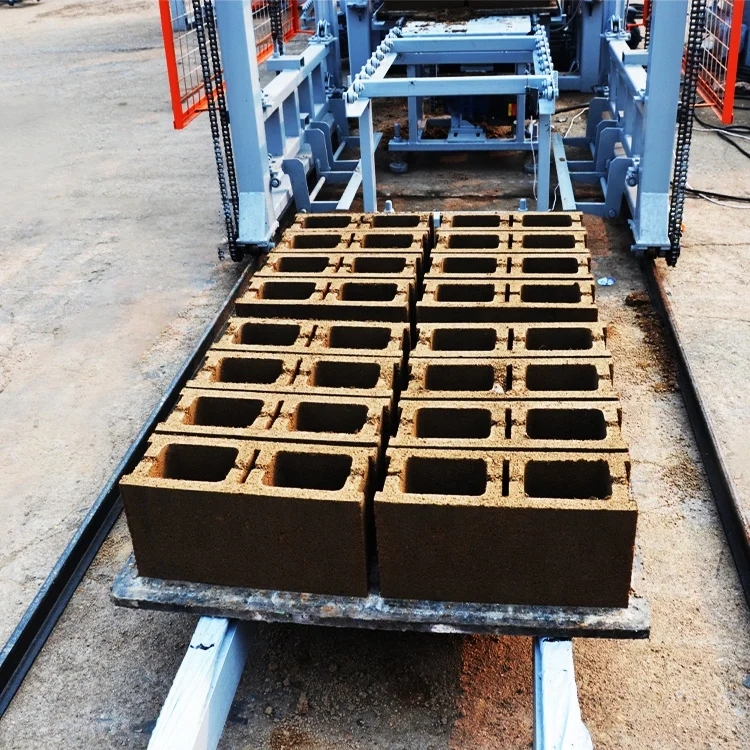
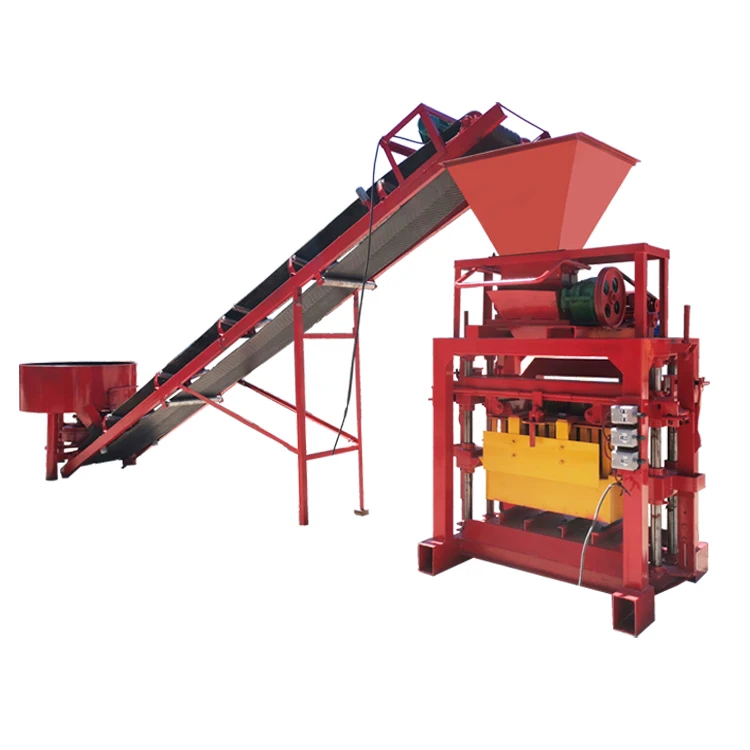
Matched System Configuration — the QTJ4-25 semi-automatic block making machine is specified as a complete press, mould, pallet, and mixer package rather than a standalone unit, ensuring every component is rated for the same cycle and output target.
Technical Specifications
| Parameter |
Value |
| Product Type |
Semi-Automatic Concrete Block Making Machine |
| Model |
QTJ4-25 |
| Overall Dimensions (L×W×H) |
6400×1500×2700 mm |
| Molding Cycle |
25 s |
| Vibration Frequency |
2800–5100 r/min |
| Exciting Force |
60 kN |
| Total Power |
17.9 kW |
| Mixer Model |
JQ350 |
| Pallet Size |
850×550×20 mm |
| Net Weight |
2500 kg |
| Output Capacity (Hollow Block 390×190×190 mm) |
4 pcs/mould, 480 pcs/h, 3800 pcs/8 hr |
| Output Capacity (Hollow Block 400×150×200 mm) |
5 pcs/mould, 600 pcs/h, 4800 pcs/8 hr |
| Output Capacity (Solid Brick 240×115×53 mm) |
18 pcs/mould, 2100 pcs/h, 17000 pcs/8 hr |
| Automation Level |
Semi-automatic |
| Applied Products |
Concrete hollow blocks, solid bricks |
| Raw Materials |
Crushed stone, sand, cement, fly ash |
| Certification |
CE (where applicable) |
Application Suitability
| Application |
Material or Output |
| Small to medium block plant startup |
Hollow blocks (390×190×190 mm and 400×150×200 mm) from crushed stone, sand, and cement |
| On-site construction block production |
Solid bricks (240×115×53 mm) using locally available aggregates including fly ash |
| Building material distributor evaluation |
Mid-tier semi-automatic output for entrepreneurs comparing investment tiers before committing to a fully automatic line |
Why "Pieces per Hour" Means Nothing Without the Block Format
Every capacity figure for the QTJ4-25 is tied to a specific mould and block dimension, so you see the actual daily production you can expect on your product.
Suppliers frequently quote a single hourly number for a Semi-Automatic Block Making Machine for Sale without disclosing which block size produced that rate. A buyer budgeting for 600 hollow blocks per hour may receive a machine that only reaches that rate on a smaller format, leaving the plant short of its daily target. [NEED_CITE: common block machine capacity quoting practices in export markets] This is why the QTJ4-25 specification sheet breaks output down by format — 480 pieces per hour on a 390×190×190 mm hollow block, 600 on a 400×150×200 mm variant, and 2,100 on a standard solid brick — each verified at the 25-second moulding cycle.

Positioning the QTJ4-25 Within the Full Machine Spectrum
The QTJ4-25 occupies the mid-tier of the semi-automatic category, sitting above mobile egg-laying machines in both output and plant footprint while remaining below fully automatic lines in capital outlay. Buyers surveying the complete range can use this Semi-Automatic Block Making Machine for Sale as a defined entry point — it delivers a fixed moulding station with controlled vibration and hydraulic compression, but still relies on manual or semi-manual pallet transfer rather than a fully automated stacking and cubing system. This positioning makes it a practical choice for entrepreneurs funding a first plant and for contractors who need dependable daily volume without the infrastructure demands of a high-capacity automatic line.
Understanding the Plant Footprint and Line Layout
A 6400×1500 mm machine body plus the JQ350 mixer and conveyor belt means the production area extends well beyond the press itself. Planning the curing yard, raw material storage, and pallet return path around this footprint prevents bottlenecks once production starts. [NEED_CITE: block plant layout planning guidelines for semi-automatic lines] Buyers should map the pallet flow from the press exit to the curing racks and back, ensuring the 850×550 mm pallets can move without manual carrying over long distances — a layout mismatch here erodes the cycle time advantage the press itself provides.
What the Core Specifications Mean for Daily Production
The 60 kN exciting force combined with a vibration frequency range of 2800–5100 r/min determines how densely the concrete mix is compacted inside the mould cavity. Higher vibration force at the right frequency produces blocks with consistent wall thickness and compressive strength, reducing breakage during pallet transfer and curing. The 25-second moulding cycle applies across all listed formats, meaning the hourly output differences come entirely from the number of cavities per mould — four for the 390 mm hollow block, five for the 400 mm variant, and eighteen for the solid brick. Total installed power of 17.9 kW covers the press, vibration motor, and mixer, so buyers must verify that their site electrical supply can sustain this draw continuously through an eight-hour shift without voltage drop affecting the vibration motors.
The Cost of Skipping Pallet and Voltage Confirmation
Ordering a Semi-Automatic Block Making Machine for Sale without confirming pallet material against the curing environment leads to warping and premature pallet replacement. Wooden pallets swell in high-humidity curing yards, while bamboo and PVC alternatives carry different cost and lifespan profiles. [NEED_CITE: pallet material selection for concrete block curing conditions] Equally, shipping a machine wired for a voltage or frequency that does not match the buyer’s grid delays commissioning by weeks while transformers or motor replacements are sourced locally — a preventable issue when voltage and frequency are confirmed before production begins.
Why Source the QTJ4-25 Through Shiyue
Block machinery is the single manufacturing focus, so the QTJ4-25 press, JQ350 mixer, moulds, and pallets are specified as one matched system instead of assembled from unrelated suppliers. Machine configuration is set against the buyer’s actual mix design and local aggregate rather than a catalogue default, reducing the risk of blocks that fail strength tests on arrival. Mould design covers the hollow block and solid brick formats the buyer’s market demands, including custom drawings when standard formats do not match local building codes. The automation level is selectable — a buyer can commission the QTJ4-25 as semi-automatic now and plan a future upgrade path to higher automation without replacing the entire press platform. Factory testing runs the machine on the buyer’s confirmed block format before dispatch, producing a test record that accompanies the shipment.
Documentation & Verification
- Line layout drawing showing QTJ4-25 footprint, mixer position, and pallet flow path
- Capacity calculation sheet listing output per block format with the 25-second cycle assumption
- Mould drawing and format list confirming included hollow block and solid brick cavity counts
- Voltage, frequency, and control language confirmation sheet signed before production
- Factory test record on buyer’s specified block format with dimensional and weight measurements
- Packing photographs of the QTJ4-25, mixer, and pallets before container loading
Installation, Commissioning & Support
- Foundation must support the 2500 kg machine weight plus dynamic vibration load across the 6400 mm frame length
- Dedicated electrical circuit rated for the 17.9 kW total draw with confirmed voltage and frequency at the main panel
- Machine ships as a complete assembly with mixer and conveyor; on-site reconnection of hydraulic and electrical lines required
- Commissioning includes first-run parameter tuning of vibration frequency and moulding cycle on the buyer’s mix
- Operator training covers mould change procedure, pallet loading sequence, and daily vibration motor inspection
- Wear parts kit matched to the buyer’s planned daily output volume shipped with the machine
Preparing Your Inquiry
To move from a general comparison to a firm configuration, share your target block format and daily production requirement along with the raw materials you can source locally. Confirm your site voltage, frequency, and the language your operators need on the control display. If you already have curing racks or a forklift in place, note the pallet dimensions and rack spacing so the QTJ4-25 can be configured around your existing yard infrastructure rather than forcing a new layout.
Frequently Asked Questions
Q: How do I verify the real daily output of the QTJ4-25 against my target block format?
A: Request the capacity calculation document that lists output per format — for example, 480 pieces per hour is rated on a 390×190×190 mm hollow block at the 25-second cycle, while 600 pieces per hour applies to the 400×150×200 mm variant. Cross-reference your market’s primary format to determine your actual eight-hour production volume.
Q: Where does the QTJ4-25 sit in the range compared to fully automatic and mobile block machines?
A: It occupies the mid-tier semi-automatic position — higher output and more consistent compaction than a mobile egg-laying machine, but lower capital cost and simpler infrastructure than a fully automatic line with robotic stacking and cubing.
Q: What voltage, frequency, and control language options are available for my market?
A: These are confirmed during the ordering process before production begins. Provide your local grid voltage and frequency along with the preferred display language so the electrical system and control interface are configured to match your site conditions.
Q: How large a plant footprint does the QTJ4-25 require, and what supporting equipment is needed?
A: The machine body measures 6400×1500 mm, with additional space needed for the JQ350 mixer, raw material storage, and a curing yard sized for the 850×550 mm pallets. A line layout drawing is provided to plan pallet flow and rack placement around the press.
Q: Can I start with the QTJ4-25 semi-automatic and upgrade to a higher automation tier later?
A: The machine platform supports selectable automation levels. Starting semi-automatic allows you to establish production and revenue first, then add automatic pallet feeding or stacking modules as demand grows without replacing the core press.

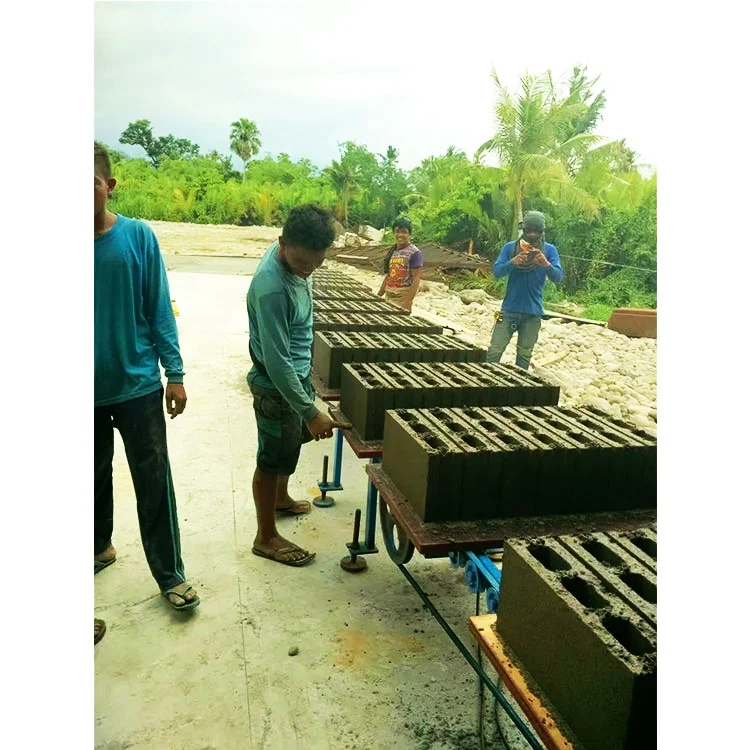
 High quality block machine