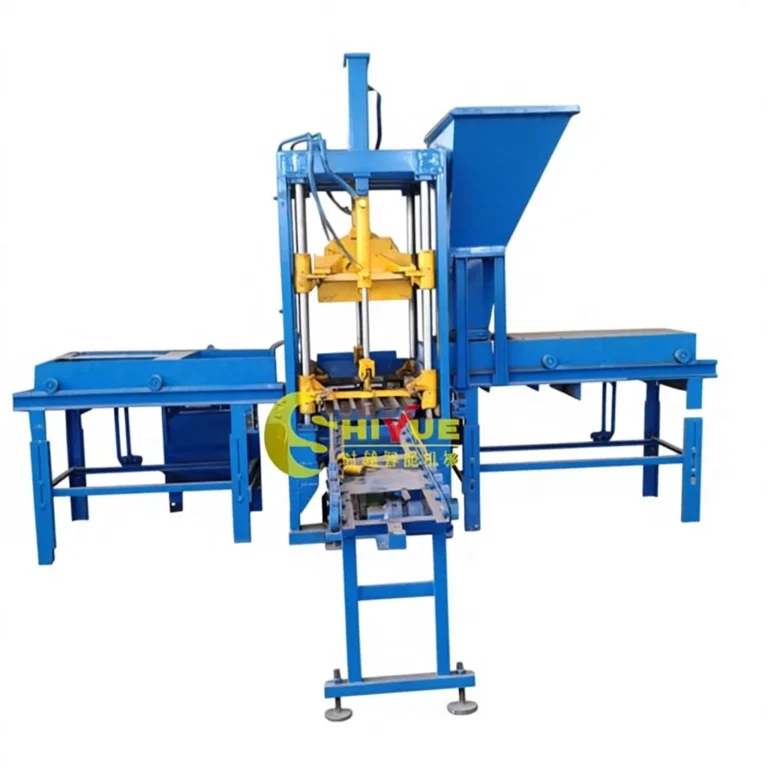
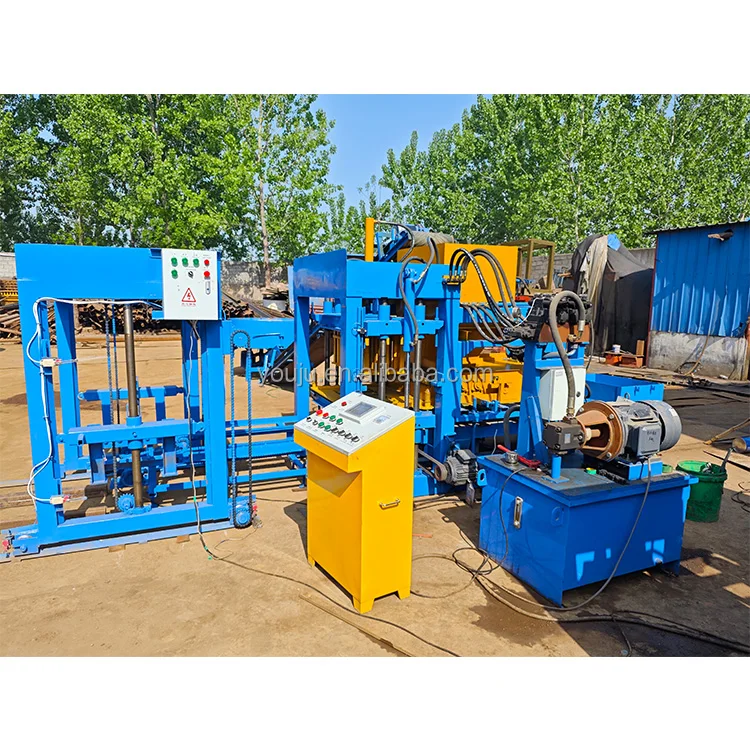
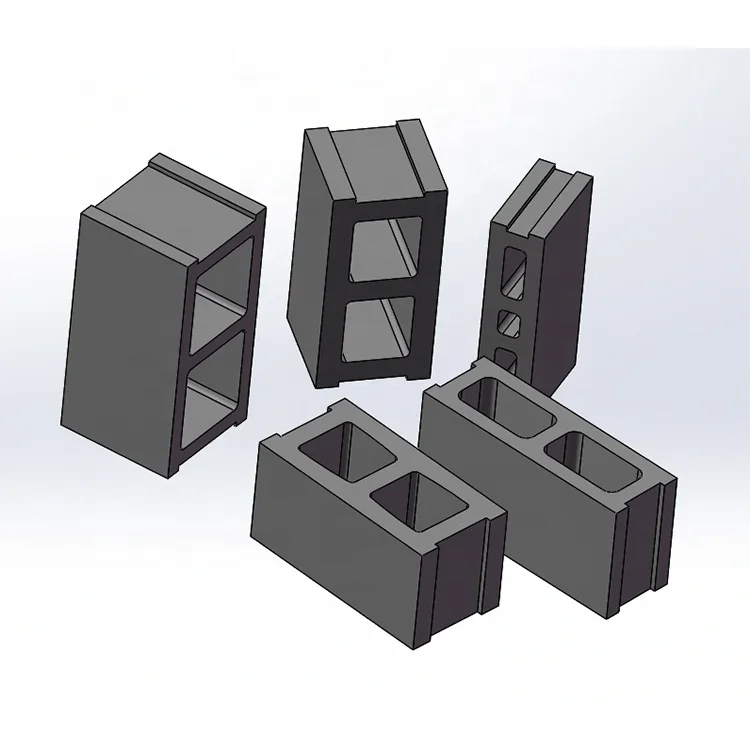
Matched System Design — the QT4-15 is specified as a complete unit with mould, pallet and handling gear chosen against your actual block format, not picked from a catalogue default.
Technical Specifications
| Parameter |
Value |
| Model |
QT4-15 |
| Product Type |
Hydraulic Block Making Machine |
| Control System |
PLC with approach switch monitoring |
| Molding Cycle |
15–30 s depending on format and mix |
| Pallet Size |
900 × 500 mm |
| Vibration Type |
Platform vibration |
| Vibration Frequency |
50–70 Hz |
| Product Height Range |
50–220 mm |
| Overall Power |
24.5 kW |
| Demolding Method |
Hydraulic |
| Automation Level |
Automatic, PLC-controlled |
| Raw Materials |
Fly ash, slag, gangue, sand, crushed stone, cement, water |
| Block Compressive Strength |
> 15 MPa |
| Output — Hollow Block 400×200×200 mm |
900–1,200 pcs/h, 7,200–9,600 pcs/8 hr (basis: 4 pcs/mould, 15–20 s cycle) |
| Output — Hollow Block 400×150×200 mm |
1,080–1,440 pcs/h, 8,640–11,520 pcs/8 hr (basis: 5 pcs/mould, 15–20 s cycle) |
| Output — Hollow Block 400×100×200 mm |
1,440–1,920 pcs/h, 11,520–15,360 pcs/8 hr (basis: 8 pcs/mould, 15–20 s cycle) |
| Output — Paver 200×100×60 mm |
2,880–3,840 pcs/h, 23,040–30,720 pcs/8 hr (basis: 16 pcs/mould, 15–20 s cycle) |
| Output — Solid Brick 240×115×53 mm |
5,930–6,720 pcs/h, 47,400–53,700 pcs/8 hr (basis: 28 pcs/mould, 15–20 s cycle) |
Application Suitability
| Application |
Material or Output |
| Mid-scale hollow block plant |
Crushed stone, sand, cement, fly ash mixes for 400×200×200 mm and 400×150×200 mm formats |
| Paver production for municipal and residential projects |
High-density paver 200×100×60 mm using fine aggregate and cement |
| Solid brick supply for load-bearing walls |
240×115×53 mm solid brick from gangue or slag blended with cement |
| Format-diverse concrete product manufacturer |
Switching among hollow, paver, and solid brick on a single chassis with mould change |
What "900 to 1,200 Pieces per Hour" Actually Means for Your Plant
Capacity figures are only honest when the block format behind them is named.
I have sat across from buyers who signed for a QT4-15 Hydraulic Block Making Machine expecting 1,200 hollow blocks an hour, then showed up on site to find the quoted number assumed a 400×100×200 mm format they never intended to sell. The real output for the 400×200×200 mm block they actually needed was roughly half what they budgeted for. That gap does not come from a bad machine — it comes from a quotation that never pinned the cycle to the format. [NEED_CITE: capacity calculation standards for concrete block machinery]
Where the QT4-15 Sits in the Stationary Range
The QT4-15 occupies the mid-tier of our stationary hydraulic block machine range. It is the step buyers take when a mobile or egg-laying unit can no longer hold daily volume, but a fully automatic cubing line would overfill the curing yard. The 900 × 500 mm pallet and 24.5 kW overall power place it squarely in the zone for plants producing hollow blocks, pavers, and solid bricks for local construction markets without requiring a dedicated substation.
Choosing the Right Tier Before the Mould
Buyers who land on this QT4-15 Hydraulic Block Making Machine usually need a fixed press that can switch formats within a shift. The PLC-controlled cycle with approach switch monitoring handles that switching without a second operator watching the hopper. The vibration frequency range of 50–70 Hz gives enough adjustment to tune density when the mix design shifts from a fly-ash-heavy blend to a crushed-stone-dominant one, which is common when quarries change supply seams. [NEED_CITE: aggregate variability in local block production]
How Vibration, Pressure, and Pallet Size Work Together
Platform vibration at 50–70 Hz compacts the mix from below, while hydraulic pressure clamps from above; when those two forces are out of balance, the block either cracks on demolding or comes out too porous to reach the > 15 MPa target. The 900 × 500 mm pallet size determines how many cavities a mould can carry per cycle — four for a 400×200×200 mm hollow block, sixteen for a 200×100×60 mm paver. That pallet size also decides how many blocks fit on a standard curing rack, so the curing area and the forklift you already own must match before the press ships. Product height range from 50 to 220 mm covers everything from thin pavers to tall kerbstones, but each format pulls the cycle time toward a different point in the 15–30 s window. Mould change is a manual bolt-down operation on this tier, which keeps the initial investment lower but means format switching is measured in tens of minutes rather than seconds.

The Cost of Skipping the Voltage Conversation
When voltage and frequency are not locked down before the QT4-15 enters production, the PLC cabinet may arrive wired for a grid the local utility does not supply, leaving the press idle while a transformer is sourced. I have seen a buyer in West Africa lose a full week of commissioning because the 50 Hz motor was run on a 60 Hz generator without a VFD in between. That kind of delay is not a warranty claim — it is a specification gap. [NEED_CITE: electrical compatibility issues in exported machinery installations]
Why Source This QT4-15 Block Machine for Sale Through Us
Block machinery is our single focus, so the press, mould, pallet, and handling gear are specified as one matched set rather than assembled from separate suppliers. Every quotation starts with the buyer’s target block format, local aggregate, and daily output, and the capacity calculation sheet states exactly which format the number assumes. Mould design covers the dimensions the buyer’s market actually sells, including custom drawings when local standards diverge from the common 400×200×200 mm. The automation level on the QT4-15 is selectable — a buyer can begin with manual pallet handling and add automatic stacking later without replacing the press. Installation support includes on-site commissioning and operator training so the first production run happens with the right parameters already dialed in.
Documentation & Verification
- Line layout and capacity calculation stating the block format behind every output figure
- Machine specification sheet listing pallet size, vibration frequency, and overall power
- Mould drawing and format list matched to your local market dimensions
- Voltage, frequency, and PLC display language confirmation signed before production
- Factory test record showing cycle time and hydraulic pressure under load on your chosen format
- Operation and maintenance manual covering daily greasing points and approach switch calibration
Installation, Commissioning & Support
- Foundation pad leveled for the 900 × 500 mm pallet track with anchor bolt template provided
- Dedicated circuit sized for 24.5 kW overall power plus starting surge of the vibration motor
- Press shipped partially assembled; pallet feeder and stacker bolted on site to match curing rack height
- First-run commissioning covers PLC parameter entry, vibration frequency tuning, and hydraulic pressure setting
- Operator training on mould change procedure and approach switch alignment for each format
- Wear parts list identifies hydraulic seals and vibration springs with recommended replacement intervals
What to Include in Your First Inquiry
Send us the exact block formats your market buys, the daily volume you need per format, and a sample of the aggregate you can source locally. Tell us the voltage and frequency your site receives, and the language your operators read on a screen. If you already have curing racks or forklifts, share the dimensions so the pallet and stacking layout can be matched before the QT4-15 is built.
Frequently Asked Questions
Q: How is the 900–1,200 pcs/hour capacity for the QT4-15 calculated?
A: That range is based on the 400×200×200 mm hollow block at four pieces per mould with a 15–20 second cycle. Other formats produce different hourly counts — the 400×150×200 mm block yields 1,080–1,440 pcs/h on the same cycle. We state the assumed format on every capacity line so you can match the number to what you actually sell.
Q: Can the QT4-15 be upgraded to fully automatic stacking later?
A: Yes. The press is designed so that an automatic stacker and cubing system can be added at the end of the pallet return conveyor without replacing the main hydraulic station or PLC cabinet. We recommend confirming the stacking layout during the initial line design so the pallet return height is set correctly from the start.
Q: What is the mould change time on the QT4-15?
A: Mould change on this tier is a bolt-down procedure that typically takes one shift segment when the crew has done it before. Custom moulds are available for non-standard formats; we produce drawings against your market dimensions and manufacture the mould in-house so it matches the platform vibration mounting points exactly.
Q: How do we confirm voltage and PLC language before shipment?
A: We ask for your site voltage, frequency, and preferred PLC display language during the quotation stage. A confirmation document is signed before the electrical cabinet is wired, and the factory test is run at the confirmed voltage so the motor and vibration system are verified under the correct electrical conditions.
Q: What curing area does the QT4-15 need with 900×500 mm pallets?
A: Each pallet carries between four and twenty-eight pieces depending on the mould. The curing rack layout is designed around your daily output and the block formats you produce. Share your available yard dimensions and existing forklift capacity so the rack spacing and pallet stacking height are matched to the equipment you already have on site.

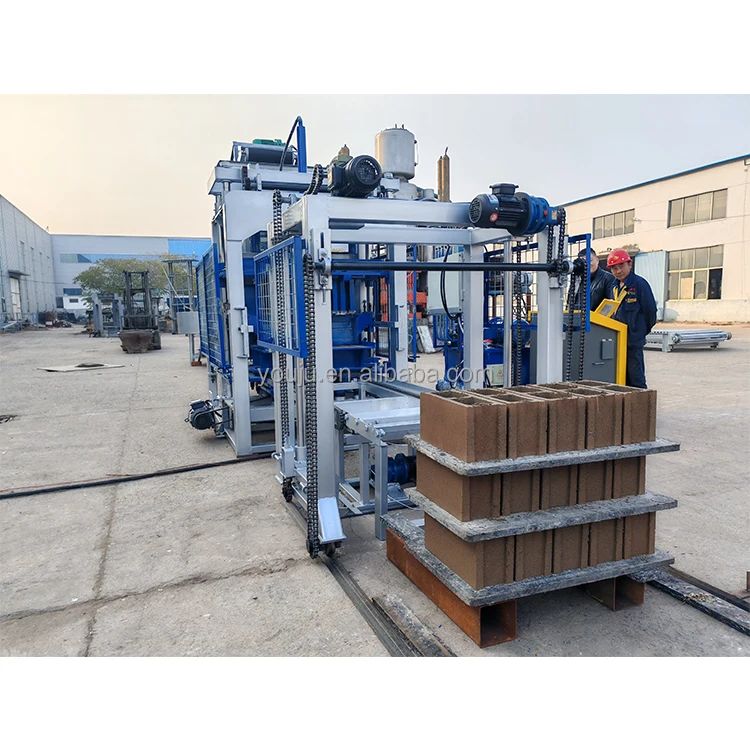
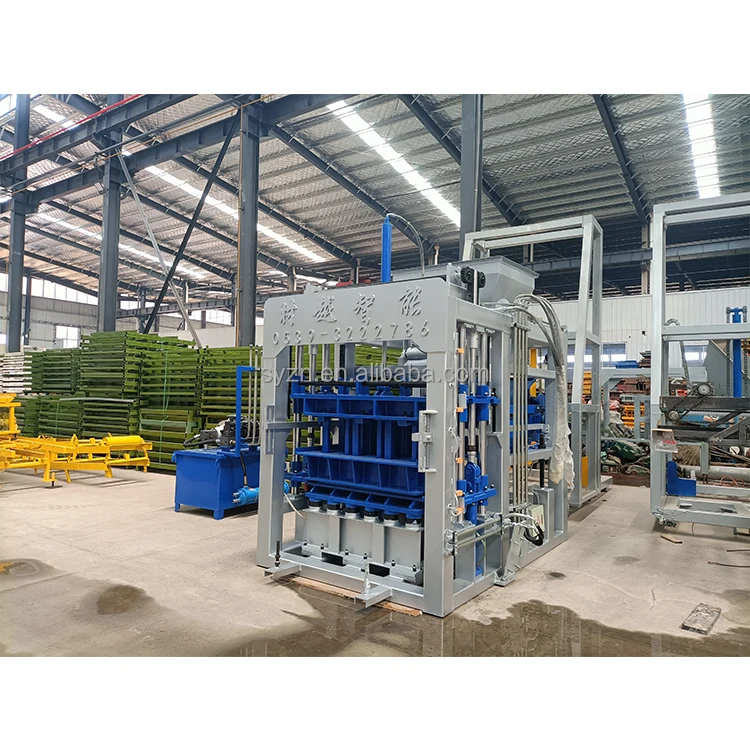 Stationary block machine