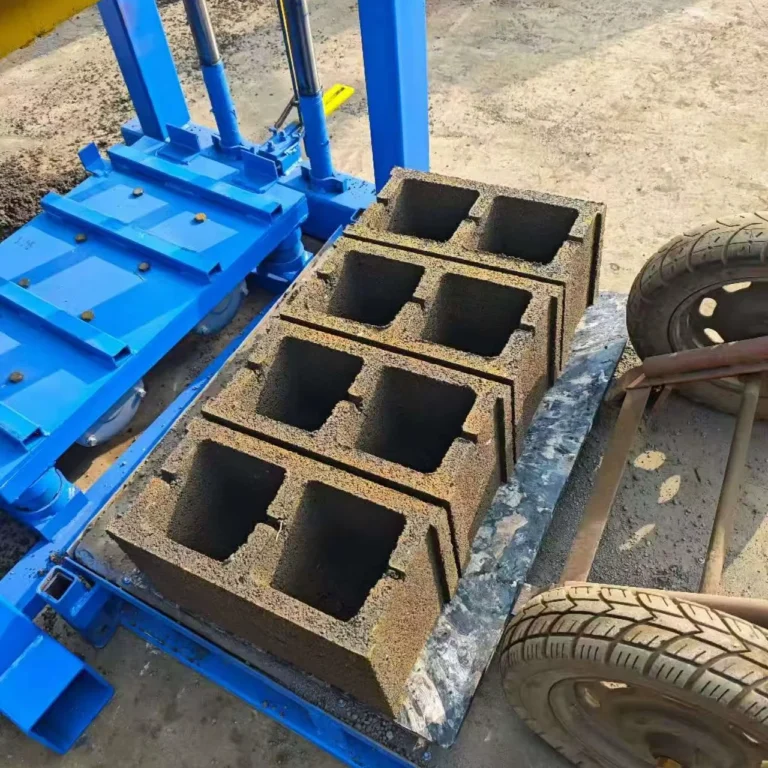
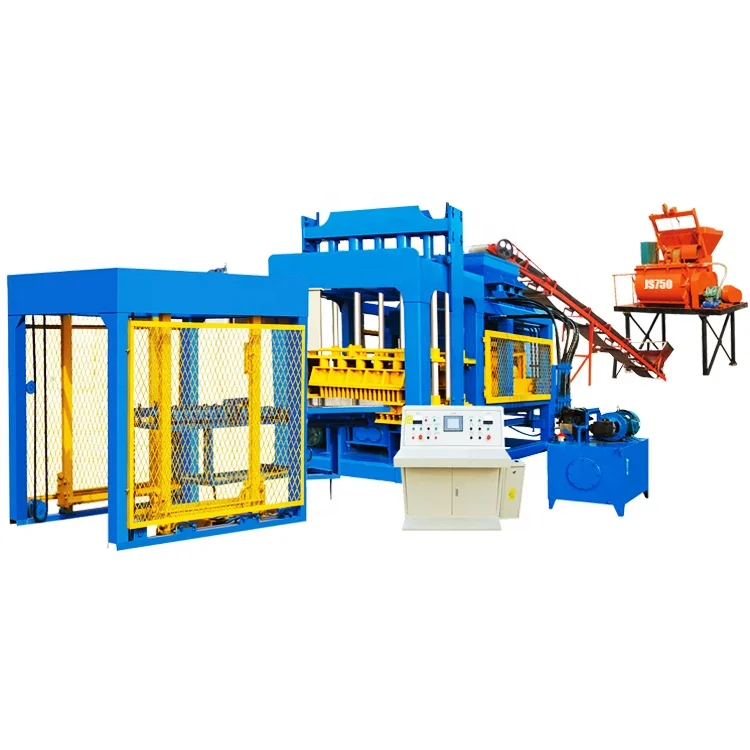
Stationary block machine single-focus engineering — we configure the press, pallet and mixer around the specific block format and local aggregate you will actually run, rather than assembling from catalogue defaults.
Technical Specifications
| Parameter |
Value |
| Model |
QTJ4-25 |
| Product Type |
Semi-Automatic Concrete Block Making Machine |
| Rated Power |
17.9 kW |
| Overall Dimensions (L×W×H) |
6400 × 1500 × 2700 mm |
| Total Mass |
2500 kg |
| Molding Cycle |
25 s |
| Vibration Frequency |
2800 r/min |
| Exciting Force |
60 kN |
| Pallet Size |
850 × 550 × 20 mm |
| Output Capacity |
960 pcs/h, 7680 pcs/day (based on 400×200×200mm hollow block, 4 pcs/mould) |
| Mould Format |
400×200×200mm hollow block (4 pcs/mould); solid, paver, curbstone available by mould change |
| Automation Level |
Semi-automatic |
| Configuration |
Host machine 1 set, block mould 1 set, JQ350 mixer |
| Hydraulic System |
Equipped with hydraulic station for stable pressure |
| Vibration Type |
Bed mould vertical vibration + upper mould compression vibration |
| Key Features |
Hydraulic station, dual vibration system, semi-automatic control, CE declaration where applicable |
Application Suitability
| Application |
Material or Output |
| Hollow block production for small to medium block plants |
Crushed stone, sand, cement, water mix in standard proportions |
| Solid block production for load-bearing walls |
Dense aggregate blends requiring high compaction pressure |
| Paving block manufacturing for driveways and walkways |
Fine aggregate and cement with surface finish requirements |
| Curbstone production for road and kerb applications |
Coarse aggregate mix designed for structural strength |
| On-site block production by construction contractors |
Local sand and gravel sources near project locations |
| First plant setup by entrepreneurs |
Standard masonry block formats for regional building markets |
Where the QTJ4-25 Sits in the Full Block Machine Range
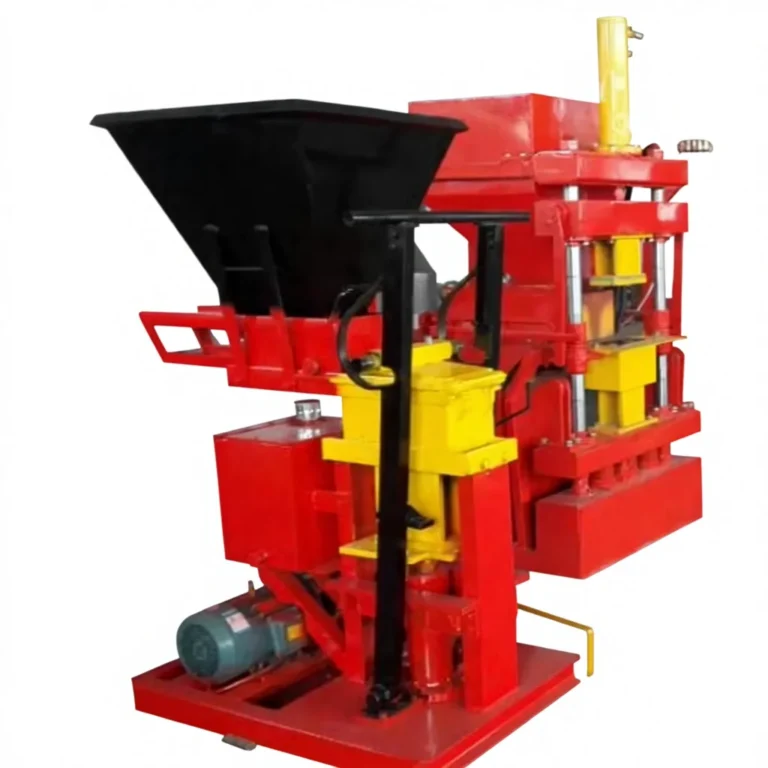
The semi-automatic tier fills the gap between mobile egg-layers and full automatic lines. Buyers surveying the market often see three distinct machine classes without a clear sense of where each belongs in a real plant layout.
The QTJ4-25 is a stationary semi-automatic block machine designed for producers who need consistent output but are not yet ready to commit the capital and floor space that a fully automatic line demands. Mobile machines work well for on-site production where blocks cure in place, but they cannot match the density and surface finish a stationary press delivers. Fully automatic lines handle high volume with minimal labour, yet they require a larger building, pallet return systems and automatic stackers that push the total investment well beyond what a first-time producer can justify. This semi-automatic block machine manufacturer positions the QTJ4-25 as the entry point where a buyer gets stationary-press quality with a manageable plant footprint and a clear upgrade path later. [NEED_CITE: typical block plant automation tiers and investment brackets]
Mapping Output Tiers to Your Production Target
The 960 pcs/h capacity figure is tied explicitly to a 400×200×200mm hollow block running four per mould. If your primary product is a smaller solid paver, the pieces-per-hour number will rise while the cubic metres of concrete consumed per shift stays roughly similar. Understanding this relationship before you order prevents the common disappointment where daily output falls short because the quoted capacity assumed a format you never intended to produce. A semi-automatic block machine manufacturer should always state which block format the capacity calculation rests on.
Footprint and Investment Compared to Adjacent Tiers
At 6400 × 1500 × 2700 mm, the QTJ4-25 fits inside a modest workshop without the extended conveyor runs and curing rack systems that automatic lines need. The JQ350 mixer included in the standard configuration keeps the raw material side simple. A fully automatic plant typically occupies several times this floor area once pallet feeders, stackers and cubing stations are added. For a buyer working through the range, the semi-automatic tier offers a realistic starting position: you produce commercial-grade blocks from day one, and when demand justifies it, the pallet handling and stacking stations can be added without replacing the press itself. [NEED_CITE: plant layout scaling from semi-automatic to fully automatic block lines]
How the Mould System Defines Your Product Range
The host machine accepts interchangeable moulds for hollow block, solid block, paver and curbstone formats. This means a single QTJ4-25 can serve multiple market segments once the appropriate moulds are on hand. The bed mould vertical vibration combined with upper mould compression vibration ensures each format receives the compaction energy it needs — a hollow block requires different vibration characteristics than a dense curbstone. When comparing across the range, this mould-change flexibility is what separates a stationary press from a mobile machine locked into one or two formats.
Inside the Press: How Pressure and Vibration Shape Block Quality
The QTJ4-25 uses a hydraulic station paired with a dual vibration system, and understanding how these two forces interact matters more than reading either number in isolation. The 60 kN exciting force at 2800 r/min compacts the concrete mix against the mould walls, while the hydraulic pressure holds the upper mould down during vibration to prevent the block from expanding upward. If vibration force is high but hydraulic pressure is low, blocks come out with good surface finish but inconsistent height. If pressure is high but vibration is weak, blocks are dimensionally accurate but under-compacted and fragile during handling. The semi-automatic block machine manufacturer must match both values to the buyer’s specific mix design and local aggregate gradation. A mix with coarse crushed stone needs more vibration energy to flow into mould corners, while a fine sand mix compacts more easily and can tolerate lower exciting force. Getting this balance right during commissioning determines whether blocks survive the journey from press to curing area without corner damage. [NEED_CITE: relationship between vibration force, hydraulic pressure and concrete block compressive strength]

Pallet Dimensions and What They Mean for Your Curing Area
The 850 × 550 × 20 mm pallet size is not arbitrary — it defines how many blocks fit on each pallet, how pallets stack in the curing area, and what forklift capacity you need to move them. A buyer who already operates a curing yard with specific rack dimensions or a particular forklift model should confirm pallet compatibility before production begins. Mismatched pallets mean either wasted curing space or a forklift upgrade you did not budget for. This is one reason a semi-automatic block machine manufacturer should request curing area details early in the inquiry process rather than treating pallet specification as an afterthought.
The Semi-Automatic Balance: Labour, Consistency and Upgrade Path
Semi-automatic operation on the QTJ4-25 means the press cycle, vibration and hydraulic pressure are controlled automatically, while pallet feeding and block stacking remain manual tasks. This keeps the initial investment lower and reduces the electrical complexity on site, which matters in regions where maintenance support for PLC systems is limited. When production volume grows, the manual stations can be replaced with automatic pallet feeders and stackers without changing the press. This upgrade path is the reason many first-time buyers start here rather than over-investing in automation they cannot fully utilise in year one. [NEED_CITE: semi-automatic to automatic block line upgrade considerations]
When a Mismatched Machine Costs More Than the Machine Itself
Buying a block press without confirming the voltage and frequency at the installation site is a mistake I have watched unfold more than once. A line shipped to a region with 440V supply when the machine was built for 380V will trip its electrical protection on the first day, and sourcing a transformer locally can take weeks of lost production. The same applies to PLC display language — an operator who cannot read the control screen will make errors that damage moulds and waste material. These are not issues that show up in a specification comparison, but they determine whether your plant runs on schedule or sits idle waiting for a part. Always confirm voltage, frequency and control language with your semi-automatic block machine manufacturer before the order enters production.
Why Buyers Source This Machine Range Here
Block machinery is the sole product focus, so the press, mould, pallet and mixer are specified as one matched system rather than assembled from separate suppliers who do not coordinate their designs.
Configuration is set against the buyer’s actual mix design, local aggregate source and target block format, not pulled from a catalogue default that may not match your conditions.
Mould design covers the specific formats your market demands, with custom mould engineering available when standard formats do not cover your product range.
The automation level is selectable and upgradable, so a buyer can begin with the QTJ4-25 semi-automatic platform and add automatic pallet handling as volume justifies the investment.
Installation support includes commissioning and operator training so your team can run the press confidently from the first production shift. [NEED_CITE: block machine manufacturer single-focus engineering approach]
Documentation & Verification
- Line layout drawing stating capacity calculation by block format for your specific product mix
- Voltage, frequency and PLC display language confirmation sheet signed before production release
- Factory test record with QTJ4-25 running your target mould format before container loading
- Pallet specification matched to your existing curing rack dimensions and forklift capacity
- Packing photographs of machine, mould and mixer before container sealing
- CE declaration documentation where applicable to your destination market
Installation, Commissioning & Support
- The 6400 × 1500 mm footprint requires a level concrete pad with anchor bolt provisions cast in place
- 17.9 kW total rated power demands a dedicated circuit with appropriate breaker sizing at your site
- Machine ships partially assembled with hydraulic station pre-filled and tested before dispatch
- Commissioning includes mould alignment, vibration tuning and cycle timing set to your block format
- Operator training covers mould change procedure, daily vibration system inspection and pallet handling
- Wear parts list identifies hydraulic seals, vibration springs and mould liner replacement intervals
What to Share When You Open an Inquiry
A useful inquiry includes your primary block format and target daily output, the local aggregate type and gradation available near your site, and the voltage and frequency standard at your installation location. If you already operate a curing area, share the rack dimensions and forklift capacity so pallet size can be matched. Stating your intended automation level — starting semi-automatic with a future upgrade, or running semi-automatic permanently — helps us size the supporting equipment correctly from the first quotation.
Frequently Asked Questions
Q: How is the 960 pcs/h capacity calculated, and which block format does it assume?
A: The 960 pcs/h figure is based on the 400×200×200mm hollow block running four pieces per mould with a 25-second molding cycle. If your primary product is a different format such as a solid paver or curbstone, the pieces-per-hour number will differ while the molding cycle remains similar. Always confirm capacity against your specific block format before finalising the order.
Q: Where does the QTJ4-25 sit compared to automatic and mobile machines?
A: The QTJ4-25 is a stationary semi-automatic press that delivers higher block density and better surface finish than a mobile egg-layer, while requiring less floor space and lower capital investment than a fully automatic line. It is positioned for buyers who want stationary-press quality without the supporting automation infrastructure of a high-volume plant.
Q: What automation level does it offer, and can it be upgraded later?
A: The semi-automatic configuration automates the press cycle, vibration and hydraulic pressure while leaving pallet feeding and stacking as manual tasks. Automatic pallet feeders and stackers can be added later without replacing the host machine, giving you an upgrade path as production volume grows.
Q: Which mould formats are available, and how long does a mould change take?
A: The QTJ4-25 supports hollow block, solid block, paving block and curbstone moulds on the same host machine. Mould change involves unbolting the current mould assembly and fitting the replacement with alignment checks. Custom mould formats can be engineered to buyer drawings when standard options do not cover your market requirements.

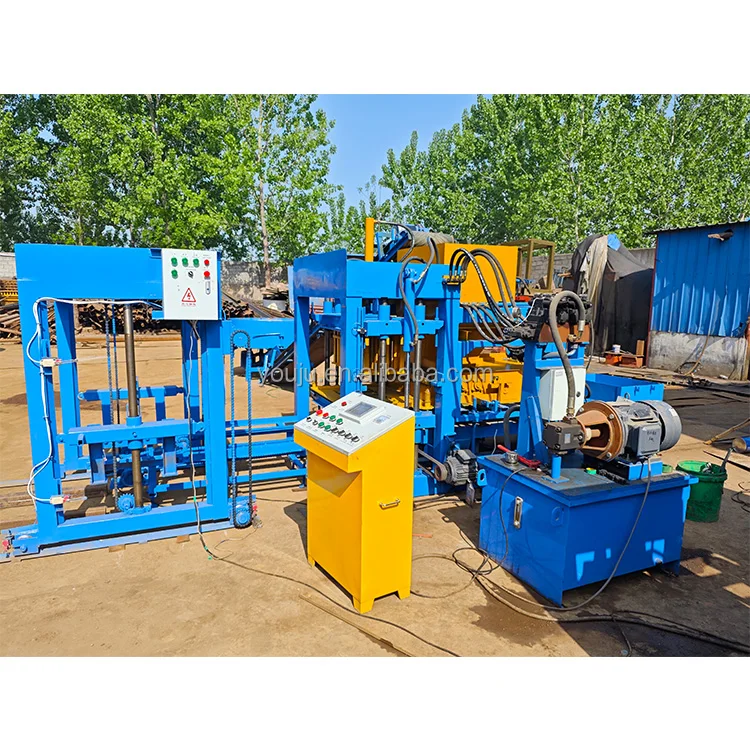
 Stationary block machine