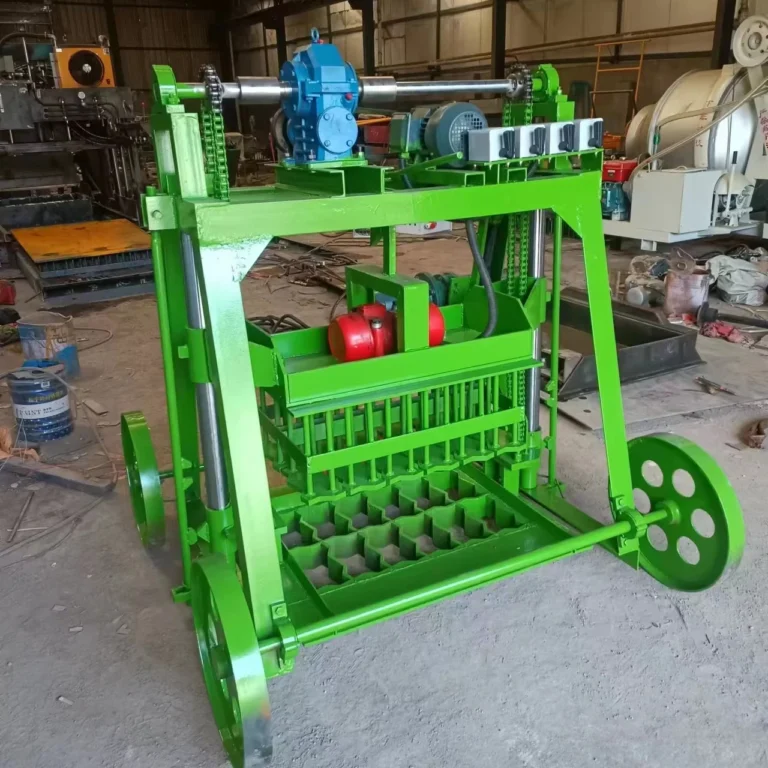
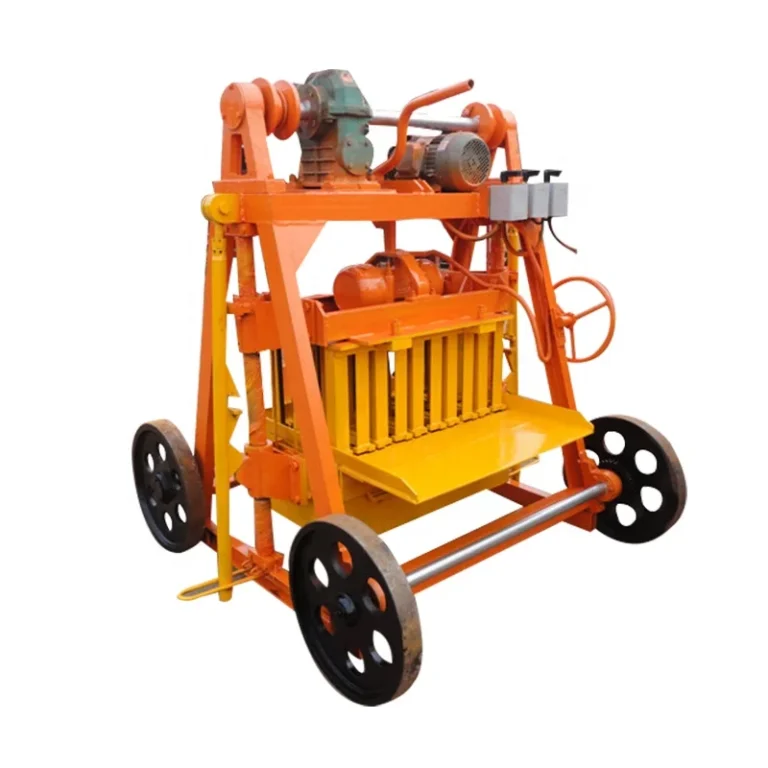
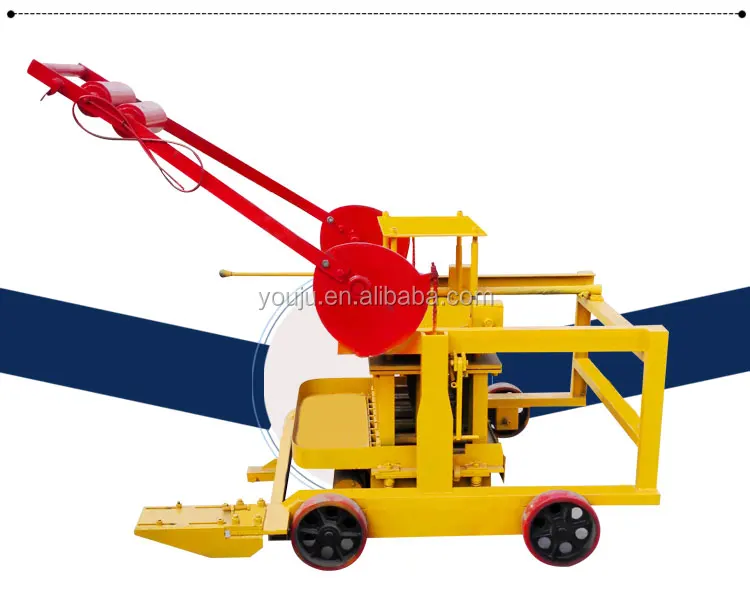
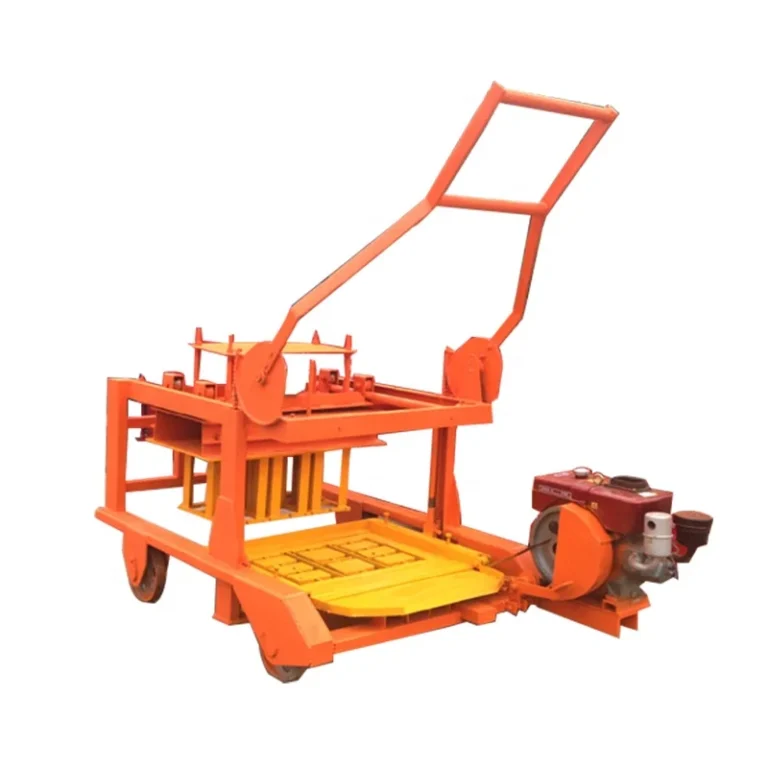
Mobile block machine range built around where each buyer sits — from workshop output to full automatic line, helping you place your project before narrowing the configuration.
Technical Specifications
| Parameter |
Value |
| Model |
QMY6-25 |
| Product Type |
Mobile Egg Laying Block Making Machine |
| Molding Capacity |
6 pcs/mold |
| Hydraulic Pressure |
16 MPa |
| Vibration Form |
Mold Vibration |
| Molding Cycle |
20s-25s (basis to be confirmed by block format) |
| Turning Method |
Hydraulic |
| Total Power |
9.6 kW |
| Total Mass |
2.5 Tons |
| Pallet Requirement |
No pallet required (egg laying type) |
| Basic Configuration |
QMY6-25 host machine, JS500 Concrete Mixer, Dump truck |
| Optional Configuration |
PLD800 Batching Machine, Cement Silo, Screw conveyor, Loading machine |
| Voltage & Frequency |
Customizable for destination market |
| Mould Format |
Customizable for hollow blocks and large solid blocks |
Application Suitability
| Application |
Material or Output |
| On-site construction block production |
Crushed stone, sand, and cement mixtures for hollow blocks |
| Small-scale block manufacturing |
Local aggregate and cement for solid blocks without fixed plant |
| Development project block supply |
Site-prepared ground production for housing and infrastructure |
| Entrepreneur first plant setup |
Low-infrastructure hollow and large solid block output |
What "20-25 Seconds Per Cycle" Actually Means for Your Daily Output
Cycle time only translates to daily capacity when the block format and ground conditions are stated up front.
Many mobile egg laying block machine quotations list a cycle time without naming the block dimensions that figure assumes, so buyers arrive at the site expecting a daily volume the machine never reaches. A 20-second cycle on a small solid block is a different reality than a 25-second cycle on a 200mm hollow block, and ground preparation directly affects how fast the machine can reposition between lays [NEED_CITE: block format impact on mobile machine cycle time]. The gap between quoted and actual output widens further when pallet handling, stacking, and curing labor were never included in the original scope, leaving crews to move fresh blocks by hand.

Why a Pallet-Free System Changes Your Operating Cost
A mobile egg laying block machine that deposits blocks directly on the ground removes the entire pallet loop from your operation. No pallet purchasing, no pallet return conveyors, no pallet storage racks, and no forklift dedicated to pallet circulation. For a first-time plant or a remote construction site, this single decision collapses the infrastructure requirement down to a leveled concrete floor and a mixer feeding the hopper.
Where the Egg Laying Format Fits Your Project Timeline
Contractors working against a project deadline choose this mobile egg laying block machine format because it produces blocks where they are needed, without a fixed batching plant or curing chamber. The machine moves along a prepared strip of ground, laying rows of blocks that cure in place. This approach suits housing developments, road kerb projects, and remote infrastructure work where transporting finished blocks from a distant factory adds cost and breakage risk [NEED_CITE: on-site block production logistics advantages].
How Hydraulic Pressure and Mold Vibration Work Together
The 16 MPa hydraulic pressure and mold vibration on this machine must be read as a pair. Hydraulic pressure compacts the mix from above while mold vibration settles the aggregate from below, and the balance between the two determines block density and edge sharpness. A mix that is too dry will not consolidate under vibration alone, while a mix that is too wet will slump when the mold lifts. Matching the pressure and vibration to your local aggregate grading is the step that turns a catalog specification into consistent block strength on your site.
The Cost of Skipping Voltage and Control Language Confirmation
Arriving at commissioning to discover the motor is wired for a voltage your site does not supply, or that the PLC display is in a language your operator cannot read, adds weeks of delay and rewiring expense. These are not factory defects — they are specification gaps that happen when voltage, frequency, and control language are assumed rather than confirmed before production starts [NEED_CITE: voltage and frequency standards by export market]. A mobile machine is particularly vulnerable because it often goes to sites where electrical infrastructure is already constrained.
Why Buyers Source This Machine Range Here
Block machinery as a single focus means the host machine, mixer, and optional batching equipment are specified as one matched system rather than assembled from separate suppliers. Configuration is set against your actual mix design and local aggregate, not a catalog default. Mould design covers the hollow and solid block formats your market actually sells, with custom drawings available. Automation level is selectable, so a buyer can start with the basic JS500 mixer setup and add a PLD800 batching machine later. Installation support includes operator training on the hydraulic turning method and mold change procedure.
Documentation & Verification
- Machine specification sheet confirming hydraulic pressure and vibration force ratings matched to your block format
- Mould drawing and format list for every hollow and solid block size you intend to produce
- Voltage, frequency, and control language confirmation document signed before production starts
- Factory test record showing molding cycle on your specific block dimensions before dispatch
- Operation and maintenance manual covering hydraulic system and mold change procedure
Installation, Commissioning & Support
- Ground preparation guidance specifying the flatness tolerance needed for consistent egg laying block placement
- Electrical connection requirements for the 9.6 kW total power draw including dedicated circuit rating
- Machine positioning and first-run calibration of hydraulic turning speed and vibration duration
- Operator training on mold change procedure and mix consistency judgment for local aggregate
- Wear parts list covering hydraulic seals and vibration motor components with replacement intervals
What to Include in Your Inquiry
Provide the exact block dimensions you intend to produce, including wall thickness for hollow blocks, so capacity can be calculated per format rather than as a generic cycle time. State your site voltage and frequency, and confirm the language your operators need on any control interface. Describe your local aggregate type and grading so the mix can be matched to the hydraulic pressure and vibration settings before the machine ships.
Frequently Asked Questions
Q: What block formats can the QMY6-25 produce and what is the realistic daily output per format?
A: The machine produces hollow blocks and large solid blocks with moulds customizable to your dimensions. The 20-25 second molding cycle produces 6 pieces per mold, but daily output depends on the specific block format, ground conditions, and mixer feeding rate. A capacity calculation stating the assumed block format will be provided with your quotation.
Q: What ground preparation is needed for egg laying operation?
A: The machine requires a flat, firm concrete surface free of debris and significant slope. Ground preparation directly affects block placement consistency and machine repositioning speed. A site assessment guide is provided before installation to confirm your surface meets the tolerance needed for stable egg laying production.
Q: Can voltage and motor specifications be customized for my market?
A: Voltage and frequency are fully configurable for your destination market. This confirmation must be completed before production starts, as motor rewinding after arrival causes commissioning delays. State your site supply specifications in your inquiry so the correct motor and control panel are fitted at the factory.
Q: What is included in the basic configuration versus optional equipment?
A: The basic configuration includes the QMY6-25 host machine, a JS500 concrete mixer, and a dump truck for material transport. Optional additions include a PLD800 batching machine for automated proportioning, a cement silo with screw conveyor for bulk cement storage, and a loading machine for aggregate feeding.
Q: How long does mould change take and what formats are available?
A: Mould formats are custom-designed to your block dimensions, including hollow blocks and large solid blocks. Change time depends on the mould size and the operator’s familiarity with the hydraulic mold clamping system. Operator training covers the full change procedure, and a mould drawing is provided for every format you order.

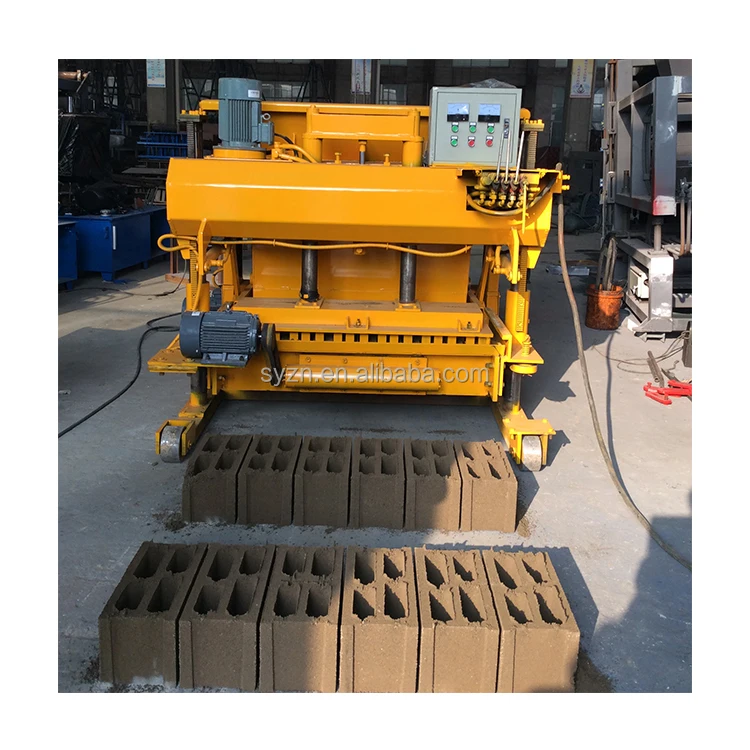
 Mobile block machine