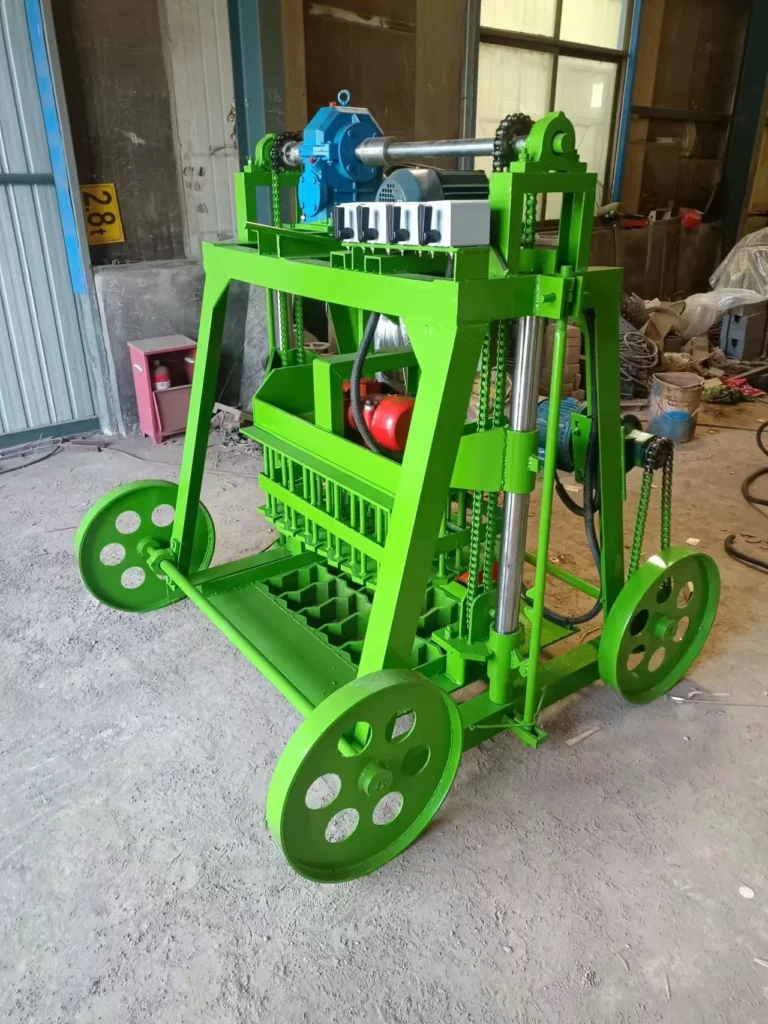
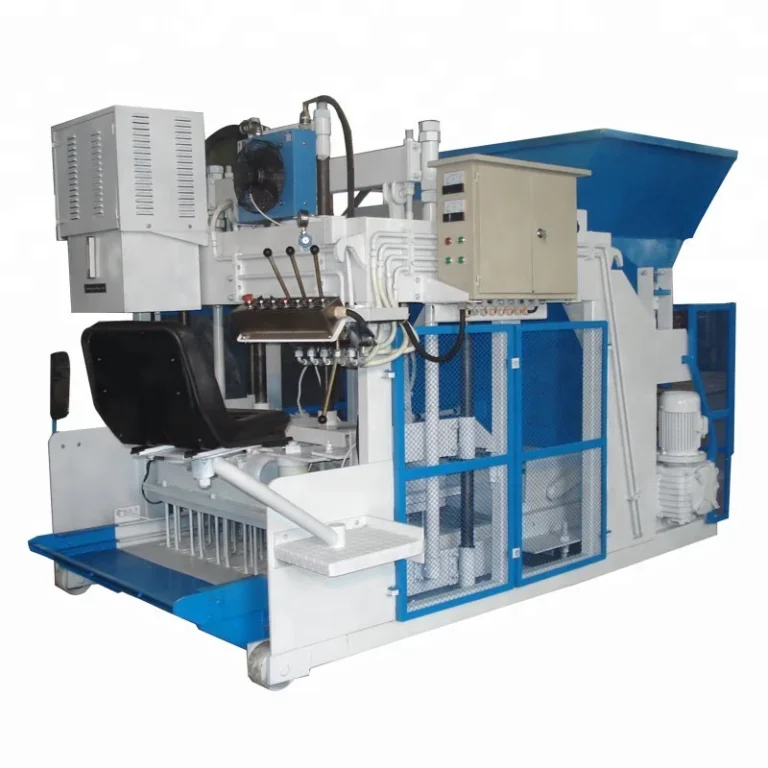
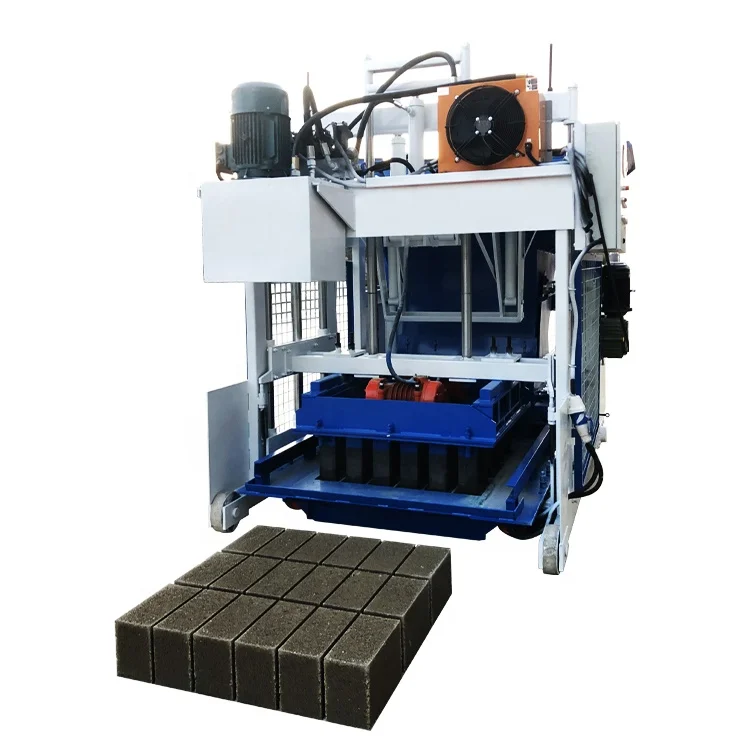
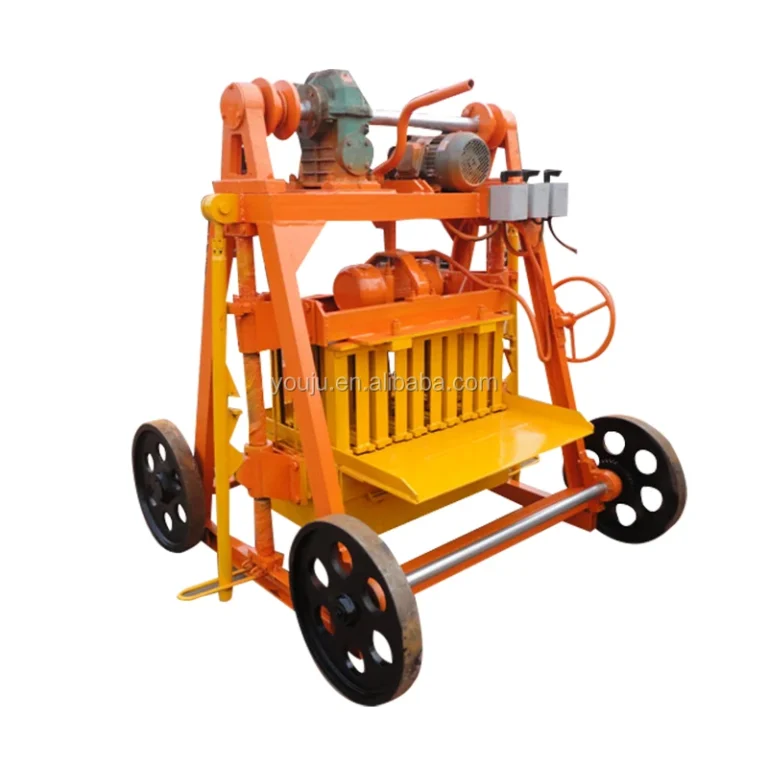
Matched System Design — machine, mould and power source specified together so the QMR4-45 arrives ready to produce the block format your project actually requires.
Technical Specifications
| Parameter |
Value |
| Model |
QMR4-45 |
| Product Type |
Mobile Concrete Block Making Machine |
| Overall Dimensions (L×W×H) |
1100 × 950 × 2100 mm |
| Total Mass |
810 kg |
| Molding Cycle |
30–45 s |
| Power Source |
Diesel engine / Petrol engine / Electric motor (configurable) |
| Output Capacity |
2560 pcs/day (basis not stated in source — confirm block format and shift length) |
| Pallet Requirement |
None — egg-laying, pallet-free operation |
| Block Formats Supported |
Hollow block, solid block, paver brick, fly ash brick, concrete block |
| Basic Equipment Included |
JZC350 or JQ350 diesel concrete mixer, trolley |
| Automation Level |
Manual / low investment |
| Warranty |
1 Year |
Application Suitability
| Application |
Material or Output |
| On-site housing project block production |
Hollow and solid concrete blocks from local sand, gravel and cement |
| Remote infrastructure construction |
Paver bricks and kerbstones laid directly on prepared ground |
| First block plant with minimal capital |
Fly ash bricks and solid blocks using regional aggregate |
| Contractor self-supply on building sites |
Concrete blocks produced adjacent to the structure being built |
What the "2,560 Pieces per Day" Figure Really Means
The quoted daily output assumes a specific block format, shift length and material condition that must be confirmed before you compare machines.
Capacity numbers on mobile block machines are often listed without naming the block size or cycle assumption behind them. I once watched a buyer plan an entire housing phase around a brochure figure, only to discover the number assumed a small solid brick while his contract required 200 mm hollow blocks — his real output dropped to less than half. With the QMR4-45, the 2,560 pcs/day figure appears in the source without a stated basis, so we always issue a capacity calculation document that names the exact format, mould cycle and shift hours used [NEED_CITE: block format and cycle time assumptions in capacity documentation]. This is the only way a mobile block machine manufacturer can give you a number you can actually build a schedule around.

Where the QMR4-45 Fits in the Range
The SHIYUE mobile range begins with the QMR4-45 at the entry tier, designed for buyers who need block production without pouring foundations or building a curing shed. It sits below the semi-automatic stationary models and the fully automatic lines, both of which require fixed plant infrastructure. For a construction contractor or a first-time entrepreneur, this mobile block machine manufacturer positions the QMR4-45 as the lowest-investment point from which you can still produce multiple block formats on a single machine.
Pallet-Free Egg-Laying Operation
The QMR4-45 lays blocks directly onto the ground and moves forward on its own wheels, which removes the entire cost layer of pallet purchase, pallet return handling and pallet storage. On a remote road project or a housing site where flat cured ground is available, this simplifies logistics considerably. The trade-off is that block curing happens in place, so you need enough level area to let each day’s output sit undisturbed. We confirm your available curing area against expected daily output before shipping [NEED_CITE: on-site curing area planning for egg-laying machines].
Reading the Specs That Matter
The 1100 × 950 mm footprint and 810 kg mass mean two workers can relocate the machine with a site trolley, which matters when a contractor moves between project phases. The 30–45 second molding cycle range reflects the difference between a small solid brick and a larger hollow block; thicker formats sit toward the longer end. Dual power availability — diesel engine or electric motor — lets the same machine work on a grid-connected yard or an off-grid site where a generator or diesel mixer is the only energy source. The included JZC350 or JQ350 mixer ensures the concrete arrives at the hopper in a condition the machine can handle.
The Hidden Cost of Skipping Format Confirmation
When a buyer orders without specifying the exact block format the local market buys, the machine arrives with a default mould that may not match. Mould swaps on a manual mobile unit take labour and downtime that erode the flexibility you thought you were buying. We have seen contractors lose the first week of production simply because the mould format list was never reviewed against the project’s bill of quantities. Confirming the format before manufacture avoids this [NEED_CITE: mould format confirmation before shipment].
Why Source the QMR4-45 Through This Range
Block machinery is the single focus of the SHIYUE range, so the QMR4-45 is specified as a matched set — machine, mould, mixer and trolley — rather than assembled from separate suppliers. The power source is selected against your actual site conditions, not a catalogue default. Mould design covers the formats your local market demands, and custom drawings are accepted. Automation level is selectable, meaning you can begin with the manual QMR4-45 and step up to a semi-automatic stationary model as volume grows. Installation and commissioning support includes operator training at your site.
Documentation & Verification
- Capacity calculation document stating the exact block format behind the daily output figure
- Mould drawing and format list showing achievable block sizes with cycle times per format
- Voltage, frequency and control language confirmation sheet for the electric variant
- Factory test record run on your specified mould before dispatch
- Wear parts and mould availability list covering the first replacement cycle
Installation, Commissioning & Support
- Level compacted ground required across the curing area to support pallet-free egg-laying operation
- Electric variant requires confirmed voltage and frequency matching the local supply before motor winding
- Machine arrives assembled on its trolley; only the mixer and power unit need on-site connection
- First production run supervised to set cycle timing against your actual mix and aggregate
- Operator training covers mould change procedure and daily lubrication points on the 810 kg frame
- Wear parts list provided so local sourcing or direct order is possible from day one
Before You Send an Inquiry
To match the QMR4-45 to your project, share the block formats your market sells, the daily volume you need to sustain, and whether grid electricity or diesel is your available power source. If you already have a mixer or a specific curing area, mention those as well — it changes what we include in the basic equipment package.
Frequently Asked Questions
Q: The 2,560 pcs/day figure — which block format does it assume?
A: The source does not state the block format or shift length behind that number. Before quotation we issue a capacity calculation that names the exact format, mould cycle and working hours used, so you can compare against your actual production target rather than a generic brochure claim.
Q: Diesel or electric — how do I choose the right power source?
A: If your site has stable grid power, the electric motor keeps running costs lower and maintenance simpler. For remote or off-grid project sites, the diesel engine paired with the included diesel mixer removes the need for a separate generator. We confirm the choice during inquiry based on your site conditions.
Q: What block formats can the QMR4-45 produce and how long does a mould change take?
A: The machine supports hollow block, solid block, paver brick, fly ash brick and concrete block formats. Mould change is a manual process on this entry-tier model. We supply the mould format list and change procedure before delivery so your crew can plan production runs around format switches.
Q: What electrical details must be confirmed before shipping the electric variant?
A: Voltage, frequency and any control display language preference must be confirmed before the motor is wound and the unit is wired. We send a confirmation sheet listing these values for your approval, preventing commissioning delays when the machine arrives at your site.
Q: When should I consider stepping up from the QMR4-45 to a semi-automatic or automatic line?
A: If your daily volume target exceeds what a single mobile unit can sustain, or if you need consistent pallet-based curing for higher-strength blocks, a stationary semi-automatic or automatic line is the next step. The QMR4-45 remains the right entry point for low-investment, on-site production where infrastructure is limited.

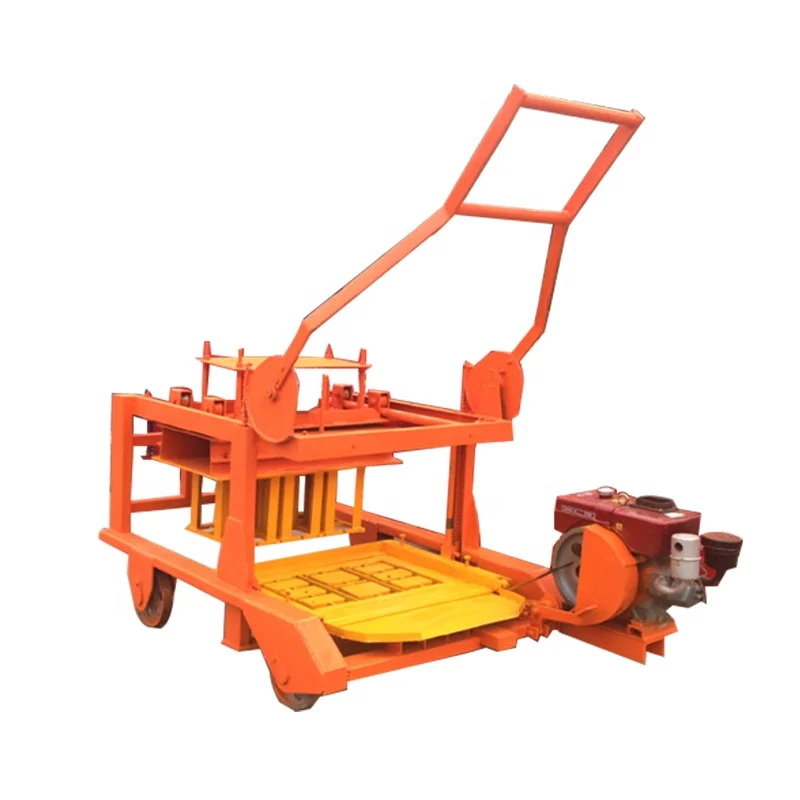
 Mobile block machine