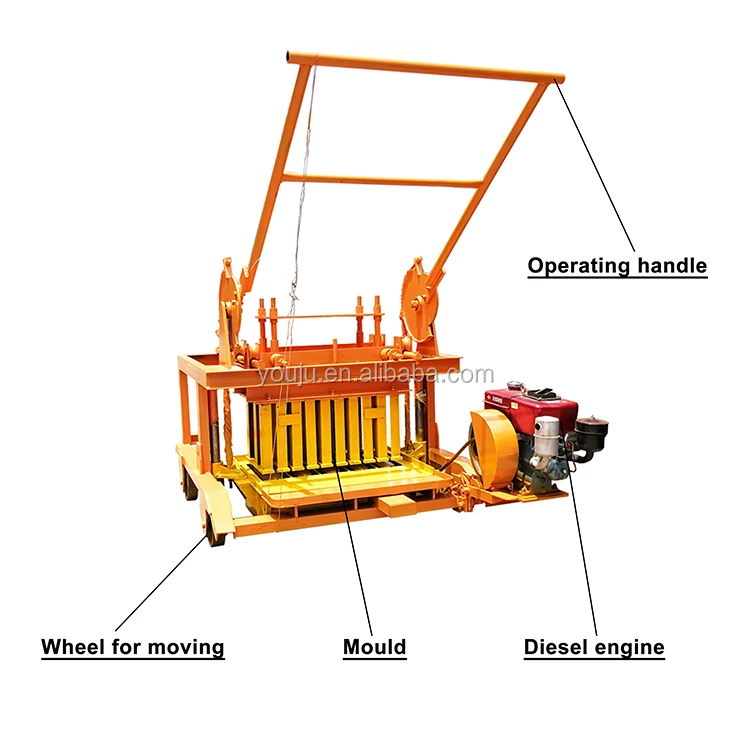
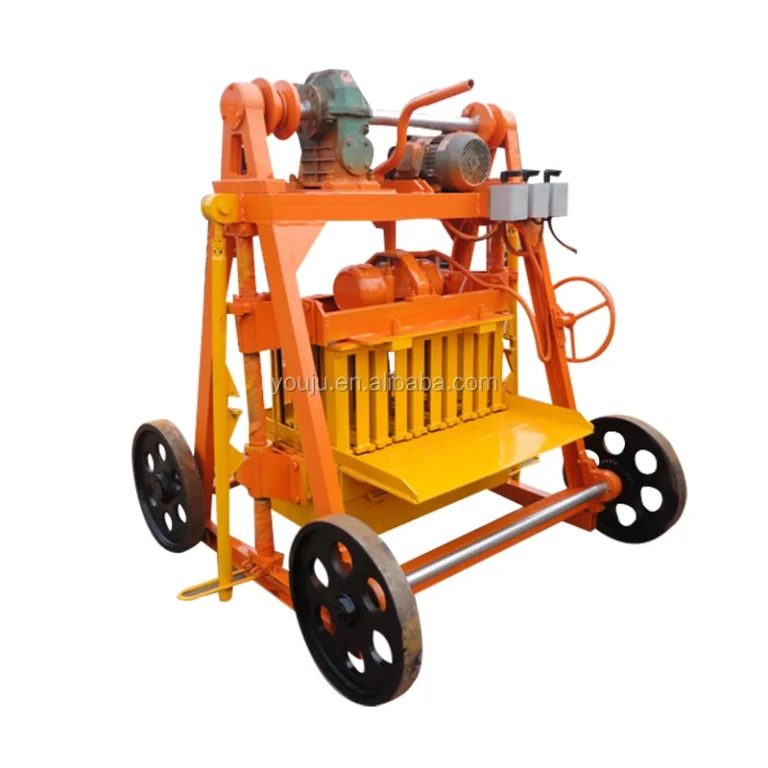
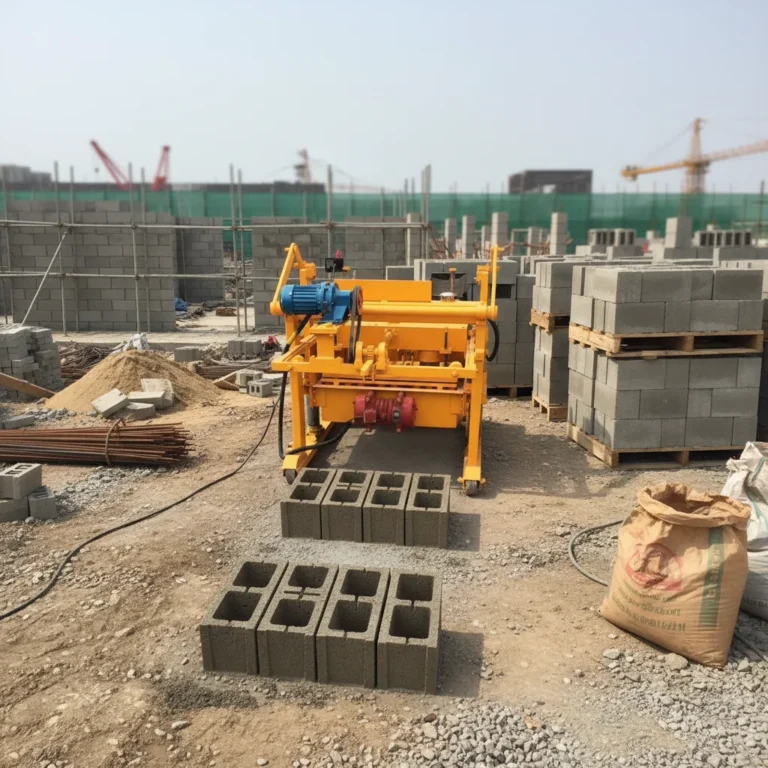
Matched System Sizing — every QMY18-15 egg-laying block machine ships with mould, power rating, and PLC language confirmed against your local mix and grid before production starts.
Technical Specifications
| Parameter |
Value |
| Model |
QMY18-15 |
| Product Type |
Mobile Egg Laying Concrete Block Making Machine |
| Working Method |
Hydraulic |
| Control System |
PLC (display language to confirm) |
| Rated Power |
24 kW |
| Voltage & Frequency |
Customized to buyer’s local industrial supply (exact V/Hz to confirm) |
| Output Capacity |
approx. 3,400 pcs per shift (basis: 400×200×200 mm hollow block) |
| Block Types Supported |
Hollow block and custom formats per buyer requirement |
| Pallet Requirement |
None — egg-laying design, blocks formed directly on ground |
| Automation Level |
Semi-automatic with PLC-assisted operation |
| Overall Dimensions |
Not stated in source |
| Net Weight |
Not stated in source |
| Vibration Force |
Not stated in source (basis to be confirmed) |
| Hydraulic Pressure |
Not stated in source (basis to be confirmed) |
Application Suitability
| Application |
Material or Output |
| On-site production for housing projects |
Hollow blocks from locally sourced crushed stone, sand, and cement |
| Entry-level block plant for entrepreneurs |
Standard masonry units using available aggregate and manual curing on prepared ground |
| Mobile production for remote construction sites |
Concrete blocks formed without fixed plant infrastructure or pallet handling systems |
| Custom-format masonry for regional markets |
Interlocking or solid formats depending on mould fitted and mix design |
What a "3,400 Pieces Per Shift" Quotation Actually Means
Capacity is only honest when the block format is stated alongside the number.
Many mobile egg laying block machine manufacturer quotations list a shift output without saying which block size that figure assumes. A machine rated at 3,400 pieces for a 400×200×200 mm hollow block will produce a different count for smaller solid bricks or interlocking pavers. When a buyer budgets based on the headline number and then switches format, daily revenue falls short of the projection. I have watched a west African contractor lose an entire week reconciling his business plan with actual output because the format assumption was buried in a footnote [NEED_CITE: common block format capacity assumptions]. The mobile egg laying block machine manufacturer you choose should state the basis clearly in the first line of the proposal.

Where the QMY18-15 Sits in the Full Block Machine Range
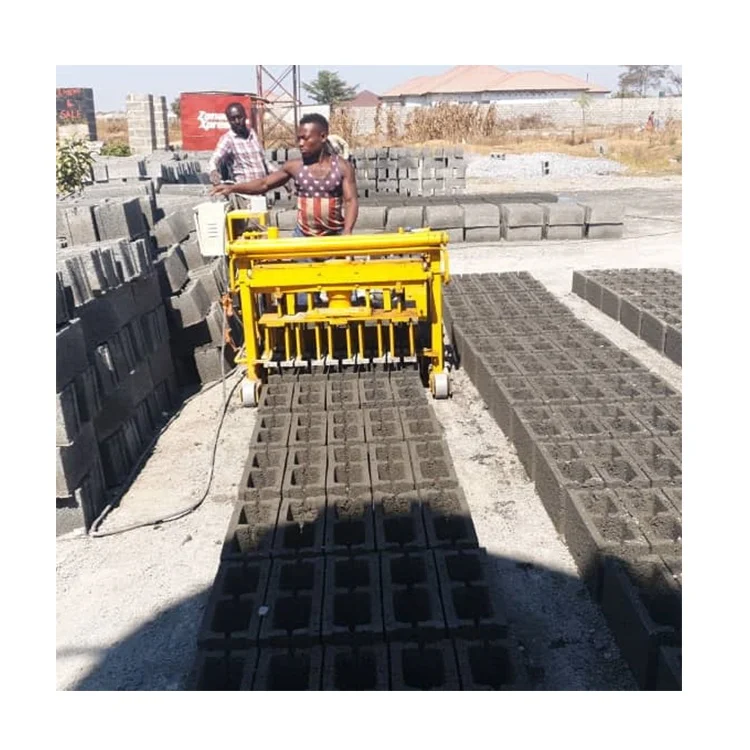
The QMY18-15 occupies the entry tier of the mobile range, designed for buyers who need block output without investing in pallets, curing racks, or a fixed plant. Compared to semi-automatic stationary machines that require a pallet return system, this egg-laying unit forms blocks directly on a level concrete floor and moves forward after each cycle. That eliminates the pallet handling infrastructure entirely, which matters for first-time plant operators working with limited capital.
How Egg-Laying Production Changes Your Site Layout
Because the QMY18-15 lays blocks on the ground, your curing area becomes your production floor. The prepared surface must be smooth, level, and large enough to hold a full shift of output before blocks are moved to storage. This is fundamentally different from a stationary press where pallets carry blocks to a separate curing rack [NEED_CITE: egg-laying block machine ground preparation standards]. Buyers who overlook this end up with uneven block density where the floor dips, and the mobile egg laying block machine manufacturer should flag ground tolerances before dispatch.
Reading the Specs That Actually Matter for Egg-Laying Machines
The 24 kW rated power drives both the hydraulic system and the vibration motor, and the balance between hydraulic pressure and vibration force determines whether blocks hold their shape once the mould lifts. Too much vibration without enough hydraulic compaction leaves blocks that crumble at the edges; too little vibration leaves voids inside hollow cores. The PLC control allows semi-automatic cycling, but the operator still guides the machine along the production line, so cycle time depends partly on operator pace. Voltage and frequency must match your local grid exactly — a 50 Hz motor running on 60 Hz supply will overheat within a shift, and this is one of the most common commissioning delays I see in the field.
The Cost of Skipping Ground Preparation
Buyers who treat ground prep as optional discover the consequences quickly. An uneven floor causes the mould to sit at an angle, producing blocks with one thin wall that fails under load. I once visited a site where the contractor had poured no leveling screed, and the machine was laying blocks on compacted soil that softened after rain — the bottom course of every block absorbed moisture and lost compressive strength [NEED_CITE: ground bearing requirements for mobile block production]. Correcting this after the fact means halting production, pouring a proper slab, and waiting for cure time while your project deadline slips.
Why Buyers Source This Tier From a Specialist
Block machinery as a single focus means the QMY18-15 is specified alongside its mould, power supply, and control language as one matched package rather than assembled from separate vendors. Machine configuration is set against your actual mix design and local aggregate, not a catalogue default. Mould design covers the formats your market actually sells, including custom drawings when standard options do not fit. Automation level is selectable so you can start with semi-automatic PLC operation and move to a higher tier later. Installation support includes operator training so your crew understands the relationship between mix moisture, cycle timing, and block integrity from the first day of production.
Documentation & Verification
- Line layout showing production path and curing area sized for 400×200×200 mm hollow block output
- Machine specification sheet confirming rated power, hydraulic working method, and PLC control system
- Mould drawing and format list detailing which block types the QMY18-15 will produce on your site
- Voltage and control language confirmation document signed off before production begins
- Factory test record with blocks formed using your shipped aggregate sample prior to dispatch
- Packing photographs showing dismantling and container loading configuration for shipment
Installation, Commissioning & Support
- Level concrete floor required across the full production and curing path before the QMY18-15 arrives on site
- Dedicated power circuit matching confirmed voltage and frequency for the 24 kW rated load
- Machine arrives partially assembled with hydraulic and electrical systems requiring on-site connection
- First-run commissioning includes adjusting vibration duration and hydraulic pressure to your specific aggregate mix
- Operator training covers PLC cycle initiation, mould change procedure, and daily maintenance checks
- Wear parts list identifies hydraulic seals and mould liner components with reorder references
What to Include in Your First Inquiry
To size the QMY18-15 correctly, share the block formats your market demands, your target daily output, and the local aggregate you plan to use — sand source, stone grading, and cement type all affect the mix design we configure before building. Confirm your site voltage, frequency, and preferred PLC display language so the control panel is built to your specification. If you have an existing curing area or plan to pour a new slab, send the dimensions so we can calculate realistic shift capacity against your floor space.
Frequently Asked Questions
Q: How is the 3,400 pieces per shift output verified, and what block format does it assume?
A: That figure is based on continuous production of 400×200×200 mm hollow blocks over a standard shift. Smaller formats such as solid bricks or interlocking pavers will yield a higher piece count per cycle, while larger formats reduce it. We state the assumed format in every quotation so your revenue projection matches actual machine output.
Q: Where does the QMY18-15 sit compared to semi-automatic and automatic block machines?
A: It occupies the mobile entry tier, eliminating pallet and curing rack investment entirely. Semi-automatic stationary machines require pallet handling infrastructure and a dedicated curing area, while fully automatic lines add stacking and cubing. The QMY18-15 suits buyers who want on-site production with minimal fixed infrastructure.
Q: What voltage, frequency, and PLC language options are available?
A: Voltage and frequency are customized to match your local industrial grid, and PLC display language is confirmed before the control panel is built. We require written confirmation of these three parameters before production starts to avoid commissioning delays once the machine arrives at your site.
Q: What ground preparation does egg-laying production require?
A: The production surface must be a smooth, level concrete slab large enough to hold a full shift of output. Ground undulations cause uneven block walls and density variation. We provide floor tolerance specifications in the line layout document so your contractor can prepare the site correctly before the QMY18-15 is delivered.
Q: Which mould formats can the QMY18-15 accept, and how does custom design work?
A: Standard moulds cover hollow block formats common in your region, and custom moulds are designed to your drawings when market demand requires non-standard shapes. Each mould is matched to the machine’s hydraulic and vibration parameters, and we provide a format list confirming every block type before the order enters production.

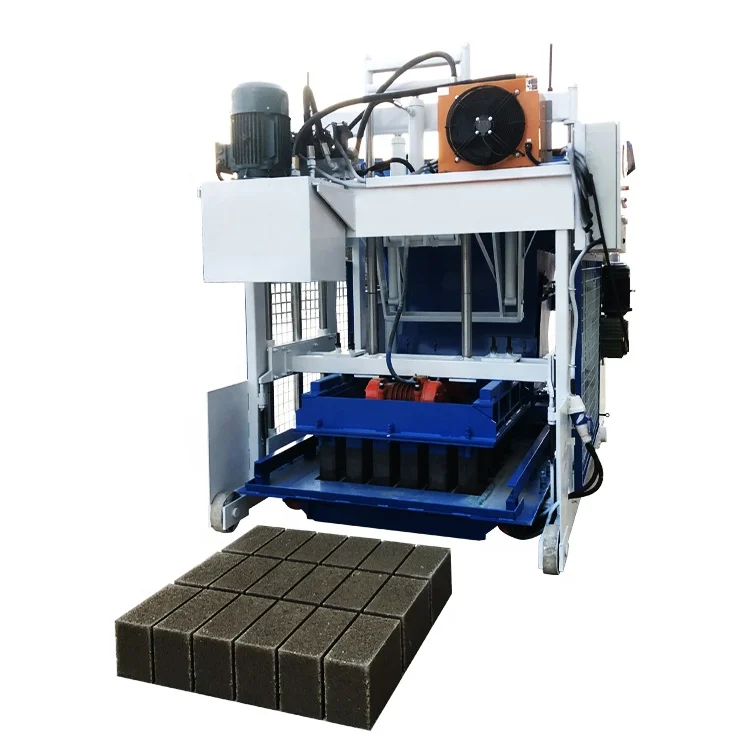
 Mobile block machine