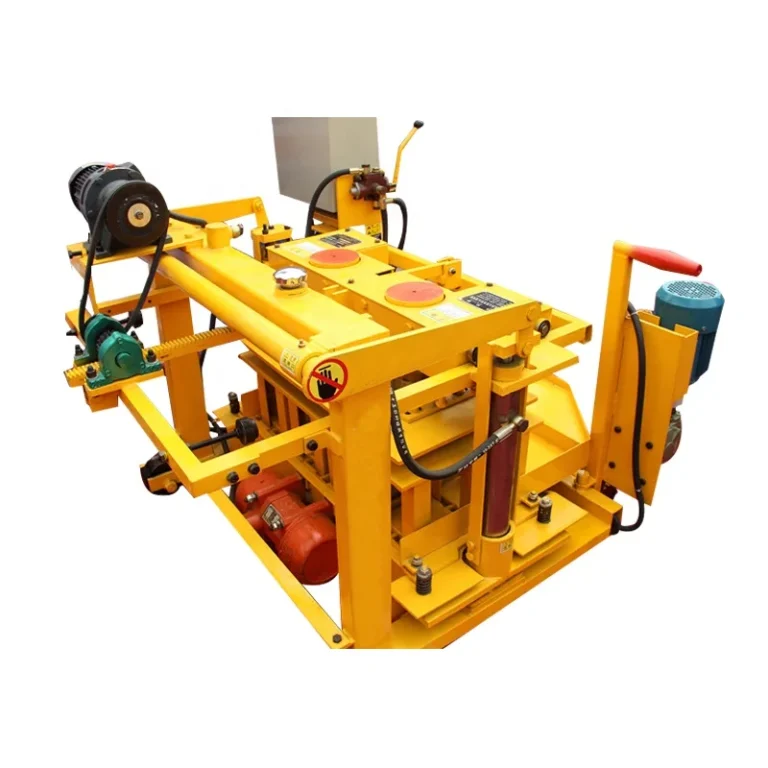
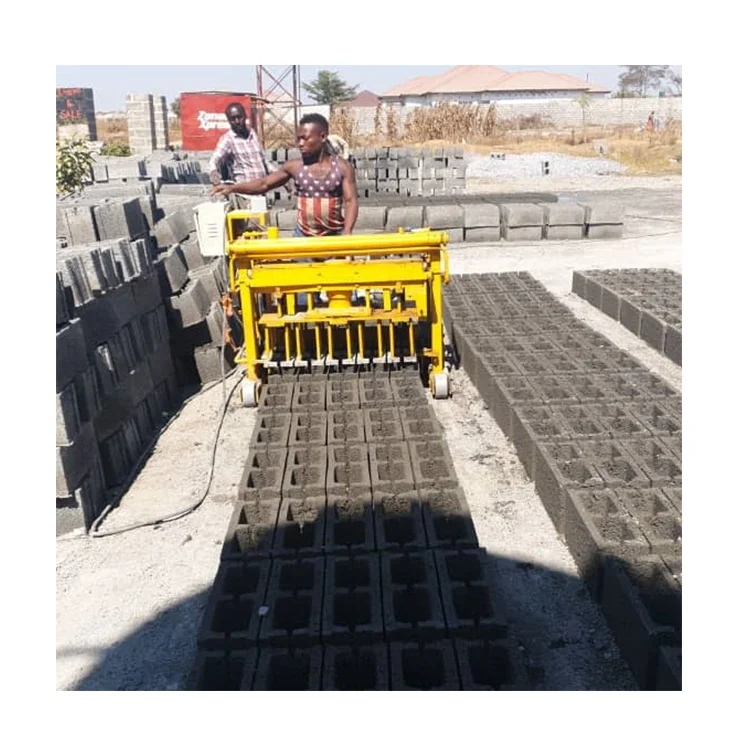
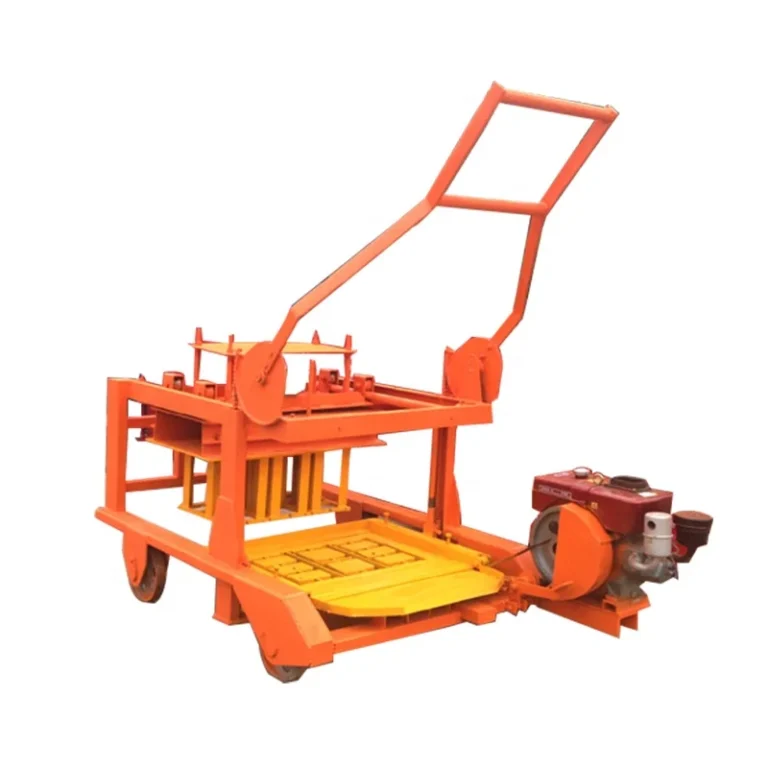
Complete Matched System — The QMR4-45 is specified with its mould, pallet strategy and diesel power source as one verified unit, so buyers avoid assembling mismatched components from separate vendors.
Technical Specifications
| Parameter |
Value |
| Model |
QMR4-45 |
| Product Type |
Diesel Movable Egg Laying Concrete Block Machine |
| Overall Dimensions (L×W×H) |
2420×1320×1650mm |
| Net Weight |
810kg |
| Moulding Cycle |
40-45s |
| Pallet Requirement |
No pallet required (egg laying design) |
| Power Source |
Diesel Engine (6kW / 6-8HP) |
| Voltage |
220V or 380V or according to client local voltage |
| Output Capacity (Hollow Block 400×200×200mm) |
3000pcs/day (4pcs/mould, 8 hours) |
| Output Capacity (Hollow Block 400×150×200mm) |
3500pcs/day (5pcs/mould, 8 hours) |
| Output Capacity (Hollow Block 400×120×200mm) |
4500pcs/day (6pcs/mould, 8 hours) |
| Automation Level |
Manual Operation |
| Warranty |
One year guarantee for the whole machine |
Application Suitability
| Application Scenario |
Production Environment & Material |
| Remote Construction Sites |
Housing and infrastructure projects relying on diesel power without grid electricity |
| On-Site Contractor Production |
Development sites producing hollow blocks directly on existing concrete ground |
| Small-Scale Manufacturing |
Entrepreneurs producing cement blocks from local crushed stone and sand |
| Housing Projects |
Local production using site-sourced aggregate to eliminate transport costs |
The Real Meaning Behind "3000 Pieces Per Day"
Capacity figures only matter when tied to a specific block format and working cycle.
I’ve seen buyers order a diesel movable block machine manufacturer unit based on a single headline number, then arrive on site to discover that figure assumed a smaller block format their market doesn’t buy. The QMR4-45 egg laying block machine delivers its rated output only when matched to the exact mould format stated — 400×200×200mm hollow blocks at 4 pieces per mould across an 8-hour shift [NEED_CITE: block format capacity calculation standards]. Switch to a different format without recalculating, and daily production drops accordingly.

Where This Machine Fits in the Block Machine Range
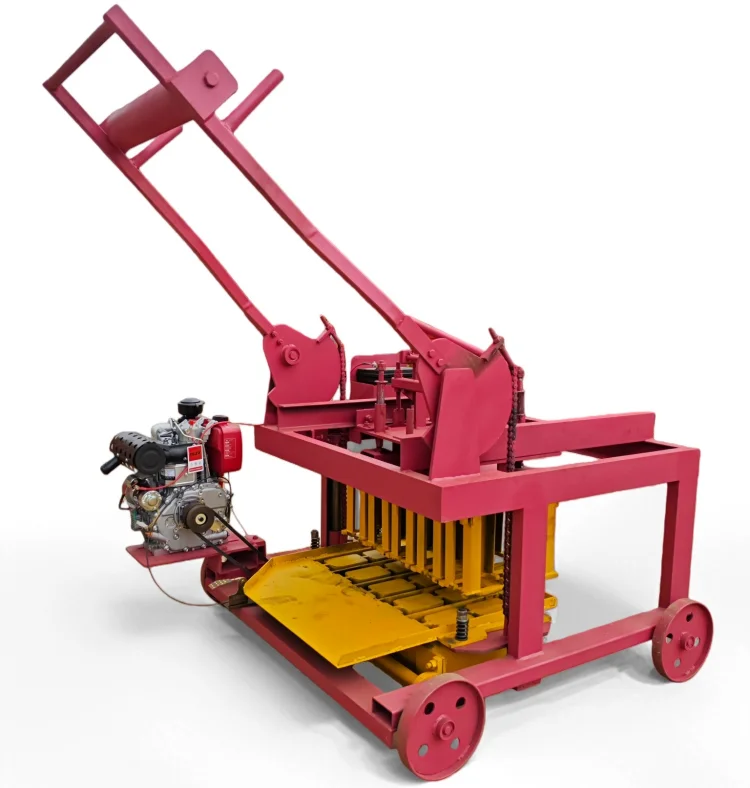
The QMR4-45 occupies the entry-mobile tier, positioned for buyers who need production without a fixed plant structure. Unlike semi-automatic machines requiring pallet handling systems and curing racks, this unit lays blocks directly on prepared ground. The diesel engine power source removes the grid electricity dependency that constrains other tiers, making it suitable for remote project locations where power infrastructure is unreliable or absent.
Footprint and Relocation Strategy
At 2420×1320×1650mm and 810kg, the machine moves between project sites without heavy transport logistics. Contractors working multiple housing developments can relocate production as work phases complete. The compact dimensions mean site preparation requires only a level concrete surface — no dedicated factory building, no pallet storage yard, no curing rack infrastructure [NEED_CITE: mobile block machine site preparation requirements]. This reduces initial investment for buyers testing block production before committing to larger automatic lines.
Interpreting the Power and Cycle Specifications
The 6kW diesel engine provides hydraulic pressure independent of local electrical grid stability, which matters in regions where voltage fluctuation damages sensitive PLC systems. The 40-45 second moulding cycle determines realistic throughput when combined with manual loading and repositioning time — operators must account for the seconds spent moving the machine forward after each block is laid. Multiple mould formats (400×200×200mm / 400×150×200mm / 400×120×200mm) share one machine frame, but mould change time is not specified in available documentation and must be confirmed before purchase.
What Happens When Mould and Mix Design Don’t Align
Buyers who skip the mix design conversation often discover their local sand contains too much clay for the vibration force this class of machine delivers. The result is blocks that crumble during curing or fail compression tests required by local building codes. I’ve watched production lines stall because the machine was configured for washed river sand while the buyer’s only available source was pit sand with high fines content [NEED_CITE: concrete block mix design and aggregate compatibility]. Block strength inconsistency then forces costly material sourcing changes after the machine has already arrived on site.
Why Configuration Confirmation Matters Before Dispatch
The QMR4-45 is built as a matched system when ordered through suppliers who verify each component against the buyer’s actual conditions. This means the diesel engine specification matches the altitude and ambient temperature of the project site, the voltage matches available local supply for any auxiliary equipment, and the mould formats included match what the local construction market actually purchases. Suppliers treating block machinery as a single focus — rather than assembling components from separate vendors — catch these mismatches before the machine ships rather than after commissioning fails.
The company maintains focus on block machines and their supporting equipment, which means the QMR4-45 arrives with mould drawings covering all stated formats, a factory test record demonstrating cycle time achievement, and documentation confirming the voltage and control language match the destination country’s requirements.
Documentation & Verification
- Capacity calculation document stating which block format each daily output figure assumes
- Machine specification sheet confirming hydraulic pressure matched to buyer’s mix design
- Mould drawing and format list covering 400×200×200mm, 400×150×200mm, and 400×120×200mm hollow blocks
- Voltage confirmation document (220V / 380V / local voltage) verified before shipment
- Factory test record demonstrating moulding cycle achievement on specified block format
Installation, Commissioning & Support
- Level concrete ground surface required for egg laying operation — no pallet system or curing rack infrastructure needed
- Diesel engine eliminates dedicated electrical circuit requirement for main hydraulic pressure
- 810kg weight allows positioning with standard site equipment rather than heavy crane logistics
- One-year machine warranty covers mechanical and hydraulic components
- Mould and wear parts list provided for planning first replacement order before inventory depletes
Starting the Conversation
Before requesting a quotation for a diesel movable block machine manufacturer unit, gather your target block format dimensions, the daily output your project timeline requires, and a sample of the sand and aggregate available at your project site. Confirm whether your local electricity supply matches 220V or 380V for any auxiliary equipment, and specify the control display language your operators need. This information allows accurate configuration rather than generic catalog pricing.
Frequently Asked Questions
Q: How is daily output calculated and which block format does each capacity figure assume?
A: The stated outputs assume specific mould configurations: 3000 pieces daily requires the 400×200×200mm hollow block mould producing 4 blocks per cycle, while 4500 pieces daily assumes the 400×120×200mm mould producing 6 blocks per cycle. All figures are based on 8-hour continuous operation with the 40-45 second moulding cycle. Different block formats or shorter working days will produce different daily totals.
Q: What voltage options are available and how is local electrical compatibility confirmed before dispatch?
A: The machine accepts 220V, 380V, or custom local voltage specifications. Voltage must be confirmed during the quotation phase so electrical components match your site’s available supply. The diesel engine provides main hydraulic power independently, but any auxiliary equipment requires compatible voltage. Control display language options should also be specified before production begins.
Q: How does the QMR4-45 compare to semi-automatic and automatic tiers in terms of investment and footprint?
A: The QMR4-45 sits at the entry-mobile tier with minimal infrastructure requirements — no pallets, no curing racks, no factory building needed. Semi-automatic tiers add pallet handling and require dedicated curing areas, while automatic tiers include stacking and cubing systems but demand larger plant footprints. Investment and output capacity increase with each tier, so buyers should match the tier to their actual production volume and available space.
Q: What on-site conditions are required to start production with an egg laying machine?
A: A level concrete ground surface is essential since blocks are laid directly without pallets. Adequate space for block curing must be available adjacent to the production area. Local aggregate and cement must be sourced before production begins, and the mix design should be tested with the machine’s vibration force to ensure block strength meets local building standards.

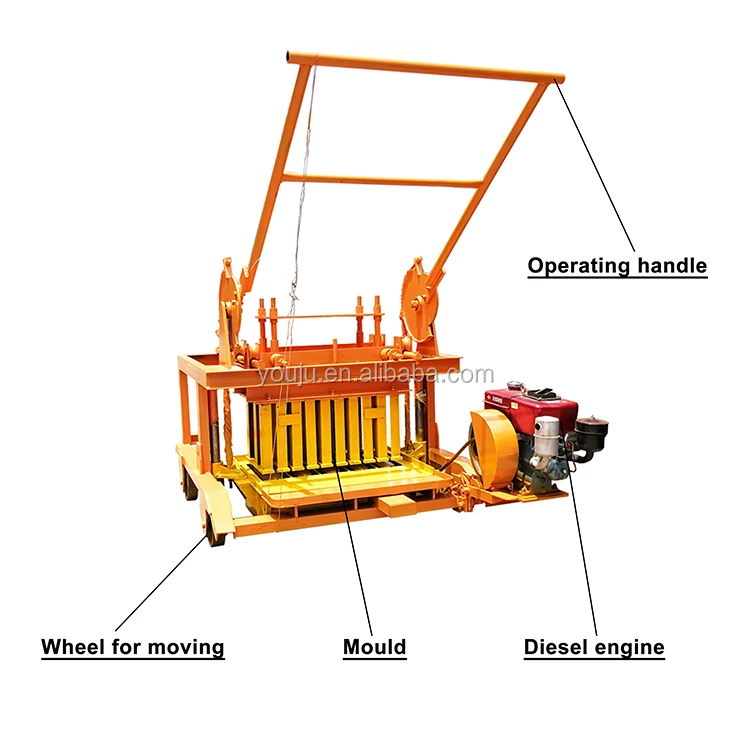
 Mobile block machine