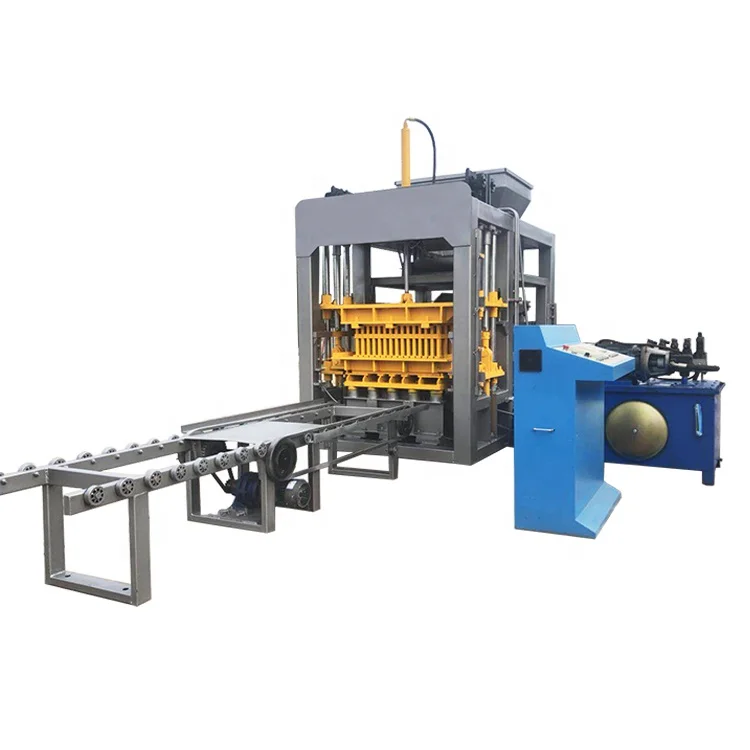
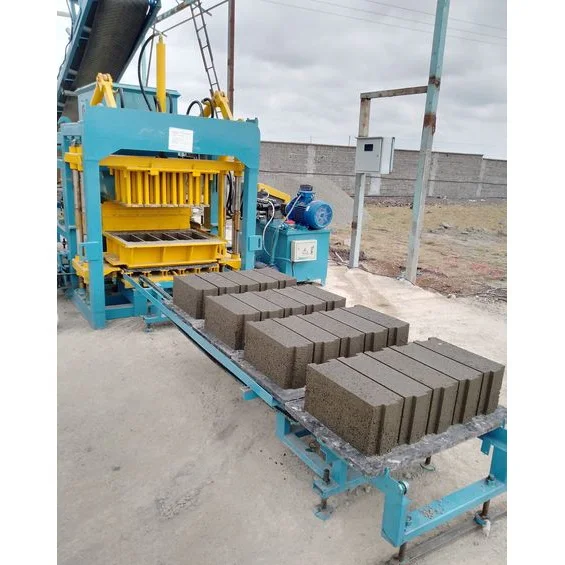
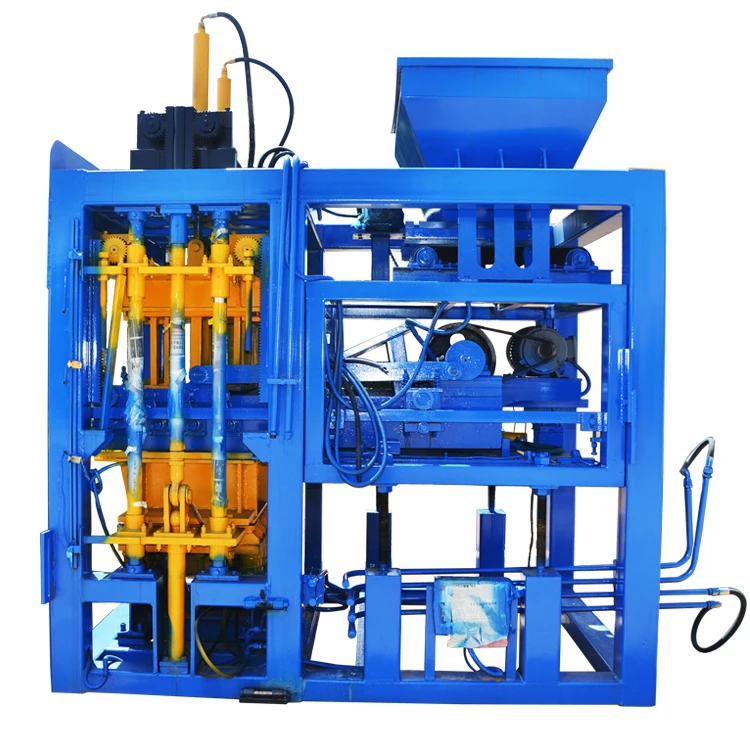
Pallet-free mobile design — the QMY10-15 egg-laying configuration removes recurring pallet cost and curing-rack handling from the budget while still producing hollow blocks on-site.
Technical Specifications
| Parameter |
Value |
| Model |
QMY10-15 |
| Product Type |
Mobile Automatic Hydraulic Block Making Machine |
| Machine Type |
Mobile / Egg-laying |
| Automation Level |
Full-automatic |
| Hydraulic Pressure |
Yes (MPa to be confirmed) |
| Vibration Force |
Yes (kN to be confirmed) |
| Motor |
Siemens motor |
| Mould Material |
Heat-treated |
| Pallet Requirement |
Pallet-free (mobile egg-laying type) |
| Cycle Time |
15–20 s (basis not stated in source) |
| Output Capacity (400×200×200 mm Hollow Block) |
1,800–2,400 pcs/h | 14,400–19,200 pcs/8 hr |
| Output Capacity (400×150×200 mm Hollow Block) |
2,160–2,880 pcs/h | 17,280–23,040 pcs/8 hr |
| Output Capacity (400×120×200 mm Hollow Block) |
2,880–3,840 pcs/h | 23,040–30,720 pcs/8 hr |
| Output Capacity (400×100×200 mm Hollow Block) |
3,240–4,320 pcs/h | 25,920–34,560 pcs/8 hr |
| Control System |
To be confirmed (PLC brand / language) |
| Voltage & Frequency |
To be confirmed |
| Overall Dimensions |
To be confirmed |
| Net Weight |
To be confirmed |
| Key Features |
Full-automatic hydraulic pressure, Siemens motor drive, heat-treated moulds, pallet-free mobile operation |
Application Suitability
| Application |
Material or Output |
| On-site hollow block production for housing projects |
400×200×200 mm and 400×150×200 mm hollow blocks from crushed stone, sand, and cement |
| Mobile production for remote construction sites |
400×120×200 mm and 400×100×200 mm hollow blocks with local aggregate |
| Contractor-run block yards with minimal fixed infrastructure |
Pallet-free egg-laying output across four standard hollow block formats |
Where the QMY10-15 Sits in the Full Machine Range
A mobile automatic block making machine manufacturer must be clear about which buyer this model is built for before the conversation turns to output numbers.
Buyers who land on this page are usually comparing their first block plant against a larger stationary line, or they already run a semi-automatic machine and want to understand what stepping into the full-automatic hydraulic block machine range actually changes. The QMY10-15 is the mobile high-output tier in our lineup. It sits above the egg-laying models that require manual mould changes and below the stationary automatic lines that need pallets, curing racks, and a fixed foundation. Knowing where it fits saves weeks of back-and-forth once a project deadline is already counting down.

Output Tiers and the Investment Step Between Models
When a buyer surveys the Shiyue range, the first decision is whether the site can support a fixed plant. If the answer is no, the mobile automatic block making machine manufacturer narrows the field to egg-laying models. Within that subset, the QMY10-15 is the highest-output option, driven by a Siemens motor and hydraulic pressure rather than mechanical vibration alone. Semi-automatic egg-layers sit one step down: lower capital outlay, manual pallet or mould handling, and a smaller daily ceiling. The step up to a stationary automatic line adds pallets, automatic stacking, and curing rack handling — infrastructure the QMY10-15 deliberately avoids [NEED_CITE: typical capital cost bands for mobile versus stationary block lines].
Footprint, Crew, and Site Readiness
A mobile machine needs only a level concrete floor, a water supply, and a three-phase power drop. There is no curing rack to build, no pallet return conveyor to install, and no stacking station to commission. That keeps the site footprint compact and the crew small — often a mixer operator, one person guiding the machine along the casting bed, and a labourer feeding raw material. For contractors who move between housing phases, the machine travels on a flatbed and is producing again within a shift of arrival.
Reading the Spec Sheet Beyond Cycle Time
Hydraulic pressure and vibration force must be balanced against the buyer’s mix design. If the local aggregate is rounded river gravel, the vibration frequency that works for angular crushed stone will leave blocks under-compacted. The QMY10-15 specifies hydraulic pressure and vibration force as separate adjustable parameters so the operator can dial in density without changing the mould. Heat-treated moulds resist abrasive wear from high-sand mixes, keeping block dimensions stable across the working life of the tooling. Cycle time of 15–20 s is quoted across all four hollow block formats, but the actual seconds per cycle depend on mix slump and ambient temperature — a hotter climate shortens the vibration window before the mix sets [NEED_CITE: effect of ambient temperature on concrete block cycle time].
The Cost of Skipping the Aggregate Conversation
I once watched a contractor lose an entire week because the machine arrived configured for a crushed-granite mix, while his site only had access to high-clay river sand. Block faces crumbled on demoulding, and the hydraulic pressure had to be backed off so far that density targets were missed. That is the hidden price of ordering a mobile automatic block making machine without sending a raw material sample first. When the mix and the machine are not matched before shipment, the commissioning visit turns into an extended troubleshooting session, and the project schedule slips while the buyer waits for revised parameter settings [NEED_CITE: common causes of commissioning delays on exported block machines].
Why Buyers Place the QMY10-15 Order Here
Block machinery is our single focus, which means the QMY10-15 is specified as one system — motor, hydraulics, mould, and controls — rather than assembled from unrelated suppliers. Capacity calculations are issued per block format, not buried in a single headline number. Voltage, frequency, and PLC display language are confirmed before the machine enters assembly, so there is no surprise on arrival. Factory test records travel with the shipment, and heat-treated moulds are listed with part numbers so replacements can be ordered without a second round of engineering drawings.
Documentation & Verification
- Capacity calculation sheet listing output per hollow block format
- Machine specification with hydraulic pressure and vibration force values
- Mould drawing set covering all four hollow block sizes
- Voltage, frequency, and control language confirmation record
- Factory test record signed off before crating
- Operation and maintenance manual in the confirmed display language
Installation, Commissioning & Support
- Level concrete floor of adequate bearing for the hydraulic pressure tonnage
- Three-phase power drop matching the confirmed voltage and frequency
- Machine arrives mobile-ready; no foundation bolts or curing rack required
- First-day parameter tuning against the buyer’s actual mix design
- Operator training on mould change and daily greasing points
- Heat-treated mould and hydraulic wear-part list with reorder codes
What to Include in Your First Enquiry
Tell us which hollow block format your market actually sells, the daily output you need to meet a contract, and the aggregate source closest to your site. Share your available three-phase voltage and frequency so the motor and PLC can be matched before assembly. If you already run a mixer or a loader, mention the model so we can check feed height compatibility.
Frequently Asked Questions
Q: How do I verify real daily output for the QMY10-15?
A: Every capacity figure we quote is tied to a specific hollow block size — 400×200×200 mm, 400×150×200 mm, 400×120×200 mm, or 400×100×200 mm. Ask for the capacity calculation sheet that matches your target format, and confirm the mix design and cycle time assumed in that sheet.
Q: Where does this model sit compared to semi-automatic machines?
A: The QMY10-15 is the full-automatic mobile tier. It adds hydraulic pressure and Siemens motor drive over semi-automatic egg-layers, removing manual vibration control. It still avoids pallets and curing racks, so the site footprint stays closer to a semi-automatic machine than to a stationary line.
Q: What voltage and control language will my machine ship with?
A: Voltage, frequency, and PLC display language are confirmed in writing before assembly starts. We record the agreed values on the specification sheet and the factory test report so the machine matches your site supply on arrival.
Q: Can I move to a stationary automatic line later?
A: Mould tooling designed for the QMY10-15 can carry over to a stationary line if the pallet size and mould mounting pattern are kept compatible. We note the mould drawing number so a future upgrade path stays open.

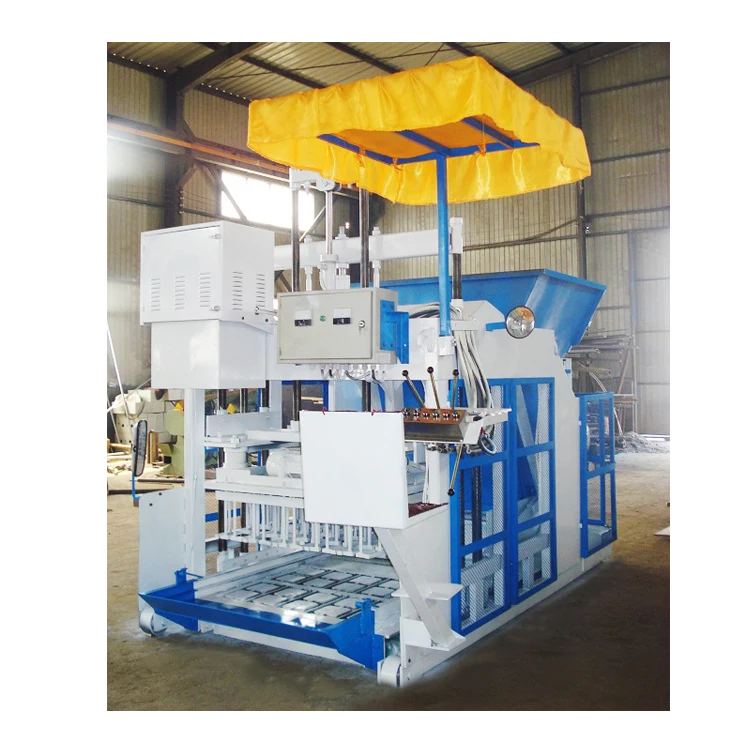
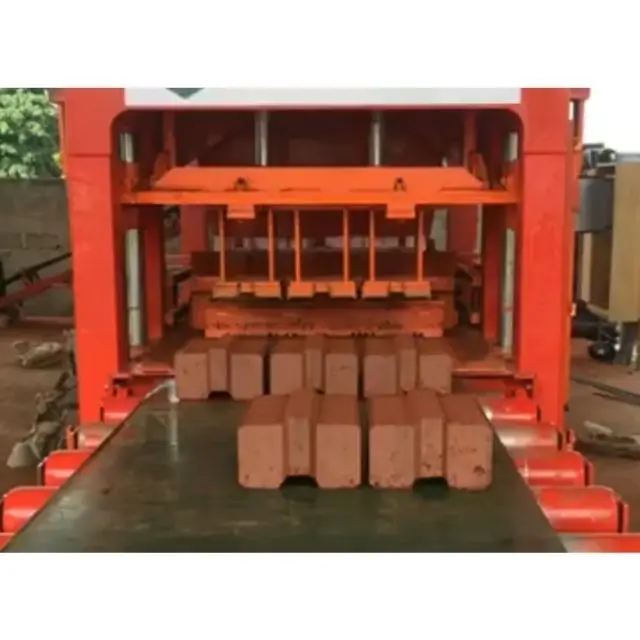 Automatic block machine