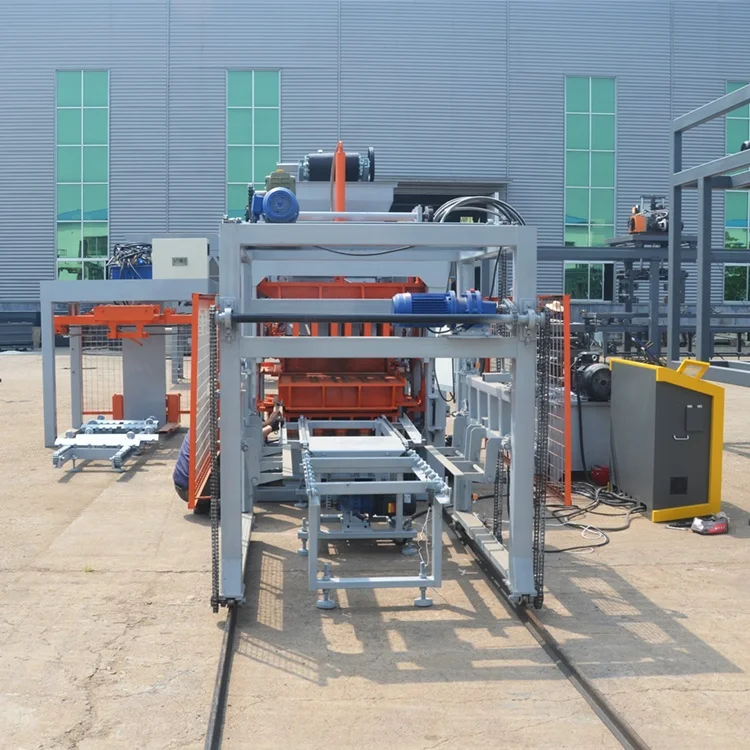
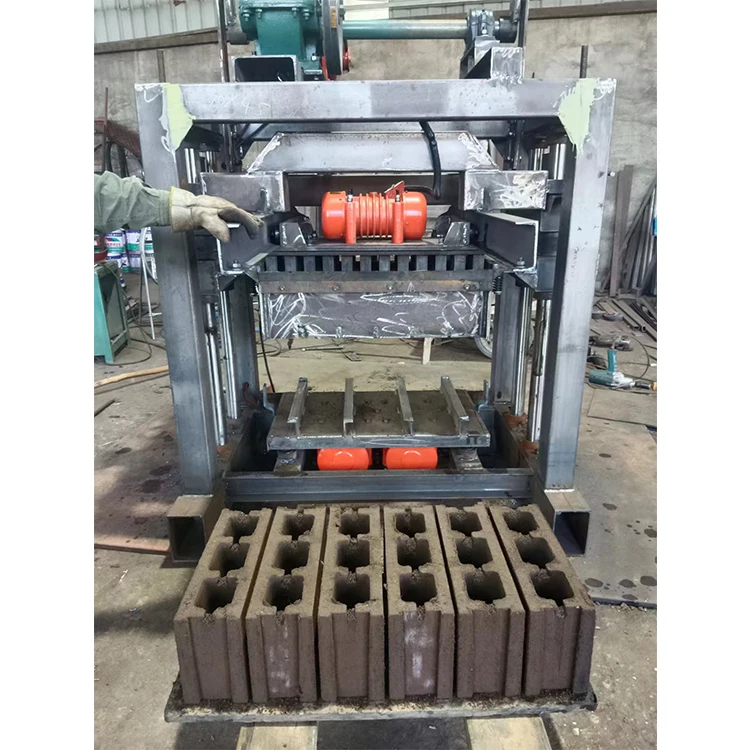
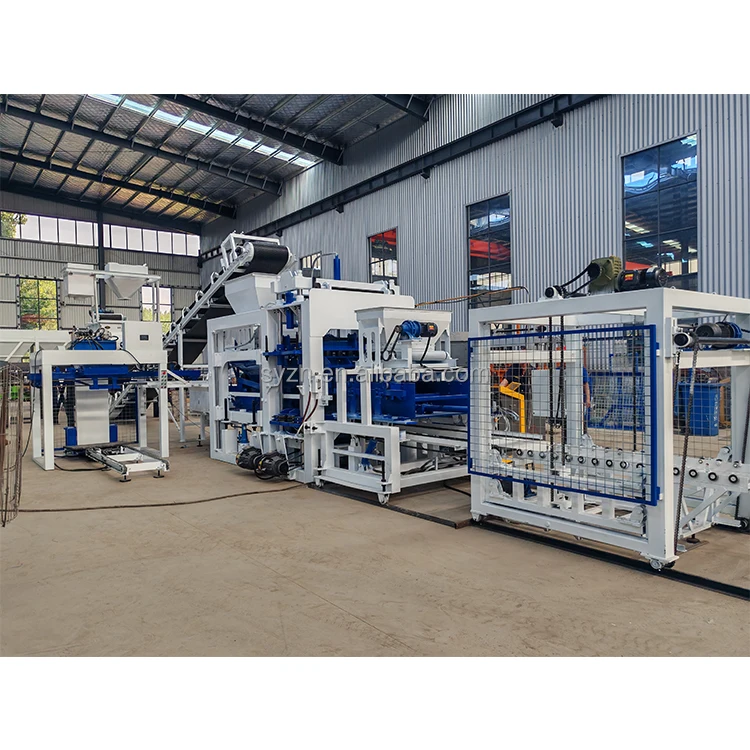
System-Matched Configuration — The QT8-15 is specified as one integrated line where press, mould, pallet and handling are sized together, not sourced separately, so every output figure ties back to the block format you actually sell.
Technical Specifications
| Parameter |
Value |
| Model |
QT8-15 |
| Product Type |
Automatic Hydraulic Concrete Block Making Machine |
| Overall Dimensions (L×W×H) |
8300×1860×3000 mm |
| Molding Cycle |
15–20 s (basis not stated in source — confirm block format / material / thickness) |
| Exciting Power (Vibration Force) |
55 kN |
| Rated Power |
37.2 kW |
| Mixer Model |
JS750 |
| Pallet Size |
1020×900 mm |
| Net Weight |
8 T |
| Control System |
PLC control system |
| Hydraulic Station |
Included |
| Pallet Feeder |
Included |
| Block Conveyor |
Included |
| Block Sweeper |
Included |
| Material Feeder |
Included |
| Automation Level |
Automatic |
| Mould Change |
Supported — multiple formats via mould change |
| Applied Products |
Paver, solid block, hollow block, curbstone |
| Raw Materials |
Crushed stones, sand, cement, dust, fly ash |
| Voltage & Frequency |
To be confirmed before production |
| PLC Display Language |
To be confirmed before production |
| Key Features |
PLC-controlled cycle, hydraulic station, pallet feeder, block conveyor, sweeper, material feeder |
Application Suitability
| Application |
Material or Output |
| Hollow block production for commercial and residential construction |
Crushed stone, sand, cement, fly ash blends |
| Solid block manufacturing for load-bearing walls |
Dense aggregate and cement mixes |
| Paving block production for walkways and driveways |
Fine sand, cement, pigment additives |
| Curbstone forming for road and infrastructure projects |
Coarse aggregate with high cement content |
What "15–20 Second Cycle" Actually Means for Your Daily Output
Cycle time only translates to real output when the block format, mix design, and pallet handling are all stated alongside it.
Every buyer I have worked with in Linyi asks the same first question: how many blocks per day? The QT8-15 molding cycle of 15–20 seconds looks straightforward on a spec sheet, but that number was measured under a specific set of conditions — a particular block format, a particular mix, a particular thickness. Switch from a standard hollow block to a dense paver and the cycle stretches, because the vibration and hydraulic pressure must work longer to compact a heavier mix. I have seen buyers quote a cycle figure to their project manager and then fall short on the first production run because the format assumed in the calculation was never the one they actually needed [NEED_CITE: block format assumptions in capacity quoting]. An Automatic Hydraulic Block Making Machine manufacturer that quotes output without naming the format behind the number is handing you a figure that will not survive contact with your actual product mix.

Placing the QT8-15 Across the Machine Range
Buyers surveying options for a first or replacement block machine need to understand where this model sits. The QT8-15 occupies the upper-mid tier of our automatic range, above semi-automatic machines that require manual pallet handling and below high-capacity lines designed for continuous three-shift operation. For a plant moving up from a smaller press or starting fresh with a target of multiple block formats, this model offers the pallet size and vibration force to cover paver, hollow block, solid block, and curbstone production without jumping to the largest machine in the range.
Matching Machine Tier to Your Plant Footprint and Investment
The decision between a semi-automatic model and the QT8-15 often comes down to the curing area available and the labour you plan to employ. A semi-automatic machine demands workers moving pallets by hand from the press to the curing yard, which limits the practical daily volume regardless of how fast the press cycles. The QT8-15 includes an automatic pallet feeder, block conveyor, and sweeper as standard line components, so pallets cycle through the press without manual intervention [NEED_CITE: automation levels in block production lines]. The trade-off is a larger plant footprint — at over eight metres in length the full line needs adequate bay width and a clear material flow path from the JS750 mixer through to the stacking point.
Reading the Specs That Decide Your Block Quality
The 55 kN vibration force and the hydraulic station work together: vibration settles the aggregate into the mould cavity while hydraulic pressure compresses from above, and the balance between them determines whether a hollow block comes out with consistent wall density or develops weak zones. If your local sand has high fines content, the vibration parameters that work for clean washed sand will over-compact a dirty mix and produce a brittle block. The 1020×900 mm pallet size is another spec that reaches beyond the press itself — it must match the racking system in your curing area and the fork dimensions of the forklift you already have on site. The 37.2 kW rated power covers the press, vibration motors, and hydraulic pump together, so the electrical supply at your plant needs a dedicated circuit sized for this total draw plus the JS750 mixer running alongside it.
The Cost of Skipping the Configuration Conversation
When a buyer orders a block machine on cycle time alone, the mismatches surface during commissioning. A pallet size that does not fit the curing racks means pallets pile up on the floor and blocks cure unevenly. A PLC display in a language the operators cannot read turns a simple fault code into a shift-long troubleshooting session. Voltage and frequency left unconfirmed can mean the machine arrives and cannot be powered up until a transformer is sourced locally. I watched a plant in West Africa sit idle for weeks because the 50 Hz motors would not run on their 60 Hz supply [NEED_CITE: voltage and frequency mismatches in exported machinery]. These are not engineering failures — they are specification gaps that a thorough pre-order conversation would have closed.
Why Buyers Source the QT8-15 Through This Range
Block machinery is our single focus, so the QT8-15 arrives as a matched system rather than a press bolted to someone else’s feeder and someone else’s pallet line. Configuration is set against your actual mix design and local aggregate, not pulled from a catalogue default, which is the difference between a machine that runs on day one and one that needs weeks of parameter adjustment. Mould design covers the formats your market sells — paver, hollow, solid, curbstone — and custom mould drawings are available when your product range includes non-standard shapes. The automation level is selectable, meaning a buyer can start with the semi-automatic tier and move to the QT8-15 when volume justifies the step, keeping the pallet size and mould interface consistent across the upgrade.
Documentation & Verification
- Line layout showing QT8-15 footprint with pallet flow and curing zone clearance
- Capacity calculation sheet stating the block format assumed for each output figure
- Mould drawing and format list covering paver, hollow, solid, and curbstone options
- Machine specification sheet with confirmed hydraulic pressure and vibration force values
- Voltage, frequency, and PLC display language confirmation record before production
- Factory test record run on your specified mix design before dispatch
Installation, Commissioning & Support
- Foundation plan accounts for the 8 T net weight and 8300 mm length of the full QT8-15 line
- Dedicated electrical circuit sized for 37.2 kW rated power plus JS750 mixer draw
- Machine arrives in dismantled shipment configuration and is reassembled on your prepared slab
- PLC control system parameters set to your confirmed block format and mix during commissioning
- Operator training covers mould change procedure, cycle adjustment, and daily maintenance routines
- Wear parts and mould list provided so first replacement orders can be placed before stock runs out
What to Share Before Requesting a Quote
To size the QT8-15 correctly within the full machine range, we need your target block formats and the daily volume expected for each one. Share the raw materials you plan to use — particularly the local aggregate type and any known fines or moisture issues — along with your available curing area dimensions and existing forklift specifications. Confirming your local voltage, frequency, and preferred PLC display language at the inquiry stage prevents delays once the machine reaches your site.
Frequently Asked Questions
Q: How is the QT8-15’s capacity calculated, and which block format does each figure assume?
A: Every output figure we provide names the exact block format, mix design, and pallet configuration used in the calculation. A hollow block and a dense paver cycle at different speeds on the same press, so a single cycle-time number without a format reference is misleading. We state capacity per format so you can match the figure to the product your market actually buys.
Q: Where does the QT8-15 sit compared to semi-automatic and higher-tier models in the range?
A: The QT8-15 is the upper-mid tier, above semi-automatic machines that rely on manual pallet handling and below the largest automatic lines built for continuous three-shift output. It suits plants that have outgrown manual operations and need automatic pallet feeding and conveying without stepping to the highest-capacity tier.
Q: What voltage, frequency, and PLC language options are confirmed before shipment?
A: Voltage and frequency are confirmed to match your plant’s electrical supply before production begins, not after arrival. The PLC display language is set to your operators’ working language. This confirmation is documented and forms part of the pre-production specification record.
Q: Which block formats are covered by standard moulds, and what about custom shapes?
A: Standard moulds cover paver, solid block, hollow block, and curbstone formats on the QT8-15. For non-standard shapes or dimensions that your local market requires, custom mould design is available from buyer drawings. The format list provided with your quotation shows exactly which products are standard and which require custom tooling.
Q: What supporting equipment is included in the QT8-15 line versus quoted separately?
A: The pallet feeder, block conveyor, block sweeper, material feeder, and hydraulic station are all included as standard components of the QT8-15 line. Stacking and curing rack handling equipment are configured based on your plant layout and quoted as part of the complete line proposal so there are no manual-handling gaps between the press and the curing yard.

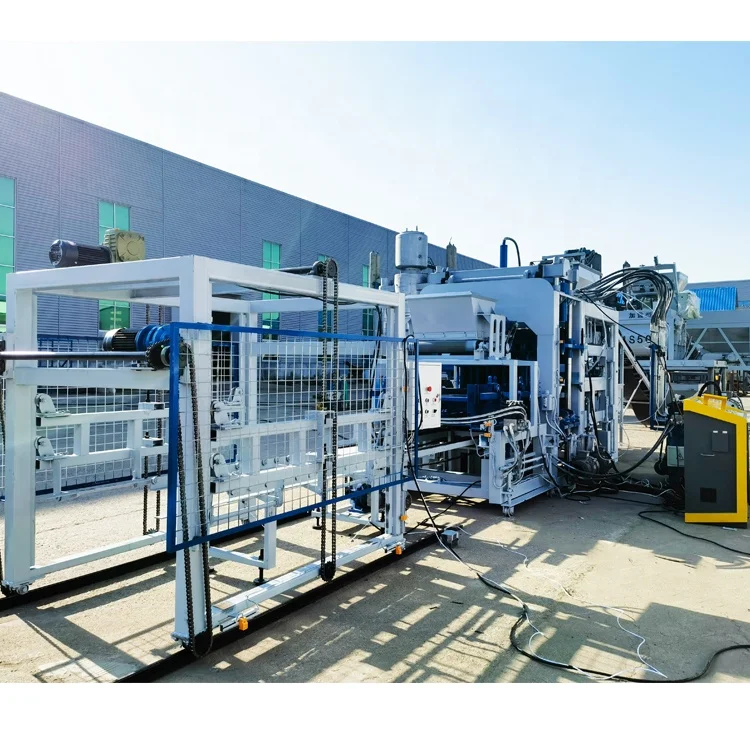
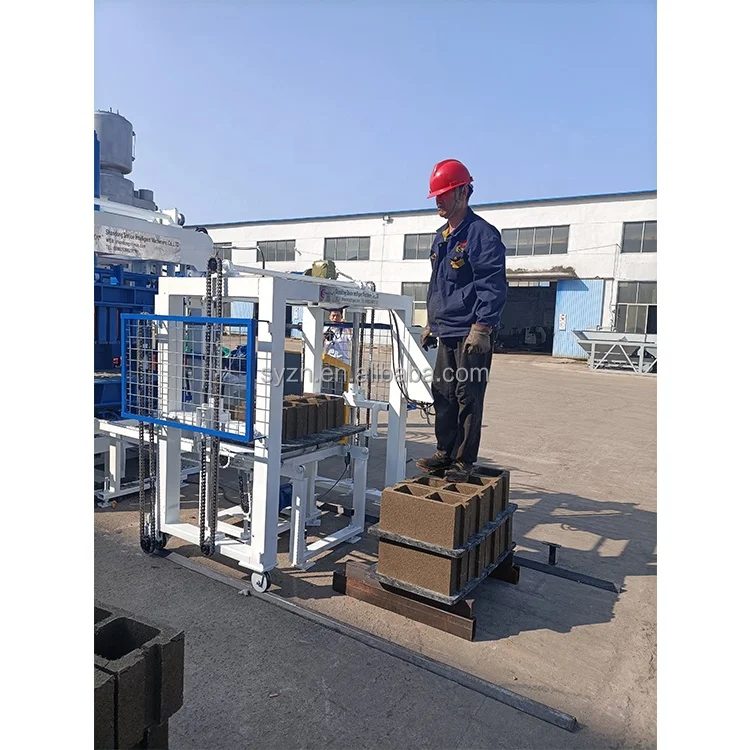 High quality block machine