Machine-to-System Match — Every QTJ4-40 ships with a line layout and capacity calculation that states the exact block format assumed, so the daily output figure you plan against is the one you actually achieve on your floor.
Technical Specifications
| Parameter |
Value |
| Model |
QTJ4-40 |
| Product Type |
Semi-Automatic Concrete Block Making Machine |
| Machine Power |
10.4 kW |
| Molding Cycle |
40 s |
| Theoretical Output (400×200×200 mm hollow block) |
4 pcs/mould, 360 pcs/h, 2800 pcs/day |
| Theoretical Output (400×150×200 mm hollow block) |
5 pcs/mould, 450 pcs/h, 3600 pcs/day |
| Theoretical Output (225×112.5×60 mm solid brick) |
9 pcs/mould, 800 pcs/h, 6400 pcs/day |
| General Capacity Claim |
2000–2500 pcs / 8 h (basis to be confirmed) |
| Raw Materials |
Concrete, sand, cement, fly ash, lime, gypsum |
| Vibration System |
Bed mould vertical vibration + upper mould compression vibration |
| Mould Operation |
Top die push-pull with automatic scraper |
| Pallet Size |
850 × 450 mm |
| Overall Dimensions (L×W×H) |
1350 × 1460 × 1800 mm |
| Machine Weight |
1 T |
| Voltage |
Configurable to buyer’s local supply |
| Automation Level |
Semi-automatic |
Application Suitability
| Application |
Material or Output |
| Small workshop hollow block production |
Crushed stone, sand, and cement mixes for 400×200×200 mm and 400×150×200 mm formats |
| Solid brick manufacturing for local sale |
Sand, fly ash, and cement blends producing 225×112.5×60 mm bricks |
| On-site block production for building contractors |
Locally sourced aggregate with portable pallet handling and open-air curing |
| First plant setup for entrepreneurs |
Low-volume hollow and solid formats with manual pallet transfer |
| Distributor trial runs before full-line commitment |
Short production batches across multiple block formats on a single machine |
What "2800 Blocks per Day" Actually Means for Your Plant
Capacity is only honest when it names the block format, the mix, and the shift length behind the number.
I have watched buyers sign off on a quoted daily output, only to discover after commissioning that the figure assumed a hollow block their market does not buy, or a sand source with a silt content their machine was never tuned for. The QTJ4-40 is rated at 2,800 pieces per day based on a 400×200×200 mm hollow block at 4 pieces per mould — swap to a solid brick and the cycle count changes, and swap your sand source and the vibration time may need adjustment [NEED_CITE: influence of local aggregate silt content on block compressive strength]. A Semi-Automatic Block Machine manufacturer that leaves the format assumption off the quotation is handing you a number you cannot plan a curing yard around.

Where the QTJ4-40 Sits in the Full Machine Range
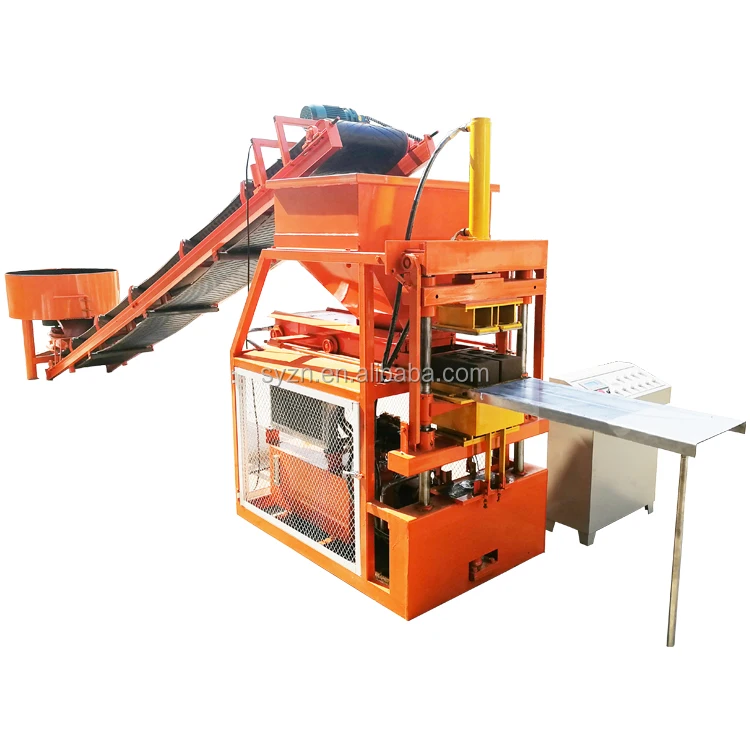
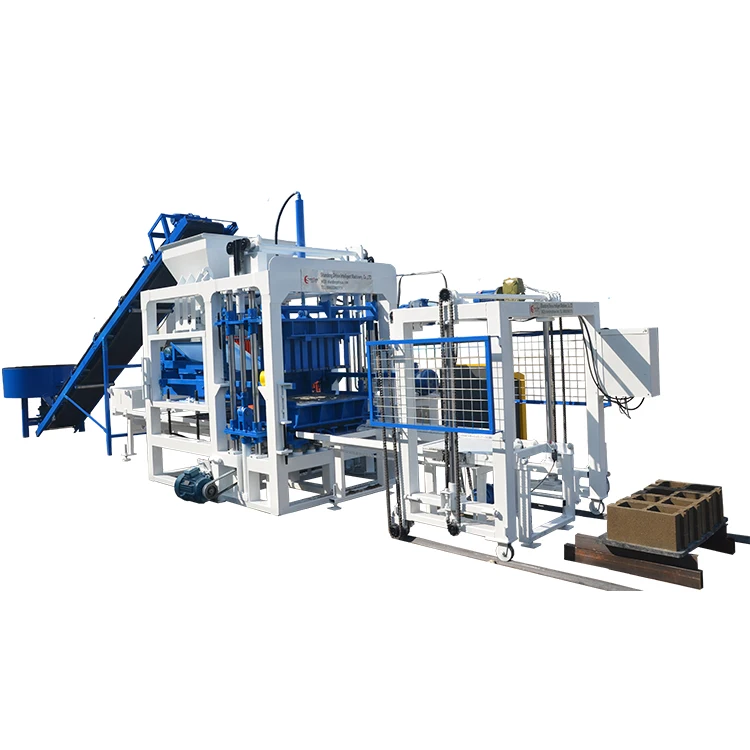
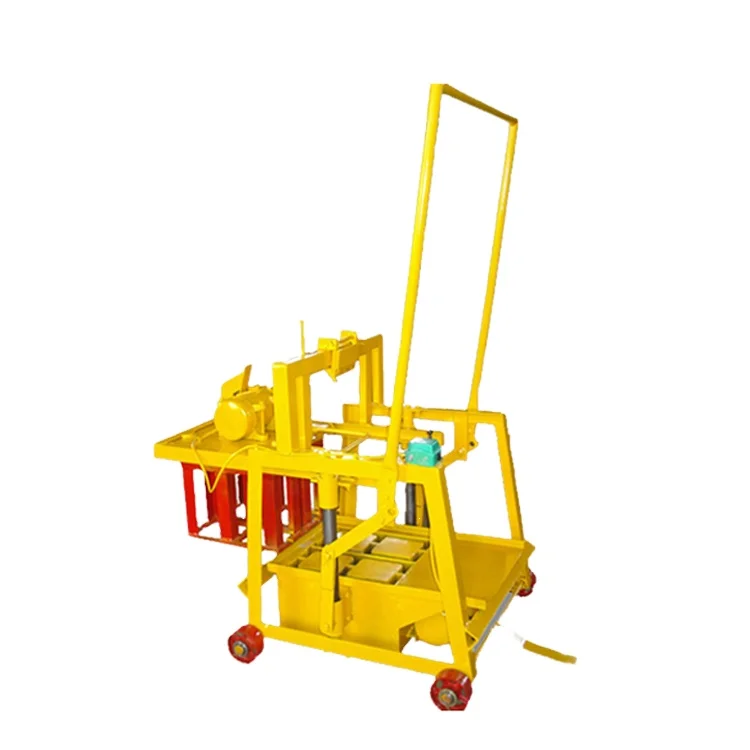
The Shiyue range covers mobile egg-laying machines at the lowest investment tier, semi-automatic presses like the QTJ4-40 for workshop production, and fully automatic lines with pallet feeders and stackers for high-volume plants. This model occupies the entry workshop tier: it produces concrete blocks on pallets rather than on the ground, giving better dimensional control than a mobile machine, while keeping the capital outlay and operator count below what an automatic line demands. Buyers who are uncertain which tier they belong in typically start by defining the block format their market actually buys and the daily volume their curing area can absorb.
Planning Your Plant Around a Known Footprint
At 1350 × 1460 × 1800 mm, the QTJ4-40 fits into a compact workshop bay, but the press itself is only one station. Raw material mixing, pallet staging, wet-block curing racks, and finished-block stacking all need floor space that scales with the format you choose [NEED_CITE: typical curing area requirements for small-scale concrete block plants]. A hollow block at 400×200×200 mm demands more curing rack area per piece than a solid brick, so two buyers running the same machine can need very different site layouts. We lay out the full line footprint — mixer, press, pallet return path, and curing zone — against your specific format before confirming the order.
Reading the Specs That Determine Block Strength
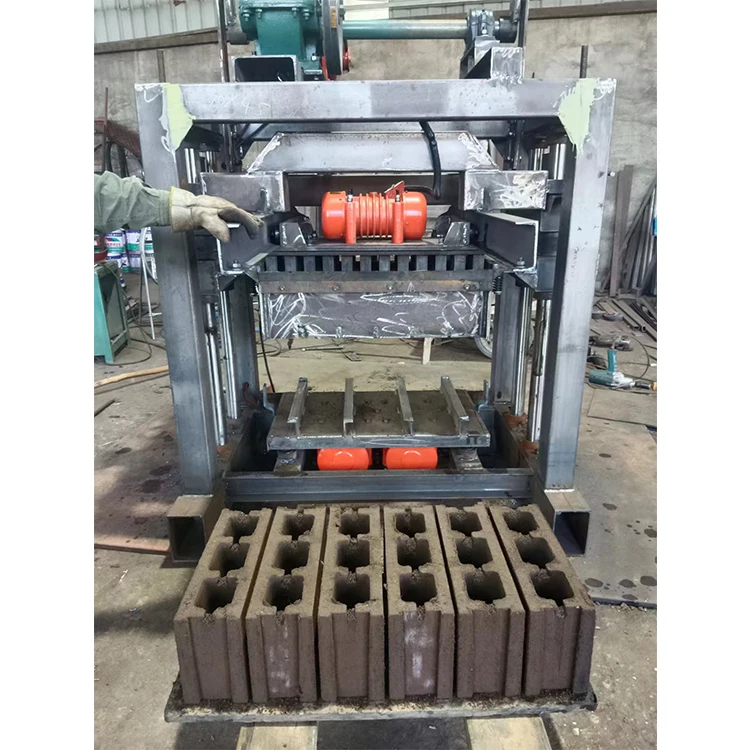
The QTJ4-40 uses a dual vibration system: vertical vibration under the bed mould combined with compression vibration from the upper mould. This two-direction compaction is what gives the block its green strength before curing begins. The 10.4 kW motor drives both the vibration and the hydraulic top-die push-pull mechanism, which includes an automatic scraper to level the squeeze head after each fill. Mould change is a manual-top die swap suited to a workshop producing two or three formats per week rather than daily changeovers. The 850 × 450 mm pallet size is fixed, so your curing racks and handling trolleys must be designed around that dimension — ordering pallets in a different size later will not fit the press guides.
The Cost of Skipping Format-Level Capacity Checks
When the quotation lists a single daily output number without naming the block format, the buyer often discovers during the first week of production that actual throughput is considerably lower than projected. Pallets pile up at the press faster than the curing yard can absorb them, or the reverse — the curing yard sits half-empty because the format being produced yields fewer pieces per cycle than expected [NEED_CITE: mismatch between quoted and realized output in small block plants]. Voltage surprises add another layer: a machine wired for 380 V/50 Hz arriving at a 440 V/60 Hz site will run at the wrong motor speed, altering vibration frequency and producing blocks that fail strength tests. These are not defects — they are configuration oversights that surface only after the machine is bolted to the floor.
Why Buyers Source This Tier from Shiyue
Block machinery is our single focus, which means the QTJ4-40 press, its moulds, pallets, and handling equipment are specified as one matched set rather than assembled from separate suppliers. We configure the vibration force and cycle time against your actual mix design and local aggregate, not a catalogue default. Moulds are designed for the formats your market sells, including custom drawings when standard formats do not match local building codes. The semi-automatic tier leaves room for growth — buyers can add automatic pallet feeding or stacking later without replacing the press. Every machine ships with a factory test record showing actual cycle time and block output per format, verified with your sample material before dispatch.
Documentation & Verification
- Line layout stating block format assumed for each output figure
- Machine specification sheet covering vibration force and pallet size
- Mould drawing and format list matched to your local market
- Voltage and control language confirmation before production starts
- Factory test record with actual cycle time per block format
- Packing photographs and customs documentation support
Installation, Commissioning & Support
- Foundation pad leveled to 1350 × 1460 mm footprint with anchor bolt template
- Dedicated 10.4 kW circuit matching confirmed local voltage and frequency
- Machine shipped as single unit; on-site assembly limited to mould mounting
- First-run parameter tuning using buyer’s actual aggregate sample
- Operator training covering mould change and vibration adjustment
- Wear parts list for top die, scraper, and vibration springs included
What to Prepare Before Requesting a Quotation
To size the QTJ4-40 accurately within the range, we need the specific block formats your market demands, the daily volume your curing area can support, and the source and gradation of your local sand and aggregate. Share your site voltage, frequency, and preferred control-panel language so electrical configuration is locked before production begins. If you already own pallets, mixers, or curing racks, provide their dimensions so the line layout accounts for existing equipment rather than assuming a blank floor.
Frequently Asked Questions
Q: How does the QTJ4-40 compare to the automatic and mobile tiers in the Shiyue range?
A: The QTJ4-40 is a semi-automatic workshop press — higher output and better dimensional control than a mobile egg-laying machine, but lower capital and simpler operation than a fully automatic line with pallet feeders and stackers. It suits buyers producing up to a few thousand blocks per day who want pallet-based forming without the investment in automated handling.
Q: How is daily capacity verified, and which block size does the output assume?
A: Each quoted output is tied to a specific block format and mould cavity count — for example, 2,800 pieces per day based on 400×200×200 mm hollow blocks at 4 per mould. We provide a capacity calculation document listing output per format before order confirmation, so buyers plan against real numbers.
Q: What electrical details are confirmed before the machine enters production?
A: We confirm voltage, frequency, and control-panel language with the buyer before manufacturing begins. This prevents motor-speed mismatches and unreadable PLC displays that would otherwise delay commissioning after the machine arrives at the site.
Q: Can I start with the QTJ4-40 and move to a higher automation tier later?
A: Yes. The semi-automatic configuration is the entry point of a range that extends to fully automatic lines. Buyers who outgrow manual pallet handling can add automatic pallet feeding and stacking modules as their volume grows, without replacing the core press.
Q: What site preparation does the QTJ4-40 require?
A: The machine needs a leveled concrete pad for its 1350 × 1460 mm footprint, a dedicated power circuit at the confirmed local voltage, and a curing area sized to the pallet dimensions of 850 × 450 mm. We supply a line layout showing press placement, pallet flow, and curing rack arrangement before shipment.

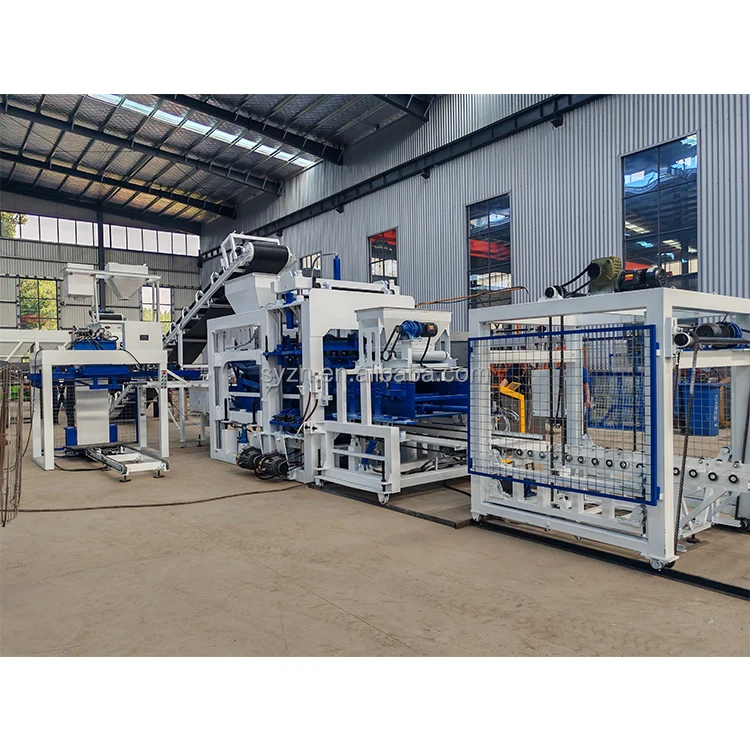 High quality block machine