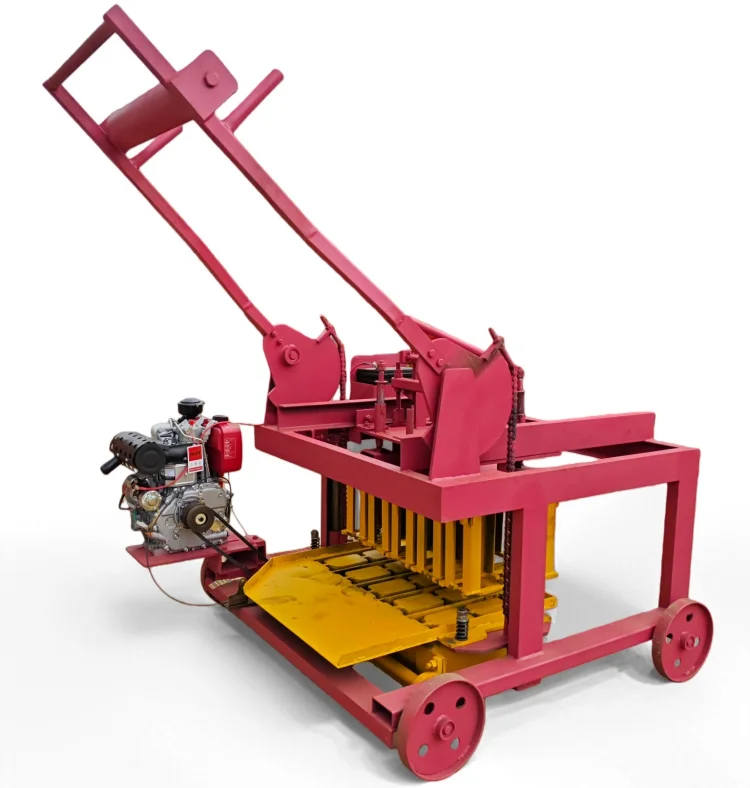
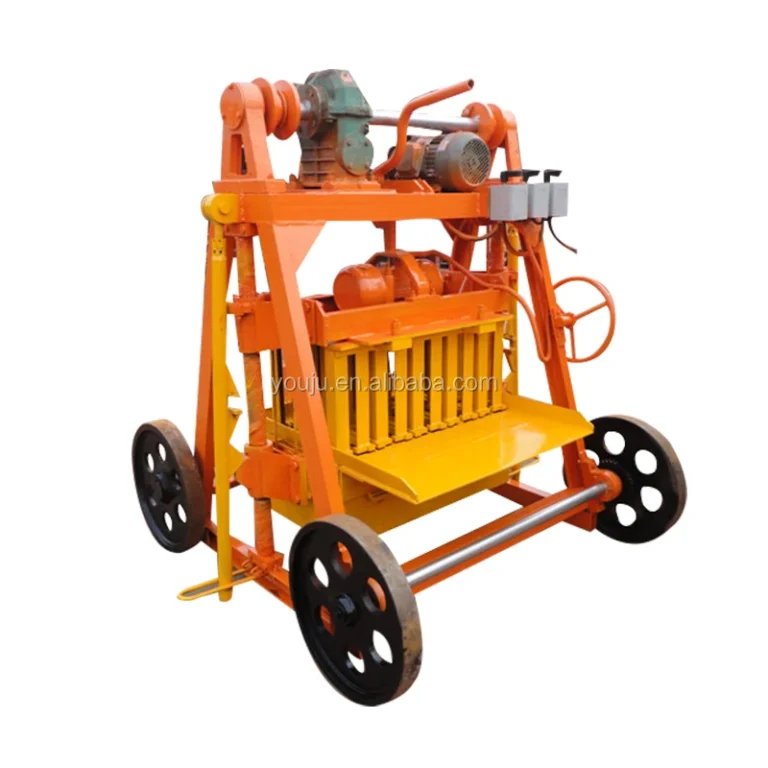
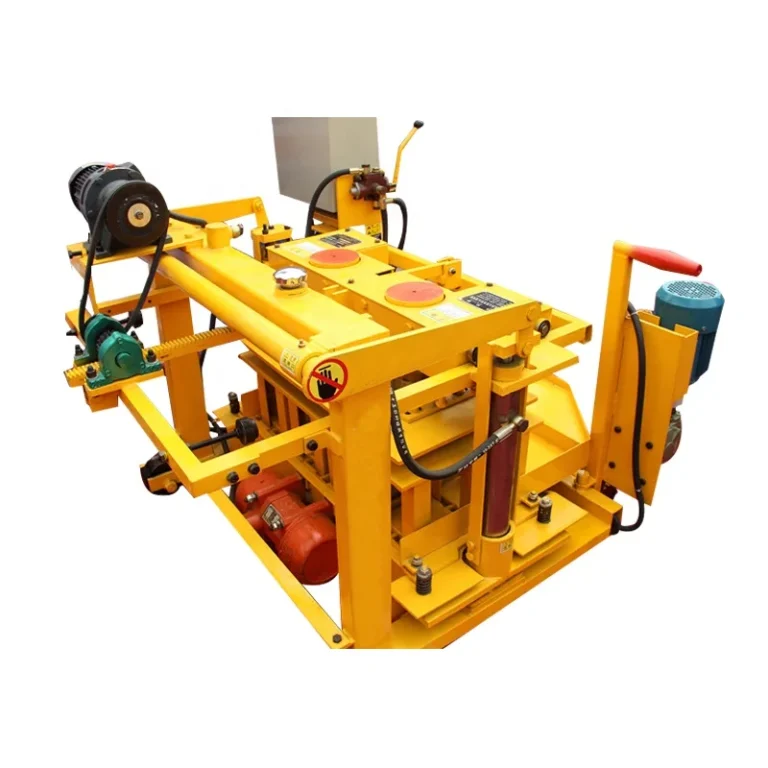
Single Focus on Block Machinery — Machine, mould, pallet, and handling specified as one matched system rather than assembled from separate suppliers, ensuring the QMR4-45 performs reliably in your specific site conditions.
Technical Specifications
| Parameter |
Value |
| Model |
QMR4-45 |
| Product Type |
Diesel/Electric Mobile Block Making Machine |
| Power Source |
Diesel (Electric option available) |
| Rated Power |
8hp |
| Molding Cycle |
45s (basis not stated in source — confirm block format / material / thickness) |
| Molding Form |
Vibration and Pressure |
| Vibration Force |
60KN |
| Total Weight |
800kg |
| Overall Dimensions |
2420×1320×1650mm |
| Block Formats |
Paver brick, hollow block, concrete block, solid brick, fly ash brick |
| Pallet Requirement |
No pallet required |
| Mobility |
Mobile / egg-laying type |
| Basic Equipment |
JZC350 Diesel Concrete Mixer or JQ350 Diesel Concrete Mixer (Electric Generating Unit); Trolley |
| Automation Level |
Manual operation with motorized vibration and pressure |
Application Suitability
| Application |
Material or Output |
| Remote area block production |
Crushed stone, river sand, and cement without grid power |
| On-site construction block making |
Local aggregate and fly ash for housing and development projects |
| Small-scale paver and hollow block production |
Concrete mixes for municipal and residential paving formats |
| Fly ash brick manufacturing |
Thermal plant byproduct mixed with lime, gypsum, and sand |
Why the "45-Second Cycle" Claim Leaves Buyers Guessing
A molding cycle quoted without stating the target block format creates false expectations when a mobile block machine manufacturer provides only a single number for all production scenarios.
The actual daily output of this machine depends entirely on which mould is installed and the thickness of the block being formed.
In my experience running site trials across Southeast Asia, I have seen buyers purchase equipment based on a 45-second cycle figure, only to discover that their specific hollow block format requires closer to 60 seconds per cycle when accounting for manual repositioning and mix settling. The vibration force and hydraulic pressure must also be matched to your local aggregate and mix design, or block strength will fall short regardless of cycle speed [NEED_CITE: concrete block compressive strength standards by region]. This is why we always request material samples before finalizing any equipment configuration.

Placing the QMR4-45 Within the Full Range
This diesel-powered, pallet-free unit sits at the entry tier of the Shiyue block machine range, designed for buyers who need on-site production without investing in a fixed plant or curing infrastructure. The egg-laying design means blocks are deposited directly onto the ground, eliminating the need for pallet handling equipment and reducing initial capital outlay. As your operation grows, the transition path leads toward semi-automatic stationary machines and eventually fully automatic lines with integrated stacking and cubing systems.
Diesel Power and Remote Site Viability
The 8hp diesel drive enables operation in locations where grid electricity is unavailable or unreliable, a common scenario for housing projects in developing regions. The included JZC350 or JQ350 diesel concrete mixer ensures the entire production workflow remains independent of external power sources [NEED_CITE: diesel generator fuel consumption for small-scale construction equipment]. This configuration is particularly relevant for contractors working on infrastructure projects far from urban centers, where bringing in temporary power would add significant cost and delay to the project timeline.
Understanding Vibration Force and Pressure in Mobile Forming
The 60KN vibration force works in conjunction with manual pressure application to compact the concrete mix within the mould cavity, determining the final density and structural integrity of each block. In mobile egg-laying machines, the absence of a heavy stationary frame means vibration energy must be carefully calibrated — too little force results in weak blocks that crumble during curing, while excessive vibration can cause the machine to shift position on uneven ground. The 45-second cycle time assumes a specific block format and material consistency that must be validated against your actual production targets before the machine leaves the factory.
The Hidden Cost of Skipping Material Validation
I once configured a mobile unit for an Indonesian client using standard parameters, only to watch the first batch fail strength tests because the local river sand had high clay content that our default mix design could not accommodate. The blocks had to be scrapped, the project schedule slipped, and we had to recalibrate the entire approach based on laboratory analysis of their actual materials. This is why we now require physical samples and lab testing before committing to any machine configuration [NEED_CITE: impact of aggregate clay content on concrete block strength].
Why Buyers Choose This Configuration
Block machinery remains our single focus, so the QMR4-45 arrives as part of a matched system where the mould, mixer, and trolley are specified together rather than sourced separately. We configure the equipment against your actual mix design and local aggregate characteristics, not a generic catalogue default. Mould design and supply cover the specific formats your market demands, including custom drawings if your region requires non-standard block dimensions. The automation level is selectable, allowing you to start with this manual mobile unit and upgrade to semi-automatic stationary equipment as production volume justifies the investment.
Documentation & Verification
- Line layout and capacity calculation stating the specific block format assumed for each output figure
- Machine specification sheet confirming vibration force, power source, and complete mould format list
- Mould drawing and format list with custom design option matched to your market requirements
- Voltage and control language confirmation for electric-start variants to prevent commissioning delays
- Factory test record documenting actual cycle times on your specified block format before dispatch
Installation, Commissioning & Support
- Site preparation guidance covering ground leveling requirements for stable egg-laying operation
- Diesel engine maintenance schedule and fuel specification for the 8hp power unit
- Mould change procedure training to minimize downtime when switching between block formats
- Vibration force adjustment protocol based on your local aggregate and mix design characteristics
- Wear parts inventory list covering mould liners and vibration motor components for first-year operation
Moving Forward with Your Inquiry
To provide an accurate configuration proposal, we need to understand your target block formats, the specific dimensions and strength requirements your market demands, and the characteristics of locally available raw materials including sand, aggregate, and cement type. Please also share your daily production volume targets and whether the site has access to grid electricity or requires full diesel operation.
Frequently Asked Questions
Q: How do I verify realistic daily output when only a 45-second cycle is quoted?
A: Request a capacity calculation document that states the specific block format and dimensions assumed for each output figure. The actual cycle time varies based on mould size, material thickness, and manual handling requirements between cycles. We provide format-specific projections after reviewing your target products and local material samples.
Q: Should I choose diesel or electric power for my mobile block machine?
A: The decision depends on grid reliability and fuel cost at your production site. Diesel enables fully independent operation in remote locations but carries ongoing fuel expenses. Electric power reduces per-unit energy cost where grid access is stable. We offer both configurations and can advise based on your local conditions and production schedule.
Q: When should I consider moving from a mobile unit to a semi-automatic stationary machine?
A: The transition typically occurs when daily volume exceeds what manual pallet-free operation can sustain, or when your market demands higher consistency than manual repositioning can deliver. Semi-automatic stationary machines also enable larger pallet sizes and more complex block formats. We can assess your growth trajectory and recommend the appropriate upgrade timing.
Q: How do I select the right mould formats for my local market?
A: Provide us with the block types and dimensions that sell in your region, including any local standards for hollow core ratios or paver thickness. We supply moulds matched to those specifications and can design custom formats based on your drawings. The QMR4-45 base machine accepts multiple mould formats for production flexibility.
Q: What supporting equipment do I need for a complete mobile production setup?
A: Beyond the block machine itself, you need a concrete mixer matched to your batch size, a trolley for moving fresh mix to the machine, and adequate ground space for blocks to cure in place. We specify the mixer model and provide curing area layout guidance to ensure workflow continuity without bottlenecks between mixing and forming stages.

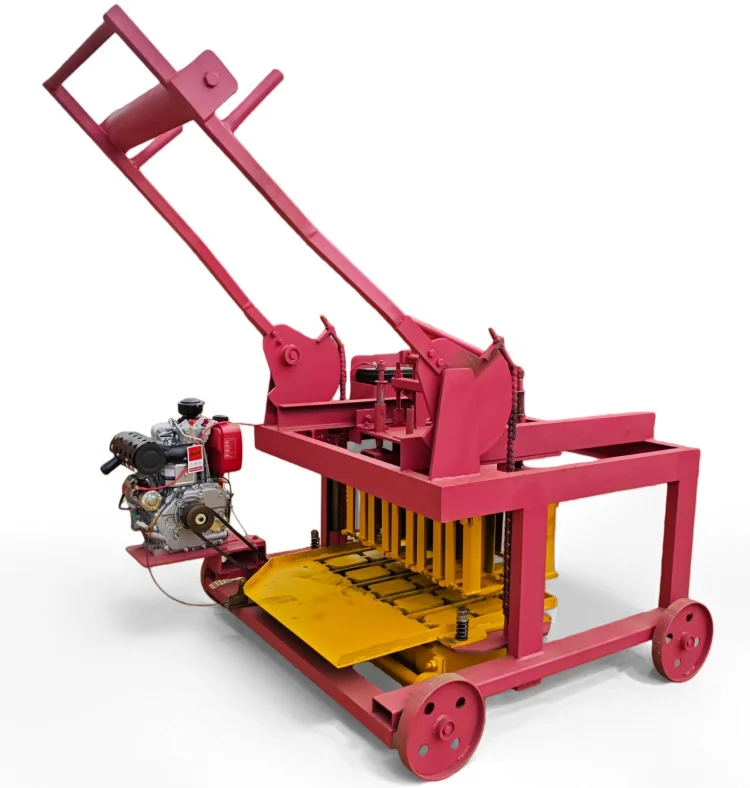
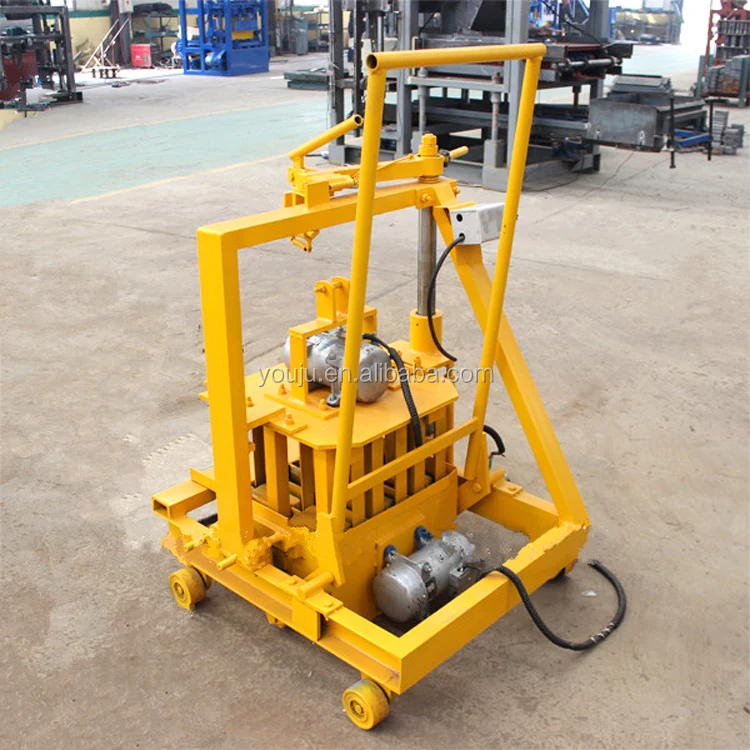 Mobile block machine