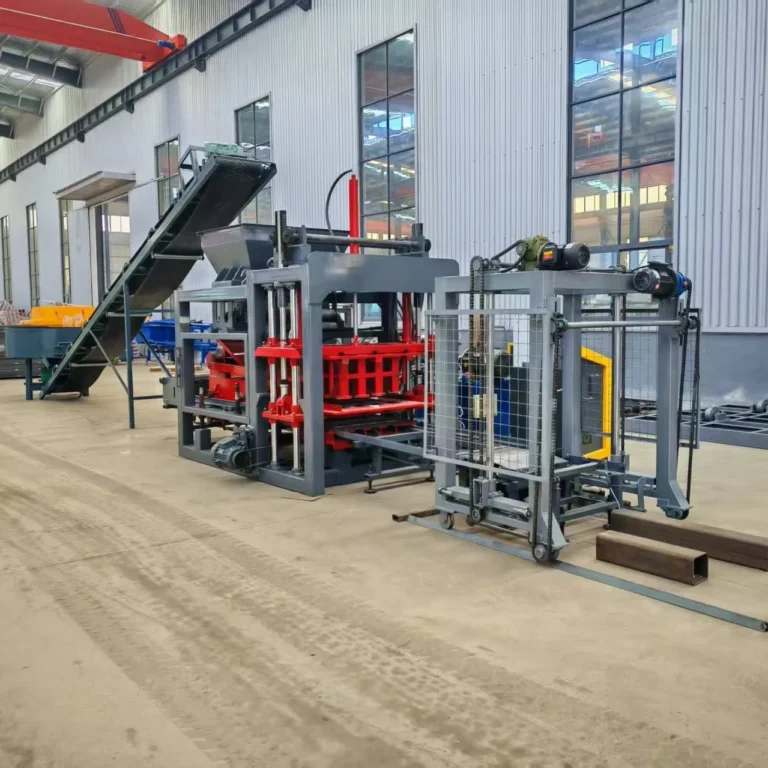
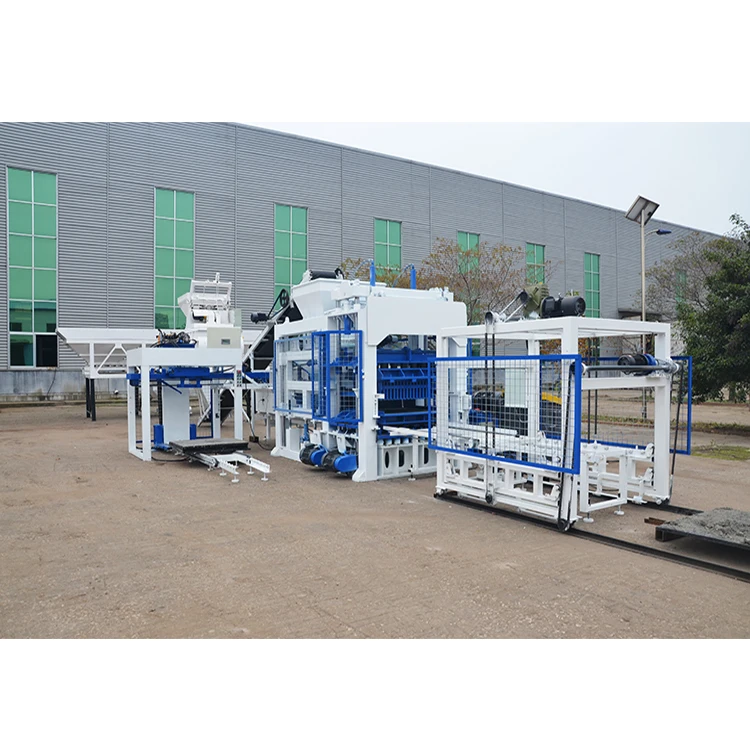
Single-focus engineering — the QT10-15 is specified as a matched system where press, mould, pallet and handling are sized together against your actual block format and local aggregate, not assembled from separate suppliers.
Technical Specifications
| Parameter |
Value |
| Model |
QT10-15 |
| Product Type |
Concrete Block Making Machine |
| Control System |
PLC control cabinet |
| Hydraulic System |
Independent integrated hydraulic station |
| Vibration Mode |
Vertical station mode resonance with automatic FM-AM |
| Mould Change |
Simple mould replacement for multi-format production |
| Cycle Time (hollow block / solid brick) |
15–20 s |
| Cycle Time (paving block) |
20–25 s |
| Output — 400×200×200 mm hollow block |
1,800–2,400 pcs/h (10 pcs/mould, 15–20 s cycle) |
| Output — 400×150×200 mm hollow block |
2,160–2,880 pcs/h (12 pcs/mould, 15–20 s cycle) |
| Output — 240×115×53 mm solid brick |
8,928–11,160 pcs/h (62 pcs/mould, 15–20 s cycle) |
| Output — 200×100×60 mm paving block |
5,184–6,480 pcs/h (27 pcs/mould, 20–25 s cycle) |
| Output — 225×112.5×60 mm paving block |
4,032–5,040 pcs/h (24 pcs/mould, 20–25 s cycle) |
| Line Components |
Pallet feed machine, block making machine, storage hopper, conveyor, hydraulic unit, PLC cabinet |
| Warranty |
1 year for the whole machine (excluding spare parts) |
| Rated Power / Voltage / Dimensions / Weight |
source value not stated — confirm with manufacturer |
Application Suitability
| Application |
Material or Output |
| Hollow block production for building envelope |
Cement, sand, crushed stone, optional fly ash or volcanic ash aggregate |
| Multi-cellular brick for partition walls |
Fine aggregate with controlled moisture for consistent cavity formation |
| Standard solid brick for load-bearing masonry |
Dense aggregate mix achieving structural compressive strength |
| Paving block and kerbstone for hard landscaping |
High-strength mix with surface finish requirements |
| On-site production for housing projects |
Standard hollow block output matched to daily laying rate |
What "1,800 Pieces per Hour" Actually Means
Every capacity figure on this page names the block format, mould cavity count and cycle time behind it — because a number without those details is just marketing.
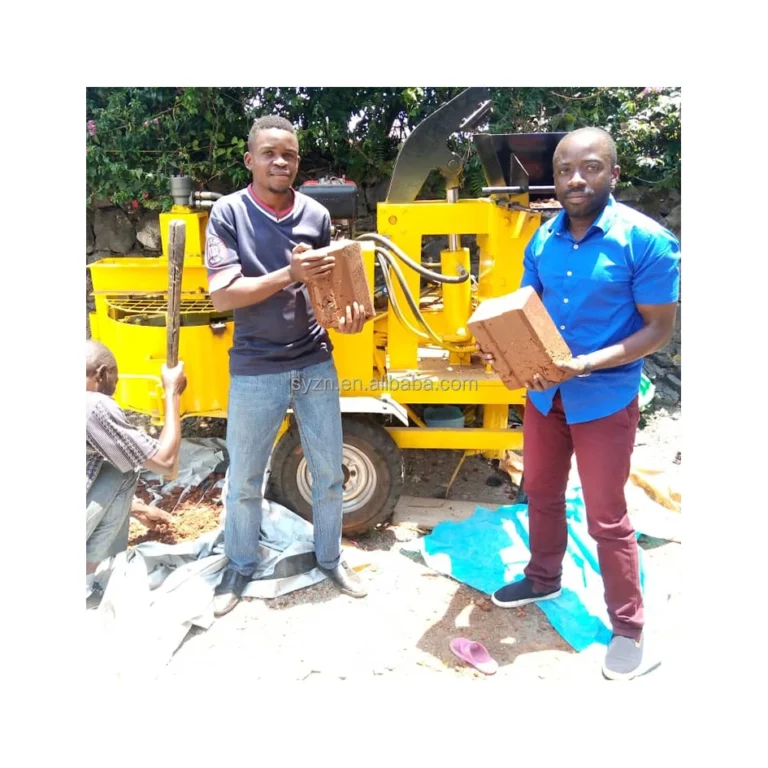
I once stood next to a block press in West Africa watching the operator count finished hollow blocks at the end of a shift. The machine was rated for a certain output, but the vibration parameters had been set for a completely different aggregate profile, and the real tally was barely half the brochure number. The concrete block making machine manufacturer had quoted cycles per hour without specifying which format those cycles assumed, and nobody had adjusted the settings for local volcanic ash. That gap between quoted capacity and daily reality is the single biggest source of buyer disappointment in this industry [NEED_CITE: capacity quoting conventions in block machinery exports]. When you compare the QT10-15 against other models in the range, the per-format table above lets you match machine tier to your actual product mix instead of guessing.

Placing the QT10-15 in the Output Range
The QT10-15 occupies the high-capacity tier within the full concrete block making machine manufacturer range. It is designed for buyers whose daily volume requirement exceeds what semi-automatic or mobile egg-laying models can sustain over continuous shifts. Where smaller machines serve workshop-level output or on-site production without a fixed plant, this model anchors a permanent block production line with dedicated pallet circulation and hydraulic pressing.
From Semi-Automatic to Full Line — Where the Boundary Lies
Buyers moving from a semi-automatic setup often underestimate the supporting equipment needed around the press. The QT10-15 line includes pallet feed, storage hopper, conveyor and hydraulic unit as standard components, meaning the press itself is not left waiting for material or pallets mid-cycle [NEED_CITE: block line synchronization and bottleneck analysis]. Upgrading from a standalone press to this configuration removes manual pallet handling from the critical path and allows the stated cycle times to hold across an eight-hour shift.
Reading the Spec Sheet for Production Impact
Hydraulic pressure and vibration force together determine the density and compressive strength of every block the QT10-15 produces. The independent integrated hydraulic station sits apart from the main vibration zone, which keeps hydraulic seals and valve blocks away from continuous shock loading — a common failure point on machines where the hydraulic manifold is bolted directly to the vibrating frame. The vertical station mode resonance with automatic FM-AM adjustment means the vibration frequency and amplitude adapt when you switch from a lightweight hollow block mould to a dense paving block mould, rather than requiring manual parameter changes that operators may skip under production pressure. Mould cavity count varies from 10 for large hollow blocks up to 62 for standard solid bricks, and each count paired with its cycle time produces the per-format output in the table above. Pallet size, though not listed here, must match both the press opening and the buyer’s existing curing racks and forklift dimensions.
The Cost of Skipping Configuration Checks
Ordering a block press without confirming pallet size against the curing area you already operate is a mistake I have seen repeated across multiple job sites. Pallets that do not stack on your existing racks mean blocks are handled twice — once off the press and again onto a compatible rack — wiping out the cycle time advantage the machine was bought to deliver. Voltage and frequency mismatches discovered after the container arrives add weeks of idle time while transformers are sourced locally [NEED_CITE: voltage and frequency standards by export market]. The PLC display language, if not specified before production, leaves operators guessing at fault codes in a language they cannot read.
Why Source This Machine Here
Block machinery is the single product focus, so the QT10-15 is not one model inside a catalogue of unrelated equipment — every mould, pallet and handling component is cross-referenced against the press specification. Configuration is set against the buyer’s local aggregate and target block format rather than a default factory setting, which means the vibration parameters arrive closer to production-ready. Custom mould design is available to buyer drawings, so formats specific to a regional market can be tooled without sourcing from a separate supplier. The automation level is selectable, allowing a buyer to start with manual pallet return and add automatic stacking later without replacing the press itself. Documentation covers line layout, capacity calculation per format, hydraulic and electrical schematics, and factory test records — everything needed for bank-financed projects.
Documentation & Verification
- Line layout drawing with pallet circulation path and station spacing for the QT10-15
- Capacity calculation sheet stating block format, mould cavities and cycle time per product
- Hydraulic and electrical schematic matching the shipped PLC cabinet and station
- Factory test record on buyer’s specified block format before container loading
- Mould drawing and format list for every mould included in the purchase order
Installation, Commissioning & Support
- Foundation plan specifying load points and curing for the QT10-15 press weight
- Power supply confirmation for voltage, frequency and dedicated circuit rating
- Pallet feed machine alignment and conveyor tension setting during first startup
- PLC cabinet language and parameter setup matched to operator team before handover
- Mould change procedure training covering format swap and vibration recalibration
- Wear parts list identifying hydraulic seals, vibration springs and pallet contact surfaces
Preparing Your Inquiry
Before requesting a quote, gather the block formats your market actually buys along with target daily volume per format. Note your local aggregate type — crushed granite, river sand, volcanic ash, fly ash — because the mix design determines the vibration setting the machine must deliver. Confirm your site voltage and frequency, and measure the pallet dimensions your existing curing area and forklift can handle so the supporting equipment is specified correctly from the start.
Frequently Asked Questions
Q: How is the QT10-15 capacity calculated, and which block format does each number assume?
A: Each output figure in the specification table is tied to a specific block dimension, mould cavity count and cycle time range. For example, 1,800–2,400 hollow blocks per hour assumes a 400×200×200 mm format with 10 cavities and a 15–20 second cycle. This lets you compare tiers on a like-for-like basis instead of relying on a single headline number.
Q: Where does the QT10-15 sit compared to semi-automatic and mobile models?
A: It occupies the high-capacity tier for permanent block plants. Semi-automatic machines suit lower investment and smaller daily volumes. Mobile egg-laying models work where no fixed plant exists. The QT10-15 is specified when daily output of standard hollow blocks must sustain a continuous shift with dedicated pallet circulation.
Q: What voltage, frequency and PLC language options are available?
A: Voltage and frequency are configured to the buyer’s local grid standard and confirmed before production begins. The PLC display language is set during commissioning to match the operator team. Both items are part of the pre-production documentation package and should be verified at the inquiry stage to avoid delays on arrival.
Q: What supporting equipment does the QT10-15 line require beyond the press?
A: The standard line includes pallet feed, storage hopper, conveyor and hydraulic unit. Buyers must also plan for a mixer upstream, curing racks sized to the pallet dimensions, and a forklift capable of handling loaded pallets. The line layout drawing shows station spacing and pallet circulation path for your site footprint.
Q: What is the warranty, and are moulds and wear parts available later?
A: The warranty covers one year for the whole machine excluding consumable spare parts. Moulds, hydraulic seals and vibration wear parts are listed in the documentation package with part numbers, so replacements can be ordered without reverse-engineering components on site. Custom mould drawings are retained for future re-orders.

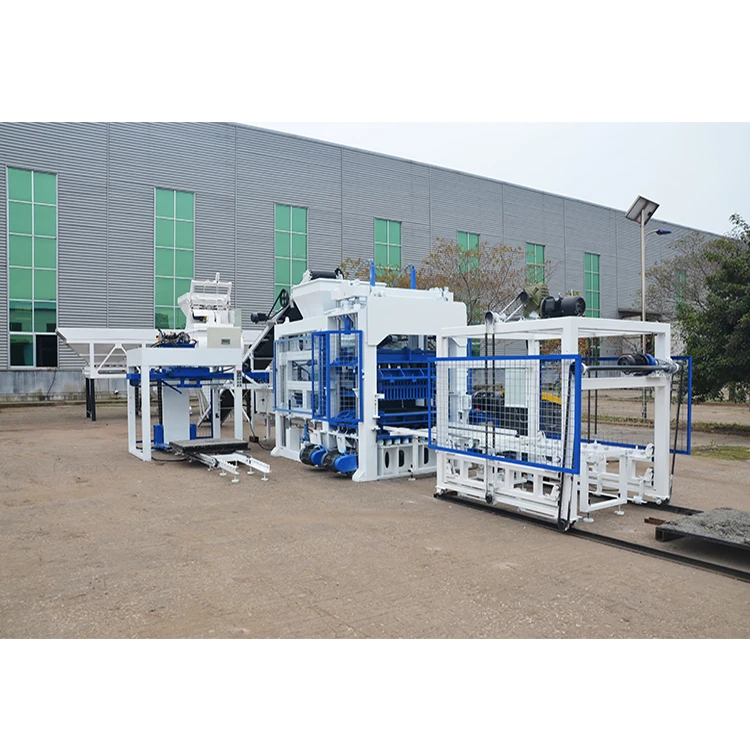
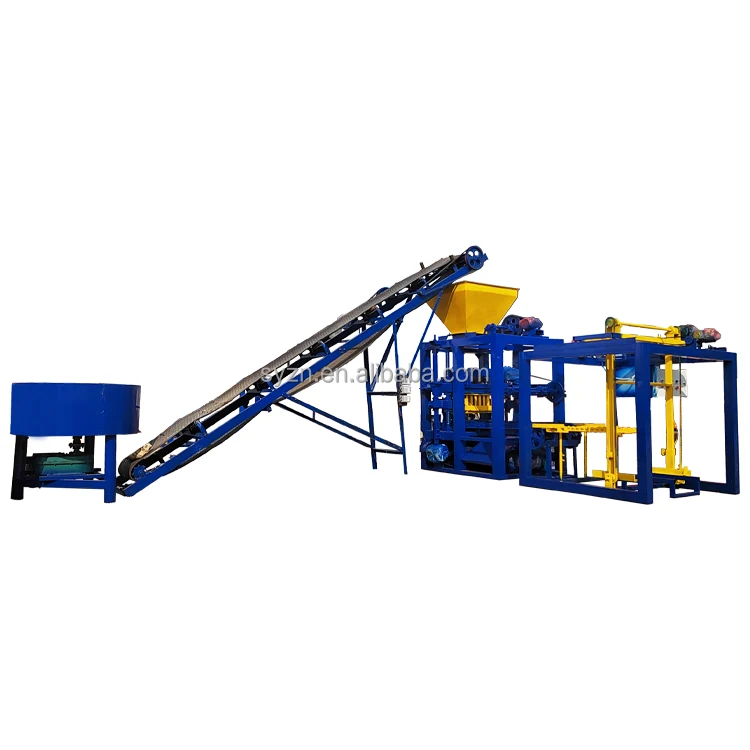 High quality block machine