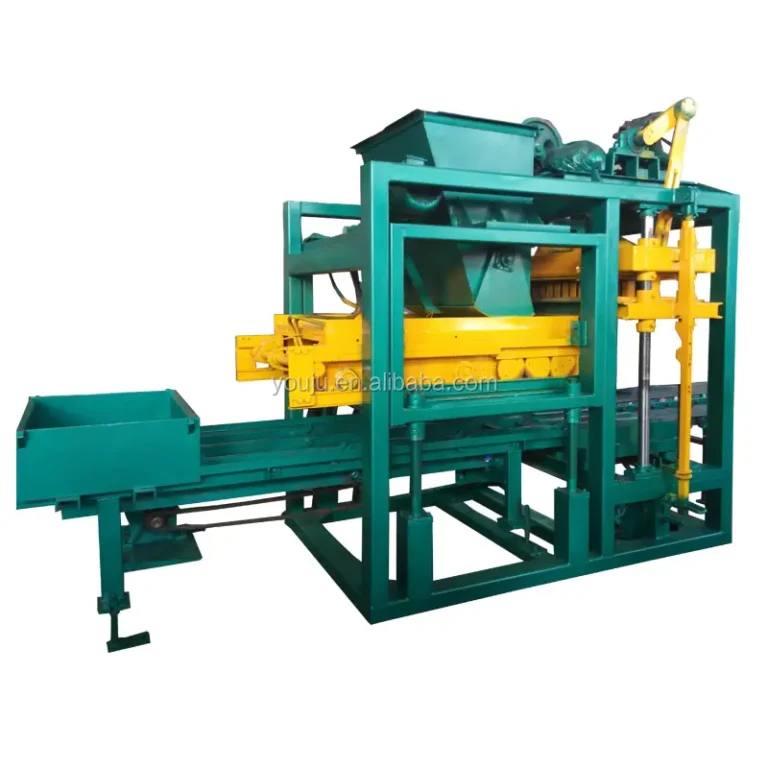
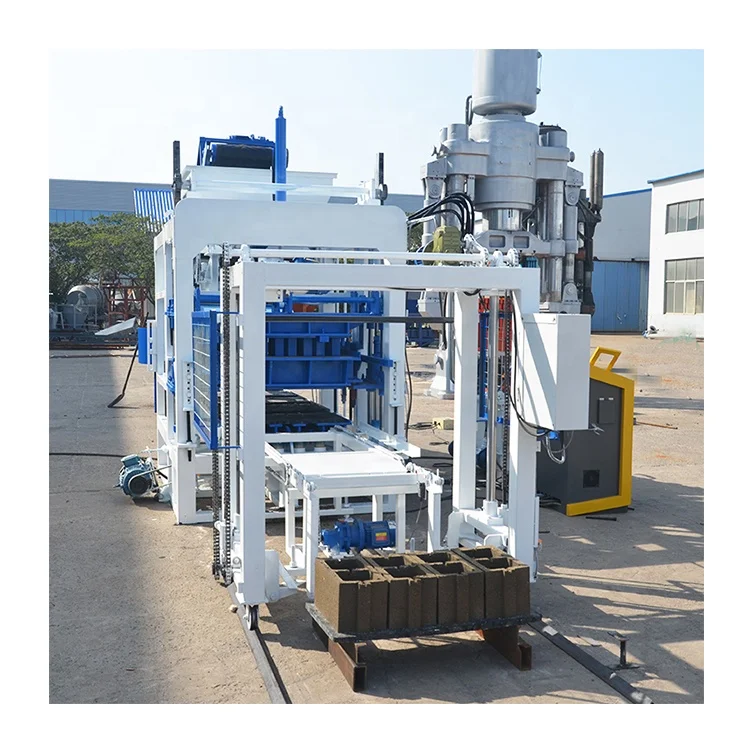
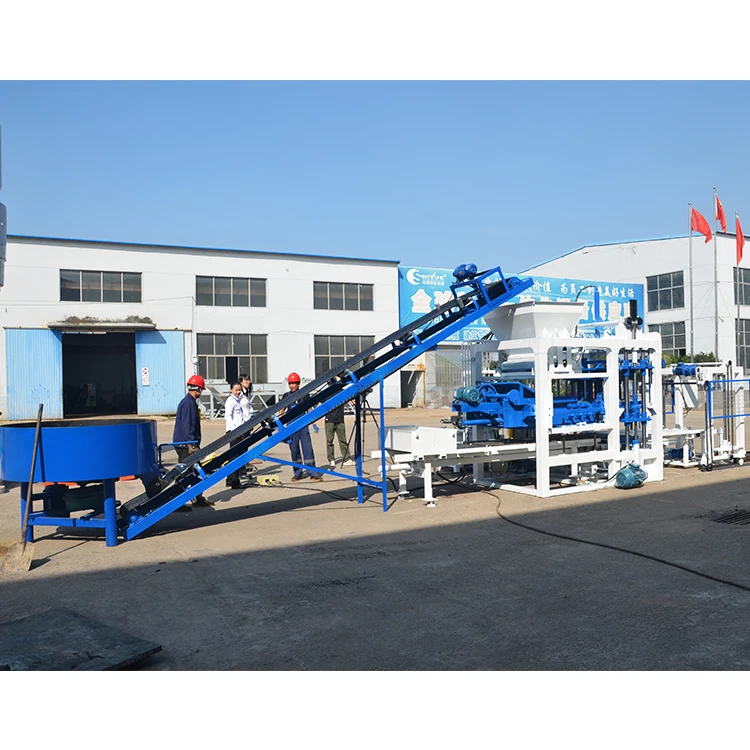
Single-Focus Block Machinery Line — the QTJ4-40 sits at the entry tier of a complete range where machine, mould, pallet and handling are specified as one matched system rather than assembled from separate suppliers.
Technical Specifications
| Parameter |
Value |
| Model |
QTJ4-40 |
| Product Type |
Manual Concrete Block Making Machine |
| Operation Type |
Stationary, manual with mechanical-electric combination |
| Rated Power |
10.4 kW |
| Overall Dimensions |
1350×1460×1800 mm |
| Total Mass |
1200 kg |
| Molding Cycle |
40 s |
| Pallet Size |
850×450×20 mm |
| Vibration Frequency |
2800 r/min |
| Output Capacity |
2400 pcs/hour based on 400×200×200mm hollow block (5 pcs/mould); 19200 pcs/day under same basis |
| Automation Level |
Semi-automatic vibration and molding, manual pallet handling |
| Mould Format |
400×200×200 mm hollow block (1 set included) |
| Mixer Included |
JQ350 mixer |
| Control System |
Electrical control with mechanical interworking |
| Voltage & Frequency |
Configurable for target market (basis to be confirmed) |
| Certification |
Available upon request |
Application Suitability
| Application |
Material or Output |
| Small-scale hollow block production |
Crushed stone, sand, cement, and water at standard ratios |
| On-site block making for contractors |
Local aggregate mixed with Portland cement for project-specific formats |
| First block plant for entrepreneurs |
Low-investment stationary setup producing 400×200×200mm hollow blocks |
| Solid block runs |
Alternative mould fitted for solid block format from the same pallet size |
What "19,200 Pieces per Day" Actually Means for Your Site
That figure assumes a 400×200×200mm hollow block at five per mould, running a steady 40-second cycle with no pallet change delays.
When I first started quoting block machines from the assembly floor here in Linyi, capacity numbers looked straightforward on paper. A buyer would see 19,200 pieces per day and plan staffing, curing space, and sales commitments around it. Then the machine arrived and the real number was half that. The reason was almost never a faulty press — it was a mismatch between the quoted capacity format and the block the buyer actually needed to sell. A manual concrete block making machine manufacturer that quotes honestly will always state which format the output figure assumes, because switching to a smaller interlocking paver or a taller kerbstone changes the cycle time and the pieces-per-mould count. This page keeps that basis visible so your planning starts from reality. [NEED_CITE:]

Where the QTJ4-40 Sits in the Complete Range
The QTJ4-40 is the entry point of a broader block machine family. First-time buyers and small contractors choose this manual tier because the investment is low and the plant footprint fits a modest yard. The same range extends through semi-automatic and fully automatic stations, so a buyer who starts here can move up as demand grows without learning a completely different system. The manual concrete block making machine manufacturer approach here is to design each tier around the same pallet logic and mould mounting standards, keeping the upgrade path within one product family.
Matching the Station to Your Curing Area and Handling Method
With an 850×450×20 mm pallet, the wet blocks leave the press on a board small enough for one operator to carry by hand or slide onto a simple curing rack. This matters because pallet size dictates your curing yard layout and the forklift or hand cart you will use. A larger pallet would demand a bigger curing area and heavier handling equipment before you have the volume to justify it. The QTJ4-40 keeps the station compact so the manual workflow stays practical at entry-level output. [NEED_CITE:]
Reading the Specs Against Real Production Conditions
The 2800 r/min vibration frequency and mechanical-electric interlock work together to compact the mix inside the mould cavity. Vibration alone is not enough — the mechanical interlock prevents the upper mould from descending before the vibration cycle completes, which protects block density and reduces cracked edges. The 10.4 kW rated power covers both the vibration motor and the mixer drive when the JQ350 is running. For a manual concrete block making machine manufacturer, stating the vibration frequency alongside the cycle time lets the buyer cross-check whether their local aggregate will compact within 40 seconds or whether a longer cycle is needed. Heavier mixes with more coarse aggregate may require a slightly extended cycle, and that adjustment is made at the control panel rather than through hardware changes.
The Hidden Cost of Skipping Voltage Confirmation
One of the most common commissioning delays I have seen happens when the machine arrives and the local supply does not match the motor winding. A 10.4 kW motor needs the correct voltage and frequency to reach its rated vibration frequency — run it on the wrong supply and the vibration drops, cycle time stretches, and blocks come out soft. Confirming the electrical configuration before production avoids a multi-week delay while replacement motor windings are shipped. [NEED_CITE:]
Why Source This Tier Here
Block machinery is the single focus of this operation, so the QTJ4-40 press, its JQ350 mixer, the 850×450 pallet, and the included hollow block mould are specified as one matched set rather than sourced from separate vendors. The configuration is checked against the buyer’s stated mix design and local aggregate before production begins, not pulled from a catalogue default. Mould design covers the formats the buyer’s market actually sells, and custom drawings are available when standard formats do not match. The automation level is selectable — a buyer can begin with this manual station and add pallet feeding or stacking automation later within the same range. Installation guidance includes operator training so the crew understands the mechanical interlock logic and the correct mould change procedure from day one.
Documentation & Verification
- Line layout showing QTJ4-40 placement with pallet flow and curing rack spacing
- Capacity calculation stating 400×200×200mm hollow block as the assumed format
- Mould drawing and format list for the included 400×200×200mm cavity
- Pallet specification covering 850×450×20 mm dimensions and material grade
- Factory test record on the buyer’s stated block format before dispatch
- Voltage and control language confirmation sheet signed before production
Installation, Commissioning & Support
- Level concrete pad sized to the 1350×1460 mm footprint with anchor bolt points
- Dedicated electrical circuit matching confirmed voltage for the 10.4 kW load
- Machine ships partially assembled; vibration table and uprights bolt on site
- First-run cycle set to 40 seconds and adjusted after test blocks are broken for strength
- Operator training covers the mechanical interlock sequence and mould change steps
- Wear parts list provided so replacement vibration springs and mould liners are planned early
Preparing Your Inquiry
Send the block format you intend to sell, your target daily output, and the local aggregate type you plan to use. Include your site voltage and frequency so the motor and control panel are wound correctly before the machine leaves the factory. If you already have a curing area or handling equipment, share the dimensions so the 850×450 pallet can be confirmed as the right fit or an alternative proposed.
Frequently Asked Questions
Q: How is the 19,200 pcs/day capacity calculated, and what changes when I switch block formats?
A: The figure assumes a 400×200×200mm hollow block at five pieces per mould, running a 40-second cycle across a standard shift. Switching to a smaller paver or a taller solid block changes both the pieces-per-mould count and the cycle time, so daily output will differ. Always ask for a recalculated capacity based on your target format before confirming the order.
Q: What voltage and frequency options are available for my market?
A: The motor and control panel are configured to match your local supply. This must be confirmed before production starts so the vibration frequency and cycle timing are correct on arrival. Provide your voltage, phase, and frequency in the inquiry stage to avoid commissioning delays.
Q: Can I start with the QTJ4-40 and upgrade to a higher automation tier later?
A: Yes. The QTJ4-40 sits within a range that extends through semi-automatic and fully automatic stations sharing the same pallet and mould mounting logic. Upgrading later means adding pallet feeding or stacking equipment rather than replacing the entire press, keeping your initial investment working.
Q: What pallet material and size should I choose based on my curing setup?
A: The standard 850×450×20 mm pallet suits manual handling and small curing racks. If your curing yard uses a forklift with wider forks or a larger rack spacing, a different pallet size may be needed. Share your curing area layout and handling method so the pallet spec is matched before dispatch.
Q: Where does the QTJ4-40 sit compared to automatic machines in footprint and investment?
A: The QTJ4-40 occupies a compact 1350×1460 mm footprint with manual pallet handling, requiring a smaller yard and lower initial outlay than an automatic line with stacking and cubing. It suits first plants and on-site contractor setups where space and capital are limited but output still needs to be consistent.

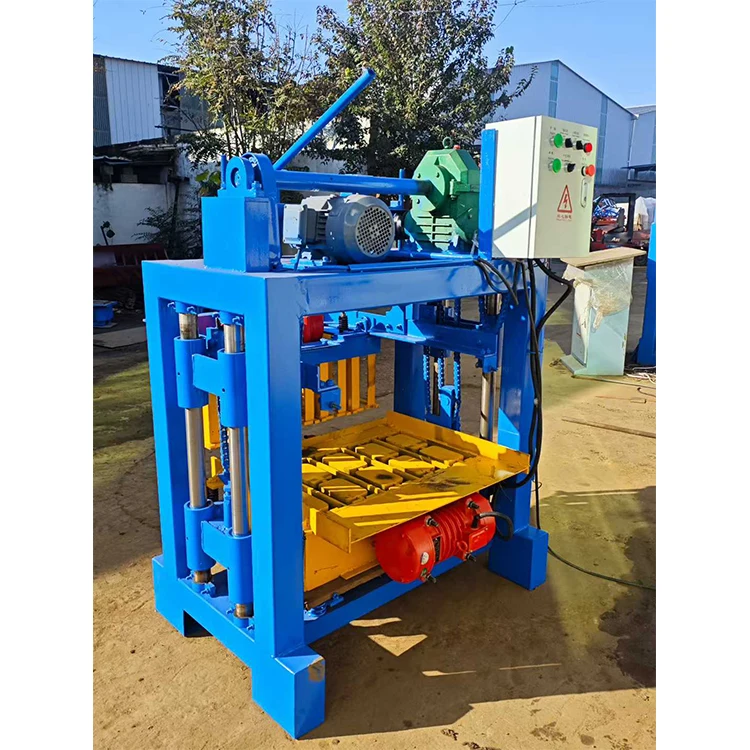
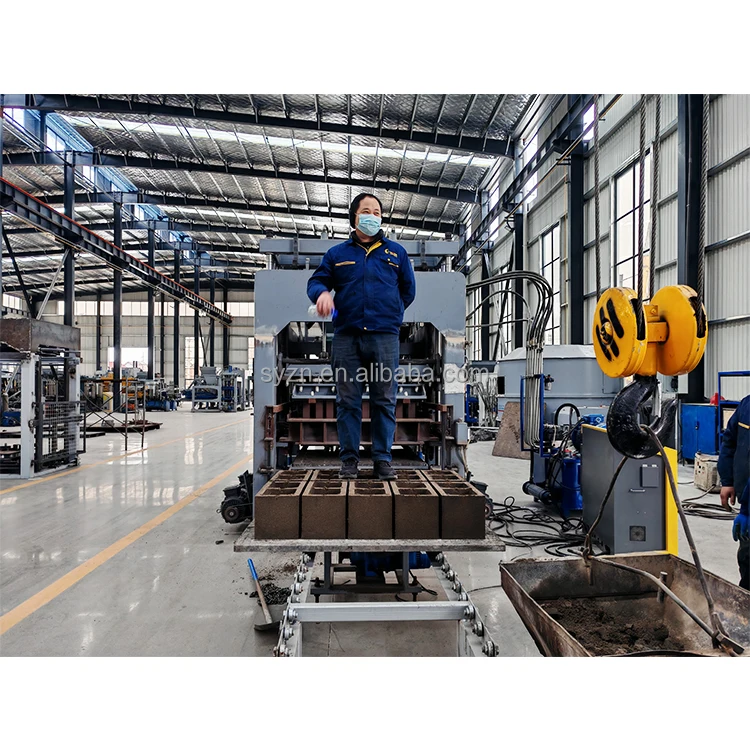 Stationary block machine