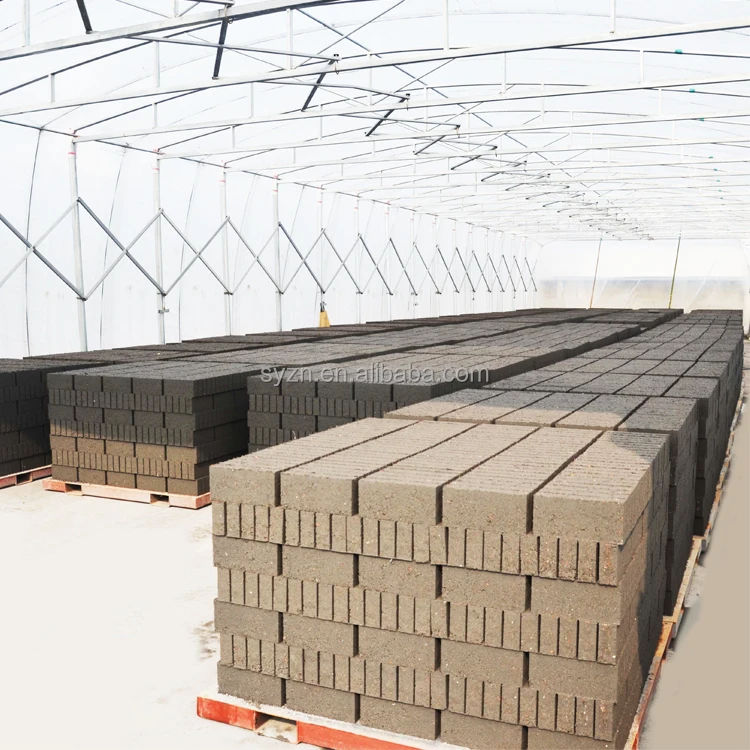
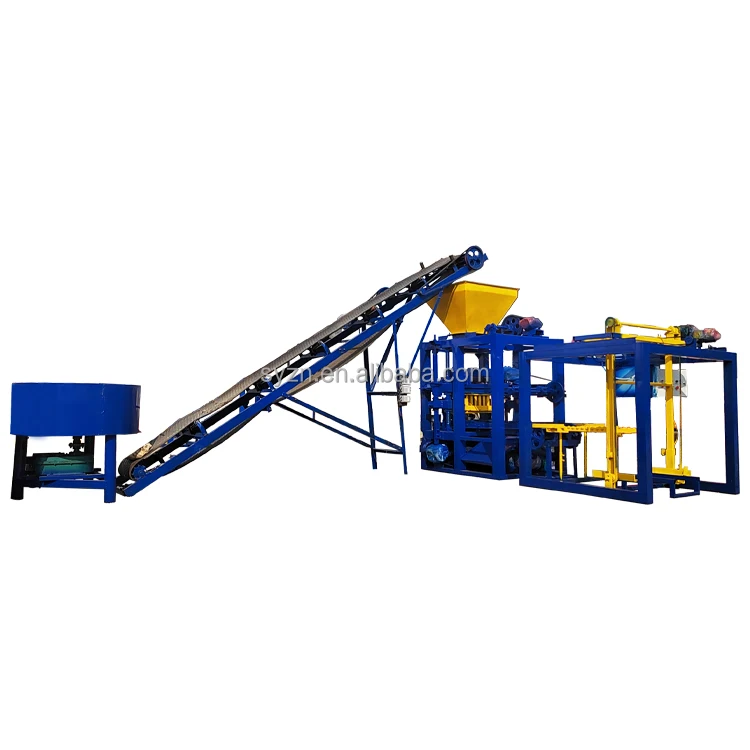
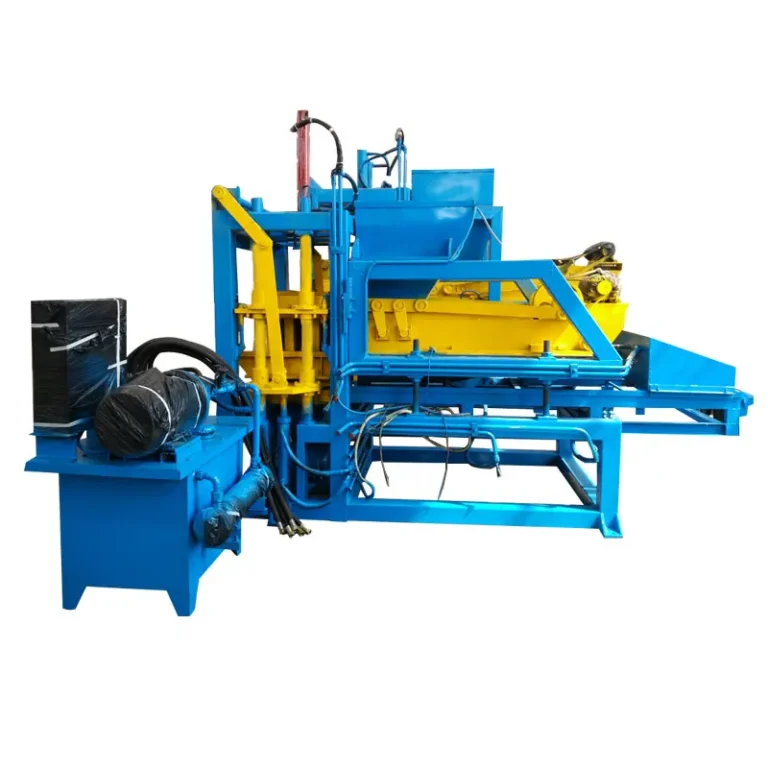
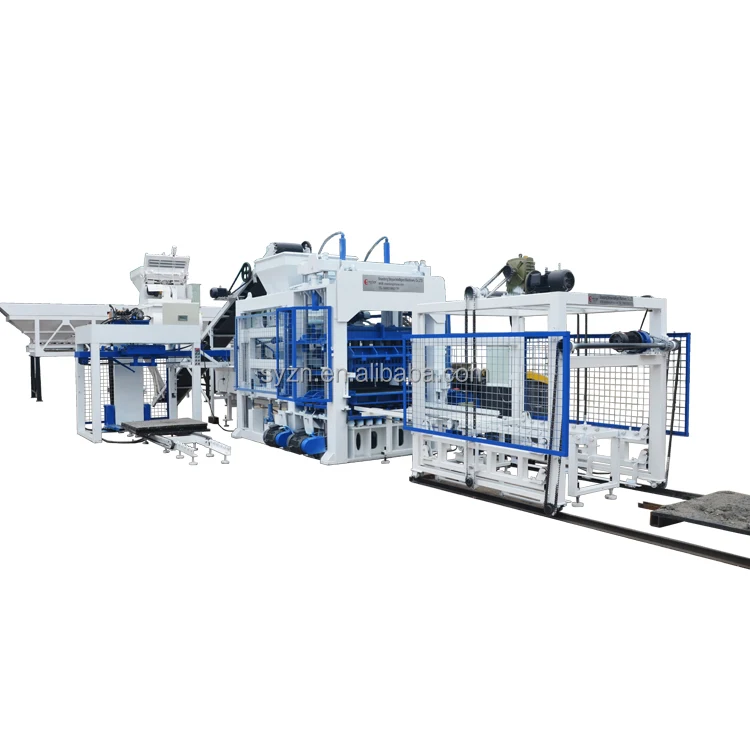
Single-Focus Engineering — the QT4-18 stationary block machine for sale is specified as one matched system of press, mould, pallet and handling rather than assembled from disconnected suppliers, so cycle times and output tiers stay honest from inquiry to commissioning.
Technical Specifications
| Parameter |
Value |
| Model |
QT4-18 |
| Product Type |
Automatic Hollow Block Making Machine |
| Host Machine Power |
27.5 kW |
| Moulding Cycle |
15 s (basis to be confirmed with block format) |
| Overall Dimensions (L×W×H) |
7100 × 1600 × 2610 mm |
| Pallet Size |
1020 × 570 mm |
| Net Weight |
5 T |
| Vibration Force |
40 kN |
| Mixer Model |
JS500 |
| Voltage |
380 V (configurable to destination supply) |
| General Water Consumption |
4 T / day |
| Required Workers |
3–4 |
| Workshop Area |
150 m² |
| Control System |
PLC (language configurable before shipment) |
| Automation Level |
Automatic (upgrade path from semi-automatic available) |
| Theoretical Productivity |
Basis not stated in source — confirm block format and wall thickness |
Application Suitability
| Application |
Material or Output |
| Small-to-medium hollow block plants |
Crushed stone, sand, cement and fly ash blends |
| On-site contractor production for housing projects |
Local aggregate with standard cement ratios |
| First block plant for entrepreneurs entering the market |
Hollow blocks in common regional wall thicknesses |
| Replacement of ageing semi-automatic presses |
Same pallet footprint with higher daily consistency |
Why "15 Seconds per Cycle" Means Nothing Without the Block Format
A moulding cycle only becomes real capacity once the block format and pallet layout are named.
I still remember watching a buyer in Manila calculate his daily output by dividing an eight-hour shift by the quoted cycle time, then ordering pallets that did not match his curing racks. The stationary block machine for sale he selected was right for his budget, but the capacity figure on the brochure assumed a block format his market did not buy [NEED_CITE: block format and cycle time assumptions in machinery brochures]. When you survey the complete range, every output tier must be read against the pallet size and the number of cavities the mould actually holds. Without that context, a 15-second cycle is just a number on a specification sheet.

Placing the QT4-18 Within the Output Tiers
The QT4-18 sits in the mid-output band of the stationary block machine range, filling the gap between entry-level workshop presses and high-capacity automatic lines. Buyers who have outgrown a mobile egg-layer but do not yet need a fully automatic stacking and cubing system find this tier practical. The 1020 × 570 mm pallet footprint keeps curing area requirements moderate while still allowing multiple cavity layouts per cycle.
Automation That Grows With the Plant
Starting with the automatic configuration means the PLC handles batching sequences and pallet indexing, yet the same platform can accept semi-automatic pallet handling if the buyer prefers to phase capital spend. Upgrading later to automatic stacking avoids a full machine replacement. This flexibility matters for contractors who secure a housing project first and scale the plant afterwards [NEED_CITE: phased automation adoption in small block plants].
Reading the Power and Vibration Numbers Together
The 27.5 kW host machine power must be evaluated alongside the 40 kN vibration force, because compaction density in hollow block production depends on both amplitude and hydraulic confinement. A higher vibration force without sufficient clamping pressure lets the mix shift during the cycle, producing blocks with uneven wall thickness. Conversely, heavy pressure with weak vibration leaves air pockets in the web section. The QT4-18’s pairing targets standard hollow block mixes using crushed stone up to 10 mm grading. Pallet size also dictates how many blocks are formed per cycle, so the vibration force must cover the full mould area uniformly rather than concentrating at the centre.
The Cost of Skipping the Voltage Conversation
Arriving at a job site in Cebu with a 380 V / 50 Hz cabinet when the local grid runs 440 V / 60 Hz turns a two-day commissioning into a three-week wait for a step-down transformer. I learned this the hard way on an earlier shipment, and since then every stationary block machine for sale we dispatch goes through a video call between our electrician and the buyer’s site engineer to lock voltage, frequency and PLC display language before the control panel is wired. Skipping that call costs more in idle labour than the confirmation ever takes [NEED_CITE: voltage and frequency standards by export market].
Why Buyers Choose This Range
The QT4-18 is configured against the buyer’s actual mix design and target block format rather than shipped as a catalogue default. Mould drawings are reviewed with the buyer so the cavity layout matches the formats the local market moves. Pallet specifications are matched to the curing area dimensions and the forklift the buyer already owns, preventing costly pallet replacements after arrival. Factory test records document the cycle time on the exact block format ordered, not a generic test block.
Documentation & Verification
- Line layout and capacity calculation naming the block format assumed for the QT4-18 cycle time
- Machine specification sheet confirming voltage, frequency and PLC language before the cabinet is sealed
- Mould drawing and format list showing every cavity layout the QT4-18 pallet can accept
- Pallet specification matched to buyer’s curing rack spacing and forklift fork width
- Factory test record on the buyer’s chosen block format before crate closure
- Hydraulic and electrical schematic for on-site troubleshooting during the first production year
Installation, Commissioning & Support
- 150 m² workshop area including JS500 mixer station and raw material bays must be level and drained
- 380 V three-phase supply with dedicated circuit breaker rated above 27.5 kW inrush current
- Machine arrives dismantled to fit a standard container; reassembly on prepared foundation takes a typical multi-week window
- PLC display language and alarm texts verified on-site during first power-up before production begins
- Operator training covers mould change procedure, vibration amplitude adjustment and daily pallet inspection
- Wear parts list and hydraulic seal kit shipped with the machine so first replacements are on hand
- Curing rack layout reviewed to match the 1020 × 570 mm pallet footprint and forklift turning circle
Before You Request a Quote
Tell us the exact hollow block dimensions your market sells, the local aggregate grading you can source, and the daily output you need to justify the shift pattern. Share your site voltage, frequency and the language your operators read so the PLC and electrical cabinet leave the factory matched to your grid. If you already have curing racks or a forklift, send the dimensions so the pallet specification is locked before production starts.
Frequently Asked Questions
Q: How does the QT4-18 output tier compare with smaller and larger models in the range?
A: The QT4-18 occupies the mid-output tier, above workshop-scale manual presses and below high-capacity lines with automatic cubing. It suits buyers who need consistent daily volume without the footprint and capital outlay of a full automatic plant. Pallet size and cycle time together determine where it sits relative to neighbouring models.
Q: What block format is assumed when quoting the 15-second moulding cycle?
A: The cycle figure must be read against a specific block format, wall thickness and cavity count on the 1020 × 570 mm pallet. Without that detail, the number is incomplete. We state the assumed format in the capacity calculation so buyers can verify against their own product mix.
Q: What plant footprint does a QT4-18 line require?
A: Around 150 m² covers the press, JS500 mixer, raw material bays and pallet return path. Additional curing area depends on the block format and turnover rate. We provide a line layout drawing showing every station before the order is confirmed.
Q: Can the QT4-18 be started as semi-automatic and upgraded later?
A: Yes. The platform accepts semi-automatic pallet handling at the outset and can be upgraded to automatic stacking and cubing as volume grows. The PLC architecture supports the additional I/O without replacing the main controller.
Q: Which voltage and frequency options are available for the destination market?
A: The electrical cabinet is configurable to the destination grid, including common 380 V, 415 V and 440 V supplies at 50 Hz or 60 Hz. Voltage and frequency are confirmed by video call between our electrician and the buyer’s site engineer before wiring begins.

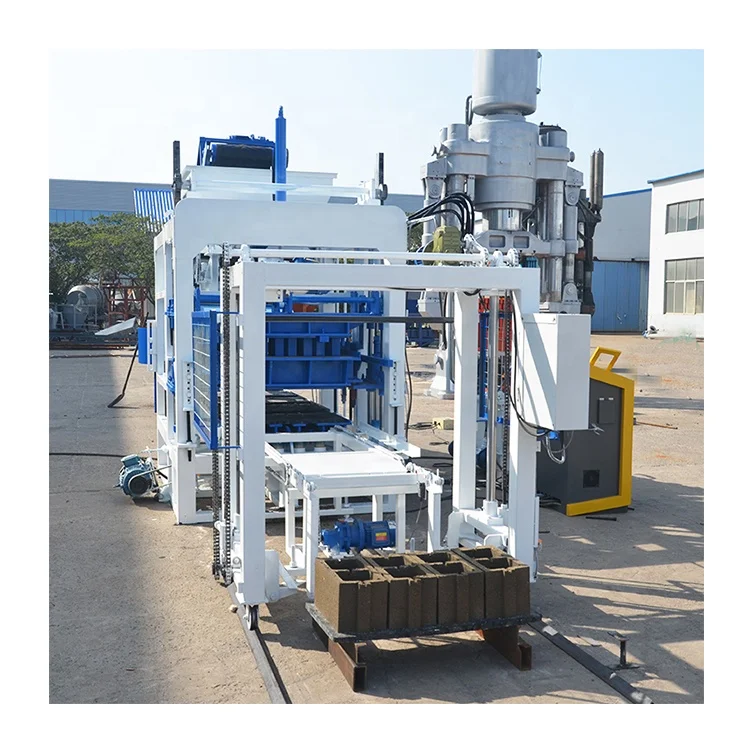
 Stationary block machine