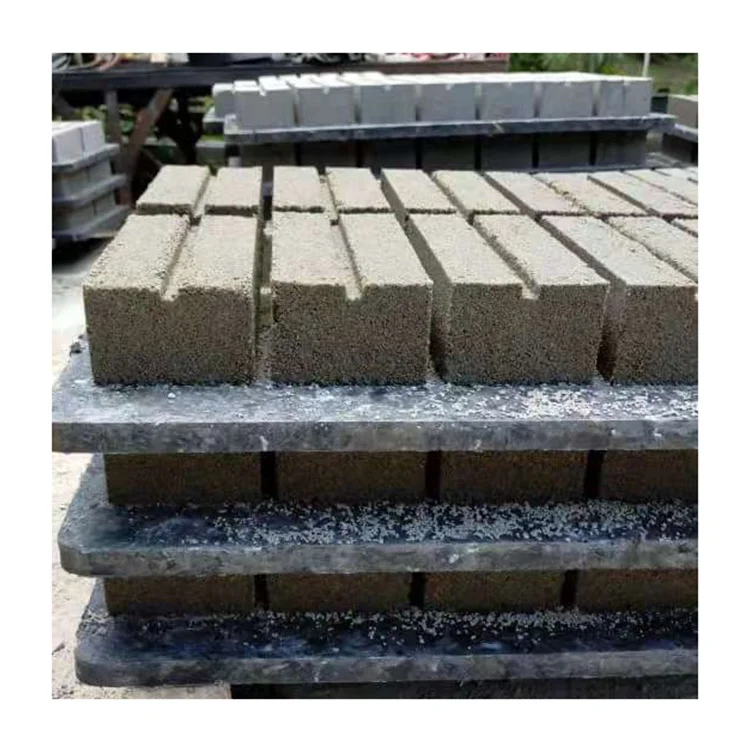
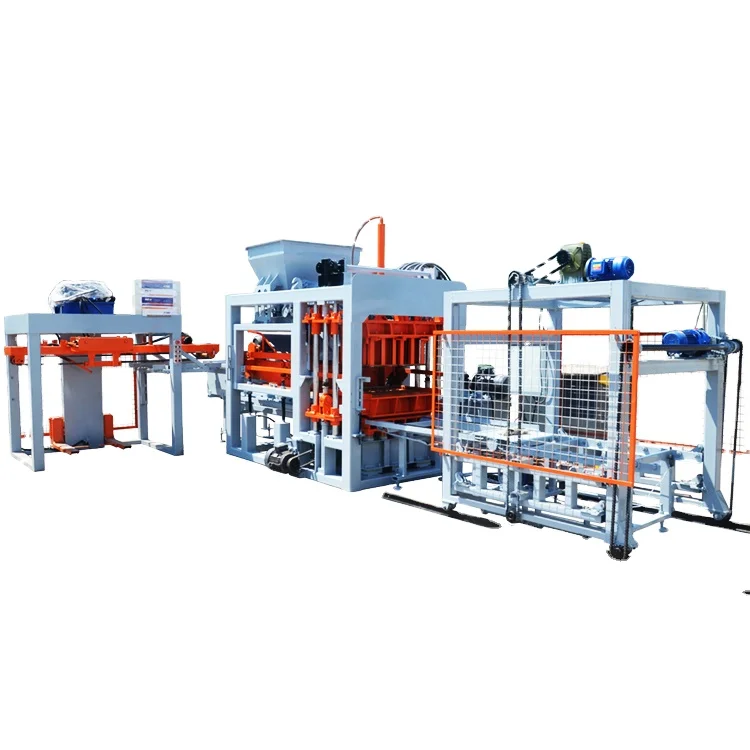
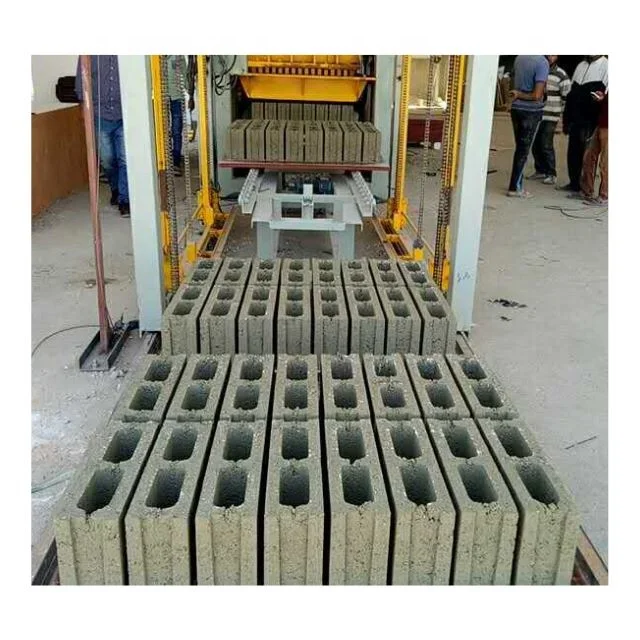
Matched System Integration — every component from the QTJ4-40 block making machine press to the 850×450 mm pallets is specified as one coordinated line, eliminating the mismatch between standalone purchases that forces buyers into costly on-site improvisation.
Technical Specifications
| Parameter |
Value |
| Model |
QTJ4-40 |
| Product Type |
Small Semi-Automatic Concrete Block Making Machine |
| Machine Power |
10.4 kW |
| Molding Cycle |
40 seconds |
| Theoretical Productivity |
360 pcs/hour (based on 400×200×200mm hollow block, 4 pcs/mould) |
| Theoretical Productivity |
450 pcs/hour (based on 400×150×200mm hollow block, 5 pcs/mould) |
| Theoretical Productivity |
800 pcs/hour (based on 225×112.5×60mm solid block, 9 pcs/mould) |
| Overall Dimensions |
1350×1460×1800 mm |
| Machine Weight |
1 Tonne |
| Pallet Size |
850×450 mm |
| Vibration System |
Bed mould vertical vibration + upper mould compression vibration |
| Automation Level |
Semi-automatic (top die push-and-pull, automatic scraper) |
| Stacking Method |
Manual |
| Raw Materials |
Concrete, sand, cement, fly ash, lime, gypsum |
Application Suitability
| Application |
Material or Output |
| Small-scale hollow block manufacturing |
Crushed stone, sand, and cement blends for 400×200×200mm and 400×150×200mm formats |
| On-site production for building contractors |
Local aggregate and cement mixes for solid and hollow masonry units |
| Entry-level paving and solid block plants |
Fine sand and cement combinations for 225×112.5×60mm solid formats |
| Entrepreneurial first-time block plants |
Fly ash, lime, and gypsum blends for varied standard block sizes |
Why "2500 Pieces a Day" Means Nothing Without the Block Format
Real output is always tied to a specific mould and block dimension.
When sourcing block machines for contractors across Europe, I repeatedly saw quotation sheets promise a daily capacity figure that evaporated the moment the operator loaded a different mould. The QTJ4-40 block making machine is quoted at 2000-2500 pcs/8hours (basis not stated in source), a range that only becomes meaningful once you anchor it to the exact block format your market demands. A 400×200×200mm hollow block yields a theoretical 2800 pieces per day, while a smaller 225×112.5×60mm solid block pushes that figure to 6400 pieces under ideal conditions. The gap between those two realities is where most buyer disappointment originates [NEED_CITE: capacity calculation standards for concrete block machinery].

Where the QTJ4-40 Sits on the Investment Ladder
This machine occupies the entry tier of the Shiyue range. It is a small semi-automatic block machine for sale aimed at buyers who need proven forming capability without the capital outlay of a fully automatic stacking and cubing line. The semi-automatic designation means the top die push-and-pull and scraper function without manual intervention, while pallet feeding and product stacking remain manual tasks. For a first-time plant or a contractor producing on-site, this keeps the initial footprint and labour requirement manageable.
Planning the Line Around the Press
The press is only one station. Raw material feeding, mixing, pallet circulation, and curing rack handling must all keep pace with the 40-second moulding cycle. If your mixer cannot deliver a fresh batch every cycle, the QTJ4-40 block making machine sits idle between presses. Buyers planning a complete block production setup must map every upstream and downstream station to avoid bottlenecking the press [NEED_CITE: block production line synchronization principles].
Vibration, Pressure, and Pallet Alignment
The dual vibration system combines bed mould vertical vibration with upper mould compression vibration. This paired action consolidates the concrete mix from two directions, producing a more uniform block density than single-axis vibration alone. The 850×450 mm pallet size is a fixed parameter that dictates your curing area layout and the forklift tine spacing you will need. Specifying pallets without confirming they match your existing handling equipment leads to immediate on-site rework. The 10.4 kW power rating is modest, meaning standard three-phase industrial supply is sufficient, but the voltage and frequency must be confirmed against your local grid before the machine leaves the factory.
The Cost of Skipping the Voltage Conversation
I have stood on commissioning sites where the control panel labels were entirely in a language the local operators could not read, and the voltage supplied did not match the motor winding configuration. A semi-automatic machine like this one depends on the operator interacting with the controls throughout every shift. When the voltage is wrong, motors overheat and contactors fail prematurely. When the panel language is unconfirmed, the first day of production becomes a translation exercise rather than a training session [NEED_CITE: electrical commissioning standards for exported industrial machinery].
What Shiyue Configures Before the Container Ships
Block machinery is a single focus for this manufacturer, which means the machine, mould, pallet, and handling equipment are specified as a matched system rather than assembled from unrelated suppliers. The configuration is set against your actual mix design and local aggregate, not a catalogue default. Mould design covers the formats your market sells, with custom drawings available. The automation level is selectable, so you can begin with the QTJ4-40 as a semi-automatic unit and plan an upgrade path as volume grows. Installation support includes on-site commissioning and operator training.
Documentation & Verification
- Line layout and capacity calculation stating the exact block format assumed for output figures
- Machine specification sheet confirming voltage, frequency, and control language before dispatch
- Mould drawing and format list matched to your target market products
- Pallet specification sheet aligned to your curing area and forklift dimensions
- Factory test record on your specified block format before shipment
- Operation and maintenance manual with wear parts and mould replacement schedule
Installation, Commissioning & Support
- Compact 1350×1460×1800 mm footprint requires a level concrete pad with minimal foundation work
- 10.4 kW power draw needs a dedicated three-phase circuit with confirmed voltage and frequency
- Semi-automatic configuration means manual pallet handling training is part of commissioning
- 40-second moulding cycle verified against your mix design during on-site test runs
- 850×450 mm pallet stock and spare wear parts list provided before first production shift
What to Include in Your Inquiry
To receive a configuration that matches your actual site conditions, provide the block formats your market sells along with target daily output per format. Confirm your local voltage, frequency, and preferred control panel language. Detail the raw materials available locally, including aggregate type and grading, so the mix design and vibration settings can be aligned before dispatch.
Frequently Asked Questions
Q: How is the daily output of the QTJ4-40 block making machine calculated?
A: Output depends entirely on the block format in the mould. For a 400×200×200mm hollow block with four cavities, the theoretical rate is 360 pieces per hour. For a 225×112.5×60mm solid block with nine cavities, it reaches 800 pieces per hour. Always request a capacity calculation tied to your specific block size.
Q: What voltage and frequency options are available for my market?
A: Voltage and frequency are configured to match your local grid supply before the machine ships. Common industrial configurations across different export markets vary significantly. Confirming this detail during the inquiry stage prevents motor rewinding or transformer additions after arrival on site.
Q: Where does the QTJ4-40 sit compared to automatic block machines in the Shiyue range?
A: The QTJ4-40 is a semi-automatic entry-level small semi-automatic block machine for sale, with manual pallet feeding and stacking. Higher tiers add automatic pallet circulation, stacking, and cubing. Buyers often start here and upgrade automation as production volume justifies the additional investment.
Q: Can I order custom moulds for specific block formats?
A: Yes. Moulds are designed and manufactured for the formats your market requires, including custom drawings provided by the buyer. Each mould change involves a specific changeover time, which should be factored into your daily production planning if you run multiple formats in one shift.
Q: What supporting equipment do I need alongside the QTJ4-40?
A: The press requires a mixer capable of matching the 40-second cycle, a raw material feeding system, and a supply of 850×450 mm pallets. Curing area layout and stacking are manual at this tier. Confirming pallet size against your existing forklift and curing space avoids handling problems once production begins.

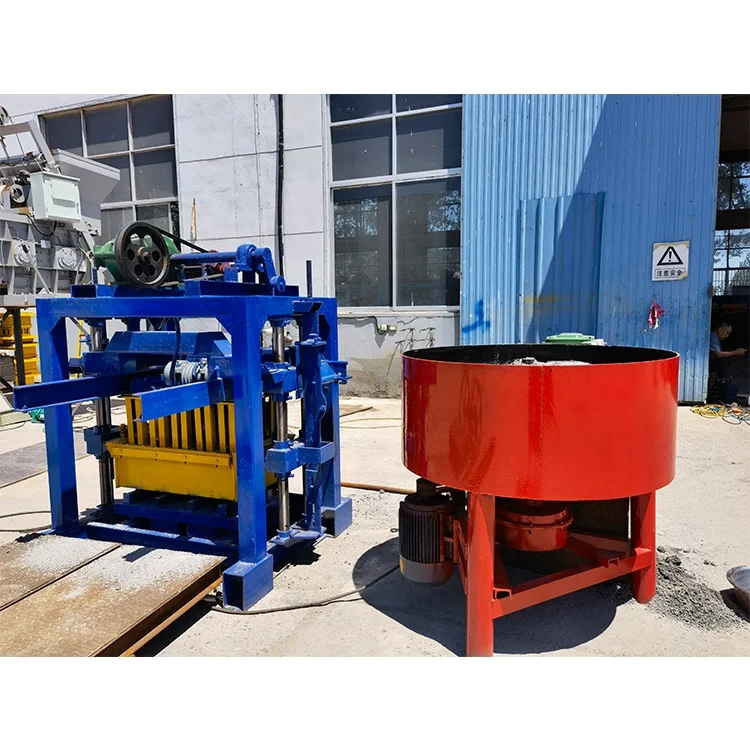
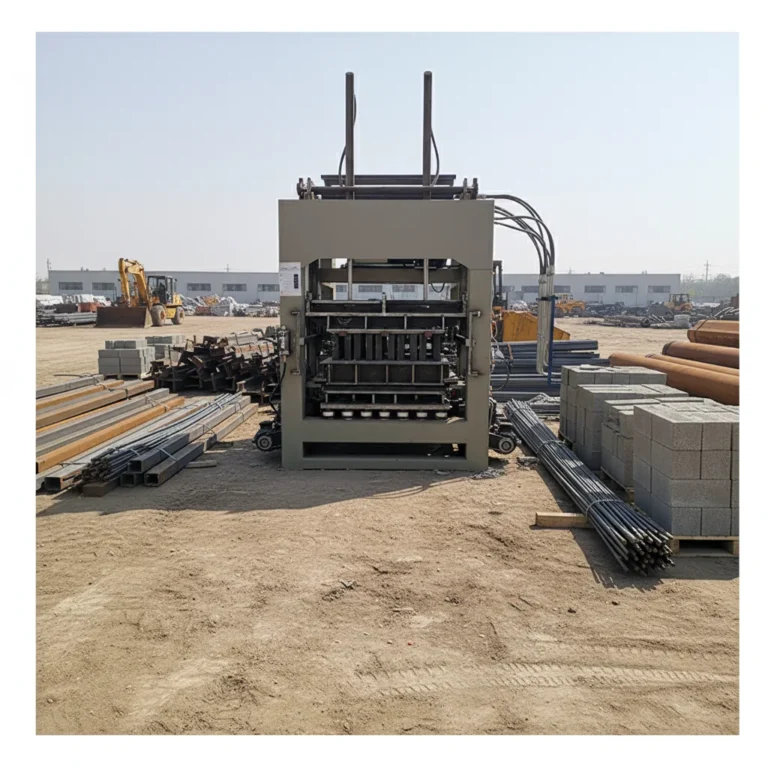 High quality block machine