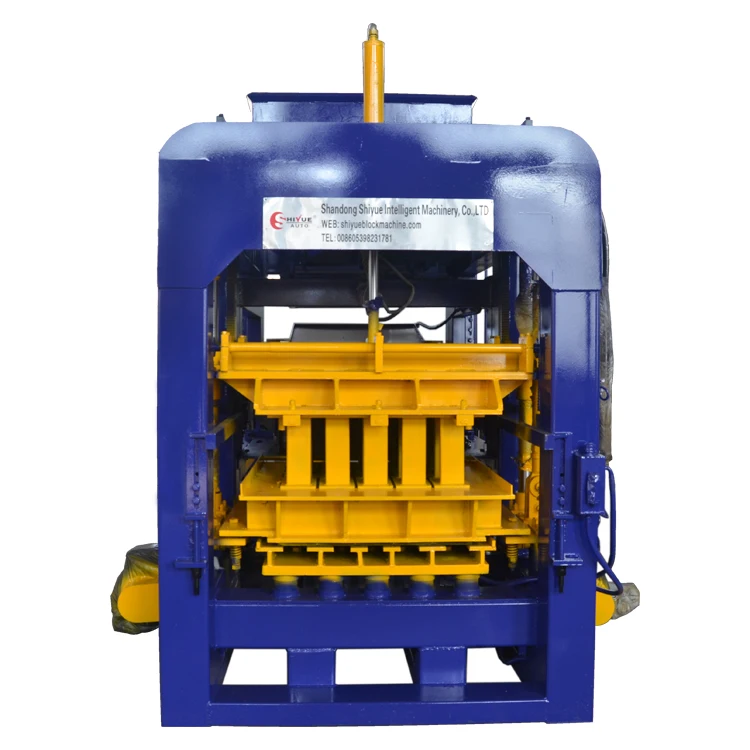
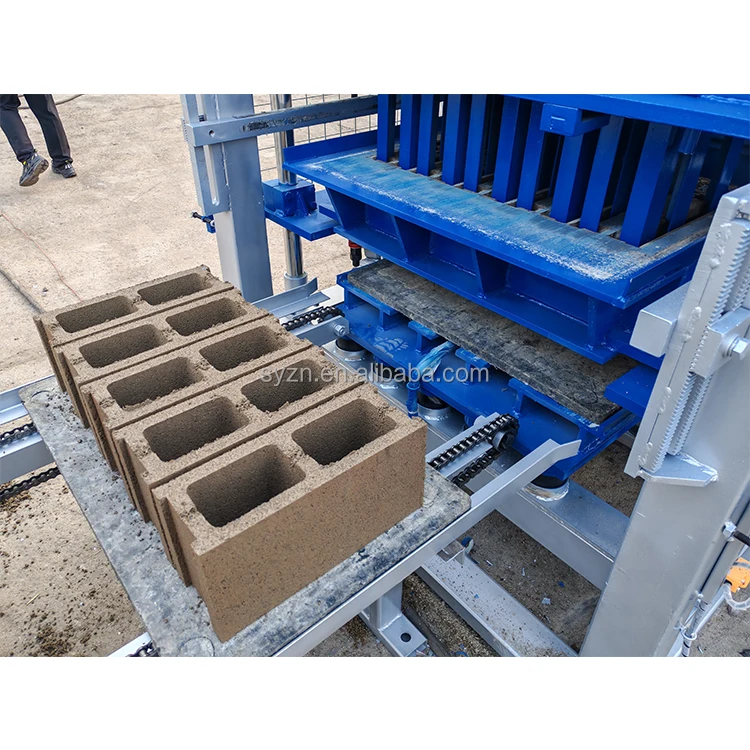
Matched System Integration — Every component from the mixer to the stacker is specified as one coordinated line, preventing the press from waiting on upstream stations or being starved by pallet shortages.
Technical Specifications
| Parameter |
Value |
| Model |
QT4-15 |
| Product Type |
Automatic Concrete Block Making Machine |
| Overall Dimensions (L×W×H) |
410016002600mm |
| Rated Pressure |
16-21MPa |
| Main Vibration Form |
Platform Vibration |
| Vibration Frequency |
4200 r/min |
| Vibration Force |
55KN |
| Pallet Size |
880*550mm |
| Molding Cycle |
25-30 s (basis not stated in source — confirm block format / material / thickness) |
| Overall Power |
18.45kW |
| Total Mass |
4T |
| Demolding Method |
Hydraulic |
| Applied Products |
Concrete blocks, hollow/solid blocks, pavers, interlocking blocks, curbstone, colored pavers |
| Automation Level |
Fully automatic |
| Warranty |
1 year |
| Loading |
1×40HQ container |
Application Suitability
| Application |
Material or Output |
| Hollow Block Production |
Crushed stone, sand, cement, fly ash |
| Solid Block Manufacturing |
Gravel, slag, cement, dust |
| Paving Block & Kerbstone |
High-density aggregate mixes, colored face layers |
| Interlocking Brick Lines |
Specialized clay or cementitious blends |
Why the Voltage Question Should Come Before the Price
A machine configured for the wrong grid frequency will never reach its rated cycle time, regardless of its hydraulic pressure.
When the QT4-15 concrete block making machine for sale is prepared for export, the electrical configuration is often the last detail confirmed. If the vibration motor runs at 60Hz instead of the designed 50Hz, the 4200 r/min frequency shifts, altering the compaction energy. This leads to inconsistent block density and higher rejection rates. [NEED_CITE: electrical frequency impact on vibration motor torque]
Placing the Mid-Tier Press in a Complete Line
The QT4-15 sits at a critical junction for buyers moving beyond mobile egg-laying units but not yet requiring high-capacity lines. It demands a supporting ecosystem where the pallet feeder and the stacking robot match the 25-30 s cycle rhythm. If the supporting equipment lags, the press sits idle, effectively halving your daily volume.
The Automation Path from Manual to Fully Automatic
Choosing the automation level determines your labor cost and consistency. The QT4-15 offers a fully automatic control architecture that manages material feeding and demolding. [NEED_CITE: PLC communication protocols in block making machinery] However, the value of this automation depends on whether the raw material batching is also automated to feed the mixer with the correct moisture and cement ratios.
Interpreting Pressure, Vibration, and Pallet Dimensions
The 16-21MPa rated pressure and 55KN vibration force work in tandem; the vibration settles the aggregate while the hydraulic pressure squeezes out air voids. This combination dictates the compressive strength of the final product. The 880*550mm pallet size is a crucial logistical parameter; it must match your curing racks and the fork pocket spacing of your site forklifts. Using mismatched pallets creates a bottleneck at the stacking station that no amount of press speed can resolve.

The Hidden Costs of a Misconfigured Plant Layout
Ignoring the plant footprint (300m²) leads to cramped curing zones. When blocks are stacked too closely or in areas without proper airflow, the hydration reaction stalls. Furthermore, if the voltage is not stabilized for the 18.45kW total load, the contactors will degrade prematurely. [NEED_CITE: harmonic distortion from heavy vibration motors on local grids]
Why Procurement Logic Must Shift to the Whole Line
We treat the QT4-15 concrete block making machine for sale as the center of a synchronized production loop.
- Capacity Logic: We calculate daily output based on the specific block format and your local aggregate’s density.
- Mould Matching: We provide custom drawings for the kerbstones and interlockers your local market actually sells.
- Handling Integration: The quotation includes the pallet handling and cubing systems required to clear the press output.
- Material Testing: We run trials with your sand and fly ash samples to set the hydraulic and vibration parameters before the machine leaves the factory.
Documentation & Verification
- Line layout drawing confirming the 300m² area allocation for press, mixer, and curing.
- Capacity calculation sheet specifying the assumed block format for the quoted cycle.
- Hydraulic and electrical schematics matching the confirmed voltage and frequency.
- Factory test record on your specific mould and aggregate blend before dispatch.
Installation, Commissioning & Support
- Foundation preparation for the 4T total mass and high-frequency platform vibration.
- Dedicated circuit installation for the 18.45kW peak load and 16-21MPa hydraulic pump.
- Alignment of the 880*550mm pallet track with the buyer’s existing curing racks.
- Calibration of the PLC language and sensor sensitivity to local ambient dust levels.
- Training on hydraulic demolding maintenance and mould change procedures.
Requesting a Production Proposal
To provide a realistic daily output figure, we require your target block format (e.g., 6-inch hollow), local sand/slag availability, and site power specifications. Please also indicate if you need the supporting mixer and stacker included in the proposal.
Frequently Asked Questions
Q: How is daily output calculated per block format for the QT4-15?
A: We do not rely on a generic "pieces per hour" figure. Instead, we take the 25-30 s molding cycle and adjust it for the specific block height and your aggregate’s compaction requirements. A 150mm paver will have a different cycle time than a 200mm hollow block, so we provide a capacity table for every mould in your list.
Q: Where does the QT4-15 sit in the range compared to other models?
A: It occupies the mid-tier for fully automatic production. It provides higher consistency and lower labor requirements than a semi-automatic line, but it has a smaller footprint and lower capital requirement than a high-capacity plant designed for 10,000+ blocks daily. It is the standard for professional plants starting up.
Q: What voltage, frequency, and control language options are available?
A: The machine is configurable to most industrial grids, including 220V/380V/440V at 50Hz or 60Hz. The control interface is programmed in the operator’s preferred language to ensure accurate troubleshooting and parameter adjustments during the production shift.
Q: Which pallet size and material are recommended for this specification?
A: The standard is 880*550mm. We recommend bamboo or PVC composite pallets based on your local climate and curing duration. We verify that this dimension matches the fork spacing of your existing equipment and the rack spacing in your curing shed.
Q: What is the plant footprint and required factory area?
A: The press itself is compact (410016002600mm), but a complete automatic line including the mixer, pallet feeder, and initial stacking area requires approximately 300m². This ensures enough space for safe maintenance access and the flow of finished product to the curing zone.

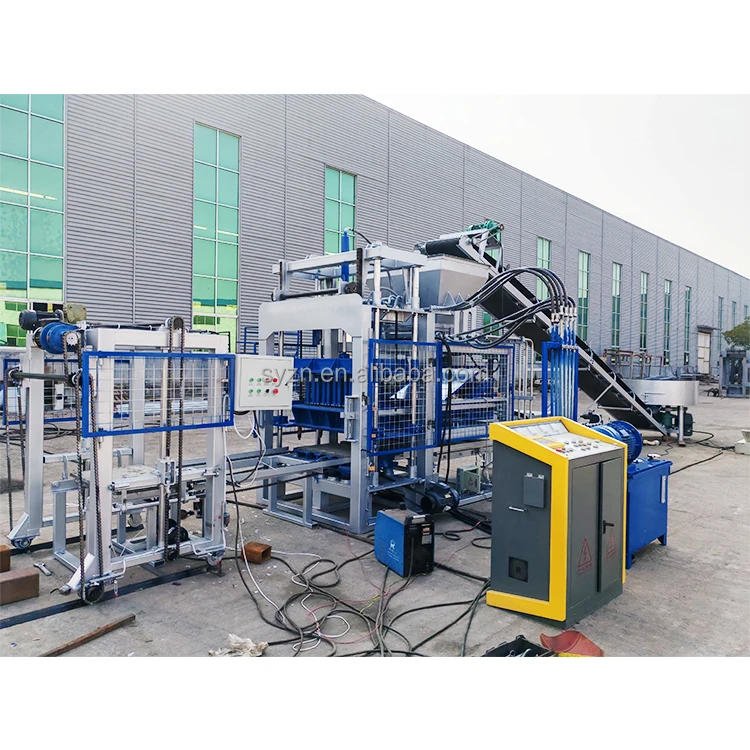
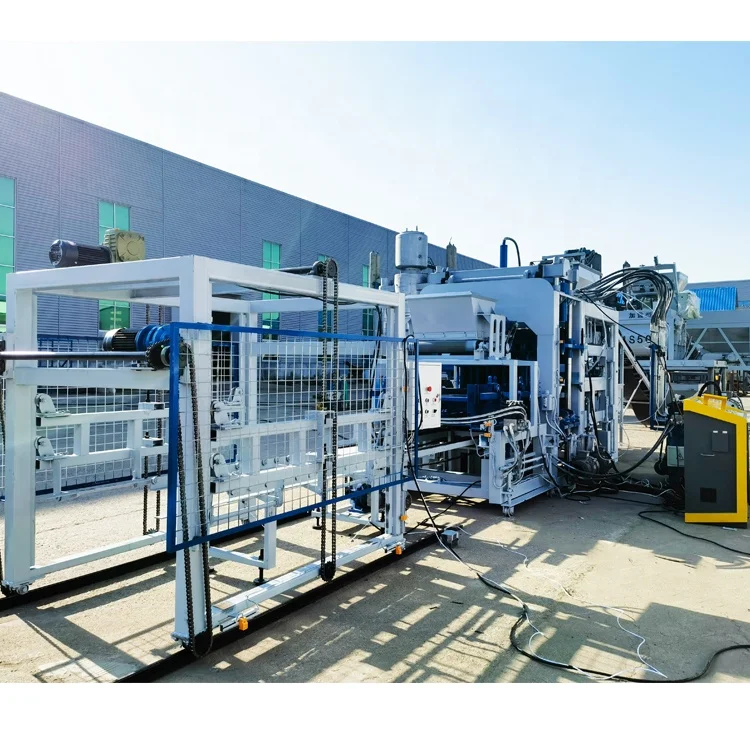 High quality block machine