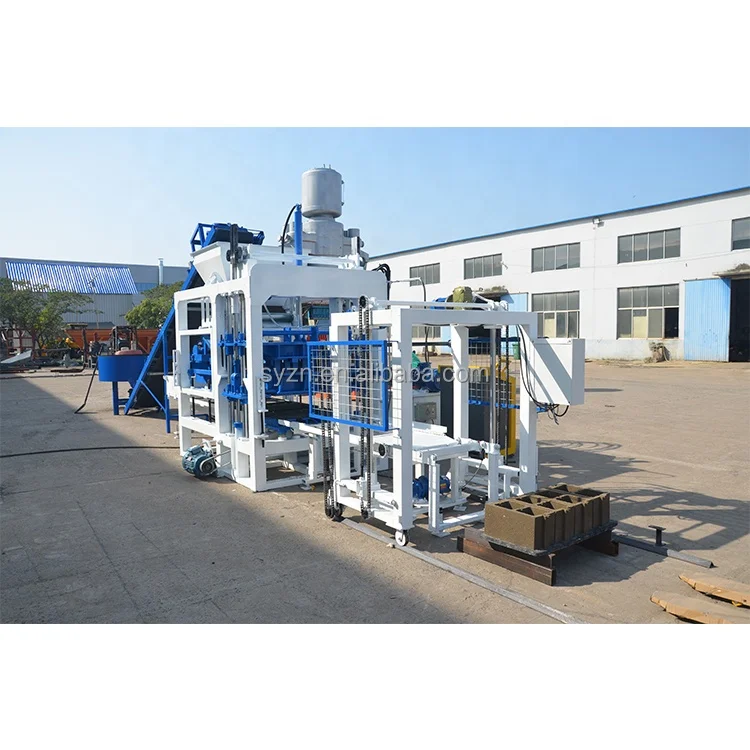
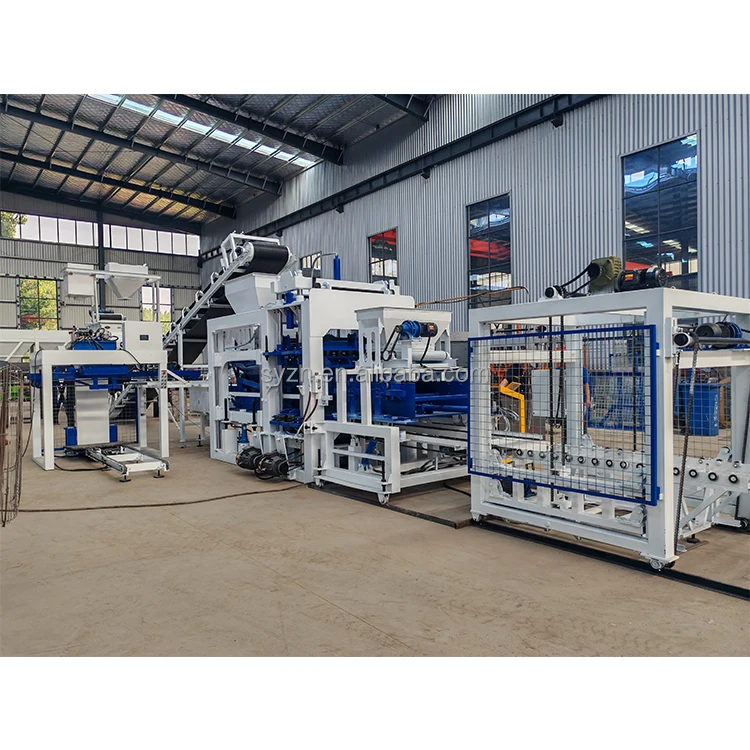
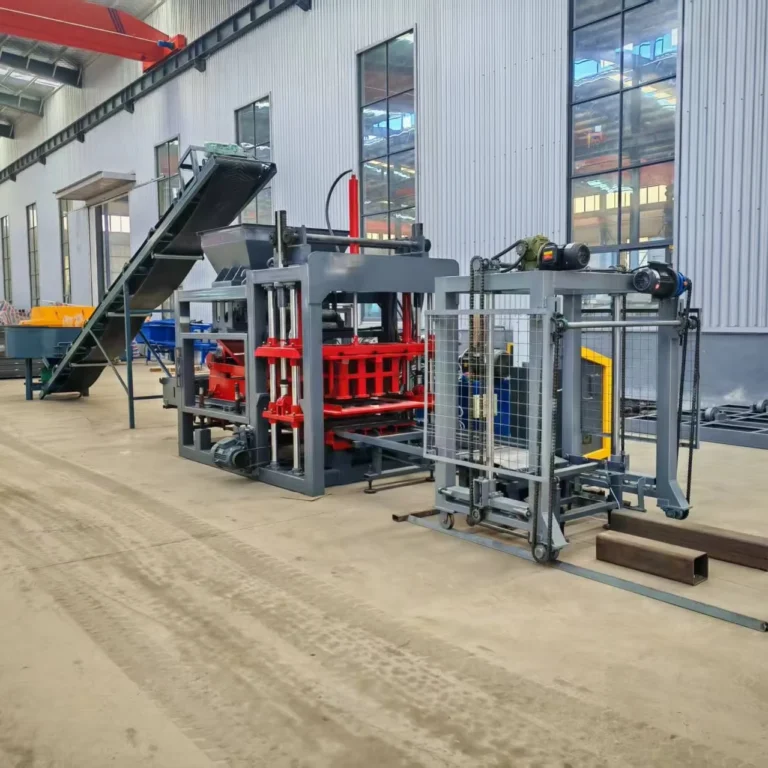
Configuration Matched to Output Tier — The QTJ4-25 is positioned as a defined step within a broader block machine range, so buyers can evaluate where this semi-automatic model fits against higher-capacity automatic lines before committing capital.
Technical Specifications
| Parameter |
Value |
| Model |
QTJ4-25 |
| Product Type |
Semi-Automatic Concrete Block Making Machine |
| Overall Dimensions (L×W×H) |
6400×1500×2700 mm |
| Molding Cycle |
25 s |
| Vibration Frequency |
2800–5100 r/min |
| Vibration Force (Exciting Power) |
60 kN |
| Total Power |
17.9 kW |
| Mixer Model |
JQ350 |
| Pallet Size |
850×550×20 mm |
| Total Weight |
2500 kg |
| Applied Products |
Concrete hollow blocks (8 inch, 6 inch), solid bricks, pavers |
| Raw Materials |
Crushed stone, sand, cement, dust, fly ash |
| Output Capacity |
480 pcs/h (basis: 390×190×190 mm hollow block, 4 pcs/mould) |
| Output Capacity |
600 pcs/h (basis: 400×150×200 mm hollow block, 5 pcs/mould) |
| Output Capacity |
2100 pcs/h (basis: 240×115×53 mm solid brick, 18 pcs/mould) |
| Output Capacity (8-hour shift) |
3800 pcs (basis: 390×190×190 mm hollow block) |
| Output Capacity (8-hour shift) |
4800 pcs (basis: 400×150×200 mm hollow block) |
| Output Capacity (8-hour shift) |
17000 pcs (basis: 240×115×53 mm solid brick) |
| Automation Level |
Semi-automatic |
| Hydraulic Pressure |
To be confirmed |
| Control System |
To be confirmed |
| Voltage & Frequency |
To be confirmed |
| Mould Change Time |
To be confirmed |
| Certification |
CE (model-specific confirmation required) |
Application Suitability
| Application |
Material or Output |
| Small concrete block production plant |
Hollow blocks and solid bricks from crushed stone, sand, cement |
| On-site block production for construction contractors |
Pavers and hollow blocks using locally available aggregates including fly ash |
| First block plant for entrepreneurs |
Semi-automatic hollow block and solid brick output at entry-to-mid investment tier |
| Building material distributor sampling |
Multiple format trials (hollow block, solid brick, paver) on a single Semi-Automatic Block Making Machine for sale |
What "480 Pieces per Hour" Actually Means for Your Plant
Every capacity figure must name the block format it assumes, or the number is meaningless.
Catalogues frequently quote a single hourly output without disclosing which mould and block size produced that number. A buyer expecting 480 hollow blocks per hour will face a very different reality when switching to solid bricks or pavers, where cycle behaviour and mould cavity count change the equation entirely. The Semi-Automatic Block Making Machine for sale here lists capacity per format so you can plan daily volume against the product your market actually buys [NEED_CITE: block format influence on cycle time and daily output].

Where the QTJ4-25 Sits in the Full Machine Range
The Shiyue range spans mobile egg-laying units, semi-automatic presses like the QTJ4-25, and fully automatic lines with stacking and cubing. This model occupies the entry-to-mid tier, offering a defined starting point for buyers who need consistent hollow block and solid brick output without the capital outlay of a high-capacity automatic plant. Understanding this position helps you decide whether to begin here or step directly to a larger tier.
Planning the Upgrade Path from Semi-Automatic
A Semi-Automatic Block Making Machine for sale at this tier allows a first-time plant owner to validate local demand before scaling. Pallet handling remains partly manual, but the JQ350 mixer and 25-second molding cycle establish a baseline rhythm that a future automatic line can absorb. Buyers who anticipate growth should confirm that their curing area layout and forklift fleet can accommodate a later increase in pallet throughput [NEED_CITE: block plant upgrade path from semi-automatic to automatic].
Vibration Force, Pallet Size, and What They Mean on the Floor
The 60 kN vibration force, paired with a frequency range of 2800–5100 r/min, determines how densely the mix consolidates inside the mould cavity. Insufficient vibration leaves hollow blocks fragile at the web section; excessive vibration can segregate fine aggregate from coarse. The 850×550×20 mm pallet must align with your existing curing rack spacing and forklift tine width — a mismatch forces you to either replace the pallet fleet or reconfigure the curing yard. The 17.9 kW total power draw, including the JQ350 mixer, defines the electrical circuit requirement and helps your electrician size the dedicated breaker before the machine arrives.
The Cost of Skipping Voltage and Language Confirmation
Arriving at a job site to find that the control panel displays instructions in a language your operators cannot read, or that the motor winding does not match the local three-phase supply, delays commissioning by weeks. Transformers are expensive, re-winding motors is riskier, and idle crews cost money every day the press sits silent. Confirming voltage, frequency, and PLC display language before production begins removes this avoidable bottleneck [NEED_CITE: voltage and frequency standards by export market].
Why Buyers Source This Tier from Shiyue
The QTJ4-25 is specified as part of a matched system — machine, mould, pallet, and handling equipment are selected together rather than assembled from separate vendors. Capacity calculations state the exact block format assumed, removing guesswork from your business plan. Mould design covers the hollow block, solid brick, and paver formats your market demands, with custom drawings available. The semi-automatic configuration lets you start at a controlled investment level and plan a clear upgrade path when volume justifies it. Installation support and operator training are included so the first production run meets your strength requirements.
Documentation & Verification
- Line layout and capacity calculation stating the block format assumed for each output figure
- Mould drawing and format list covering hollow block, solid brick, and paver sizes
- Pallet specification sheet confirming 850×550×20 mm size, material, and recommended quantity
- Voltage, frequency, and control language confirmation record before dispatch
- Factory test record on your specified block format and raw material mix
Installation, Commissioning & Support
- Foundation pad sized to 6400×1500 mm footprint with vibration isolation for 60 kN exciting force
- Dedicated electrical circuit rated for 17.9 kW total load including JQ350 mixer motor
- Machine shipped as a single unit at 2500 kg, dismantled only where container dimensions require
- First-run commissioning with vibration frequency tuned between 2800–5100 r/min to match your mix design
- Operator training covering 25-second molding cycle, pallet feeding rhythm, and mould change procedure
- Wear parts list supplied with recommended reorder intervals for hydraulic seals and vibration springs
Preparing Your Inquiry
To receive a configuration proposal that matches your actual production target, share the block formats your market sells, the daily volume you plan to reach, and the raw materials available locally including aggregate gradation and any fly ash source. Include your site voltage, frequency, and preferred control panel language so the electrical package is confirmed before the machine enters production.
Frequently Asked Questions
Q: How is output capacity calculated, and which block format does each figure assume?
A: Each capacity figure on the QTJ4-25 is tied to a specific mould and block size. For example, 480 pieces per hour assumes a 390×190×190 mm hollow block with four cavities per mould, while 2100 pieces per hour assumes a 240×115×53 mm solid brick with eighteen cavities. This lets you plan daily volume against the product you actually sell.
Q: Where does the QTJ4-25 sit compared to automatic and mobile models in the full range?
A: The QTJ4-25 occupies the entry-to-mid tier of the Shiyue semi-automatic range. Mobile egg-laying machines sit below it for on-site production without a fixed plant, while fully automatic lines with stacking and cubing sit above it for higher daily volume. This model is a defined starting point before scaling up.
Q: What voltage, frequency, and control language options are available for my target market?
A: Voltage and frequency are confirmed during the inquiry stage to match your local three-phase supply. Control panel display language is specified before production so operators can read instructions on day one. Providing this information early avoids commissioning delays after the Semi-Automatic Block Making Machine for sale arrives at your site.
Q: Which pallet material and quantity should I plan for?
A: The QTJ4-25 uses 850×550×20 mm pallets. Quantity depends on your curing cycle length; a typical plant stocks enough pallets to keep the press running while blocks cure on the rack. Verify that pallet dimensions match your existing curing area spacing and forklift tine width before ordering.
Q: What is the upgrade path from this semi-automatic machine to higher automation?
A: The QTJ4-25 establishes a production rhythm with its JQ350 mixer and 25-second cycle. When volume grows, buyers can transition to a fully automatic line where pallet feeding, stacking, and cubing are mechanised. The curing area and pallet size chosen now should accommodate that future increase in throughput.

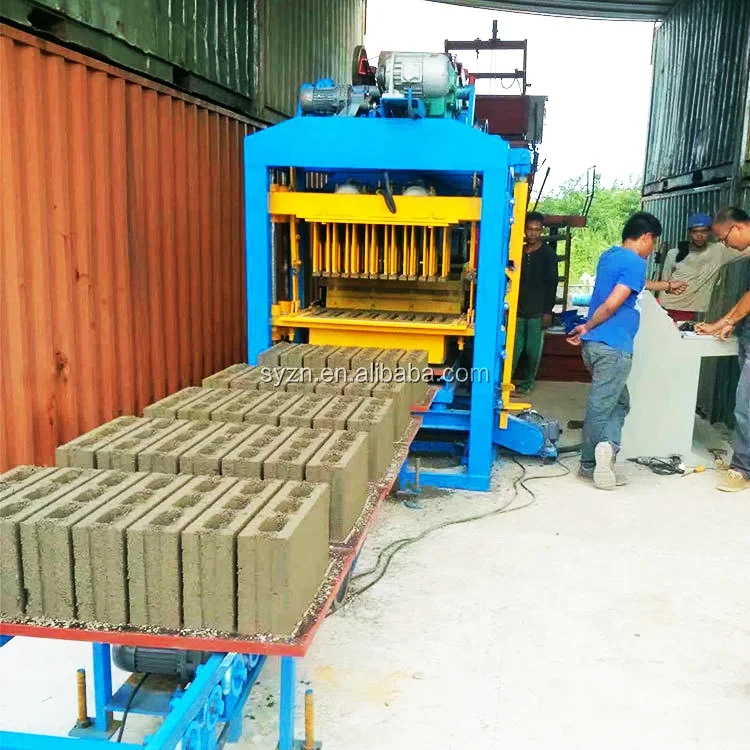
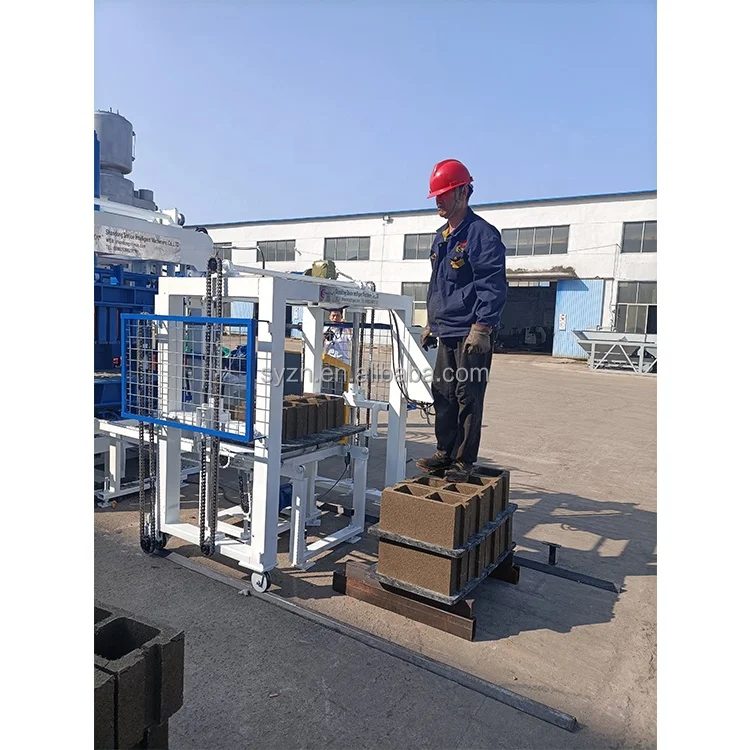 High quality block machine