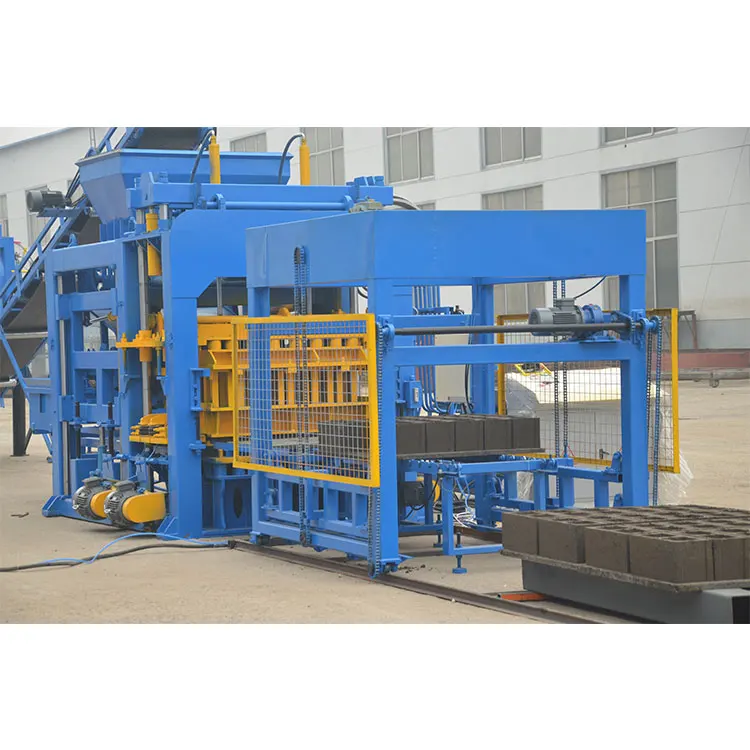
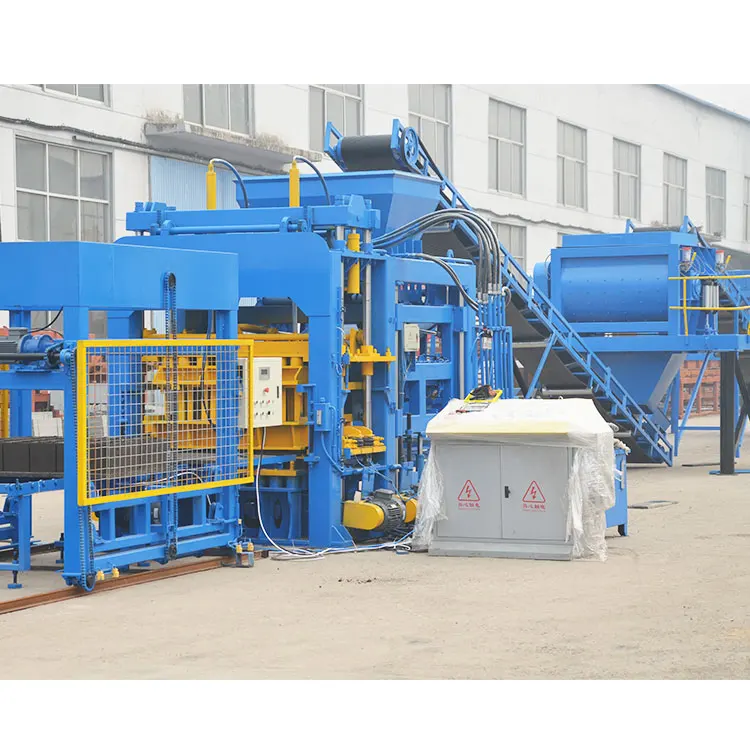
Matched System Sizing — the QTJ4-25 semi-automatic block machine is configured with pallet, mould, and handling as one verified set rather than sourced as separate items.
Technical Specifications
| Parameter |
Value |
| Model |
QTJ4-25 |
| Product Type |
Semi-Automatic Concrete Block Making Machine |
| Overall Dimensions (L×W×H) |
3000×1800×2680 mm |
| Total Mass |
3.5 T |
| Vibration Force |
60 kN |
| Vibration Form |
Platform Vibration |
| Vibration Frequency |
2800–4500 r/min |
| Overall Power |
16.58 kW |
| Pallet Size |
850×480 mm |
| Molding Cycle |
25 s (basis to be confirmed) |
| Demolding Method |
Mechanical |
| Guide Column |
Four-column, chrome-plated, overlong guide design |
| Frame Material |
National standard manganese steel |
| Mould Compatibility |
Hollow blocks, solid bricks, porous blocks, pavers, interlocking blocks, kerbstones |
| Raw Materials |
Crushed stone, sand, cement, fly ash, gravel, slag, stone dust |
| Output Capacity |
580 pcs/h based on 400×200×200 mm hollow block, 4 pcs/mould |
| Output Capacity |
1400 pcs/h based on 240×115×90 mm brick, 9 pcs/mould |
| Output Capacity |
3300 pcs/h based on 240×115×53 mm solid brick, 21 pcs/mould |
| Recommended Factory Area |
300 m² |
| Warranty |
1 year (whole machine, excluding spare parts) |
Application Suitability
| Application |
Material or Output |
| Hollow block production for wall construction |
Crushed stone, sand, cement mixes on 400×200×200 mm format |
| Solid brick manufacturing for masonry |
Fly ash, stone dust, and cement blends on 240×115×53 mm format |
| Paving block and interlocking brick runs |
Gravel and sand aggregates with colored face mix option |
| On-site block production for housing projects |
Local aggregate and cement, semi-automatic operation suited to project-scale output |
| First plant setup for building material distributors |
Multi-format mould changes across hollow, solid, and paver products |
What "580 Blocks per Hour" Actually Means for a Semi-Automatic Block Making Machine for Sale
Every capacity figure here is tied to a specific block dimension and mould cavity count, not a single headline number.
Quoted output rates rarely tell buyers which block format was assumed during the test. A machine rated at several hundred pieces per hour on a small solid brick may produce far fewer when the mould switches to a large hollow block. That gap between catalogue numbers and real daily production is where most first-time plant owners lose money [NEED_CITE: block machine capacity calculation standards by format]. With the QTJ4-25 semi-automatic block making machine for sale, the stated rates of 580 pcs/h, 1400 pcs/h, and 3300 pcs/h each carry a named block size and cavity count so buyers can calculate against the format their market actually demands.

Where the QTJ4-25 Sits in the Full Block Machine Range
The QTJ4-25 occupies the semi-automatic tier, positioned between mobile egg-laying machines and fully automatic lines with stacking and cubing. Buyers stepping up from manual production or starting a first block plant typically land here because the investment is lower while still delivering mechanical demolding and consistent cycle times. The machine requires manual pallet handling, which keeps the initial capital outlay manageable and leaves a clear upgrade path to higher automation tiers when daily volume grows.
How Format Flexibility Works at the Semi-Automatic Tier
One QTJ4-25 press accepts moulds for hollow blocks, solid bricks, porous blocks, pavers, interlocking bricks, and kerbstones. This multi-format capability means a single machine can serve different product lines within a small to medium plant. Mould changes are mechanical, and the actual time required per change depends on the operator and the specific mould set [NEED_CITE: typical mould change procedures for semi-automatic block presses]. Buyers evaluating a semi-automatic block making machine for sale should confirm the format list against their local market demand before placing an order.
Reading the Specifications That Matter on the Shop Floor
The 60 kN vibration force combined with platform vibration at 2800–4500 r/min determines how densely the concrete mix is compacted into the mould cavity. Insufficient vibration relative to the mix design produces blocks that crack during curing or fail compressive strength tests. The four-column chrome-plated guide system keeps the upper mould aligned during each press cycle, which directly affects block dimensional consistency across a production run. Pallet size at 850×480 mm must match the curing racks and forklifts the buyer already has on site — a mismatch here causes bottlenecks before the press even starts running. The 16.58 kW overall power requirement should be checked against the local supply capacity, especially in regions where three-phase voltage may fluctuate [NEED_CITE: voltage and frequency standards by export market].
The Cost of Choosing the Wrong Configuration
When vibration force is not matched to the buyer’s aggregate and cement ratio, blocks come out under-compacted on one side and over-compacted on the other. I have seen semi-automatic block machines of this class produce inconsistent batches simply because the frequency range was set for a sand type the buyer could not source locally. Pallets ordered in the wrong size pile up in the curing yard with no compatible forklift to move them. Voltage and control language left unconfirmed before shipment mean the machine sits idle for weeks while electricians and translators are arranged on site [NEED_CITE: commissioning delays caused by unconfirmed electrical specifications].
Why Source This QTJ4-25 Semi-Automatic Block Making Machine for Sale Here
Block machinery is the single production focus, so the press, mould, pallet, and handling equipment are specified as one matched system rather than assembled from separate suppliers. Machine configuration is set against the buyer’s actual mix design and local aggregate, not pulled from a catalogue default. Mould design covers the specific formats the buyer’s market sells, including custom drawings when standard moulds do not match local block dimensions. The automation level is selectable, allowing a buyer to start with the QTJ4-25 semi-automatic tier and move to a higher tier later. Installation support includes operator training so the crew understands cycle timing, mould change procedure, and daily maintenance from the first production shift.
Documentation & Verification
- Line layout showing capacity calculation for each block format the QTJ4-25 will produce
- Machine specification sheet confirming pallet size, vibration force, and overall power before production
- Mould drawing and format list with mechanical demolding procedure for each cavity type
- Voltage, frequency, and control language confirmation document signed before manufacturing begins
- Factory test record on the buyer’s target block format before the machine leaves the workshop
Installation, Commissioning & Support
- 300 m² minimum factory area with level concrete foundation to support the 3.5 T total mass
- Dedicated three-phase circuit rated for 16.58 kW overall power with voltage confirmed to local grid
- Machine arrives as a single assembled unit; pallet handling area must be planned around the 850×480 mm pallet size
- First-run commissioning includes vibration frequency adjustment between 2800 and 4500 r/min for the buyer’s mix
- Operator training covers mechanical demolding sequence, mould change steps, and daily guide column inspection
- Wear parts list provided for the four-column chrome-plated guides and platform vibration components
What to Prepare Before Requesting a Quote
Share the block formats your market sells along with the daily volume target for each format so the capacity calculation reflects your actual product mix. Confirm the local voltage, frequency, and the control display language your operators will need. Provide details on the aggregate and sand available in your area so the vibration settings can be matched before the machine is built.
Frequently Asked Questions
Q: How is the output capacity of the QTJ4-25 calculated for different block formats?
A: Each capacity figure is stated with the specific block size and mould cavity count assumed during the test. For example, 580 pcs/h applies to 400×200×200 mm hollow blocks with four cavities per mould. This approach lets buyers compare against their actual target product rather than a single generic headline number.
Q: Where does the QTJ4-25 fit in the full machine range, and can I upgrade later?
A: The QTJ4-25 sits in the semi-automatic tier between mobile machines and fully automatic lines. It is designed for buyers who need mechanical demolding with manual pallet handling at a lower investment entry point. The automation level can be upgraded to a higher tier as daily output requirements grow.
Q: What voltage and frequency options are available for my market?
A: Voltage, frequency, and control language must be confirmed before production begins. The QTJ4-25 overall power is 16.58 kW, and the electrical system is configured to match the buyer’s local grid specifications. Confirming these details upfront prevents commissioning delays after the machine arrives on site.
Q: Does the quotation include pallets, moulds, and handling equipment?
A: The quotation scope depends on the configuration agreed during the inquiry stage. Pallets sized at 850×480 mm, specific mould sets, and supporting handling equipment can all be included. Buyers should confirm exactly which items are listed so there are no gaps when production starts.
Q: How long does a mould change take on the QTJ4-25?
A: Mould change time depends on the operator and the specific mould set being installed. The mechanical demolding system requires manual steps that vary by format. Buyers should request the mould change procedure document for each cavity type to plan shift schedules around format switches.

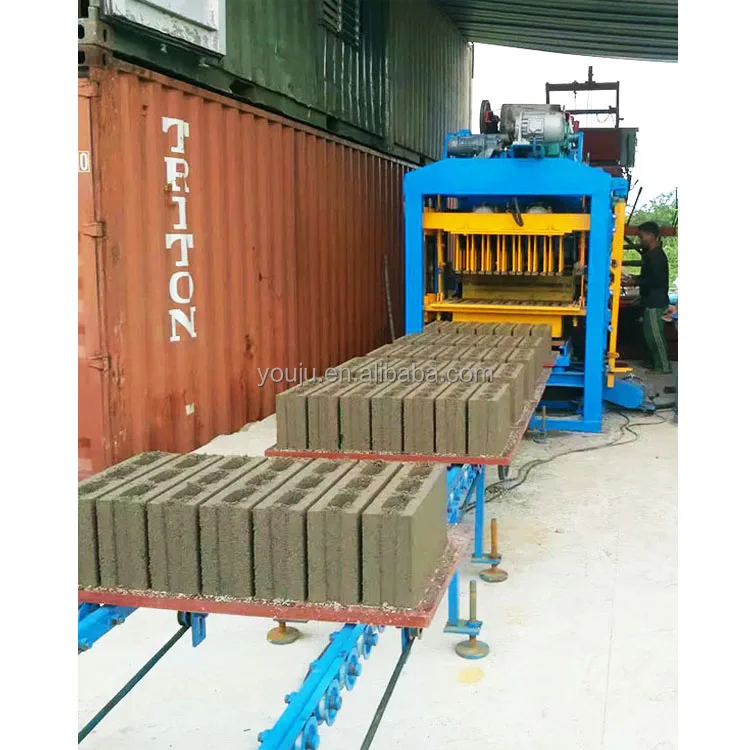
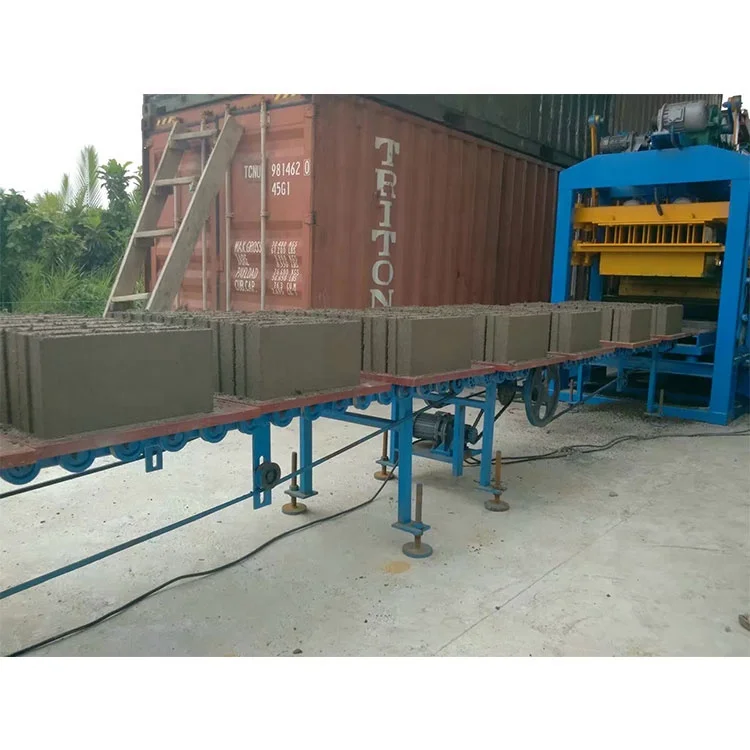 Semi automatic block