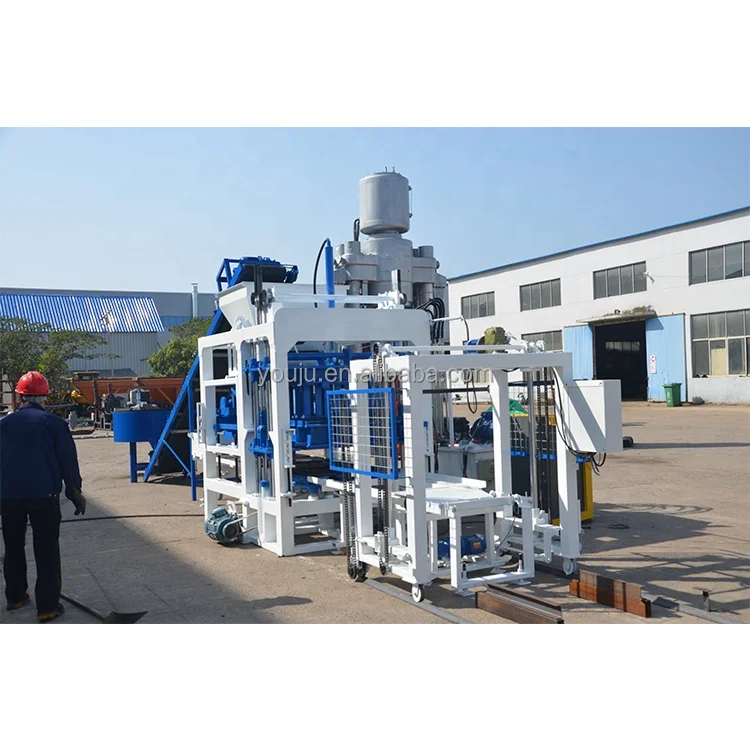
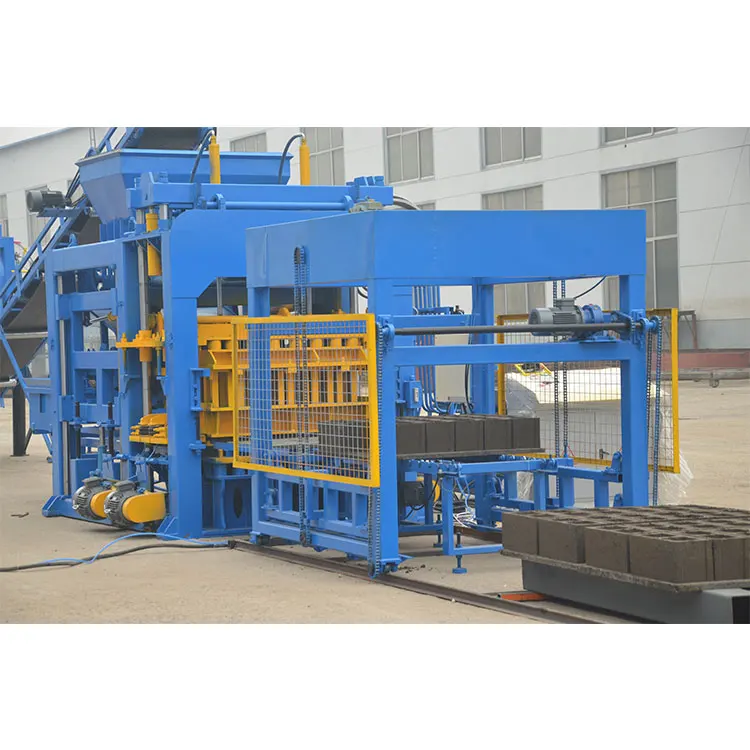
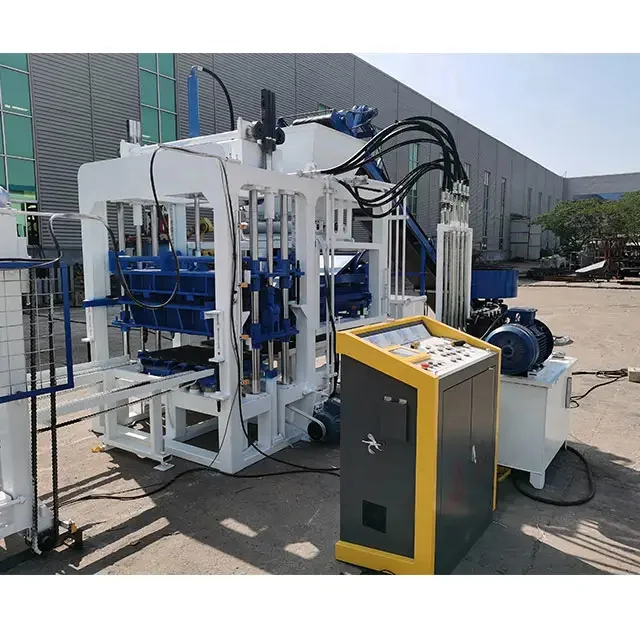
Matched System Sizing — Every QT4-18 block machine and its supporting line are configured around your local aggregate, target format, and curing yard layout, not pulled from a catalogue default.
Technical Specifications
| Parameter |
Value |
| Model |
QT4-18 |
| Product Type |
Concrete Block Making Machine |
| Overall Dimensions |
2500 × 1750 × 2200 mm |
| Rated Pressure |
16 MPa |
| Vibration Form |
Platform Vibration |
| Pallet Size |
950 × 550 mm |
| Molding Cycle |
18–25 s |
| Overall Power |
27.5 kW |
| Control System |
PLC with frequency converter |
| Electrical Components |
Schneider |
| Automation Level |
Semi-automatic (pallet feeding automated, product convey manual or mechanical) |
| Mould Lifting Mechanism |
Double-sided synchronous gears |
| Supporting Equipment Options |
JQ500 pan mixer, 8 m belt conveyor (6 m optional), stacker, block clamper, cement silo, batching plant, extra moulds, trolley |
| Output Capacity |
(basis to be confirmed — depends on block format and mix design) |
| Voltage & Frequency |
(basis to be confirmed — varies by destination country) |
| Net Weight |
(basis to be confirmed — varies by configuration) |
Application Suitability
| Application |
Material or Output |
| Hollow block production for housing projects |
Crushed stone, river sand, cement blends |
| Solid block manufacturing for load-bearing walls |
Dense aggregate and cement mixes |
| Paving block production for walkways and yards |
Fine aggregate with pigment additives |
| On-site block production by contractors |
Locally sourced sand, gravel, and cement |
What "Cycles per Hour" Leaves Out About Block Machine Capacity
A cycle time only means something when tied to the exact block format being produced.
I have watched buyers receive a quote listing nothing but cycles per hour, then discover at commissioning that the figure assumed a small paving block while they needed 200 mm hollow blocks. The real daily output drops sharply when the format changes, and no amount of operator effort closes the gap. With the QT4-18 Concrete Block Making Machine, we state capacity per format so you know what the press actually delivers before it leaves the factory [NEED_CITE: block format assumptions in capacity quotations].

Where the QT4-18 Sits in the Full Machine Range
The Shiyue range spans mobile egg-laying units at the entry level, semi-automatic presses like the QT4-18 in the middle, and fully automatic lines with stacking and cubing at the top. This model occupies the tier where a buyer has moved past hand-fed production but is not yet ready to invest in a complete automatic curing and handling system. The PLC-controlled cycling and automated pallet feed remove the most labour-intensive steps while keeping the capital outlay within reach of a first-time block plant.
Automation You Can Grow Into
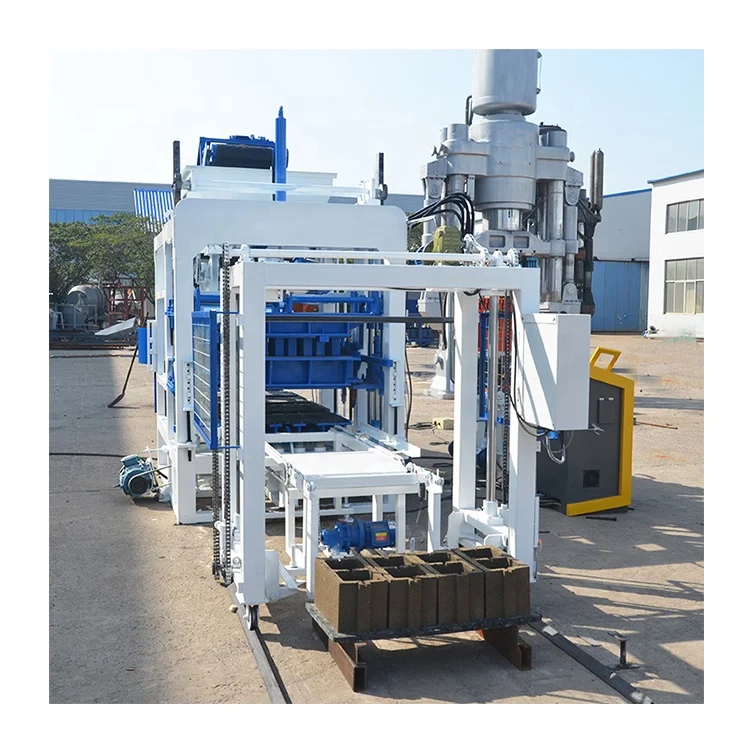
Semi-automatic operation here means the pallet feeds into the press under PLC control and the mould cycles through vibration and demoulding without manual timing. Product still moves to the curing yard by trolley or mechanical conveyor, and stacking is done by hand or with a block clamper. This leaves a clear upgrade path: when volume justifies it, the line can be extended with automatic stacking and cubing stations without replacing the press itself. That growth logic is central to how the QT4-18 block machine for sale is positioned for entrepreneurs and contractors who plan to scale [NEED_CITE: semi-automatic to automatic upgrade paths in block plants].
Reading the Specs That Matter on Site
The 16 MPa rated hydraulic pressure works together with platform vibration to compact the mix into the mould cavity. Higher pressure alone does not guarantee block strength — the vibration frequency and amplitude must match the aggregate gradation, or the mix segregates and leaves weak zones. The 950 × 550 mm pallet size determines how many blocks form per cycle and must align with the curing racks and forklifts already on site; a mismatched pallet forces the buyer into a separate equipment purchase. The 18–25 s molding cycle range reflects different block formats: a thin paving block completes faster than a tall hollow block, which needs longer vibration to fully settle the concrete around the cores.
The Cost of Skipping the Mix Design Conversation
When a block machine is configured for a standard sand-cement ratio that the buyer cannot source locally, the result is either weak blocks or an expensive material substitution. I have seen plants in West Africa forced to import washed sand because the machine was set up for a gradation unavailable within a hundred kilometres. The vibration force and hydraulic pressure need adjusting to the actual aggregate, not a laboratory assumption, or the press runs all day producing scrap [NEED_CITE: aggregate mismatch in block production].
Why Buyers Source This Tier from Shiyue
Block machinery is the single focus here, so the QT4-18 press, its moulds, pallets, and handling equipment are specified as one matched system rather than assembled from separate suppliers. The configuration is set against your local aggregate and target block format, not a catalogue default. Mould design covers the formats your market actually sells, with custom drawings available when standard options do not fit. The automation level is selectable, meaning you can start semi-automatic and add stacking or cubing later. Installation support includes operator training so your crew can run the line independently from the first week.
Documentation & Verification
- Line layout showing the QT4-18 with capacity calculated per block format
- Machine specification sheet covering hydraulic, electrical, and PLC details
- Mould drawing and format list for every block type in your order
- Voltage, frequency, and PLC display language confirmed in writing before production
- Factory test record and packing photographs supplied prior to container loading
Installation, Commissioning & Support
- Foundation pad sized for 2500 × 1750 mm footprint and 27.5 kW total power draw
- Dedicated electrical circuit matching confirmed voltage and frequency before arrival
- Machine shipped partly dismantled for container loading, reassembled on site
- PLC parameters set to your block format during first-run commissioning
- Operator training covering mould change, cycle adjustment, and daily maintenance
- Wear parts and mould inventory list provided for first replacement planning
What We Need from You to Move Forward
To size the QT4-18 correctly, share the block formats your market sells, the daily volume you need per format, and the raw materials available near your site — including sand type and aggregate gradation. We also need your local voltage and frequency, the PLC language your operators prefer, and the curing yard dimensions so the pallet size and handling equipment fit what you already have in place.
Frequently Asked Questions
Q: What block formats does the QT4-18 produce, and what is the realistic daily output per format?
A: The QT4-18 produces hollow blocks, solid blocks, and paving blocks using interchangeable moulds on the 950 × 550 mm pallet. Realistic daily output depends on the specific block format, mix design, and curing logistics. We provide a capacity calculation stating the exact format assumed, so you can compare quoted output against what your market actually demands.
Q: Where does the QT4-18 sit compared to fully automatic and mobile tiers in the Shiyue range?
A: The QT4-18 occupies the semi-automatic tier, offering PLC-controlled cycling and automated pallet feeding without the full stacking and cubing system of the automatic lines. It sits above mobile egg-laying machines in output consistency and format range, making it suitable for buyers who need reliable daily volume but are not yet ready for a fully automated plant investment.
Q: How is voltage, frequency, and PLC language confirmed for my country before the machine ships?
A: During the quotation stage, we confirm your local voltage and frequency in writing, and the PLC display language is set to your preference before production begins. Electrical components are sourced to match, and the final specification sheet documents every confirmed value so there are no surprises at commissioning.
Q: Can I start with the QT4-18 semi-automatic and upgrade to full automation later?
A: Yes. The QT4-18 is designed with a growth path in mind. You can begin with manual stacking and trolley conveyance, then add automatic stacking, cubing, and curing rack handling as your volume grows. The press itself does not need replacing — the line extends around it.
Q: What supporting equipment is included versus quoted separately?
A: The QT4-18 can be supplied with a JQ500 pan mixer, belt conveyor, stacker, block clamper, and extra moulds as part of a matched line. Pallets, cement silos, and batching plants are available options. We clarify which items are included and which are separate in the quotation so the total investment is transparent before you commit.

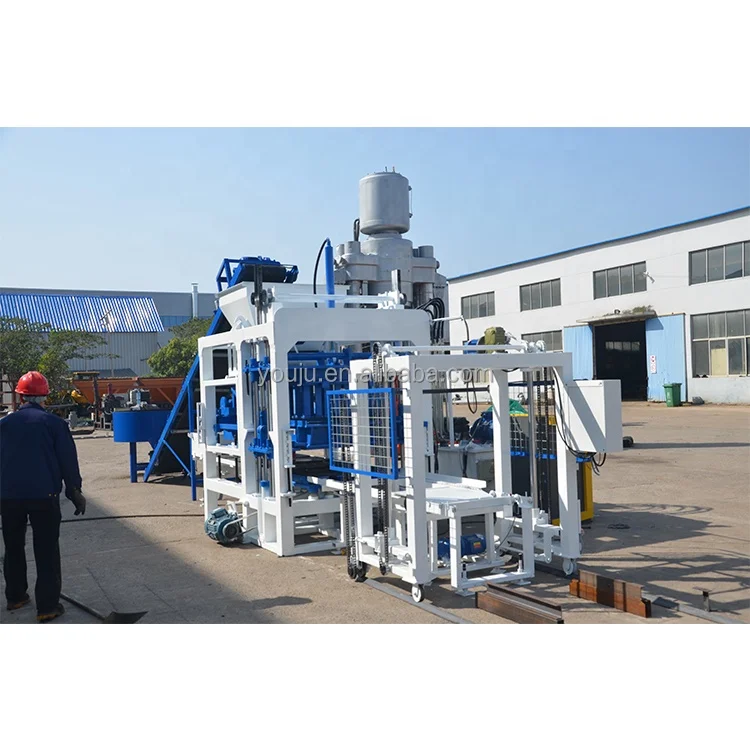 Semi automatic block