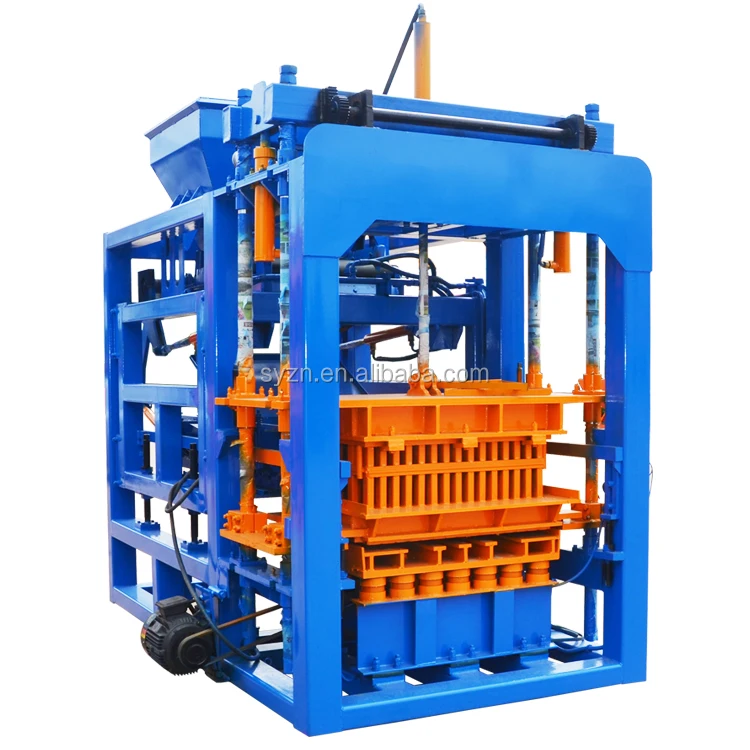
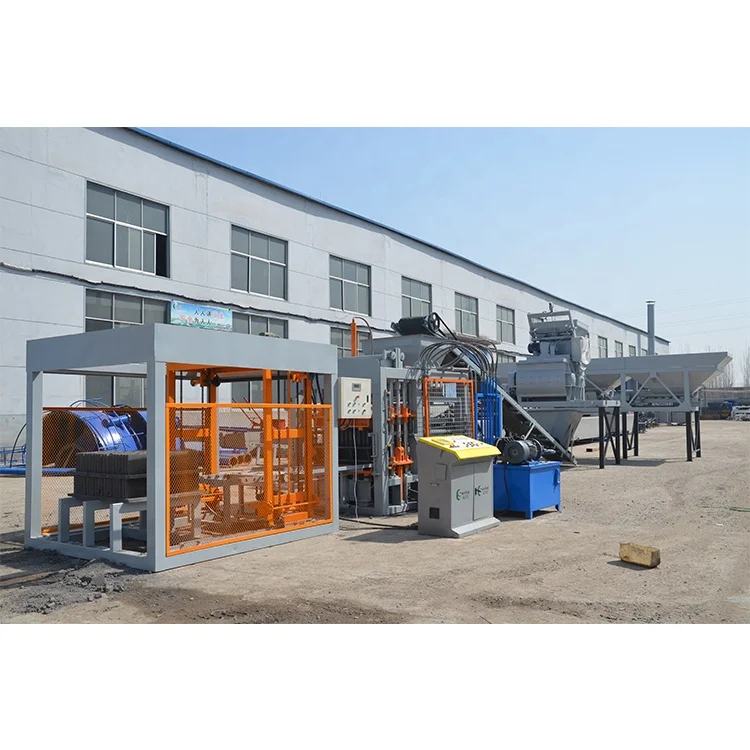
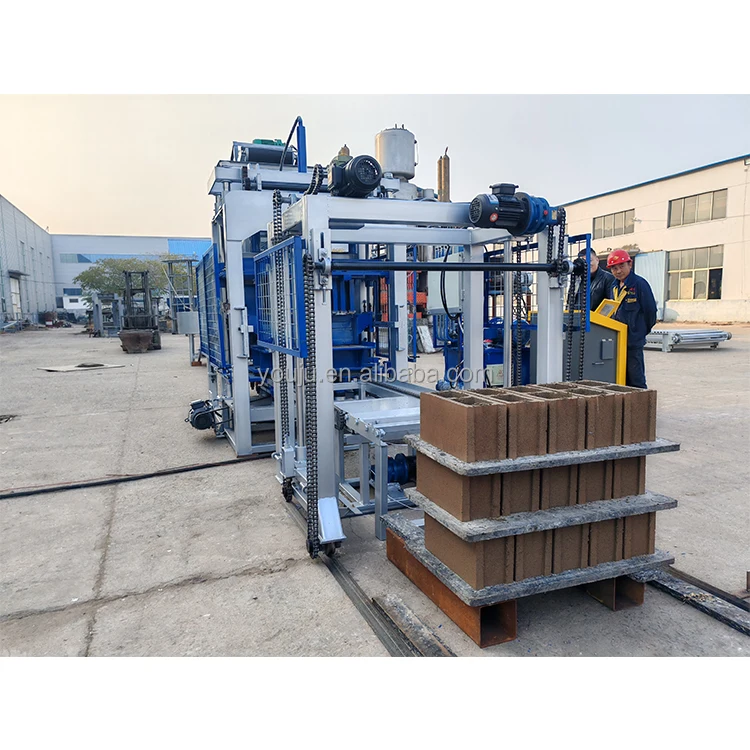
Single Focus Machinery — every QTJ4-25 leaving our Linyi workshop is specified as a matched system of press, mould, pallet and mixer rather than a standalone catalogue unit, ensuring the semi-automatic tier you choose actually fits your site layout and local aggregate.
Technical Specifications
| Parameter |
Value |
| Model |
QTJ4-25 |
| Product Type |
Semi-Automatic Concrete Block Making Machine |
| Rated Power |
17.9 kW |
| Overall Dimensions (L×W×H) |
6400×1500×2700 mm |
| Total Mass |
2500 kg |
| Molding Cycle |
25 s |
| Pallet Size |
850×550×20 mm |
| Vibration Frequency |
2800 r/min |
| Vibration Force (Exciting Power) |
60 kN |
| Output Capacity |
960 pcs/h, 7680 pcs/day (based on 400×200×200 mm hollow block, 4 pcs/mould) |
| Mould Format |
Hollow, solid, paver, curbstone (multiple sizes including 8/6/5/4 inch) |
| Automation Level |
Semi-automatic |
| Hydraulic System |
Hydraulic station equipped |
| Configuration |
Host machine 1 set, block mould 1 set, JQ350 mixer |
| Control System |
Motor-driven (PLC or manual control option to be confirmed) |
| Voltage & Frequency |
Configurable to destination market (to be confirmed before order) |
Application Suitability
| Application |
Material or Output |
| Hollow block production for residential and commercial walls |
Crushed stone, river sand, cement, fly ash, and local aggregate blends |
| Solid block manufacturing for load-bearing structures |
Dense aggregate mixes with higher cement ratios |
| Paving block and interlocking brick for driveways and walkways |
Fine sand and pigment blends for surface finish |
| Curbstone and kerb production for road and landscaping projects |
High-strength concrete mixes with coarse aggregate |
| On-site block production for construction contractors |
Locally sourced raw materials matching site conditions |
| First block plant for entrepreneurs entering the market |
Standard concrete mixes with widely available materials |
What "960 Pieces per Hour" Actually Means for Your Plant
That throughput figure only holds true when you are running 400×200×200 mm hollow blocks with four cavities per mould — switch to a smaller solid block format and your cycle time and pieces-per-mould both change, altering your real daily volume.
Capacity claims in the block machinery market often float without a stated format, leaving buyers to discover after commissioning that their daily output falls well short of what the brochure suggested. With the QTJ4-25 block making machine manufacturer documentation, the 960 pieces per hour and 7,680 pieces per day figures are explicitly tied to the 400×200×200 mm hollow block at four pieces per mould with a 25-second cycle. [NEED_CITE: block machine capacity calculation standards by format] If your market primarily sells 6-inch solid blocks or paving bricks, the same press will deliver a different throughput, and that needs to be calculated before you commit to a purchase order rather than after the container arrives.
Where the QTJ4-25 Sits in the Complete Block Machine Range
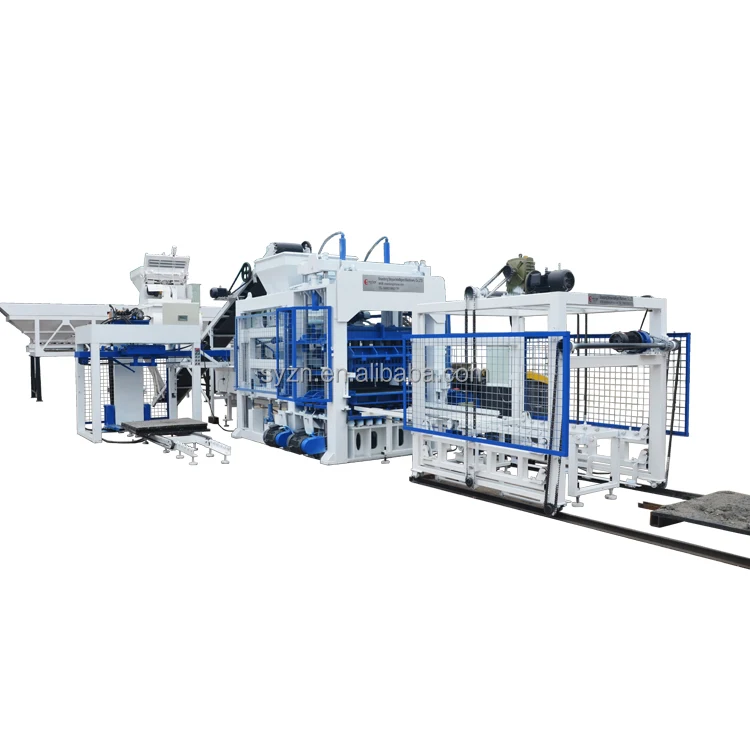
The QTJ4-25 occupies the semi-automatic entry point in our stationary block machine lineup, positioned below fully automatic lines that add pallet feeding, stacking, and cubing stations. For a buyer surveying options for a first plant or a replacement unit, this model represents the threshold where you gain hydraulic pressing and vibration forming without the capital commitment of a high-capacity automatic system. The semi-automatic designation means an operator handles pallet loading and block removal manually, keeping the initial investment contained while preserving the option to add automation modules later.
Understanding the Semi-Automatic Tier Versus Mobile and Automatic Alternatives
Mobile egg-laying machines eliminate the need for pallets entirely by depositing blocks directly onto the factory floor, but they sacrifice format versatility and density control. The QTJ4-25, as a stationary press, delivers consistent vibration force across the mould bed and hydraulic compression from above — factors that produce higher block strength and allow you to run hollow, solid, paver, and curbstone formats from one host machine. [NEED_CITE: stationary versus mobile block press density comparison] Buyers who have outgrown a mobile unit or are evaluating whether to skip straight to a fully automatic line often find that the semi-automatic tier covers their volume requirement at a fraction of the footprint and power draw.
Reading the Specifications That Determine Your Daily Reality
The 60 kN vibration force combined with hydraulic station pressure determines how densely the concrete is compacted into the mould — insufficient force leaves blocks friable and prone to breakage during curing and transport, while excessive force on a lean mix can cause edge spalling. The 850×550×20 mm pallet size is a widely adopted format that aligns with standard curing rack dimensions and common forklift tine widths, meaning you can typically source replacement pallets locally without custom fabrication. The 17.9 kW rated power draw dictates your electrical supply requirements; a dedicated circuit with adequate breaker capacity must be in place before commissioning. Mould interchangeability across hollow, solid, paver, and curbstone formats means a single QTJ4-25 host machine can serve multiple product lines, though each format change requires operator time that should be factored into your production schedule.

The Cost of Skipping the Format Conversation Before You Order
When a buyer specifies a machine based on a catalogue capacity figure without confirming which block format that figure assumes, the mismatch surfaces only after production begins and daily tallies disappoint. We have seen situations where a plant was configured for a standard sand mix that the buyer could not source at their location, forcing a material substitution that altered block weight, curing time, and ultimately compressive strength. [NEED_CITE: aggregate mismatch impact on block compressive strength] Pallet size is another common oversight — ordering a press with pallets that do not match the curing racks already on site means either replacing the racks or running a bottlenecked operation from day one.
Why Buyers Source the QTJ4-25 Through Shiyue
Block machinery is our single focus, which means the QTJ4-25 press, its mould, pallets, and the JQ350 mixer are specified and tested as one integrated system rather than assembled from unrelated suppliers. Configuration is set against your actual mix design and local aggregate, not a default catalogue setting — the vibration force and hydraulic pressure are matched to what your materials demand. Mould design covers the formats your market actually sells, with custom drawings available when standard formats do not match local building codes. The automation level is selectable, so you can begin with semi-automatic operation and add pallet feeding or stacking automation as your volume grows. Installation support includes operator training so your team understands mould change procedure, cycle timing, and daily maintenance from the first production run.
Documentation & Verification
- Line layout drawing with capacity calculation stated per block format for the QTJ4-25
- Machine specification sheet confirming voltage, frequency, and control language for your market
- Mould drawing and format list covering every block type the QTJ4-25 can produce
- Pallet specification matched to your existing curing rack dimensions and forklift capacity
- Factory test record on your specified block format before dispatch from Linyi
- Operation and maintenance manual with wear parts and mould replacement schedule
Installation, Commissioning & Support
- Foundation pad must accommodate the 6400×1500 mm footprint with level tolerance for vibration stability
- Dedicated electrical circuit sized for 17.9 kW draw with voltage and frequency confirmed before shipment
- Machine ships in dismantled state for container loading; on-site reassembly and alignment required
- First-run commissioning includes mould installation, hydraulic pressure calibration, and cycle timing verification
- Operator training covers mould change procedure across hollow, solid, paver, and curbstone formats
- Wear parts list and hydraulic seal kit supplied with recommended replacement intervals
Preparing Your Inquiry
To move from a general interest in the QTJ4-25 block making machine manufacturer range to a firm configuration proposal, we need to know which block formats your market sells and your target daily output per format. Share the raw materials you have access to locally — cement type, aggregate size and source, sand gradation — along with your site voltage and frequency. If you already have curing racks, pallets, or a forklift on site, provide those dimensions so the supporting equipment aligns with what you already own.
Frequently Asked Questions
Q: How is the QTJ4-25 daily output calculated and which block format is it based on?
A: The quoted 960 pieces per hour and 7,680 pieces per day are based on producing 400×200×200 mm hollow blocks with four pieces per mould and a 25-second molding cycle. If your primary product is a different format — such as solid blocks or pavers — the pieces-per-mould count and cycle time will differ, and we provide a revised capacity calculation for each format you intend to produce.
Q: Where does the QTJ4-25 semi-automatic tier sit compared to automatic and mobile block machines?
A: The QTJ4-25 sits at the semi-automatic entry point of the stationary range, above mobile egg-laying units that produce on the floor without pallets, and below fully automatic lines with pallet feeding, stacking, and cubing. It offers hydraulic pressing and vibration forming with manual pallet handling, keeping initial investment contained while preserving an upgrade path to higher automation.
Q: What voltage, frequency, and control display options are available for my market?
A: Voltage and frequency are configurable to your destination market and must be confirmed before production begins. The control system on the QTJ4-25 is motor-driven, with PLC or manual control options available depending on configuration. Display language is set to match your operator team before dispatch to avoid commissioning delays on site.
Q: What plant footprint and supporting equipment does the QTJ4-25 line require?
A: The press itself occupies 6400×1500 mm, and the standard configuration includes a JQ350 mixer. Beyond the machine footprint, you need space for raw material storage, pallet staging, a curing area sized to your daily output, and forklift access for moving cured blocks. The 850×550×20 mm pallet size aligns with widely available curing rack systems.
Q: Can I start with the QTJ4-25 semi-automatic and upgrade to higher automation later?
A: Yes. The semi-automatic configuration handles pallet loading and block removal manually. As your production volume grows, automation modules for pallet feeding, automatic stacking, and cubing can be added to the same host machine, allowing you to scale your line without replacing the press itself.

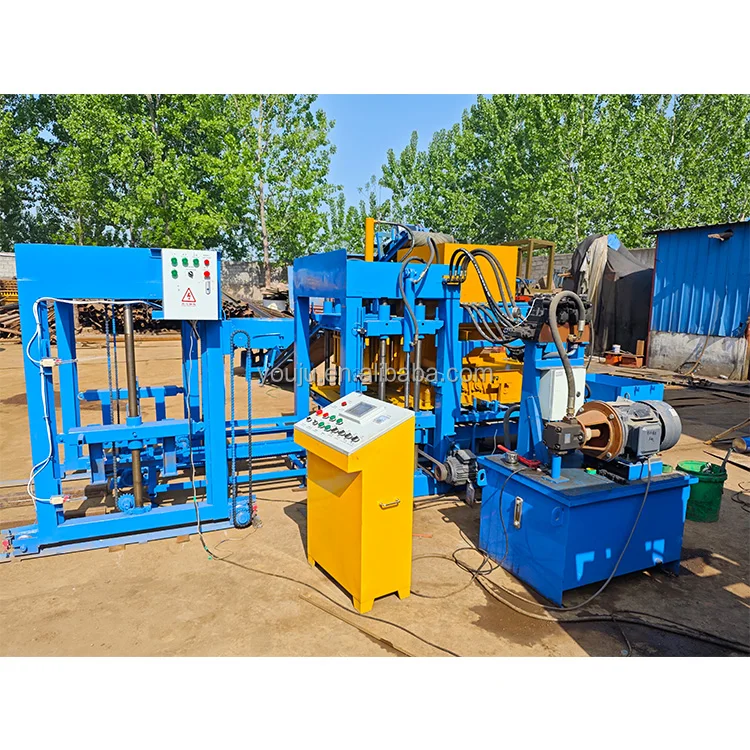
 Stationary block machine