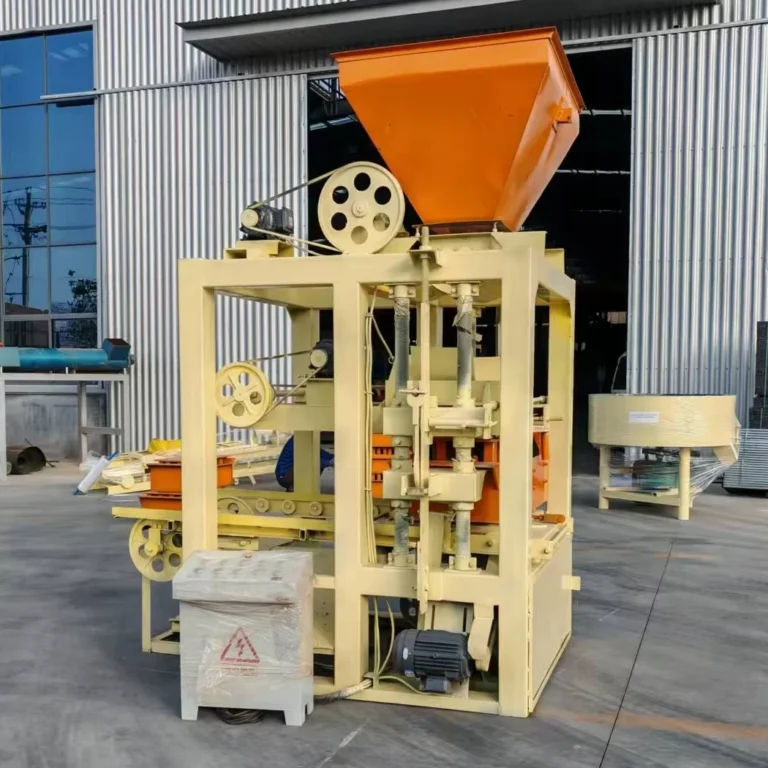
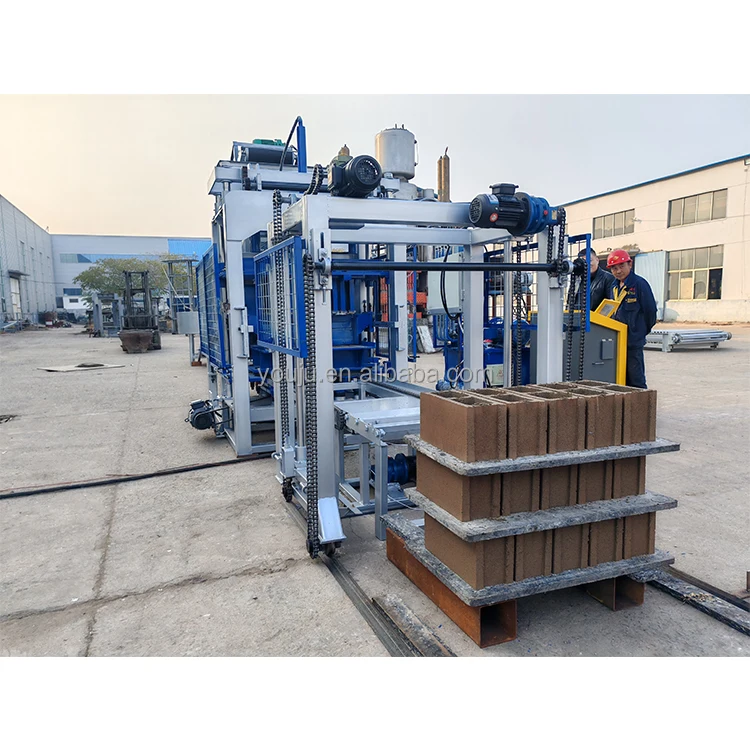
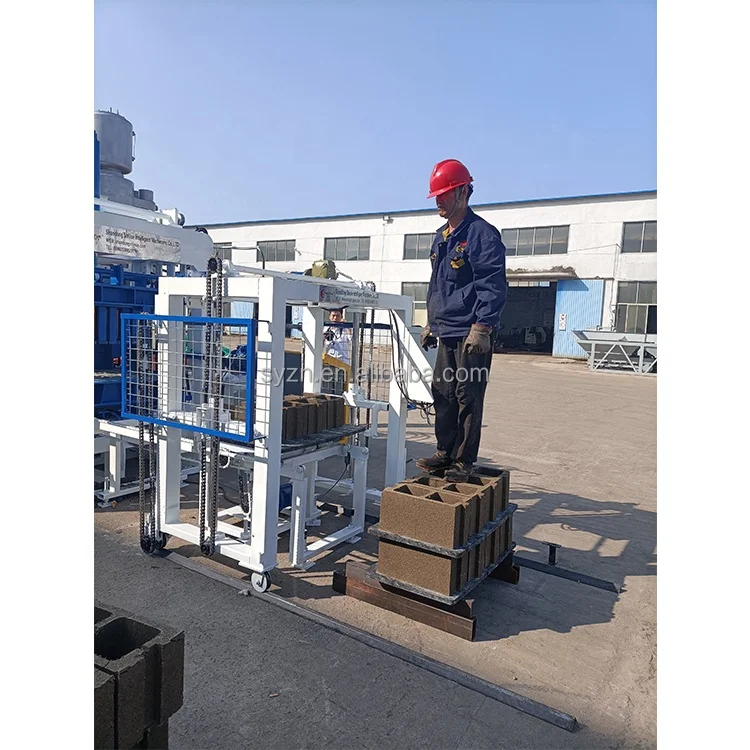
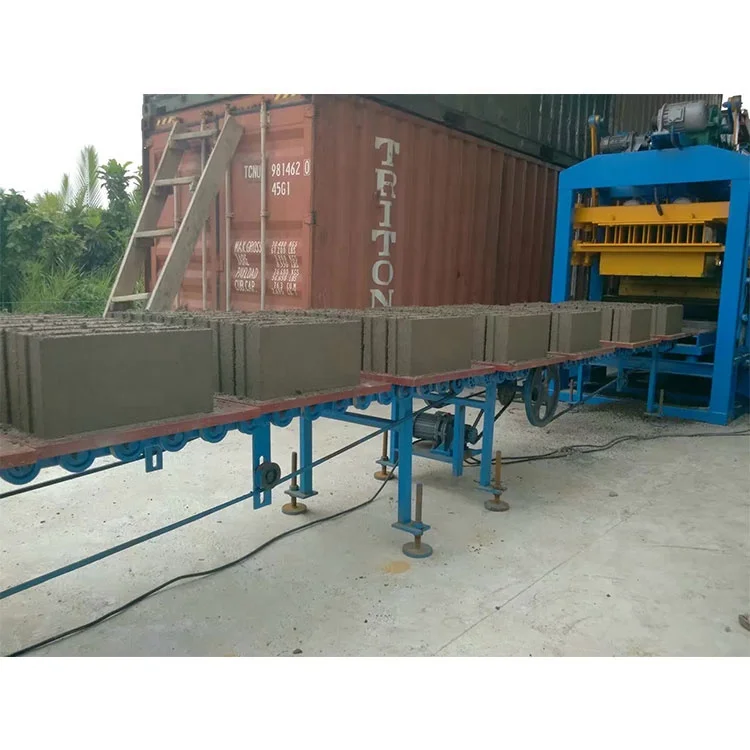
Matched System Design — Every component from the press to the pallet is specified as a single coordinated unit for the QT4-15, eliminating the mismatch risk between standalone machines and third-party handling gear.
Technical Specifications
| Parameter |
Value |
| Model |
QT4-15 |
| Product Type |
Hydraulic Concrete Block Making Machine |
| Control System |
PLC controlled with approach switch process monitoring |
| Molding Cycle |
15–30 seconds depending on format |
| Pallet Size |
900 × 500 mm |
| Vibration System |
Platform vibration, 50–70 Hz |
| Product Height Range |
50–220 mm |
| Overall Power |
24.5 kW |
| Demolding Method |
Hydraulic |
| Output (400×200×200mm hollow block) |
900–1,200 pcs/h (basis: 4 pcs/mould, 15–20s cycle) |
| Output (400×150×200mm hollow block) |
1,080–1,440 pcs/h (basis: 5 pcs/mould, 15–20s cycle) |
| Output (400×100×200mm hollow block) |
1,440–1,920 pcs/h (basis: 8 pcs/mould, 15–20s cycle) |
| Output (200×100×60mm paver) |
2,880–3,840 pcs/h (basis: 16 pcs/mould, 15–20s cycle) |
| Output (240×115×53mm solid brick) |
5,930–6,720 pcs/h (basis: 28 pcs/mould, 15–20s cycle) |
| Stated Block Compressive Strength |
≥15 MPa (verify against local mix design and aggregate) |
| Mould Compatibility |
Hollow block, paver, solid brick formats (mould change required) |
| Automation Level |
Automatic (integrated PLC, hydraulic, and vibration control) |
| Raw Materials |
Fly ash, slag, gangue, sand, crushed stone, cement, water |
| Electrical & Hydraulic Components |
Original imported or China well-known brand (brands to be confirmed) |
| Voltage & Frequency |
Configurable to destination market (must confirm before production) |
| PLC Display Language |
Configurable (must confirm before production) |
| CE Declaration |
Available where applicable (verify for specific serial number) |
Application Suitability
| Application |
Material or Output |
| Medium-output hollow block plant |
Cement, sand, and crushed stone mix producing 400×200×200mm blocks |
| Paver and interlocking brick production |
Cement-based mix with fine aggregate for 200×100×60mm pavers |
| Solid brick manufacturing |
Fly ash or slag blended with cement for 240×115×53mm bricks |
| On-site block production for contractors |
Local aggregate and cement for hollow blocks at project locations |
| Industrial residue utilisation |
Fly ash, slag, or gangue as primary aggregate in block mixes |
What "900 to 1,200 Pieces per Hour" Actually Means for Your Plant
Every output figure on this page is tied to a specific block format, mould cavity count, and cycle time — no bare cycle-per-hour claims.
I have watched buyers sign contracts based on a single hourly number, then discover on commissioning day that the figure assumed a hollow block format they never intended to produce. The QT4-15 concrete block making machine full range documentation states output per format because a 400×100×200mm hollow block yields up to 1,920 pieces per hour while the same machine on a 400×200×200mm format delivers between 900 and 1,200. Without that format-level breakdown, daily planning becomes guesswork. [NEED_CITE: block format impact on realistic daily output in stationary block machines]

Where the QT4-15 Sits in the Full Machine Lineup
The Shiyue range spans semi-automatic machines for first-time entrepreneurs, mid-tier automatic presses like the QT4-15, and high-capacity lines with integrated stacking and cubing. This model occupies the step above manual pallet handling: PLC-controlled automatic cycling with hydraulic demolding, but without the downstream automation of a fully automatic stacking system. Buyers surveying the QT4-15 concrete block making machine full range should ask whether their target output justifies the next tier up or whether this mid-tier press leaves room to add stacking later.
Matching the Machine to the Block Your Market Sells
A stationary block machine is only as flexible as its mould inventory and changeover time. The QT4-15 supports hollow block, paver, and solid brick formats within a product height range of 50–220mm, meaning one press can cover multiple product lines. However, format flexibility only matters if the mould change fits within your production schedule — a changeover that consumes most of a shift cancels out the variety advantage. [NEED_CITE: mould change time considerations for multi-format block production]
Reading the Specs That Shape Real Output
The platform vibration system operates at 50–70 Hz, which must be paired with adequate hydraulic pressure to achieve consistent block density. Vibration alone does not guarantee compressive strength; the stated ≥15 MPa figure assumes a mix design and aggregate gradation that match the machine’s force profile — always verify against your local materials. The 900×500mm pallet size is fixed for this model, and it must align with your existing curing rack dimensions and forklift capacity before the line is finalised. The 24.5 kW overall power requirement determines your transformer and dedicated circuit specification at the plant. Mould cycle times of 15–30 seconds vary by format, with smaller pavers cycling faster than larger hollow blocks.
The Hidden Cost of Skipping Configuration Confirmation
Voltage, frequency, and PLC display language are not factory defaults that work everywhere — I once watched a commissioning stall for an entire day in Jordan because the control screen was in English and the Arabic-speaking operators could not read a single parameter. That kind of mismatch is preventable but only if confirmed before production starts. A pallet size that does not match the curing area means blocks are stacked by hand until new racks arrive, and an electrical specification that conflicts with local supply delays energisation for weeks. [NEED_CITE: electrical and control language mismatches in exported industrial machinery]
Why Buyers Spec the QT4-15 Here
The machine, mould, pallet, and handling equipment are specified as one matched system rather than assembled from separate suppliers, reducing interface problems at commissioning. Configuration is set against your actual mix design and local aggregate rather than a catalogue default, which matters because the same cement-to-aggregate ratio produces different results in different regions. Mould design covers the formats your market actually sells, with custom drawings accepted. The automation level is selectable, so a buyer can start with the QT4-15 automatic cycle and plan an upgrade path to stacking and cubing when volume warrants it. Installation support includes operator training and ongoing mould and wear parts supply.
Documentation & Verification
- Line layout and capacity calculation stating the specific block format assumed for each output tier
- Machine specification sheet with confirmed voltage, frequency, and PLC display language
- Mould drawing and format list matching your order before production release
- Factory test record for your machine serial number conducted prior to dispatch
- Hydraulic and electrical schematic for local maintenance reference
- CE declaration provided where applicable for the specific unit shipped
Installation, Commissioning & Support
- Foundation pad sized for the QT4-15 footprint with level tolerance confirmed before delivery
- Dedicated circuit rated for 24.5 kW with voltage and frequency matched to confirmed specifications
- Machine arrives dismantled for container loading; reassembly supervised during on-site commissioning
- PLC parameters set to confirmed language and cycle times validated against your mix during first run
- Operator training covers mould change procedure, approach switch calibration, and daily maintenance checks
- Wear parts list and mould inventory supplied for planning first replacement orders
Before You Request a Quotation
Tell us the specific block formats you sell today and any formats you plan to add, along with your target daily output per format. We also need your local voltage and frequency standard, preferred PLC display language, and the dimensions of your existing curing area and forklift capacity so the 900×500mm pallet can be validated against your site. If you are working with a particular aggregate source, share the material type so the vibration and hydraulic settings can be matched before the machine is built.
Frequently Asked Questions
Q: How do I verify the real daily output of the QT4-15 for my specific block format?
A: Request a capacity calculation that states the exact block format, mould cavity count, and cycle time assumed for each output figure. The numbers on this page are per format — for example, 400×200×200mm hollow blocks yield 900–1,200 pieces per hour at a 15–20 second cycle. Your daily target should be calculated against an eight-hour shift with allowance for mould changes and pallet loading time.
Q: Where does the QT4-15 sit in the full Shiyue range, and when should I consider a different tier?
A: It is the mid-tier automatic press — PLC-controlled with hydraulic demolding but without integrated stacking and cubing. Choose a semi-automatic model if your volume is lower and labour cost allows manual pallet handling. Look at a higher tier if your daily target requires automatic stacking to keep pace with the press output.
Q: What voltage, frequency, and PLC language options are available, and when must I confirm them?
A: The QT4-15 can be configured for various voltage and frequency standards, and the PLC display language is selectable. Both must be locked in writing before production starts — they are not adjustable after the control cabinet is wired. Confirming late means rewiring or reprogramming on site, which delays commissioning.
Q: How does the 900×500mm pallet size affect my curing area and stacking plan?
A: Your curing racks must accept this pallet dimension, and your forklift must handle the loaded pallet weight. A mismatch means blocks cannot be racked properly and output piles up on the floor. Verify rack spacing and forklift capacity against this pallet size before the line is specified, not after delivery.
Q: What is the upgrade path if I start with the QT4-15 and later want automatic stacking?
A: The automation level is selectable, and downstream stations such as automatic pallet feeding, stacking, and cubing can be added when production volume justifies the investment. Discuss the upgrade path during the initial quotation so the press configuration leaves room for future line expansion without replacing the core machine.

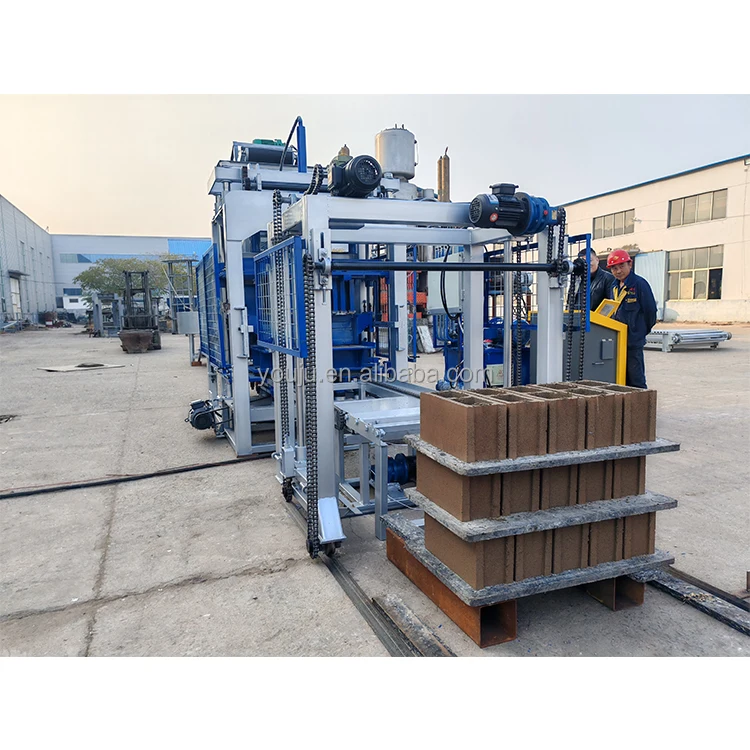
 Stationary block machine