Matched Vibration to Mix — QTJ4-25 vibration frequency tuned between 2800–5100 r/min against your local aggregate report, not a catalogue default.
Technical Specifications
| Parameter |
Value |
| Model |
QTJ4-25 |
| Product Type |
Automatic Concrete Block Making Machine |
| Overall Dimensions |
6400×1500×2700 mm |
| Total Weight |
2500 kg |
| Molding Cycle |
25 s |
| Vibration Frequency |
2800–5100 r/min |
| Exciting Power |
60 kN |
| Vibration Type |
Flat vibration and squeeze compression vibration |
| Total Power |
17.9 kW |
| Mixer Model |
JQ350 |
| Pallet Size |
850×550×20 mm |
| Control System |
PLC control with automatic plate-supplying, material-disturbing and brick-discharging |
| Applied Products |
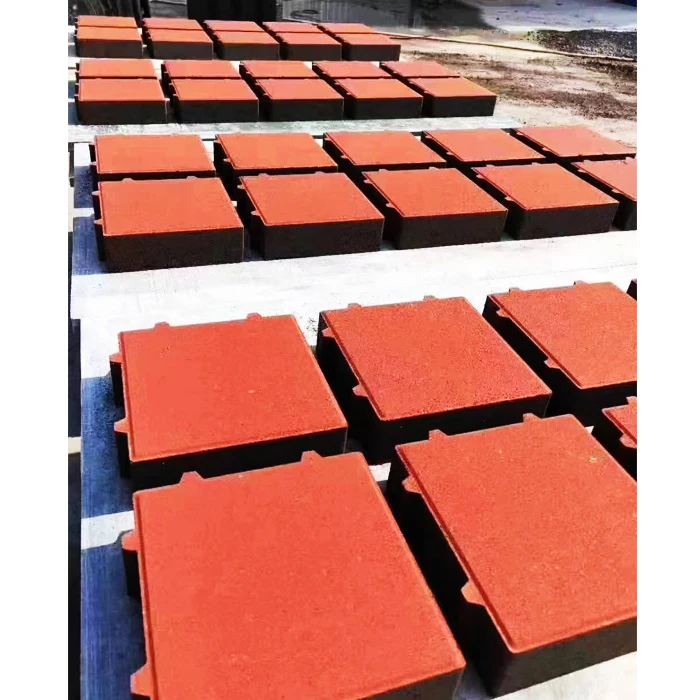
Concrete blocks, hollow block (8 inch, 6 inch), solid brick |
| Raw Materials |
Crushed stones, sand, cement, dust, fly ash |
| Output Capacity (390×190×190 mm Hollow Block) |
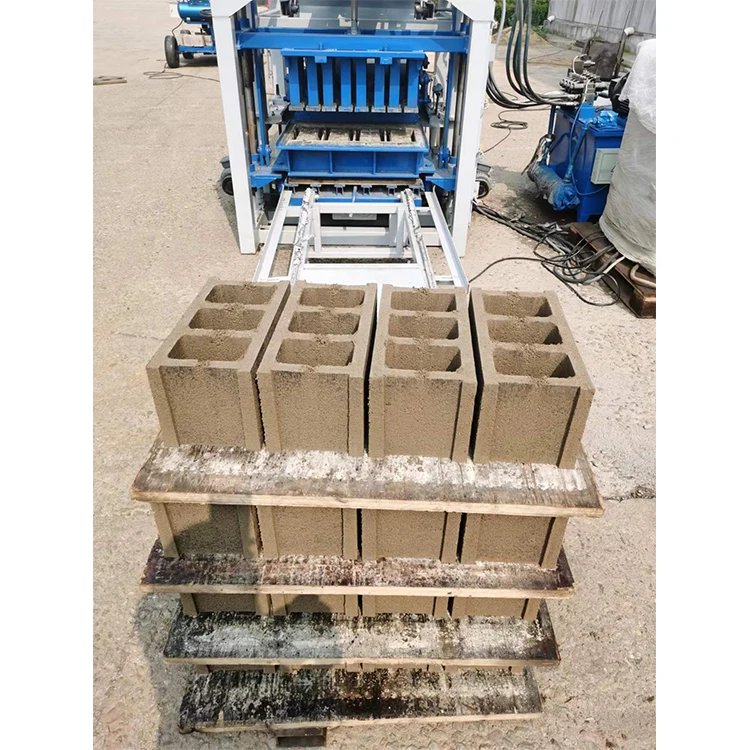
4 pcs/mould, 480 pcs/h, 3800 pcs/8 hr |
| Output Capacity (400×150×200 mm Hollow Block) |
5 pcs/mould, 600 pcs/h, 4800 pcs/8 hr |
| Output Capacity (240×115×53 mm Solid Brick) |
18 pcs/mould, 2100 pcs/h, 17000 pcs/8 hr |
| Voltage & Frequency |
Basis not stated in source — confirm with buyer’s local supply |
| PLC Display Language |
Basis not stated in source — confirm before production |
Application Suitability
| Application |
Material or Output |
| Hollow block wall construction |
390×190×190 mm and 400×150×200 mm formats from crushed stone, sand, and cement |
| Solid brick production |
240×115×53 mm format from sand, cement, and fly ash blends |
| Small-to-medium block plant startup |
First-line press for entrepreneurs entering local block markets |
| On-site construction block manufacturing |
Contractor-produced blocks using locally sourced aggregate and dust |
What "480 Pieces per Hour" Actually Means for the QTJ4-25 Block Making Machine Manufacturer
Output figures only hold when the block format, mould cavity count, and cycle time all align with your target product.
I have watched buyers receive a machine quoted at a headline cycle speed, only to discover the number assumed a small solid brick they never planned to sell. When the real order is an 8-inch hollow block, the mould carries fewer cavities and the daily count drops sharply. The QTJ4-25 block making machine manufacturer lists capacity per format — 3800 hollow blocks per 8-hour shift at 390×190×190 mm, or 17000 solid bricks in the same window. If your market moves a different size, those numbers shift, and any honest proposal must recalculate before you sign. [NEED_CITE: block format impact on daily output calculations]

Where the QTJ4-25 Sits in the Full Machine Range
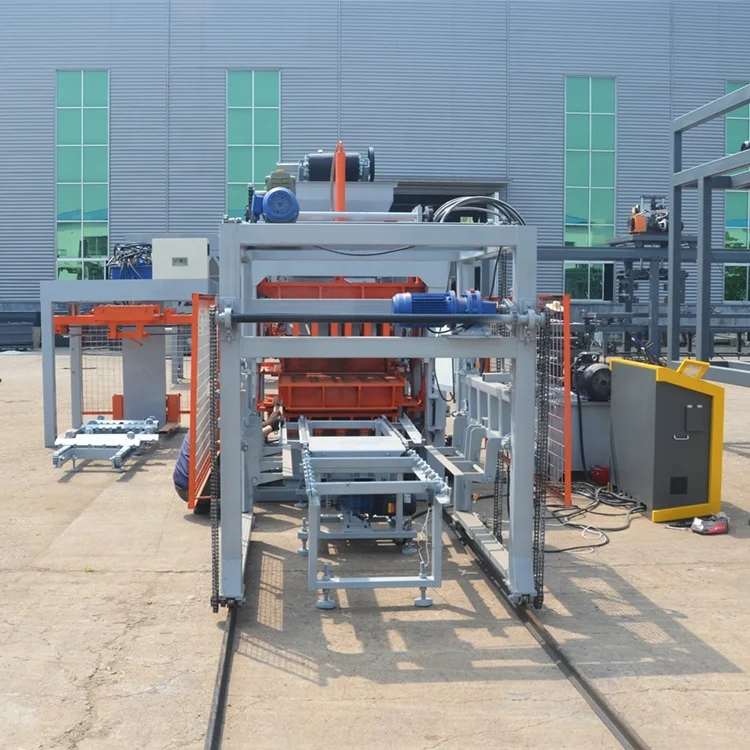
The Shiyue lineup spans semi-automatic entry presses for low-investment workshops up through high-capacity fully automatic lines with stacking and cubing. The QTJ4-25 occupies the mid-tier: PLC-controlled with automatic plate-supplying and brick-discharging, yet without the full automatic stacking and curing rack handling that the upper tiers carry. This positions the QTJ4-25 block making machine manufacturer offering for buyers who want consistent cycle execution through automation but prefer to handle pallet movement and curing manually at the start.
Semi-Automatic Today, Higher Automation Later
A common path I see among first-time plant owners is starting with the press and mixer, running pallets by hand, and adding automatic stacking once daily volumes justify the investment. The QTJ4-25 supports this trajectory because the PLC architecture and pallet dimensions remain compatible with downstream automation modules. Buyers surveying the complete range should weigh whether their current labour cost and curing area layout leave room for that upgrade, or whether stepping to a higher tier from day one avoids a costly retrofit. [NEED_CITE: automation upgrade paths in block production lines]
Vibration, Pressure, and the 25-Second Cycle
The 60 kN exciting power combined with flat vibration and squeeze compression is what gives the QTJ4-25 its density across both hollow and solid formats. Vibration frequency spans 2800–5100 r/min, a range wide enough to accommodate different aggregate gradations — coarser crushed stone needs higher frequency to settle, while finer fly ash blends respond better at the lower end. The 25-second molding cycle is the baseline; actual cycle time may extend slightly when the mix is wetter or the mould cavity is deeper. Pallet size at 850×550×20 mm should be checked against your existing curing racks and forklift fork width before the order is locked in.
The Cost of Skipping the Aggregate Report
When a machine is configured for standard silica sand and the buyer’s yard is full of volcanic scoria or recycled demolition aggregate, vibration settings miss the mark and block walls come out crumbly. I have seen entire first shipments sit idle while frequency parameters were re-mapped on site. The QTJ4-25 block making machine manufacturer configuration process starts with your local material test, not a default recipe, because the 60 kN platform can only deliver rated density when the frequency matches what is actually in your mixer. [NEED_CITE: aggregate variability effects on block compressive strength]
Why Buyers Source This Tier from Shiyue
Block machinery is our single focus, which means the QTJ4-25 press, JQ350 mixer, pallet specification, and mould set are discussed as one system rather than pulled from separate catalogues. Capacity calculations in every proposal name the exact block format assumed, so there is no gap between quoted output and what your crew actually produces. Mould design covers the formats your market demands, including custom drawings when your region sells a size we do not keep in standard stock. Voltage, frequency, and PLC display language are confirmed before production begins, preventing commissioning delays when the machine arrives. Installation support includes operator training on the PLC interface and routine maintenance scheduling tied to the actual wear parts in your configuration.
Documentation & Verification
- Line layout drawing showing QTJ4-25 footprint with pallet flow and mixer placement
- Capacity calculation sheet stating output per block format and assumed cycle time
- Mould drawing and format list covering included cavities and custom options
- Voltage, frequency, and PLC language confirmation record before build
- Factory test record with photographs of the QTJ4-25 running your specified mould
- Packing photographs documenting machine condition prior to container loading
Installation, Commissioning & Support
- Foundation pad leveled to 6400×1500 mm footprint with anchor bolt provisions for the 2500 kg frame
- Dedicated 17.9 kW power circuit matching confirmed voltage and frequency at your site
- Mixer JQ350 positioned for direct material feed into the QTJ4-25 hopper
- PLC display language set and verified during on-site commissioning
- Vibration frequency tuned between 2800–5100 r/min against your actual aggregate blend
- Wear parts list with hydraulic seal and mould liner replacement intervals provided
What to Include in Your First Inquiry
Tell us the block formats your market actually buys, the daily volume you need to hit, and the raw materials available within hauling distance of your site. Share your local voltage and frequency so the QTJ4-25 block making machine manufacturer build matches your grid from day one, and confirm the PLC language your operators read. If you already have curing racks or forklifts on site, send the dimensions so the 850×550 mm pallet specification aligns with what you have.
Frequently Asked Questions
Q: How do I verify the QTJ4-25 real daily output against the block format my market sells?
A: Request a capacity calculation sheet that names your exact block dimensions, mould cavity count, and assumed cycle time. Headline output figures often reference a standard hollow block; if your product is a different size, the per-shift total changes. The QTJ4-25 block making machine manufacturer proposal should recalculate before you commit.
Q: Where does the QTJ4-25 sit in the full machine range and when should I step up?
A: It occupies the mid-tier with PLC-controlled automatic plate-supplying and brick-discharging but without full automatic stacking. If your target daily volume exceeds what a 25-second cycle delivers across your formats, or if labour cost makes manual pallet handling uneconomical, a higher-capacity automatic line may suit better.
Q: What voltage, frequency, and PLC language options are confirmed before shipment?
A: These are confirmed during the quotation stage based on your local grid supply and operator preference. The build does not begin until voltage and frequency are locked, and the PLC display language is set to match your crew. This prevents commissioning delays after the machine arrives at your site.
Q: Is the QTJ4-25 supplied as a standalone press or as a complete line?
A: It can be supplied as the press alone or paired with the JQ350 mixer, pallet feeding arrangement, and handling equipment. The scope depends on what you already have on site. The proposal should clearly list every station included so nothing is left to manual work unexpectedly.
Q: Can I start with the QTJ4-25 semi-automatic and add automation later?
A: The PLC architecture and pallet size are compatible with downstream stacking and cubing modules added at a later stage. Buyers often begin with manual pallet handling to keep initial investment lower, then upgrade once daily volumes and labour costs justify the additional automation stations.

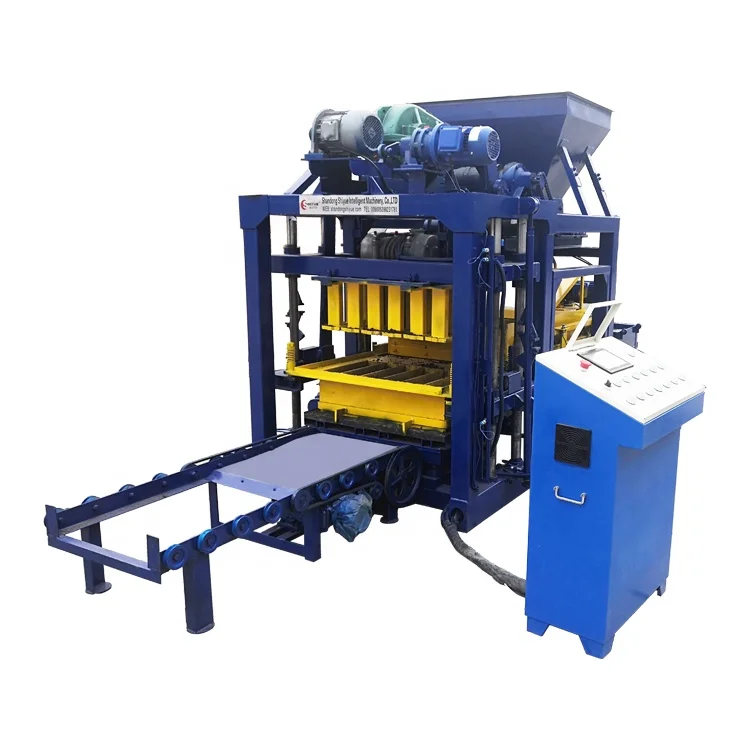
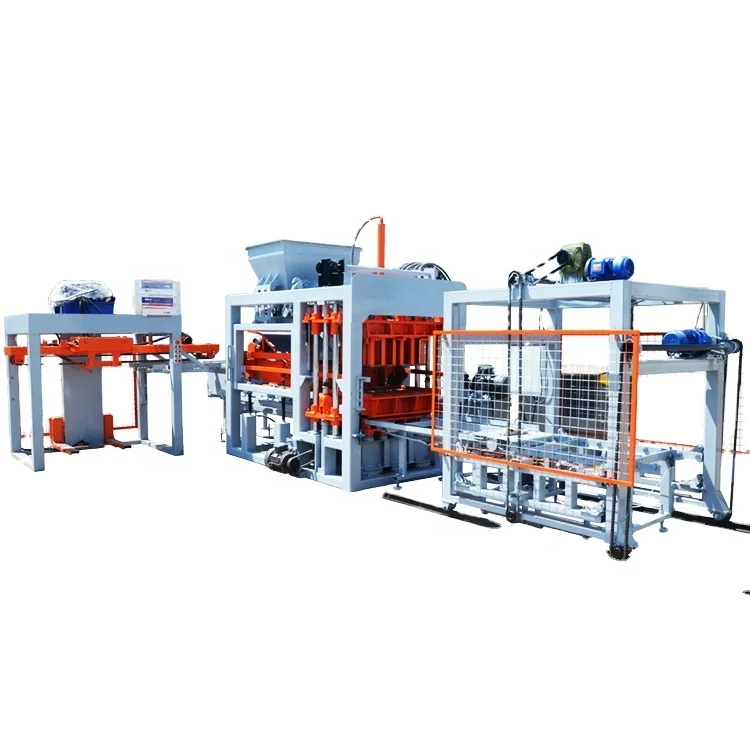 High quality block machine