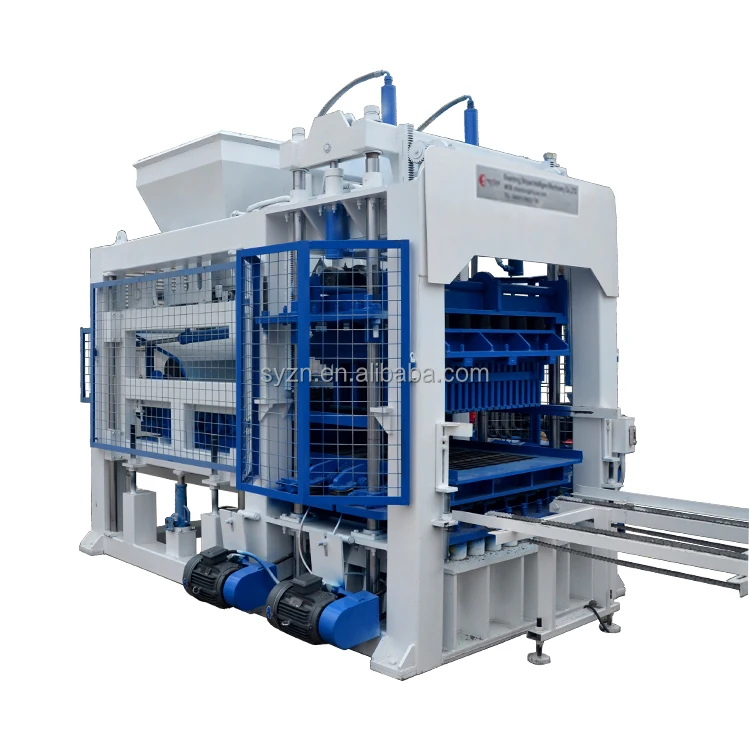
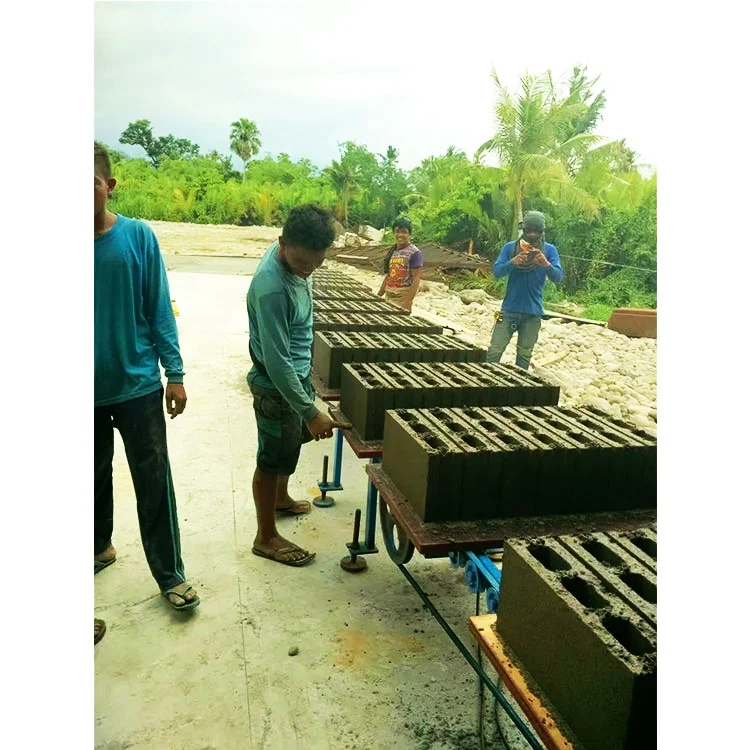
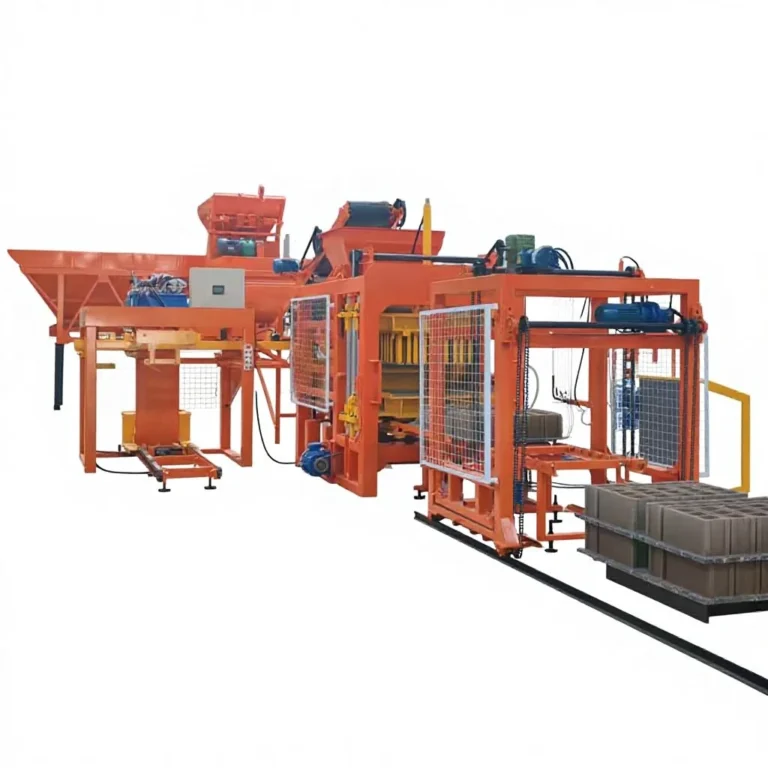
Matched System Design — The QT6-15 is specified with moulds, pallets, and handling equipment as one integrated line, preventing the output gaps that appear when press and peripherals come from separate sources.
Technical Specifications
| Parameter |
Value |
| Product Type |
Hydraulic Block Making Machine |
| Model |
QT6-15 |
| Overall Dimensions (L×W×H) |
8200 × 1700 × 2950 mm |
| Total Mass |
7 T |
| Overall Power |
37 kW |
| Vibration Form |
Platform Vibration |
| Vibration Frequency |
0–60 Hz (adjustable) |
| Vibration Force |
45 kN |
| Moulding Mode |
Automatic load, vibration moulding |
| Demolding Method |
Hydraulic |
| Pallet Size |
880 × 850 mm |
| Molding Cycle |
15–20 s (basis to be confirmed per format) |
| Control System |
PLC with touch screen interface |
| Hydraulic System |
Independent integrated hydraulic station |
| Factory Area Required |
1200 m² |
| Output — Hollow Block 400×200×200 mm |
8,640–11,520 pcs / 8 hr (6 pcs per mould, 15–20 s cycle) |
| Output — Hollow Block 400×150×200 mm |
11,520–15,360 pcs / 8 hr (8 pcs per mould, 15–20 s cycle) |
| Output — Solid Brick 240×115×53 mm |
46,080–61,440 pcs / 8 hr (32 pcs per mould, 15–20 s cycle) |
| Output — Rectangular Paver 200×100×60 mm |
17,280–23,040 pcs / 8 hr (21 pcs per mould, 20–25 s cycle) |
| Output — Zigzag Paver 225×112.5×60 mm |
17,280–23,040 pcs / 8 hr (15 pcs per mould, 20–25 s cycle) |
| Block Compressive Strength |
> 15 MPa (source value — verify against test data) |
| Voltage & Frequency |
Configurable (basis to be confirmed) |
| Warranty |
1 year for whole machine (excluding spare parts) |
Application Suitability
| Application |
Material or Output |
| Hollow block production for wall construction |
Crushed stone, sand, cement, fly ash blends |
| Solid brick manufacturing |
Local aggregate, cement, industrial by-products |
| Rectangular paving brick production |
Fine aggregate, cement, pigment for coloured pavers |
| Zigzag interlocking paver production |
Graded aggregate, cement, with surface finish options |
| On-site block production for housing projects |
Locally sourced sand and gravel with cement |
Why "Pieces per Hour" Means Nothing Without the Block Format
Capacity figures are only honest when tied to a specific block size, mould cavity count, and cycle time.
I have watched buyers sign off on a Hydraulic Block Making Machine for sale based on a single headline output number, only to discover at commissioning that the quoted figure assumed a small solid brick — not the 200 mm hollow block their market actually buys. The QT6-15 produces 8,640–11,520 hollow blocks (400×200×200 mm) per eight-hour shift, but that same machine running rectangular pavers on a 20–25 second cycle delivers a different daily total entirely. [NEED_CITE: block format and cycle time assumptions in capacity quotations] Without the format breakdown, two machines with the same "pieces per hour" claim can produce vastly different saleable output over a working day.

Where the QT6-15 Sits in a Complete Block Machine Range
The QT6-15 occupies the mid-tier of Shiyue’s automatic block machine lineup, positioned between entry-level semi-automatic presses and the higher-output QT8 and QT10 models. For a buyer surveying options for a first fixed-plant operation or replacing an aging press, this model offers PLC-controlled automation with hydraulic demolding while keeping the factory footprint to around 1200 m². It is the point in the range where platform vibration and automatic material loading become standard, yet the investment remains within reach for a growing block plant.
Choosing Between Semi-Automatic and Full Line Automation
The Hydraulic Block Making Machine for sale at this tier can be configured from a standalone press with manual pallet handling through to a complete line with automatic pallet feeding, stacking, and cubing. A buyer setting up a first plant may start with semi-automatic operation to manage initial capital outlay, then add automatic stacking and curing rack handling as production volume grows. [NEED_CITE: automation upgrade paths in block production lines] The critical point is that pallet size — 880 × 850 mm on this model — must match the curing area layout and the forklift already on site, regardless of which automation level is chosen.
Reading the Specs That Actually Shape Daily Output
The vibration system on the QT6-15 delivers 45 kN of force at an adjustable frequency of 0–60 Hz, which is the primary mechanism for compacting the concrete mix into a dense, consistent block. Vibration force alone does not determine block strength; it must work together with the hydraulic demolding pressure and the buyer’s specific mix design to produce a block exceeding 15 MPa. The independent integrated hydraulic station sits apart from the main press frame, shielding valves and seals from the vibration and dust that accelerate wear in block-making environments.
Molding cycle times range from 15–20 seconds for hollow blocks and solid bricks up to 20–25 seconds for pavers, and these figures directly set the ceiling on daily throughput. A five-second difference per cycle, multiplied across hundreds of cycles in an eight-hour shift, separates a plant that meets its delivery commitments from one that falls short. The PLC touch screen interface allows operators to adjust cycle parameters and monitor fault codes without stopping the press. Pallet size at 880 × 850 mm must be verified against the buyer’s existing curing racks and handling equipment before the order is placed.
What Happens When Pallet and Curing Layout Are Ignored
I have seen plants receive a new QT6-15 class press only to find their curing racks were built for a different pallet dimension, forcing a complete rack rebuild before the first block could be cured properly. When pallet size is chosen without checking the forklift tine spacing or the curing yard layout, the entire output of the press stacks up on the floor waiting for manual handling — erasing whatever cycle time advantage the machine was supposed to deliver. [NEED_CITE: pallet handling mismatches in block plant commissioning] The QT6-15’s 880 × 850 mm pallet is a deliberate specification, and the buyer’s downstream handling must be ready for it on day one.
Why Buyers Specify the QT6-15 With Confidence
Block machinery is the single focus at Shandong Shiyue Intelligent Machinery, meaning the press, mould, pallet, and handling equipment are specified as one matched system rather than assembled from separate suppliers. The configuration is set against the buyer’s actual mix design, local aggregate, and target block format — not pulled from a catalogue default. Mould design covers every format the buyer’s market demands, including custom drawings for non-standard brick profiles. Automation level is selectable, so a plant can begin with semi-automatic pallet handling and add stacking and cubing modules as volume justifies the investment.
Documentation & Verification
- Line layout showing capacity calculation per block format assumed
- Machine specification sheet with voltage, frequency, and PLC language confirmed
- Mould drawing and format list matching buyer’s target products
- Pallet specification cross-checked against curing area dimensions
- Factory test record documenting cycle times on buyer’s block format
- Hydraulic and electrical schematic for local maintenance teams
Installation, Commissioning & Support
- 1200 m² factory area preparation with level concrete floor and drainage for the 7 T press
- Dedicated 37 kW power circuit with confirmed voltage and frequency before dispatch
- Machine dismantled for container loading and reassembled on site at commissioning
- PLC touch screen configured to buyer’s language before the first production run
- Operator training covering mould change procedure and cycle time adjustment
- Wear parts list and mould inventory plan provided for first replacement cycle
Before You Request a Quotation
To match the right Hydraulic Block Making Machine for sale to your production plan, share the block formats your market buys, the daily volume you need to hit, and the raw materials available locally — including an aggregate test report if possible. Confirm your site’s voltage and frequency, the PLC display language your operators need, and whether your curing area is already set up or needs to be designed around the press. If you have existing pallets or forklifts on site, send their specifications so the 880 × 850 mm pallet requirement can be validated early.
Frequently Asked Questions
Q: How does the QT6-15 compare to other tiers in the Shiyue range?
A: The QT6-15 sits between smaller semi-automatic presses and larger QT8 or QT10 models. It offers PLC control, platform vibration, and hydraulic demolding at a mid-range output level, requiring around 1200 m² of factory space. Buyers stepping up from mobile or egg-laying machines typically find this tier balances automation capability with a manageable first-plant footprint and investment.
Q: How is daily output verified for each block format?
A: Output figures for the QT6-15 are stated per block format with the mould cavity count and cycle time assumption made explicit. For example, hollow block 400×200×200 mm output assumes 6 cavities and a 15–20 second cycle. Requesting the capacity calculation sheet ensures the quoted number matches the format you will actually produce.
Q: Can I start semi-automatic and upgrade later?
A: Yes. The QT6-15 can be supplied with manual pallet handling initially, with automatic pallet feeding, stacking, and cubing added as production volume grows. The press itself remains the same; the upgrade involves adding peripheral handling stations to the line.
Q: What voltage and PLC language options are available?
A: Voltage and frequency are configured to match the buyer’s local supply, and the PLC touch screen display language is confirmed before production begins. These details are locked in during the quotation stage to avoid commissioning delays after the machine arrives on site.
Q: What plant area does the QT6-15 require compared to larger models?
A: The QT6-15 requires approximately 1200 m² of factory space including raw material storage, press area, and pallet circulation. Larger models in the range need more floor area for extended pallet return systems and higher-capacity stacking zones.

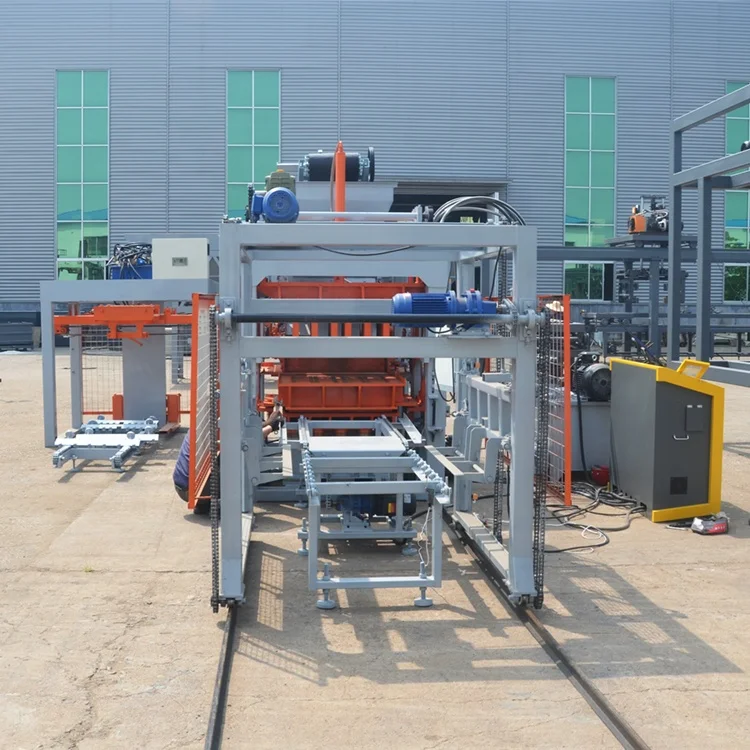
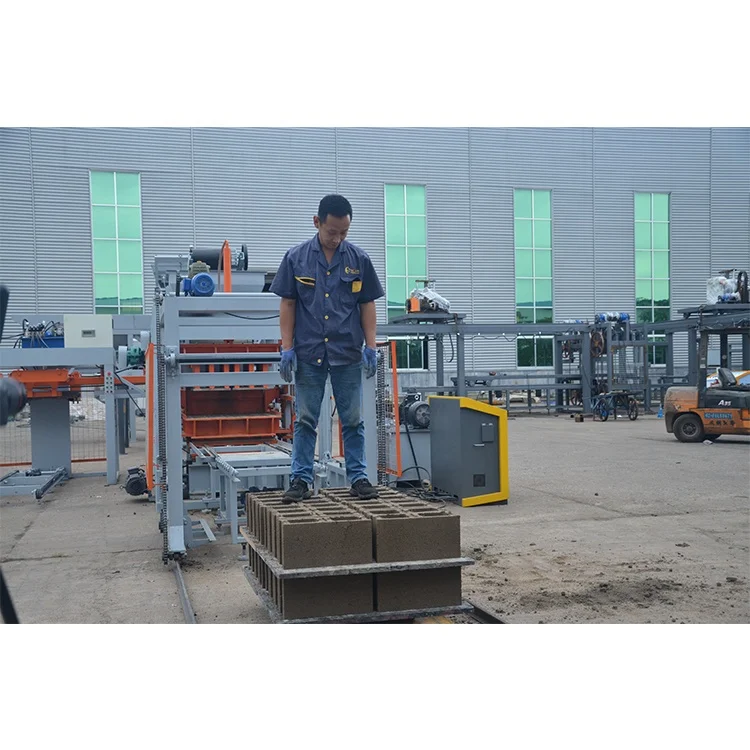 High quality block machine