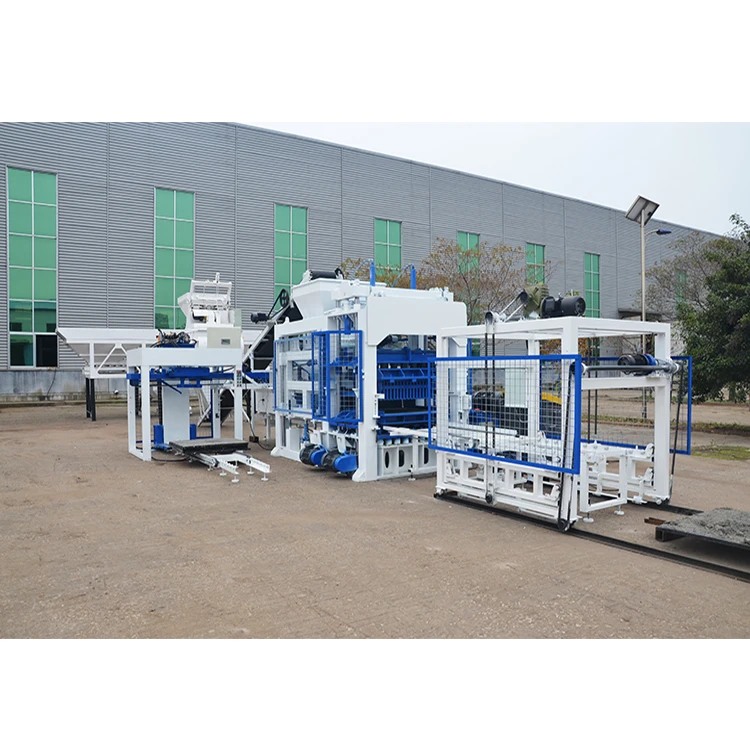
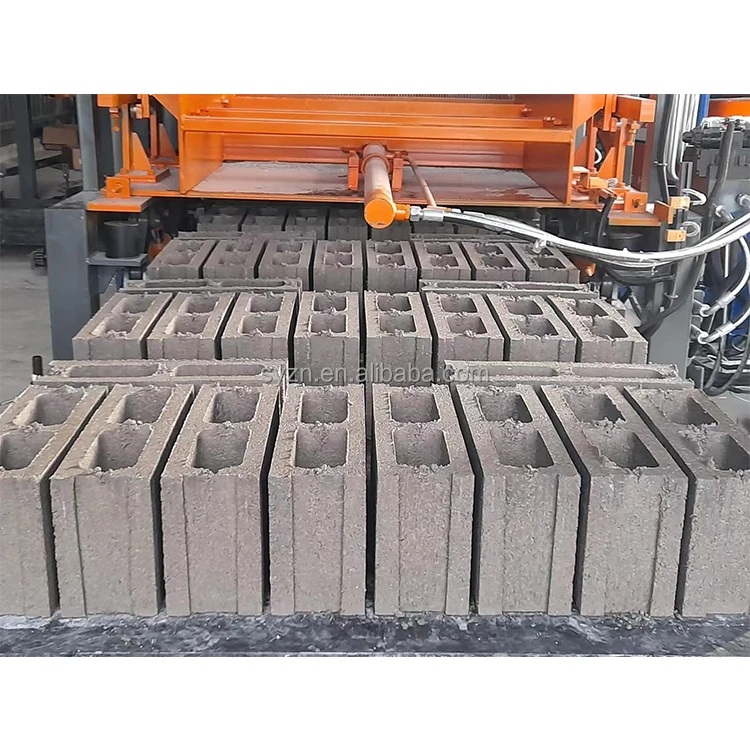
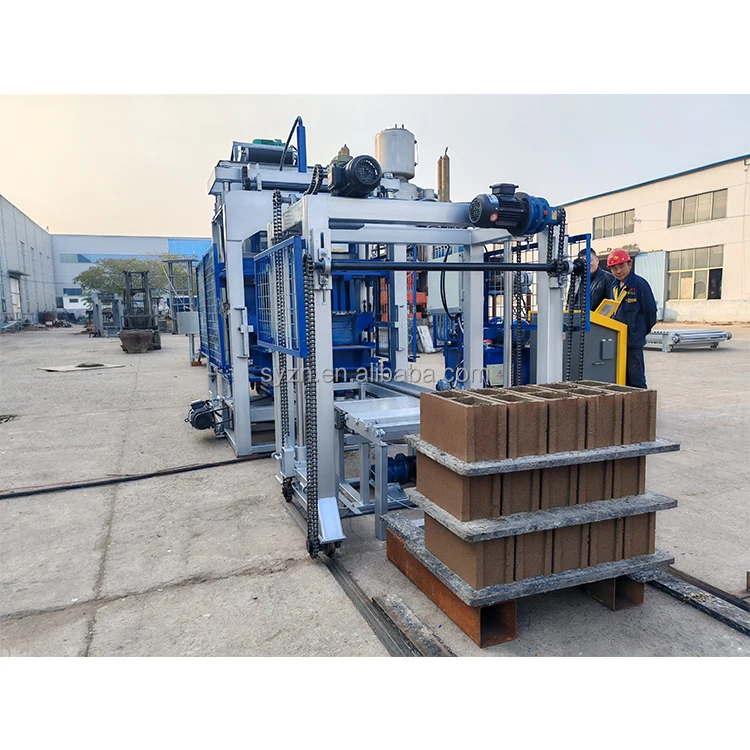
Matched System Sizing — every QTJ4-25 configuration we ship is validated against the buyer’s actual mix design and target block format before production begins.
Technical Specifications
| Parameter |
Value |
| Model |
QTJ4-25 |
| Product Type |
Semi-Automatic Concrete Block Making Machine |
| Overall Dimensions (L×W×H) |
3060×1730×2580 mm |
| Total Mass |
4 T |
| Rated Pressure |
16–21 MPa |
| Main Vibration Form |
Platform Vibration |
| Vibration Frequency |
4200 r/min |
| Vibration Force |
45.5 kN |
| Molding Cycle |
25–30 s |
| Pallet Size |
850×550 mm |
| Overall Power |
14.9 kW (source value listed as 14.9W — verify against manufacturer catalog) |
| Demolding Method |
Vibration |
| Factory Area Required |
200 m² |
| Automation Level |
Semi-automatic |
| Applied Products |
Concrete hollow/solid blocks, pavers, interlocking blocks, curbstone, colored pavers |
| Raw Materials |
Crushed stone, sand, cement, fly ash, gravel, slag, dust |
| Loading |
1×40HQ container (basic equipment) |
| Warranty |
1 year (excluding spare parts) |
| Output Capacity |
(basis not stated in source — confirm block format / daily output assumption) |
| Voltage & Frequency |
(to be confirmed for target market) |
| Control System / PLC Language |
(to be confirmed) |
Application Suitability
| Application |
Material or Output |
| Small to medium block production plants |
Hollow and solid blocks from crushed stone, sand and cement |
| On-site construction block production |
Interlocking blocks and pavers using locally sourced gravel and fly ash |
| First-time entrepreneur block plants |
Standard concrete masonry units at manageable semi-automatic investment |
| Housing project contractors |
Kerbstone and colored pavers for local development sites |
| Building material distributors |
Format expansion using existing raw material supply chains |
What "25-Second Cycle" Actually Means for Your Daily Output
Many Semi-Automatic Block Machine manufacturer quotations lead with a cycle time figure but omit the block format behind that number, leaving buyers to discover real-world throughput only after commissioning.
Cycle time is format-dependent, and honest capacity starts with naming the block.
A 25–30 second molding cycle on the QTJ4-25 applies across standard formats, but the number of units per cycle changes drastically between a 400×200×200 mm hollow block and a small interlocking paver. Buyers who plan their curing area, labor shifts and raw material orders around an unqualified cycles-per-hour figure routinely find actual daily output falls well short of expectation [NEED_CITE: common causes of block plant output shortfall versus quoted capacity]. I once watched a plant in West Africa sit half-idle for weeks because the capacity quote assumed a format the local market did not buy.

Positioning the QTJ4-25 Within the Full Machine Range
The Shiyue range spans mobile egg-laying units, semi-automatic platforms and fully automatic lines with stacking and cubing. The QTJ4-25 occupies the entry-to-mid tier as a Semi-Automatic Block Machine manufacturer offering, built for buyers who need steady production without the capital outlay of a high-capacity automatic plant. Its 200 m² factory area requirement and 4-tonne machine mass keep site preparation manageable for first-time operators.
Where Semi-Automatic Fits the Buyer’s Growth Path
Starting semi-automatic does not lock a plant into manual handling forever. The QTJ4-25 platform allows selective upgrades — adding automatic pallet feeding or stacking at a later stage — without replacing the press itself. This matters for entrepreneurs and housing contractors who must start production quickly but anticipate format diversification as local demand shifts [NEED_CITE: block plant automation upgrade paths in developing markets]. The machine’s pallet size and vibration system remain constant through those upgrades, protecting the initial mould and pallet investment.
Vibration Force, Hydraulic Pressure and Block Density
The 45.5 kN vibration force at 4200 r/min works in tandem with the 16–21 MPa rated hydraulic pressure to consolidate the mix during the 25–30 second molding cycle. Platform vibration transmits energy through the pallet rather than the mould walls, which improves density uniformity across the block cross-section. The 850×550 mm pallet format balances output per cycle against the curing area and forklift capacity typical of smaller plants. Buyers working with high-clay laterite sand or fly ash blends will find that vibration force and pressure must be tuned together to the actual mix — a setting we confirm during commissioning rather than leaving to default values.
The Hidden Cost of Skipping Pallet and Curing Planning
When pallet size is chosen without considering the curing yard dimensions and forklift reach already on site, blocks end up stacked by hand in uneven rows that crack during early curing. The 850×550 mm pallet requires a curing area planned around that exact footprint, with aisle widths matching the forklift the buyer intends to use. Skipping this step turns a Semi-Automatic Block Machine manufacturer investment into a manual handling operation that negates the machine’s cycle advantage [NEED_CITE: block curing and pallet handling impact on early strength development].
Why Source the QTJ4-25 Through Shiyue
Block machinery is our single focus, so the QTJ4-25 press, its moulds, pallets and supporting handling equipment are specified as one matched system rather than assembled from unrelated suppliers. Every configuration is set against the buyer’s actual mix design and target block format, not a catalogue default. Mould design covers the formats the buyer’s market actually sells, including custom drawings. Voltage, frequency and PLC display language are confirmed before production, preventing commissioning delays. Documentation arrives with the machine, not weeks after.
Documentation & Verification
- Line layout stating assumed block format for every capacity figure on the QTJ4-25
- Machine spec sheet confirming vibration force, pressure and cycle matched to your mix
- Mould drawing and format list included with quotation before order confirmation
- Voltage, frequency and control language written confirmation before production starts
- Factory test record on your specified raw material blend prior to dispatch
Installation, Commissioning & Support
- 200 m² factory area layout guidance including curing zone and pallet circulation paths
- Electrical connection planning for the QTJ4-25’s overall power requirement and local voltage
- Single 40HQ container loading plan with dismantling sequence for site reassembly
- On-site vibration force and pressure tuning to the buyer’s actual aggregate and mix
- Operator training covering mould change procedure and daily maintenance routines
- Wear parts and mould replacement list provided with first shipment for forward planning
What to Include in Your Inquiry
Help us match the QTJ4-25 to your operation by providing your target block formats with dimensions, the local raw materials you intend to use including aggregate type and any fly ash or slag content, your available factory floor area and curing yard dimensions, and the voltage and frequency standard at your site. If you are comparing this semi-automatic tier against a mobile or fully automatic option, let us know your daily output target and the shift pattern you plan to run.
Frequently Asked Questions
Q: How is output capacity calculated for the QTJ4-25, and which block format is the figure based on?
A: Capacity depends on the specific block format, pallet layout and molding cycle. We provide a written capacity calculation that names the exact block dimensions and units-per-pallet assumed for every output figure, so you can cross-check against the formats your market actually purchases.
Q: Where does the QTJ4-25 sit within the full Shiyue range, and what is the upgrade path?
A: It occupies the entry-to-mid tier as a semi-automatic platform. Buyers can start here and add automatic pallet feeding or stacking later without replacing the press, preserving the initial mould and pallet investment while scaling automation as demand grows.
Q: What pallet size does the QTJ4-25 use, and how should curing and forklift be planned?
A: The machine uses 850×550 mm pallets. Your curing yard, aisle widths and forklift fork length should all be planned around that footprint before the machine arrives, so blocks move from press to curing without manual restacking.
Q: What voltage and control language details must be confirmed before production?
A: We need your site voltage, frequency and preferred PLC display language confirmed in writing before production begins. This prevents delays during commissioning, especially in markets where three-phase supply standards differ from the factory default.
Q: How much floor space does a QTJ4-25 plant realistically require?
A: The machine itself needs part of a 200 m² factory area, but the total footprint must also account for raw material storage, pallet circulation paths, curing racks and finished block staging. We provide a line layout document showing all zones before you commit to a site.

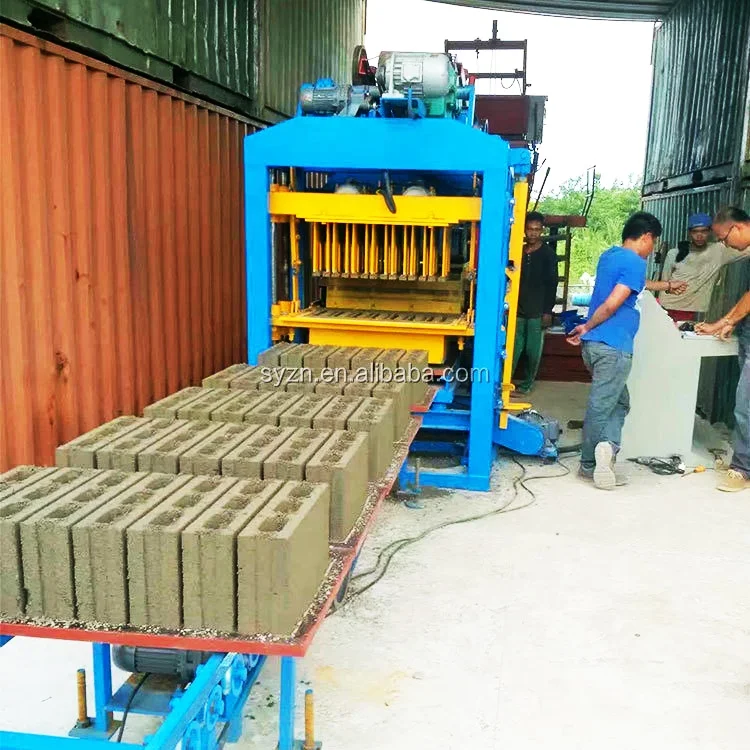
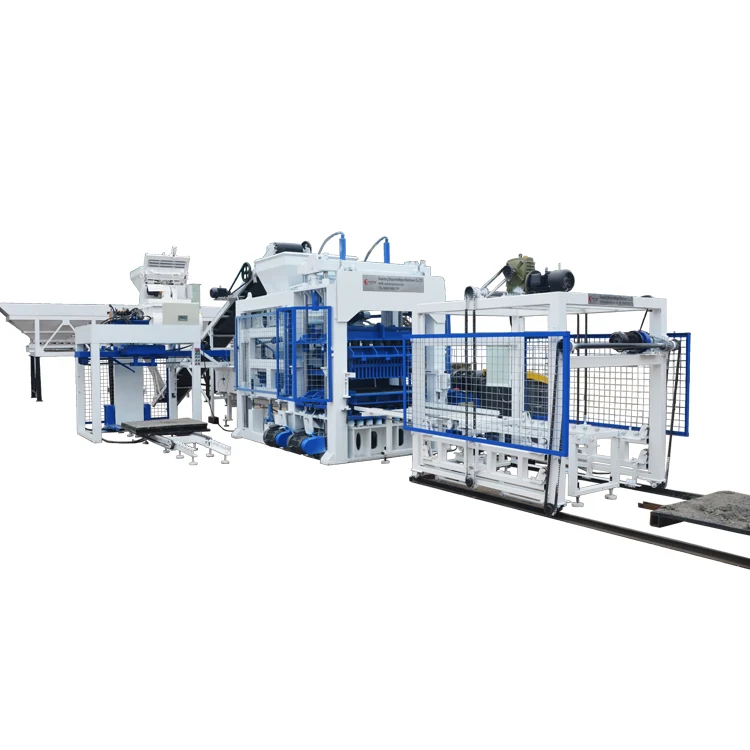 High quality block machine