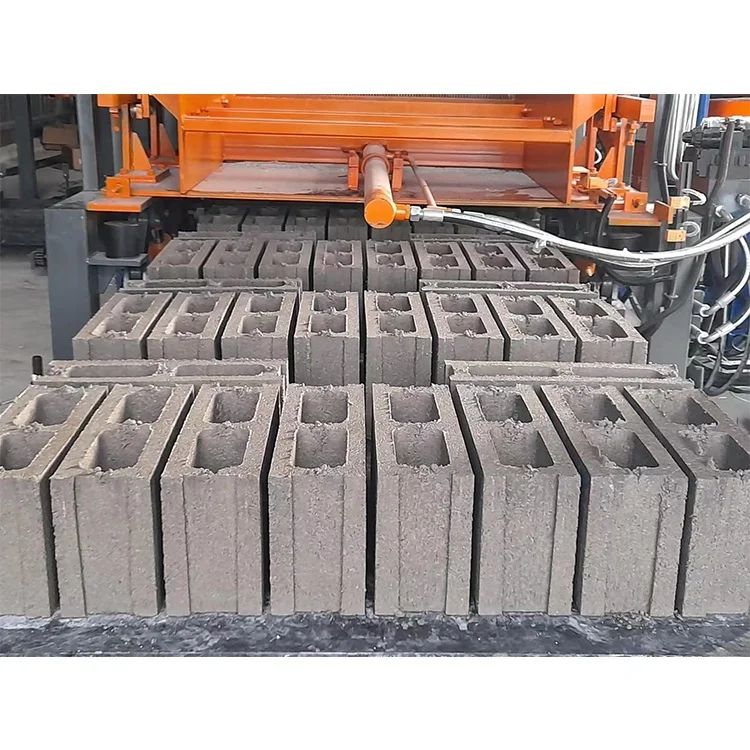
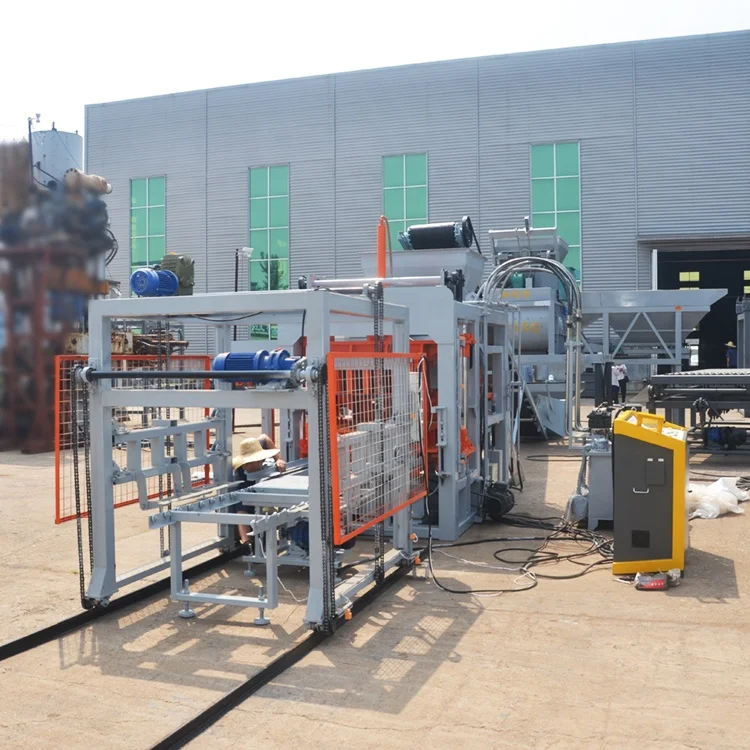
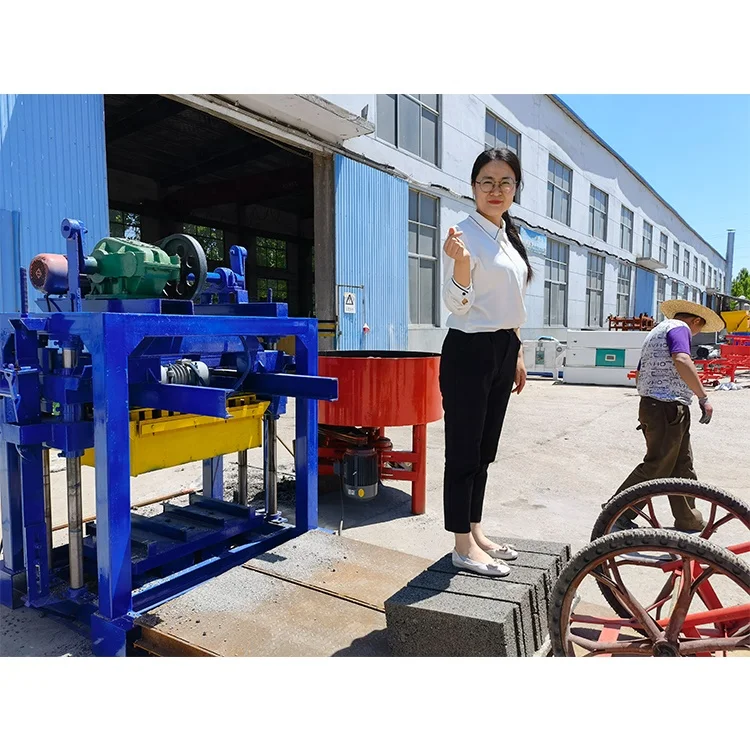
Matched System Design — machine, mould, pallet and handling are specified together against your target interlocking format, not assembled from separate suppliers.
Technical Specifications
| Parameter |
Value |
| Model |
QT7-15 |
| Product Type |
Hydraulic Vibration Block Making Machine |
| Pallet Size |
1150 × 700 mm |
| Molding Cycle |
15–20 s |
| Overall Power |
45 kW |
| Vibration Force |
100 kN |
| Vibration Frequency |
0–60 Hz (adjustable) |
| Vibration Form |
Platform Vibration |
| Demolding Method |
Hydraulic |
| Control System |
PLC with touch screen interface, remote diagnostics supported |
| Total Mass |
8 T |
| Output Capacity (Hollow block 400×200×200 mm) |
1,260–1,680 pcs/hour; 10,080–13,440 pcs/8 hr shift |
| Output Capacity (Hollow block 400×150×200 mm) |
1,440–1,920 pcs/hour; 11,520–15,360 pcs/8 hr shift |
| Output Capacity (Rectangular brick 200×100×60 mm) |
3,888–4,860 pcs/hour; 31,104–38,880 pcs/8 hr shift (cycle 20–25 s) |
| Standards |
CE referenced in documentation package |
| Warranty |
1 year for the whole machine (excluding spare parts) |
Application Suitability
| Application |
Material or Output |
| Hollow block production |
Crushed stone, sand, cement and fly ash blends for load-bearing and non-load-bearing walls |
| Solid block production |
Dense aggregate mixes for foundation and structural masonry |
| Interlocking brick production |
Interlocking dry-stack formats for perimeter walls and retaining structures |
| Paving brick production |
High-strength mixes for pedestrian and light-traffic paved surfaces |
| Rectangular brick production |
Standard 200×100×60 mm pavers on a 20–25 s cycle |
What "Pieces per Hour" Actually Means for a QT7-15 Block Machine Manufacturer
Output figures only hold when the block format, mould and cycle time are stated together.
Capacity numbers on block machine brochures are often printed without naming the format behind them. A buyer compares two machines on hourly pieces, orders the higher number, then discovers the quoted figure assumed a small solid brick while the plant actually runs interlocking pavers with a longer cycle. Real daily output drops, the payback calculation breaks, and the press sits idle waiting for the rest of the line to catch up. When you evaluate any QT7-15 block machine manufacturer, the first document you should request is a capacity table that lists every format the buyer intends to run [NEED_CITE: capacity calculation standards for concrete block production].

Placing the QT7-15 Inside the Shiyue Output Tiers
The QT7-15 occupies the mid-to-high automatic tier, sitting above small workshop semi-automatic presses and below the highest-capacity fully automatic lines. Buyers who have outgrown egg-laying mobiles but do not yet justify a large cubing plant land here. The 1150 × 700 mm pallet and 100 kN platform vibration place it in a range where multi-format flexibility is realistic without demanding the footprint of a high-volume single-format line. A QT7-15 block machine manufacturer typically positions this model for plants targeting consistent daily output across hollow blocks, interlocking bricks and rectangular pavers.
Matching Automation Level to Your Plant Footprint
Automation on this tier is selectable, not fixed. A buyer can start with manual pallet handling and add automatic stacking later, keeping initial investment aligned with early-stage cash flow. The PLC touch screen and remote diagnostics mean the control side is ready for higher automation even if the mechanical handling starts basic. Choosing the right automation level now prevents the common situation where the press outruns the curing and stacking stations, leaving finished blocks on the floor waiting for manual labour [NEED_CITE: block plant automation staging strategies].
How Vibration Force and Pallet Size Shape Real Output
Platform vibration at 100 kN and an adjustable 0–60 Hz frequency compact the mix from below, which suits interlocking and paving formats where surface finish matters. The frequency must be matched to the buyer’s local aggregate; a high-fines sand needs a different setting than clean crushed stone, otherwise block strength varies across the shift. The 1150 × 700 mm pallet size must align with the curing racks and forklifts already on site, because a mismatch means either new racks or a pallet change before the first production day. The 15–20 s molding cycle applies to standard hollow and solid formats; rectangular pavers on a 20–25 s cycle yield 3,888–4,860 pieces per hour based on the 200×100×60 mm brick specification. These numbers shift the moment the mix design or block geometry changes.
The Cost of Skipping the Format-to-Cycle Check
When a buyer orders on a single headline capacity number, the first production week reveals that interlocking bricks need a longer vibration window and a slower demolding stroke. The press still cycles, but each pallet carries fewer pieces and the daily total falls well short of the business plan. Pallet handling becomes the bottleneck, stacking falls behind, and partially cured blocks are moved too early, cracking on the rack. These losses accumulate quietly because the machine itself shows no fault code [NEED_CITE: hidden output losses in block plant commissioning].
Why Source This Tier from Shiyue
Block machinery is the single focus here, so the QT7-15 is configured against the buyer’s actual mix design and local aggregate rather than a catalogue default. Moulds are designed for the formats the buyer’s market sells, including custom drawings when standard catalogues do not cover a regional interlocking profile. Machine, mould, pallet and handling are specified as one matched system, removing the blame-shifting that happens when separate suppliers point at each other during commissioning. Automation level is selectable, so a buyer can start semi-automatic and upgrade as volume grows. Installation support includes operator training so the crew can run multi-format changeovers confidently from the first week.
Documentation & Verification
- Line layout and capacity calculation stating the block format assumed for every output figure.
- Machine specification sheet confirming vibration force, hydraulic pressure and pallet size against your requirements.
- Mould drawing and format list with cycle time per format and wear parts schedule.
- Voltage, frequency and PLC display language confirmation recorded before production starts.
- Factory test record run on your panel thickness range and target block format before dispatch.
Installation, Commissioning & Support
- Foundation must support the 8 T total mass with level tolerance for the 1150 × 700 mm pallet track.
- Dedicated power circuit sized for the 45 kW overall load, with voltage and frequency confirmed to local grid.
- Machine dismantled for container loading and reassembled on site with alignment of the hydraulic demolding frame.
- PLC touch screen language set and remote diagnostics link tested before first production run.
- Operator training covers mould change procedure and cycle adjustment for each block format in your list.
- Wear parts and mould list supplied so first replacement can be planned before stock runs out.
What to Include with Your Enquiry
Share the block formats your market sells, the target daily output per format, and the raw materials you can source locally. Confirm the voltage, frequency and PLC language you need, along with the curing rack and forklift dimensions already in your yard. If you plan to add stacking or cubing later, note that so the line layout leaves space for the upgrade.
Frequently Asked Questions
Q: How is QT7-15 output capacity calculated per block format?
A: Each output figure is tied to a specific block size, mould cavity count and molding cycle. For example, 1,260–1,680 hollow blocks per hour assumes the 400×200×200 mm format on a 15–20 s cycle. If your target format differs, the capacity shifts and must be recalculated with your chosen mould drawing.
Q: Where does the QT7-15 sit compared to other Shiyue tiers?
A: It occupies the mid-to-high automatic tier, above small workshop semi-automatic presses and below the highest-capacity fully automatic lines. Buyers who need multi-format flexibility at consistent daily volume without the footprint of a large cubing plant typically land on this model.
Q: What plant footprint does a QT7-15 line require?
A: The press itself is compact, but the full line including pallet feed, storage hopper, conveyor and curing area needs a dedicated bay. Footprint depends on the automation level chosen; a semi-automatic start leaves room for future stacking and cubing additions.
Q: Which electrical and control options are confirmed before shipment?
A: Voltage, frequency and PLC display language are confirmed and recorded before production. This avoids commissioning delays caused by mismatched power supply or an interface the local operators cannot read on arrival.
Q: What supporting equipment is included versus quoted separately?
A: The standard system includes pallet feed machine, block making machine, storage hopper, conveyor, hydraulic unit and PLC cabinet. Automatic stacking, curing rack handling and cubing are configured based on the buyer’s automation level and quoted in the line layout.

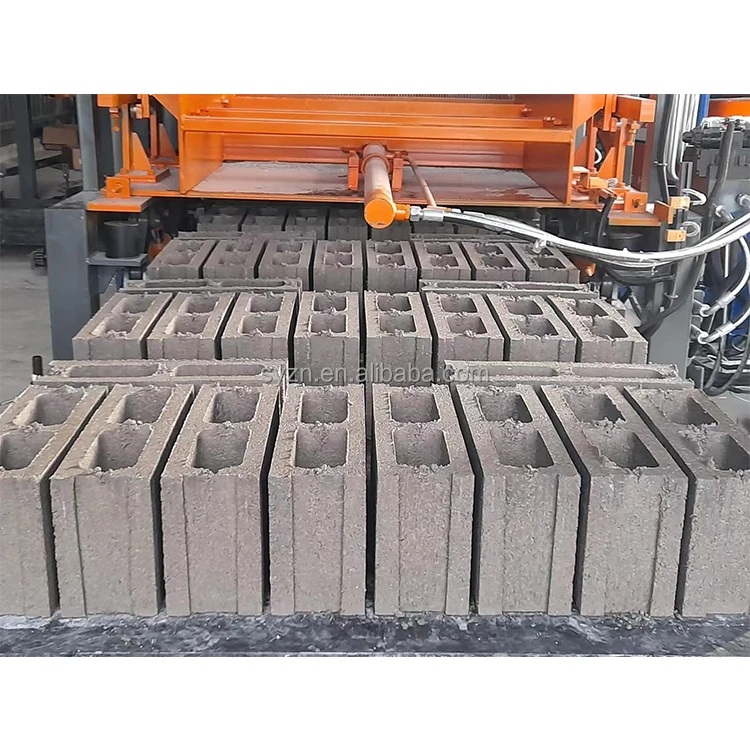
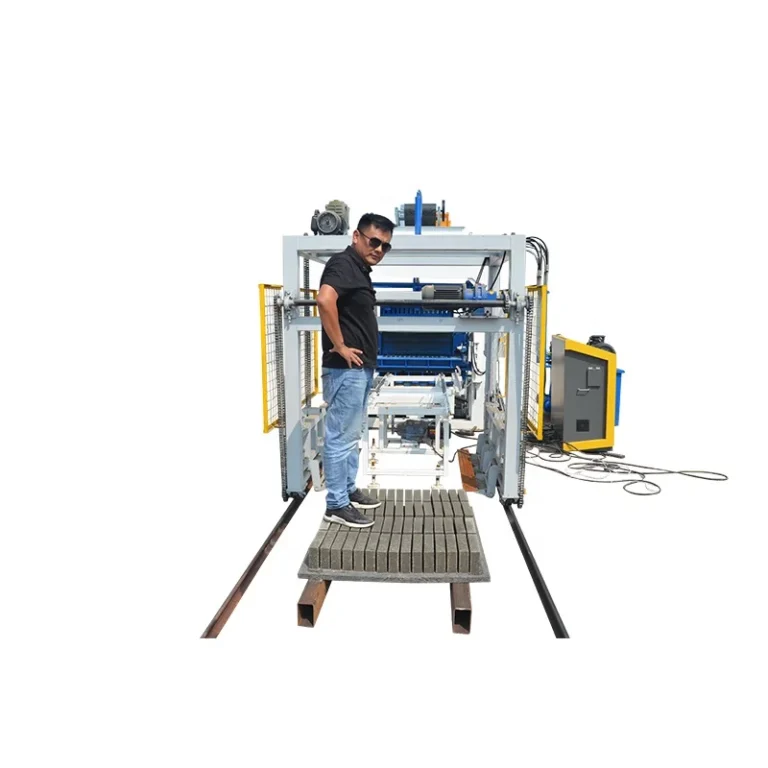 High quality block machine