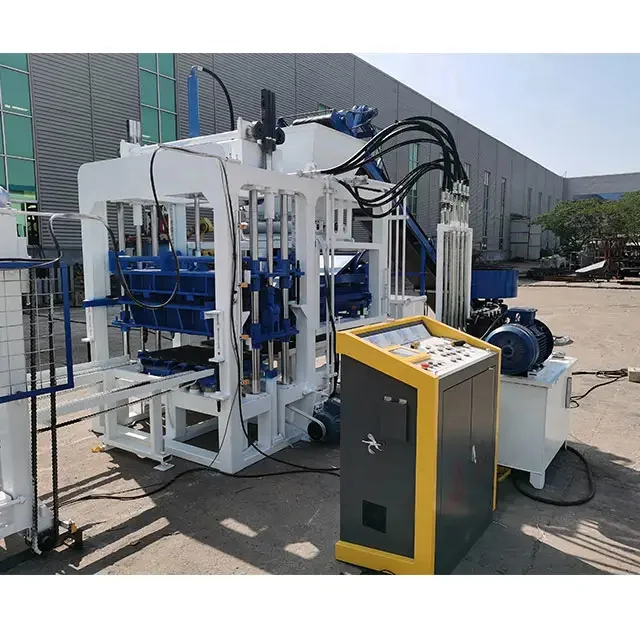
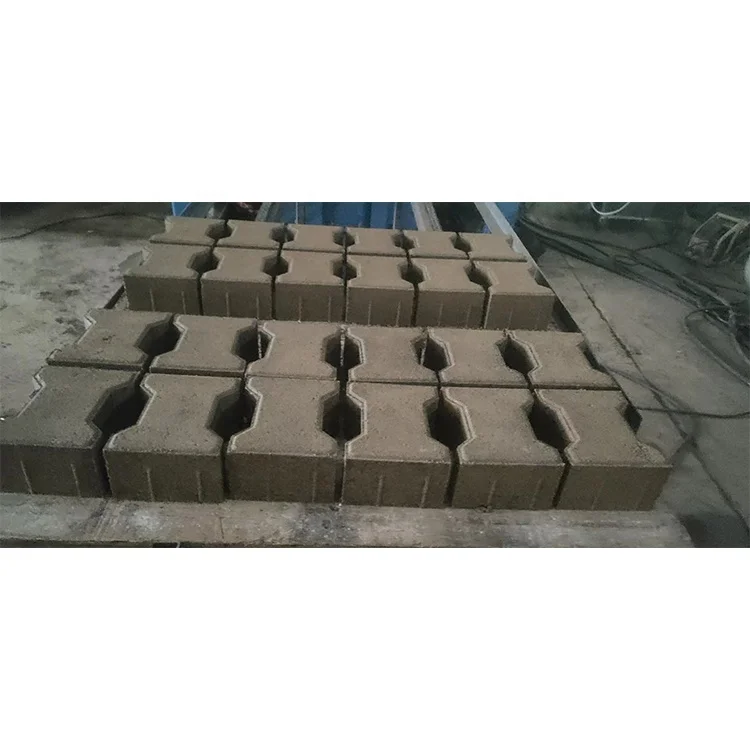
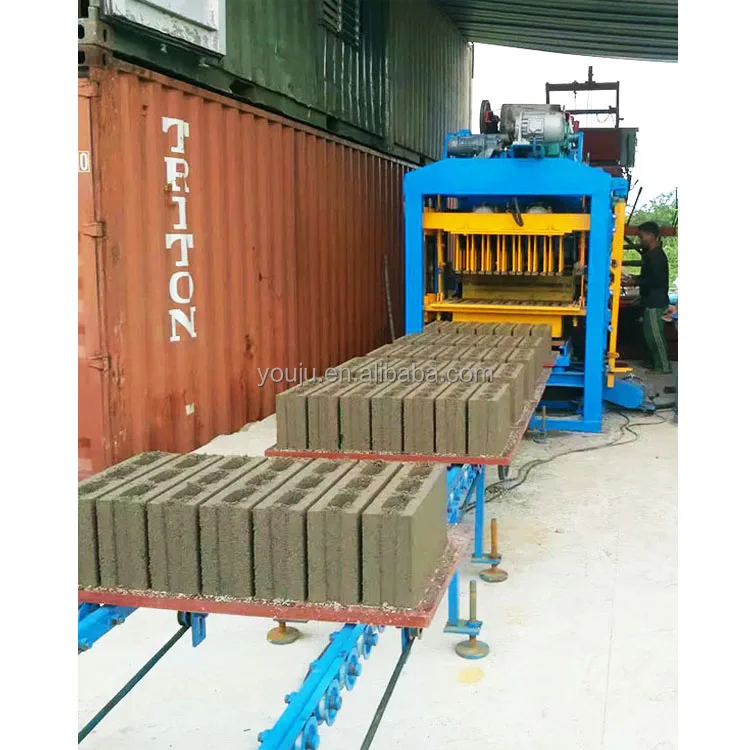
Mould and press matched as one system — the QTJ4-25 is configured around the buyer’s block format and local aggregate rather than a catalogue default.
Technical Specifications
| Parameter |
Value |
| Model |
QTJ4-25 |
| Product Type |
Semi-Automatic Concrete Block Making Machine |
| Overall Dimensions (L×W×H) |
3000 × 1800 × 2680 mm |
| Total Mass |
3.5 T |
| Overall Power |
16.58 kW |
| Main Vibration Form |
Platform Vibration |
| Vibration Force |
60 kN |
| Vibration Frequency |
2800–4500 r/min |
| Molding Cycle |
25 s |
| Pallet Size |
850 × 480 mm |
| Demolding Method |
Mechanical |
| Guide Column Design |
Four guide columns, overlong guide design |
| Surface Treatment |
Chrome-plated |
| Steel Material |
National standard manganese steel |
| Factory Area |
300 m² |
| Applied Products |
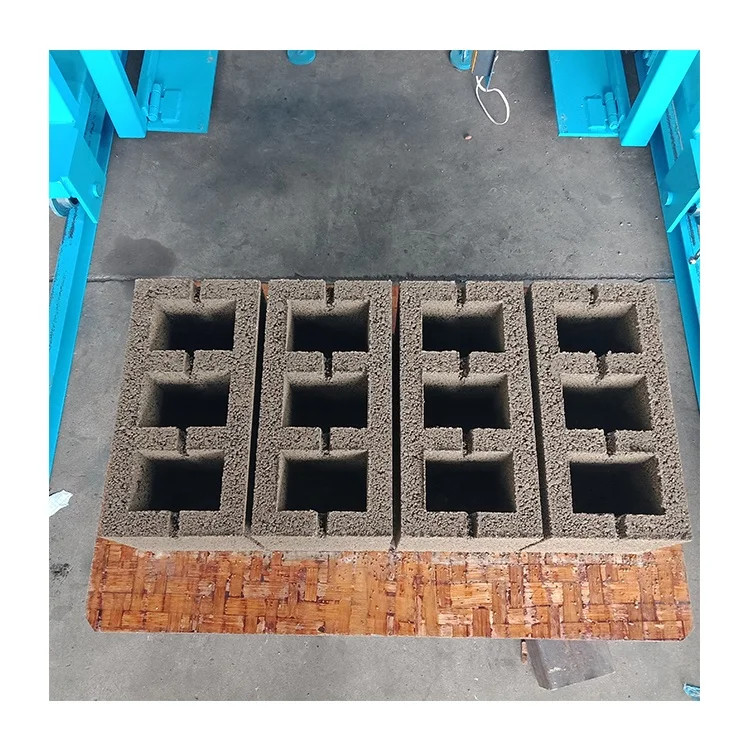
Hollow blocks, solid bricks, porous bricks, pavers, interlocking blocks, curbstones |
| Output Capacity |
580 pcs/hour based on 400×200×200 mm hollow block (4 pcs/mould) |
| Output Capacity |
1400 pcs/hour based on 240×115×90 mm porous brick (9 pcs/mould) |
| Output Capacity |
3300 pcs/hour based on 240×115×53 mm solid brick (21 pcs/mould) |
| Daily Output (8 hours) |
4,640 pcs (400×200×200 mm hollow block) |
| Daily Output (8 hours) |
11,200 pcs (240×115×90 mm porous brick) |
| Daily Output (8 hours) |
26,400 pcs (240×115×53 mm solid brick) |
Application Suitability
| Application |
Material or Output |
| Hollow block production for residential walls |
Crushed stone, sand, cement mix on 400×200×200 mm format |
| Solid brick runs for paving and partition walls |
Fly ash, gravel, slag blends on 240×115×53 mm format |
| Porous brick manufacturing for insulation applications |
Cement and lightweight aggregate on 240×115×90 mm format |
| Paver and interlocking block production for landscaping |
Colored concrete mixes with pigment additives |
| On-site block production for housing projects |
Locally sourced river sand, crushed stone, and cement |
| First plant setup by entrepreneurs |
Multi-format runs switching between hollow and solid blocks |
What "Pieces per Hour" Hides From the Buyer
Capacity is meaningless without the block format and mould behind it.
Many quotations state a single hourly figure that assumes a specific mould cavity count and block geometry. When the buyer switches to a different format — say, a solid brick instead of a hollow block — the output drops because the mould cavities differ and the cycle must adjust. I have seen semi-automatic block machine manufacturer proposals where the quoted capacity assumed a hollow block the buyer never intended to produce, leaving the plant running at a fraction of the promised volume [NEED_CITE: block output calculation assumptions across machine proposals]. The QTJ4-25 states each capacity figure with the exact block dimension, mould cavity count, and 25-second cycle time that produces it.

Where This Machine Sits in the Range
The QTJ4-25 occupies the mid-tier of the semi-automatic block machine lineup. It delivers mechanical demolding and platform vibration for buyers who need dependable daily volume without the capital outlay of a fully automatic line. The 850×480 mm pallet size suits curing yards served by standard forklifts, and the 16.58 kW total power draw stays within the capacity of a modest workshop supply.
From Workshop Output to Project-Scale Runs
A construction contractor producing blocks on a housing site needs a machine that moves with the project. The QTJ4-25 ships as a single unit at 3.5 T, requiring a 300 m² working area including raw material staging and curing space. Semi-automatic block machine manufacturer configurations at this tier let the operator handle pallets manually while the press manages vibration and demolding mechanically — balancing labour cost against output volume [NEED_CITE: semi-automatic versus manual block production labour allocation].
Vibration Force, Cycle Time, and Block Density
The 60 kN vibration force delivered through dual super motors under the platform, combined with one motor on the upper mould, determines how densely the concrete mix packs into the mould cavity. At 2800–4500 r/min, the vibration frequency can be adjusted to match the coarseness of the local aggregate. A higher frequency works better with fine sand, while a lower setting handles crushed stone with larger particle sizes. The four-column overlong guide design keeps the upper mould aligned through each 25-second cycle, preventing uneven compaction that causes weak edges. Chrome-plated surfaces resist the abrasive wear from cement and aggregate contact, extending the intervals between guide column replacement. The manganese steel frame absorbs the vibration loads without fatigue cracking over extended production runs.
The Cost of Skipping the Mix Design Check
When a machine arrives configured for a sand gradation the buyer cannot source locally, the vibration force either fails to compact the mix fully or segregates the fines from the coarse aggregate. Blocks emerge with surface voids or crumble at the edges during demolding. I once saw a plant in Peru where the river sand carried a high clay content that absorbed vibration energy, and the press could not push the mix into the mould corners. The operator shortened the cycle to compensate, which only reduced density further [NEED_CITE: effect of aggregate clay content on block compaction]. Matching the QTJ4-25 vibration frequency range to a sample of the buyer’s actual raw material prevents this failure before the machine leaves the factory.
Why Buyers Source This Range Here
Block machinery is the single focus of this manufacturer, so the press, mould, pallet, and handling equipment are specified as one matched system rather than assembled from separate suppliers. Configuration is set against the buyer’s actual mix design and target block format, not a catalogue default. Mould design covers the formats the buyer’s market actually sells, with custom drawings available for non-standard dimensions. Automation level is selectable — a buyer can start with the QTJ4-25 semi-automatic setup and add automatic pallet feeding or stacking later as volume grows. Installation support includes operator training on mould change procedures and cycle parameter adjustment for different block formats.
Documentation & Verification
- Line layout showing pallet flow and curing area sized to QTJ4-25 daily output
- Capacity calculation sheet stating block format assumed for each figure
- Mould drawing and format list matching quoted output to cavity count
- Voltage, frequency, and control language confirmation before production
- Factory test record with cycle time and block density from buyer’s mix sample
Installation, Commissioning & Support
- Foundation pad leveled for 3000×1800 mm footprint with drainage provision
- Dedicated circuit rated for 16.58 kW total power draw at confirmed voltage
- Mechanical demolding system calibrated on-site for buyer’s pallet thickness
- Vibration frequency tuned to local aggregate sample during first production run
- Mould change procedure demonstrated across all formats in buyer’s product list
- Wear parts inventory covering guide column bushings and vibration motor mounts
What to Include With Your Inquiry
Send the target block format dimensions, the daily output you need for each format, and a sample or analysis of your local sand and aggregate. Confirm your site voltage, frequency, and the language you need on the control display. If you already have pallets or a curing rack system, share the pallet dimensions and forklift capacity so the 850×480 mm pallet specification can be verified against your existing equipment.
Frequently Asked Questions
Q: How is daily output calculated and which block format does each capacity figure assume?
A: Each capacity figure is tied to a specific block dimension and mould cavity count. The 580 pieces per hour figure assumes a 400×200×200 mm hollow block with four cavities per mould. Daily output multiplies that rate by an eight-hour shift. When you switch to a different format, the cycle time and cavity count change, so the output shifts accordingly. We provide a capacity table with every quotation showing each format you plan to produce.
Q: What voltage and frequency configurations are available, and is the control language confirmed?
A: The QTJ4-25 motor and control panel can be configured to match the voltage and frequency standard at your site. Before production begins, we confirm the exact supply specification and the language for the control display labels. This prevents commissioning delays caused by incompatible electrical supply or unreadable panel markings when the machine arrives.
Q: How does the QTJ4-25 compare to other models in the semi-automatic range?
A: The QTJ4-25 sits between smaller workshop machines and higher-output semi-automatic presses in terms of pallet size, vibration force, and daily capacity. Buyers choosing this model typically need consistent multi-format output without the investment of a fully automatic stacking and cubing line. The range allows you to start here and add automation stages later if production volume increases.
Q: What is the mould change process and how long does it take?
A: The QTJ4-25 uses a mechanical mould mounting system with the four-column guide design. The upper and lower mould halves are exchanged together to maintain alignment. Operators trained during commissioning can complete a format change within a single shift break. The exact time depends on the mould weight and whether the crane or hoist is positioned at the press.
Q: What automation upgrade path exists if volume grows beyond semi-automatic?
A: The QTJ4-25 mechanical press can be integrated with automatic pallet feeding, stacking, and cubing systems added as separate stations. The upgrade keeps the existing press and moulds in service while removing manual pallet handling from the cycle. This path lets you scale output as market demand grows without replacing the core machine.

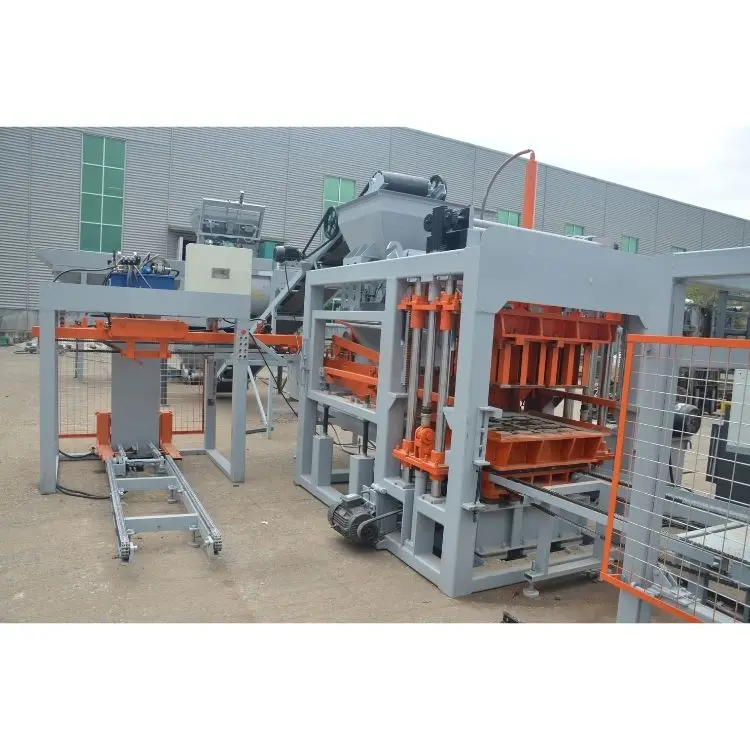 Semi automatic block