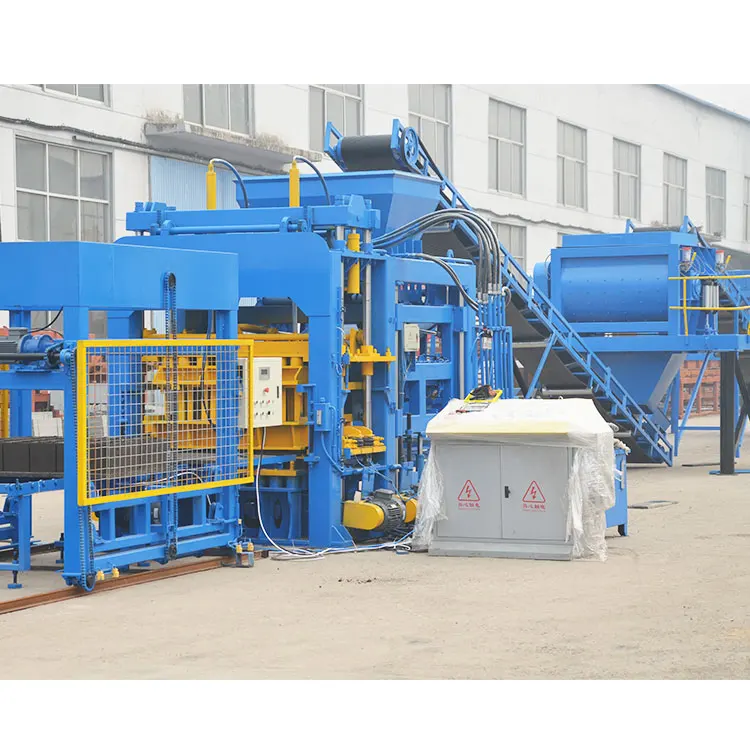
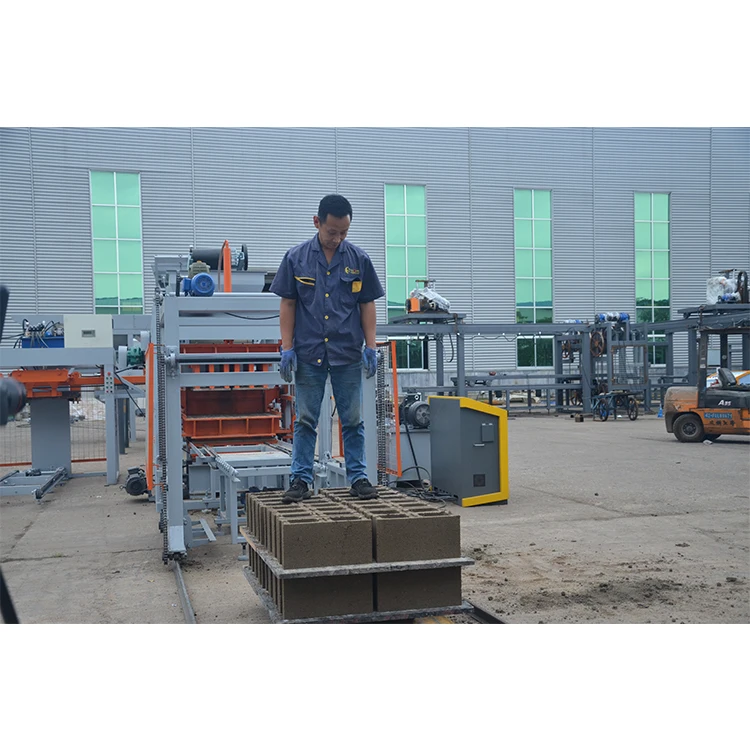
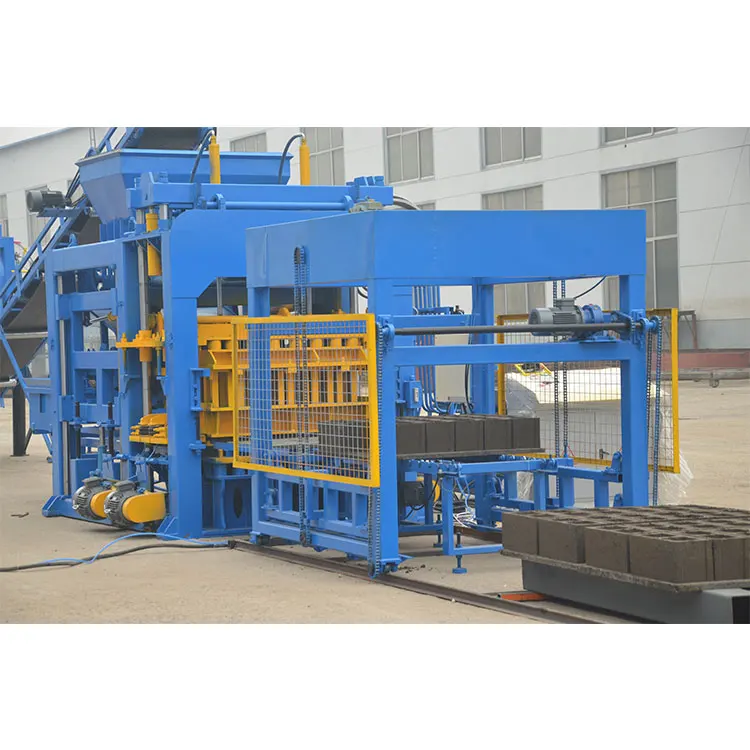
Compact Hydraulic Pressing — the LY4-10 delivers 25–32 MPa hydraulic force within a 2260 × 1500 × 2380 mm footprint, placing it squarely in the entry-level automatic tier for interlocking brick production.
Technical Specifications
| Parameter |
Value |
| Model |
LY4-10 |
| Product Type |
Clay Interlocking Brick Making Machine |
| Rated Power |
11 kW |
| Voltage & Frequency |
Configured to local supply (basis to be confirmed) |
| Hydraulic Pressure |
25–32 MPa |
| Moulding Cycle |
7–10 seconds (basis not stated in source — confirm block format, material and thickness) |
| Output per Cycle |
4 pcs (basis not stated in source — confirm block format) |
| Mould Format |
Interlocking brick |
| Automation Level |
Automatic material feeding, mould pressing and mould lifting |
| Overall Dimensions |
2260 × 1500 × 2380 mm |
| Net Weight |
1500 kg |
| Assembly State |
Fully assembled |
| Warranty |
1 year (excluding wearing parts) |
Application Suitability
| Application |
Material or Output |
| Interlocking clay brick production |
Local clay blended with small cement percentage, compressed under hydraulic pressure |
| Ecological compressed earth block (CEB) production |
On-site soil with moisture and cement ratio adjusted to local aggregate |
| Cement-clay interlocking brick manufacturing |
Crusher dust, laterite or sandy clay with cement binder |
| Small-scale brick business startups |
Low capital entry, single-operator workshop production |
Why "4 Bricks Every 7 Seconds" Is Not the Full Story
Cycle time only translates to daily output once block format, material mix and curing logistics are locked in.
Many clay interlocking brick making machine for sale quotations quote a moulding cycle without stating which brick size or thickness that figure assumes. I have watched contractors in Peru and Colombia receive machines rated for rapid cycles, only to find that the actual interlocking profile their market demands adds seconds to each press — and that pallet handling between the press and the curing area creates a bottleneck the machine itself never warned about. The LY4-10 presses four interlocking bricks per cycle within a 7–10 second window, but those figures assume a specific mould and material consistency that must be confirmed before the machine ships [NEED_CITE: block format assumptions in capacity quotations].

Where the LY4-10 Fits on the Shiyue Range
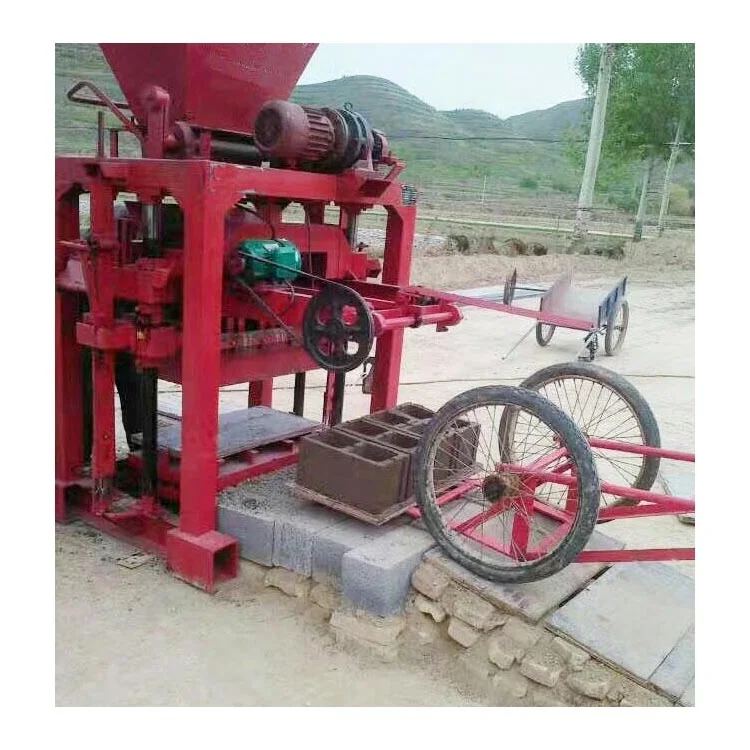
The Shiyue machine lineup spans mobile egg-laying units at the entry level, semi-automatic presses for workshop-scale output, and high-capacity fully automatic lines with pallet return systems and cubing stations. The LY4-10 occupies the compact automatic tier — it handles material feeding, pressing and mould lifting without operator intervention, yet it does not include the pallet circulation and stacking automation found on the higher tiers. For a buyer setting up a first interlocking brick plant or adding an ecological brick format to an existing product range, this tier removes the heaviest manual steps while keeping the capital outlay and workshop footprint manageable.
Matching the Machine to Your Actual Brick Format
A clay interlocking brick making machine for sale only delivers its quoted performance when the mould matches what your market actually buys. Interlocking profiles vary widely across Latin America and Africa — some regions prefer a two-hole lock pattern, others a tongue-and-groove profile with different wall thicknesses. The LY4-10 ships with an interlocking brick mould, and the hydraulic pressure range of 25–32 MPa is sufficient to compress a range of clay-cement mixes into a dense, load-bearing unit. The critical step is confirming your target brick dimensions, the local clay composition and the cement percentage before the mould goes into production [NEED_CITE: interlocking brick format standards by region].
Reading the Specs That Actually Matter
Hydraulic pressure in the 25–32 MPa range directly influences brick density and compressive strength — lower pressure leaves the earth block porous and fragile, while pressure matched to the clay-cement ratio produces a unit that can be laid without mortar. The 11 kW rated power is typical for a single-press machine at this tier; it means the LY4-10 can run on a standard three-phase industrial supply in most export markets, but voltage and frequency must be confirmed against the buyer’s local grid before production begins. The 1500 kg net weight and compact overall dimensions mean the machine can be positioned inside a modest workshop without a specialised foundation, though a level concrete floor with drainage is necessary for the hydraulic system and curing runoff.
What Happens When Configuration Gets Skipped
I have seen machines arrive in Ecuador with 380V motors wired for 50 Hz, sitting idle in a 60 Hz grid while an electrician tries to source a compatible variable-frequency drive locally. Control panel labels printed only in Chinese have left operators guessing at fault codes during the first critical weeks of production. When pallet size is chosen without checking the curing racks and forklift already on-site, the bricks end up stacked by hand on whatever timber is available — and the "automatic" part of the machine becomes the only automatic part of an otherwise manual process [NEED_CITE: voltage and frequency mismatch in exported machinery].
Why Buyers Source This Tier from Shiyue
Block machinery is the single focus here, so the LY4-10 is specified as a matched system — machine, mould, pallet and handling — rather than assembled from unrelated suppliers. The configuration is set against the buyer’s actual mix design and target block format, not pulled from a catalogue default. Mould design covers the interlocking profile the buyer’s market sells, with custom drawings available for non-standard brick geometries. Voltage, frequency and PLC display language are confirmed before production begins, so the machine arrives ready to run. A spare wearing-parts package is prepared based on what is — and is not — available in the buyer’s local supply chain.
Documentation & Verification
- Line layout showing press position, curing area flow and pallet return path for the LY4-10
- Machine specification sheet with hydraulic pressure range, cycle time and mould format confirmed
- Mould drawing and interlocking brick dimension list matching the buyer’s target market
- Voltage, frequency and control panel language confirmation signed off before production
- Factory test record on the buyer’s clay-cement mix before dispatch
Installation, Commissioning & Support
- Level concrete pad sized to the 2260 × 1500 mm footprint with drainage for curing runoff
- Dedicated three-phase circuit matched to the confirmed local voltage and 11 kW load
- Machine ships fully assembled; positioning requires a forklift rated above 1500 kg
- Hydraulic pressure calibrated on-site to match the buyer’s clay-cement mix ratio
- Operator training covers mould change, daily hydraulic seal inspection and safety interlocks
- Wearing-parts package includes hydraulic seals and mould wear plates sized to local availability
What to Send with Your Inquiry
Tell us the exact interlocking brick profile and dimensions your market requires, the local clay type and any cement percentage you are currently testing. Include your workshop length, width and available headroom, along with the local voltage and frequency. If you have curing racks or a forklift already on-site, share the pallet dimensions they accept so the pallet specification can be matched before the machine is built.
Frequently Asked Questions
Q: Where does the LY4-10 sit compared to semi-automatic and high-capacity automatic tiers?
A: The LY4-10 is in the compact automatic tier — it automates material feeding, pressing and mould lifting but does not include the pallet circulation, automatic stacking or cubing systems found on higher tiers. It suits buyers who need consistent interlocking brick output from a small workshop footprint without investing in a full high-capacity line. Semi-automatic machines at the tier below require manual pallet handling and mould operation.
Q: How do I verify the real daily output for my specific brick format?
A: Request a capacity calculation that names the exact interlocking brick dimensions and material mix used. The LY4-10 moulding cycle of 7–10 seconds and four-brick output per cycle are reference points — actual daily throughput depends on pallet handling speed, curing area capacity and the cycle time your specific brick profile requires.
Q: Can the voltage and control language be set for my country before shipment?
A: Yes. Voltage and frequency are configured to the buyer’s local grid, and the control panel display language is confirmed before production. This is part of the standard sales process to prevent commissioning delays when the clay interlocking brick making machine for sale arrives on-site.
Q: What plant footprint and supporting equipment does this machine require?
A: The LY4-10 itself occupies 2260 × 1500 × 2380 mm, but total floor space must include raw material storage, a mixing station, curing racks and pallet return area. A level concrete floor, three-phase power and basic weather protection are the minimum site requirements for this tier.
Q: Can the LY4-10 produce brick types other than interlocking?
A: The standard mould supplied is for interlocking bricks. Other formats such as solid or paving blocks require separate moulds and may need different hydraulic pressure settings. Confirm your full product range during the inquiry so the machine can be evaluated for format flexibility.

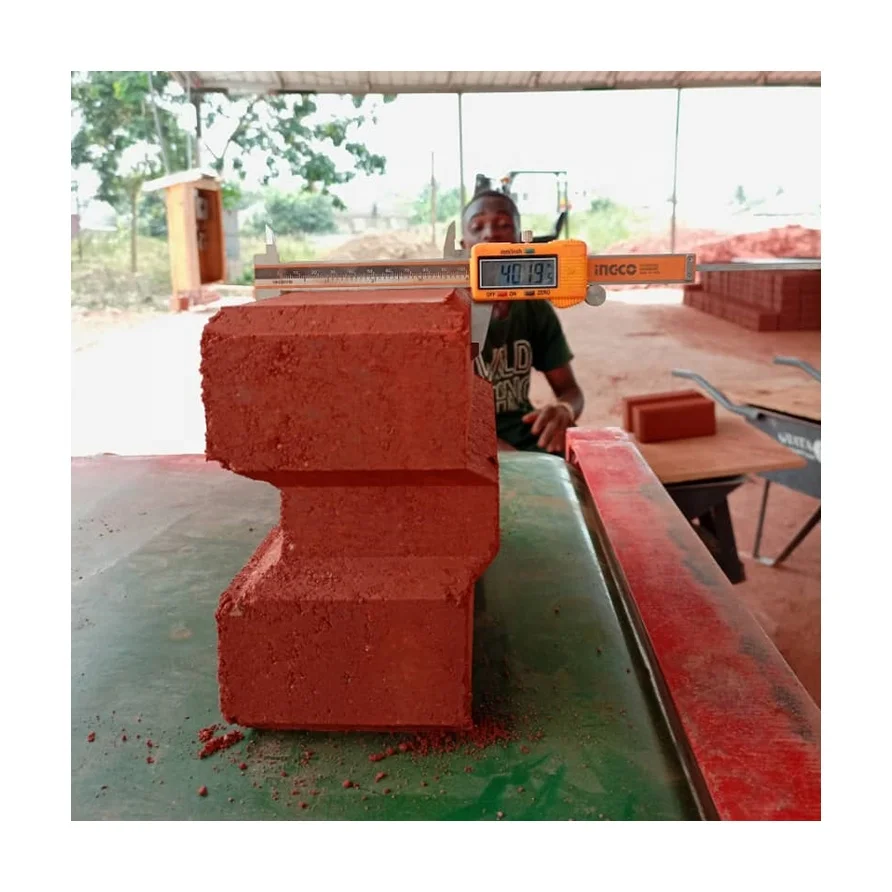
 Semi automatic block