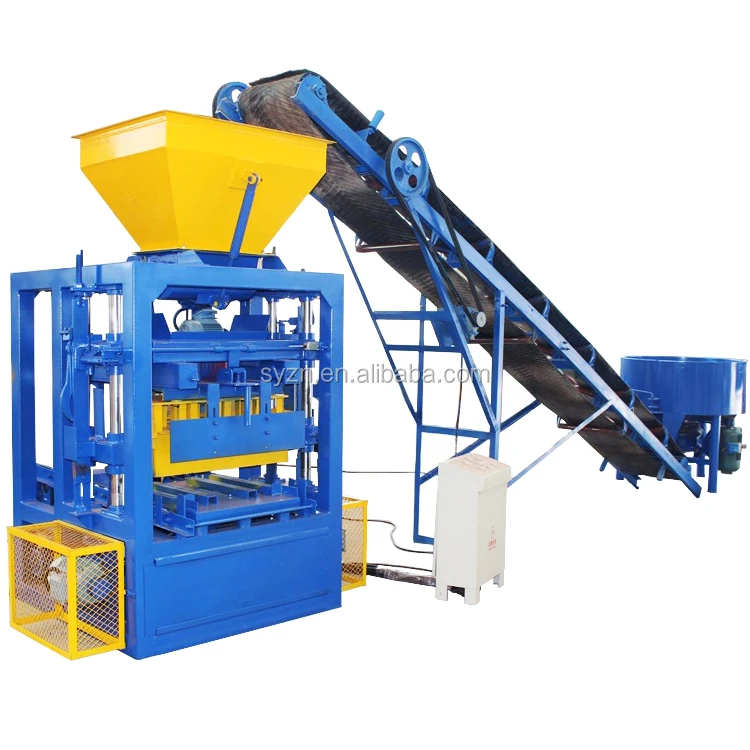
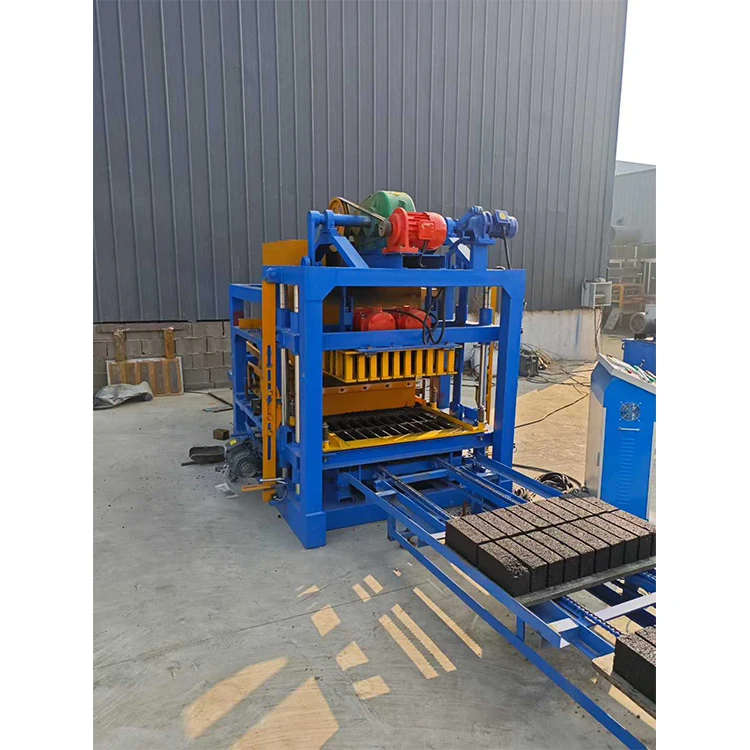
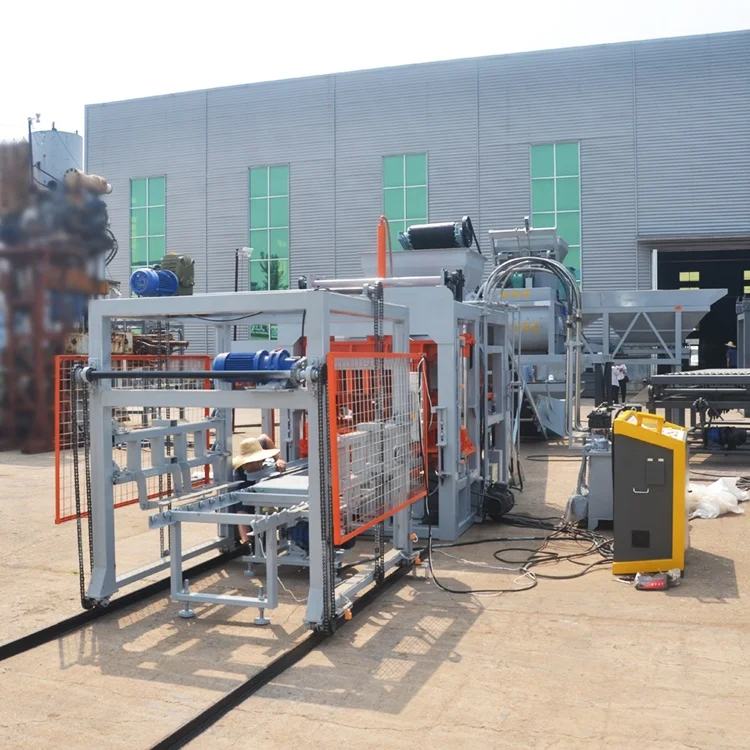
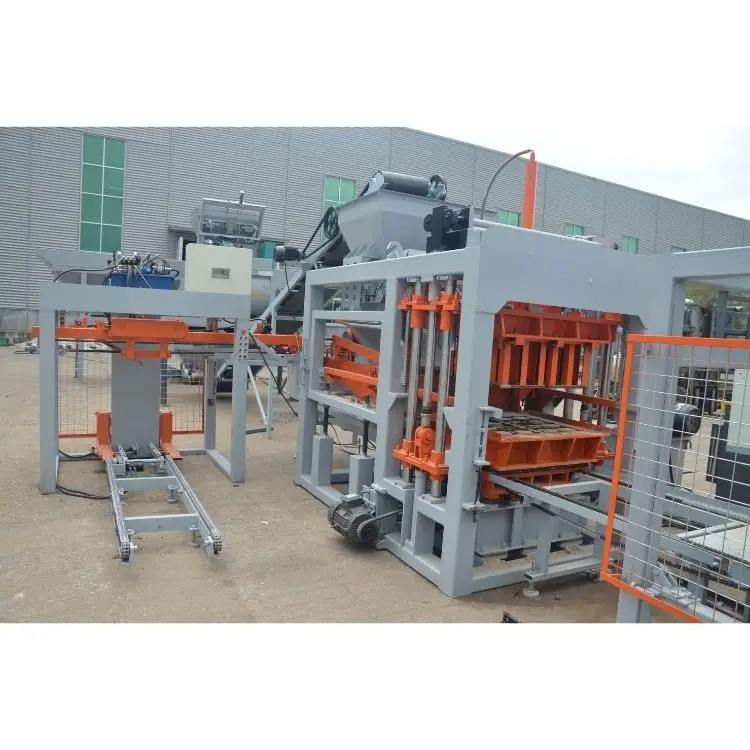
Positioned Between Entry and High-Capacity — The QTJ4-25 occupies the automatic tier where PLC control and stacking meet medium-volume demand, specified around your block format rather than a generic catalogue figure.
Technical Specifications
| Parameter |
Value |
| Model |
QTJ4-25 |
| Product Type |
Automatic Concrete Block Making Machine |
| Control System |
PLC controlled fully automatic |
| Vibration System |
Vibration motor with large vibration box |
| Machine Power |
16.58 kW |
| Motor Brand |
Siemens motor |
| Molding Cycle |
25 seconds |
| Output Capacity |
4600 pcs / 8 hours (basis not stated in source — confirm block format / material / thickness) |
| Machine Weight |
5000 kg |
| Overall Dimensions |
6400 × 1500 × 2700 mm |
| Pallet Size |
850 × 480 mm |
| Voltage |
Configured to buyer’s local voltage |
| Raw Materials |
Concrete, sand, cement, fly ash, crushed stone, lime, water |
| Automation Features |
Automatic pallet feeding, automatic material feeding and scraping, automatic block stacker |
| Frame |
Thick steel construction |
| Hydraulic Pressure |
Not applicable (non-hydraulic design) |
| Block Formats |
Hollow blocks, solid blocks/bricks, paver stone bricks |
| Warranty |
One year with free parts supply |
| Standards |
CE declaration where applicable |
Application Suitability
| Application |
Material or Output |
| Hollow block production for building walls |
Crushed stone, sand, cement, fly ash blends |
| Solid brick manufacturing for load-bearing structures |
Concrete and sand-cement mixes |
| Paver stone brick production for walkways and yards |
Dense aggregate and cement combinations |
| Medium-sized block factory mass production |
Continuous shift operation with automatic stacking |
| On-site block production for construction projects |
Locally sourced aggregate and cement |
What the Automatic Concrete Block Making Machine Manufacturer Should Confirm Before Shipping
Voltage, frequency, and PLC display language must be locked in before the machine leaves the factory, not after it arrives.
I remember a project in West Africa where an automatic block line sat idle for weeks because the motors were wired for 380V when the site ran on 415V/50Hz. The contractor lost an entire commissioning window while replacement contactors and motor rewinds were arranged locally. Since that job, every automatic concrete block making machine manufacturer worth working with will confirm electrical specifications and control language during the order stage, not assume a default. [NEED_CITE: voltage and frequency standards by export market]
The QTJ4-25 sits in the automatic tier of our block machine range. It fills the space between semi-automatic models where pallets are handled by hand and high-capacity hydraulic lines that require substantial investment and plant infrastructure. Buyers stepping up from manual operations find this tier removes the heaviest labor — pallet feeding, material distribution, and block stacking all happen without operator intervention at each station.
Where the QTJ4-25 Sits in the Machine Range
This automatic concrete block making machine occupies the middle ground for plants scaling production without committing to a full hydraulic press line. The PLC controls the 25-second molding cycle, the vibration motor compacts the mix inside the mould, and the automatic stacker collects finished blocks — meaning the operator oversees rather than manually handles every stage. For a first-time block plant entrepreneur or a contractor adding format capability, this tier provides the automation that reduces labor headcount while keeping the investment and plant footprint manageable.
Matching the Machine to the Block You Actually Sell
The 850 × 480 mm pallet determines which block formats fit and how many pieces come off per cycle. A hollow block takes up more pallet area than a solid brick, so the number of pieces per cycle changes with every mould swap. Before quoting output, the block format and mix design need to be stated — otherwise the daily production figure means very little on the factory floor. [NEED_CITE: block format and pallet size relationship in concrete block production]
Reading the Specifications That Matter
The 16.58 kW total machine power drives the vibration motor, material feeder, scraper, and pallet feed system simultaneously. Siemens motors are specified because replacement units are available through local distributors in most markets, avoiding long waits when a motor eventually needs service. The large vibration box design distributes compaction force across the pallet area, which matters for block density consistency — uneven vibration produces blocks that are harder on one side and crumble on the other. The thick steel frame absorbs vibration without flexing, keeping the mould aligned over hundreds of thousands of cycles. Pallet size at 850 × 480 mm must match your curing rack dimensions and the forklift tine spacing already on site; ordering pallets that do not fit your existing racks creates a bottleneck before the first block is even produced.

The Cost of Skipping the Configuration Conversation
Buyers who select a machine based on a single output number without specifying block format, local aggregate, and electrical supply often discover the real cost after delivery. A pallet size that does not match the curing area forces a complete reconfiguration of the handling zone. Voltage mismatches stall commissioning while transformers or motor replacements are sourced. And a PLC display in a language the operators cannot read turns a fully automatic machine into one that requires constant supervision. [NEED_CITE: CE machinery directive requirements for industrial equipment]
Why Source This Machine Here
Block machinery is our single focus, so the QTJ4-25 arrives as a matched system — machine, mould, pallet, and stacker specified together rather than assembled from separate vendors. The configuration is set against your actual mix design and target block format, not a catalogue default. Mould design covers the formats your market sells, with custom drawings available. The automation level is selectable, so you can start with the automatic stacker and add upstream batching later. Installation support includes on-site commissioning and operator training.
Documentation & Verification
- Line layout with capacity calculation stating the block format assumed
- Voltage, frequency, and PLC language confirmation sheet before dispatch
- Factory test record run on your specified block format and pallet size
- Mould drawing and format list matching your market requirements
- Hydraulic and electrical schematic for local maintenance reference
Installation, Commissioning & Support
- 6400 × 1500 mm footprint requires a level concrete slab with anchor provisions
- Power supply must match confirmed voltage and frequency with a dedicated circuit for the 16.58 kW load
- Machine ships with removable stacker and hopper for container loading and reassembly on site
- Commissioning includes PLC parameter setup for your block format and molding cycle
- Operator training covers mould change procedure, pallet loading, and daily maintenance checks
- Wear parts list with mould and vibration components identified for first reorder
Starting the Specification Conversation
To move from general inquiry to a firm proposal, we need your target block format and dimensions, expected daily output, and the raw materials available locally. Your site voltage and frequency must be confirmed so the motor and control panel are built correctly. If you have existing pallets or curing racks, their dimensions tell us whether the 850 × 480 mm pallet size fits your current handling setup.
Frequently Asked Questions
Q: What block format is the 4600 pcs / 8 hours capacity based on, and what is realistic output for my target block?
A: That figure requires confirmation of the specific block format, wall thickness, and mix used during testing. Hollow blocks occupy more pallet area than solid bricks, so cycle output changes with each mould. We calculate daily capacity against your stated format and provide the number in the proposal before you commit.
Q: How does the QTJ4-25 automatic tier compare to semi-automatic and high-capacity hydraulic lines?
A: Semi-automatic models require manual pallet handling and stacking, keeping investment low but demanding more labor. The QTJ4-25 adds PLC control, automatic pallet feed, and a block stacker. High-capacity hydraulic lines offer greater compaction force and shorter cycles but require larger plant infrastructure and higher capital outlay.
Q: Is the voltage and PLC display language confirmed before shipment?
A: Yes. We confirm your local voltage, frequency, and preferred PLC display language during the order process. This information is locked into the electrical build so commissioning proceeds without delays caused by mismatched motors or unreadable control screens.
Q: What pallet size does this machine require, and will it work with my existing equipment?
A: The QTJ4-25 uses 850 × 480 mm pallets. Before shipment, we check this against your curing rack dimensions and forklift tine spacing. If your existing handling equipment uses a different pallet size, we discuss whether adjusting the pallet specification or modifying your racks is the better path.
Q: Can I start with this automatic machine and expand to a higher-capacity line later?
A: The automation level is selectable and the system supports upstream additions like automatic batching and more advanced cubing. Many buyers begin with the QTJ4-25, establish their market, and then add capacity or format range as demand grows.

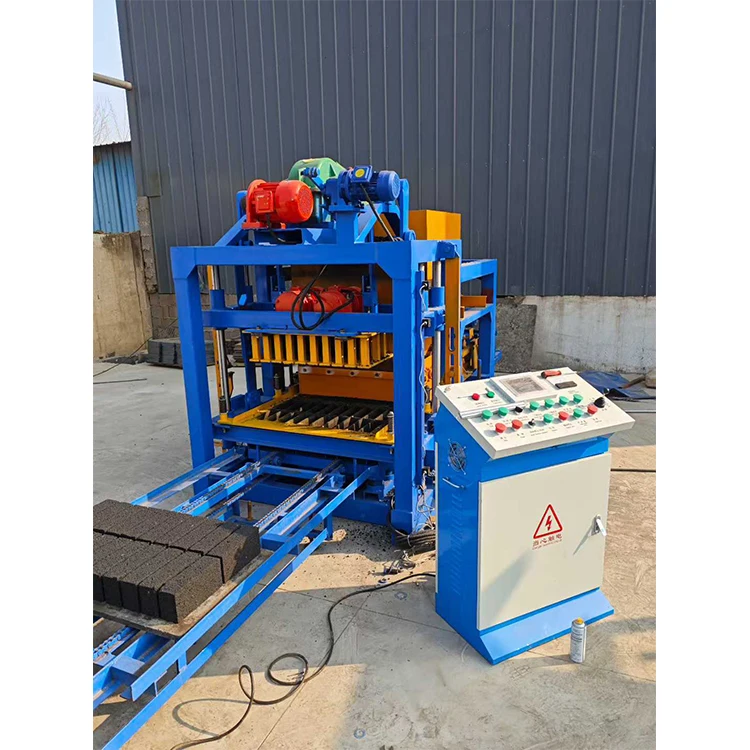
 Automatic block machine