Configuration matched to your actual mix — The QT6-15 line is specified against your local aggregate and target block format, not pulled from a catalogue default.
Technical Specifications
| Parameter |
Value |
| Model |
QT6-15 |
| Product Type |
Automatic Concrete Block Making Machine |
| Control System |
PLC controller |
| Automation Level |
Fully automatic, unattended operation capable |
| Line Composition |
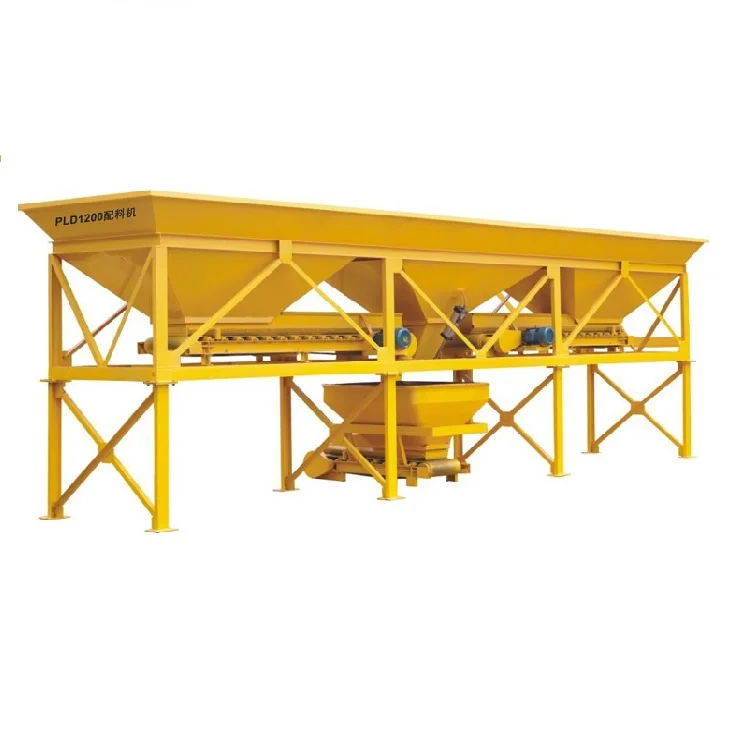
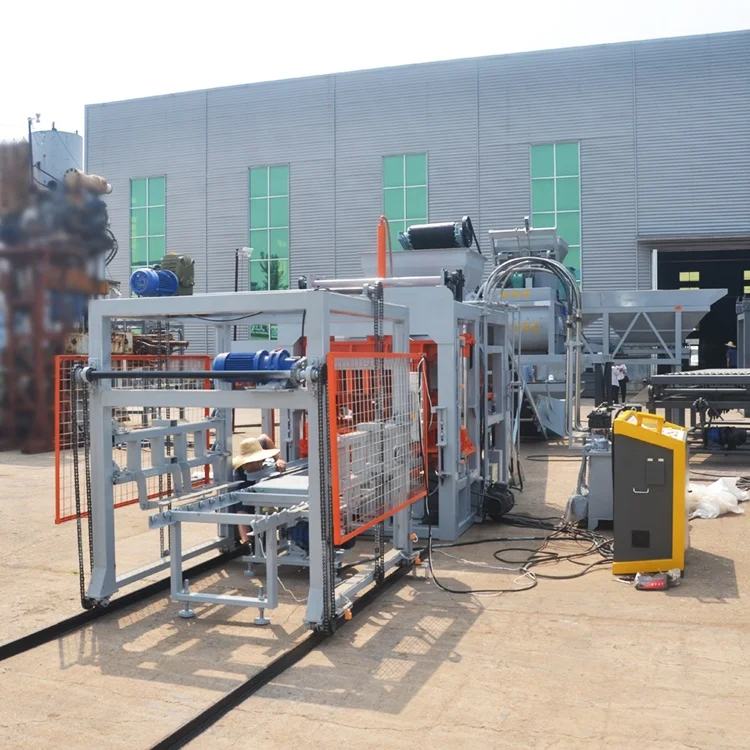
Batching machine, mixer, cement silo, conveyor, block forming machine, stacker, PLC controller |
| Output Capacity |
High output (basis not stated in source — confirm block format / material / thickness) |
| Mould Compatibility |
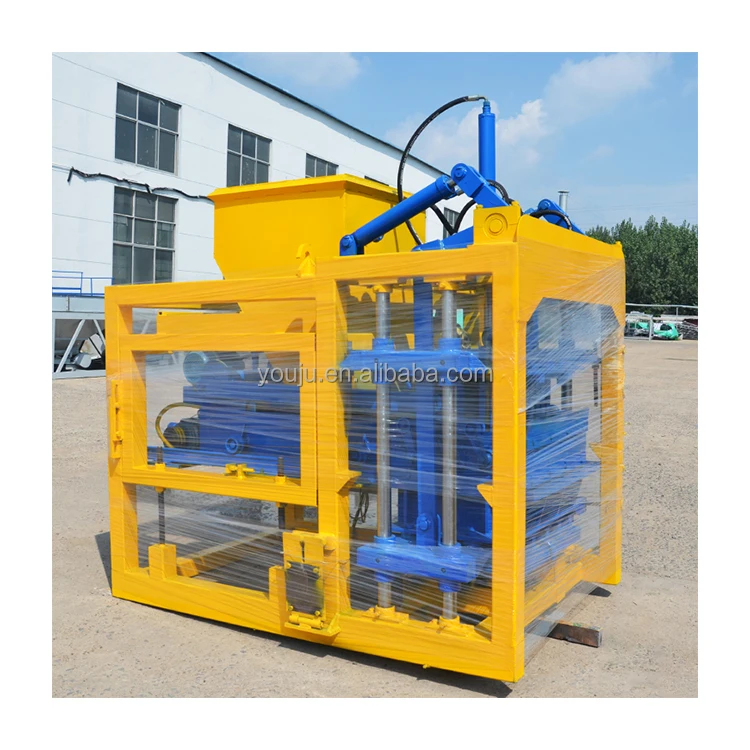
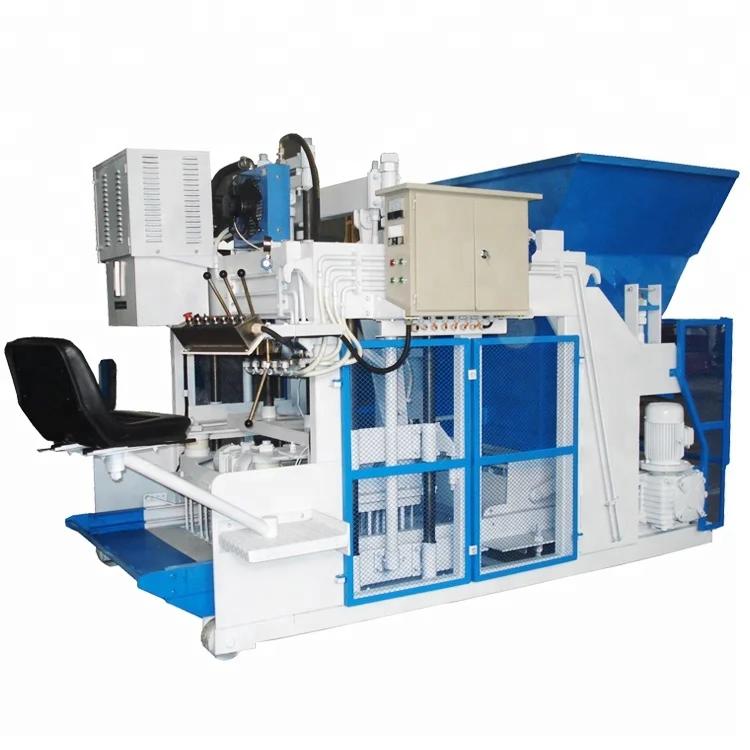
Paving blocks, hollow blocks |
| Pallet Handling |
Forklift truck transport for blocks and empty plates after forming |
| Maintenance Requirement |
Simple maintenance |
| Investment Level |
Low production cost, less investment |
| Hydraulic Pressure |
(source value not stated — verify against manufacturer catalog) |
| Vibration Force |
(source value not stated — verify against manufacturer catalog) |
| Pallet Size |
(source value not stated — verify against manufacturer catalog) |
| Cycle Time per Format |
(source value not stated — verify against manufacturer catalog) |
| Rated Power |
(source value not stated — verify against manufacturer catalog) |
| Voltage & Frequency |
(source value not stated — confirm target market requirements) |
| Overall Dimensions |
(source value not stated — verify against manufacturer catalog) |
| Net Weight |
(source value not stated — verify against manufacturer catalog) |
| Certification |
(not stated in source — confirm CE or other certifications) |
Application Suitability
| Application |
Material or Output |
| Hollow block production plants |
Crushed stone, cement, sand, and water mixes for load-bearing and partition hollow blocks |
| Paving block manufacturing |
High-density aggregate and cement blends for interlocking and rectangular paving formats |
| On-site contractor block production |
Local aggregate sourced near project sites for immediate block use in housing and commercial builds |
| Regional building material distribution |
Automated pallet and stacking output for distributor warehousing and resale |
What "High Output" Actually Means for the QT6-15 Automatic Block Machine Manufacturer
Output figures are meaningless without the block format they assume.
Every quotation sheet I have reviewed in this industry quotes a peak cycle number. Few bother to state whether that number was measured on a standard 400×200×200mm hollow block or a thin paving block that cycles faster. A QT6-15 automatic block machine manufacturer quoting capacity without format context leaves the buyer guessing what daily production will actually look like once the line is running. I have seen buyers commit to a machine based on a headline number, only to discover during commissioning that their primary product — a thick interlocking paver, for example — cuts that figure substantially [NEED_CITE: capacity calculation standards for concrete block presses]. The honest approach is to ask for a line layout that states output per format, so you know what to expect before the container is loaded.

Positioning the QT6-15 on the Automatic Tier Ladder
The QT6-15 sits in the fully automatic tier of the Shiyue block machine range. It is designed for buyers moving beyond semi-automatic setups where manual pallet handling limits daily throughput. The line integrates batching, mixing, forming, and stacking as a single specified system, removing the common problem of stations from different suppliers failing to communicate. For a buyer surveying options, the QT6-15 automatic block machine manufacturer offering represents the entry point into unattended operation without stepping into the high-capacity tier that demands a larger plant footprint and higher capital outlay.
When the Fully Automatic Tier Makes Sense
Buyers producing both hollow blocks and paving blocks in the same facility gain the most from the QT6-15 configuration. The PLC controller manages cycle sequences across formats, reducing operator dependency during mould changes and production changeovers. The automatic stacker handles formed blocks, freeing labour from repetitive pallet transport. Where a semi-automatic line requires constant forklift intervention between press output and curing area, the QT6-15 line extends that automation through to the stacking station [NEED_CITE: automation level impact on labour allocation in block plants]. This matters most in markets where skilled operators are scarce and production consistency across shifts is a priority.
Reading the Specifications That Matter
Hydraulic pressure and vibration force together determine block density and strength. A QT6-15 configured with insufficient vibration for the buyer’s aggregate blend will produce blocks that pass visual inspection but fail compressive strength tests after curing. Pallet size dictates how many blocks are formed per cycle and must align with the curing rack dimensions and forklift capacity already on site. The PLC controller language setting is a small detail that causes disproportionate delays if not confirmed before shipment — commissioning stalls when the operator cannot read the fault codes on the display screen. Cycle time varies by format, so a hollow block and a paving block will not share the same cycle duration even on the same press. Mould change time determines how quickly the line switches between these formats, directly affecting how many product types a plant can realistically offer in a single shift.
The Hidden Cost of Skipping Configuration Details
A buyer who confirms price before confirming voltage often discovers during installation that the motor winding does not match local supply frequency. The QT6-15 must be wound and tested for the destination market’s electrical standard — rewinding on site adds weeks of downtime and costs that erase any negotiating advantage gained on the purchase price. Similarly, a pallet material chosen without considering local humidity leads to warping within months, throwing off block dimensions and forcing premature pallet replacement across the entire inventory [NEED_CITE: pallet material degradation in tropical curing environments]. These are not warranty issues. They are configuration oversights that surface only after the line is installed and running.
Why Source This Line Through Shiyue
Block machinery is the single focus here, which means the press, mould, pallet, and handling equipment are specified as one matched system rather than assembled from separate suppliers. The QT6-15 configuration is set against the buyer’s actual mix design and local aggregate, not a catalogue default that assumes materials unavailable at the job site. Mould design covers the formats the buyer’s market actually sells, including custom drawings when standard moulds do not match local building codes. Automation level is selectable, so a buyer can start with the QT6-15 semi-automatic and plan an upgrade path. Installation includes operator training so the crew running the line on day one understands the PLC interface and mould change procedure.
Documentation & Verification
- Line layout and capacity calculation stating the block format assumed for the QT6-15
- Machine specification sheet covering hydraulic pressure, vibration force, and pallet size
- Mould drawing and format list showing every block type with cycle time per format
- Voltage, frequency, and PLC display language confirmation before shipment
- Factory test record demonstrating the QT6-15 running your target block format
- Operation and maintenance manual with wear parts and mould replacement schedule
Installation, Commissioning & Support
- Foundation plan matched to QT6-15 overall dimensions and vibration isolation requirements
- Dedicated electrical circuit sized to the QT6-15 rated power and local voltage standard
- Machine dismantled for container loading with reassembly sequence documented
- PLC controller parameters set to target block format during on-site commissioning
- Operator training covering mould change procedure, fault code reading, and daily startup checks
- Wear parts and hydraulic seal inventory specified for the first replacement cycle
What to Include in Your Inquiry
Provide the specific block formats you intend to produce, including dimensions and target compressive strength. State your local aggregate type and cement source so the mix design can be matched to the QT6-15 vibration and pressure settings. Confirm your site’s available floor area, ceiling height, and existing forklift capacity so the line layout and pallet size are configured correctly. Include your local voltage and frequency, along with the preferred PLC display language, to avoid commissioning delays after the QT6-15 automatic block machine manufacturer ships the line.
Frequently Asked Questions
Q: What output can the QT6-15 deliver, and for which block format is that figure calculated?
A: Output capacity depends on the block format, wall thickness, and mix design used during production. A realistic figure requires specifying whether the calculation assumes hollow blocks, paving blocks, or another format. Request a capacity calculation sheet that states the exact block dimensions and cycle time behind the quoted number so daily production expectations match reality from the first shift.
Q: Where does the QT6-15 sit between semi-automatic and high-capacity tiers?
A: The QT6-15 occupies the fully automatic tier, offering PLC-controlled unattended operation without the plant footprint of high-capacity lines. Buyers currently running semi-automatic presses who want to eliminate manual pallet handling are the typical candidates. Those requiring output volumes beyond this tier should evaluate whether the larger automatic models better match their daily production targets and available curing space.
Q: What plant footprint does the QT6-15 line require?
A: The complete line includes batching, mixing, forming, stacking, and curing areas. Floor area depends on the pallet size selected and the curing rack configuration needed to meet your daily output. Provide your available building dimensions, including ceiling height and column spacing, so the line layout can be drawn to fit your existing facility without requiring structural modifications before installation.
Q: Which voltage and PLC language options are available for the QT6-15 before shipment?
A: Voltage and frequency must match the destination country’s electrical supply standard. The PLC display language should be confirmed during the order stage so operators can read fault codes and parameter settings in their working language. Both items are confirmed before production begins and verified again during the factory test to prevent delays once the line arrives on site.
Q: How does the QT6-15 compare to other Shiyue automatic models in cycle time and pallet size?
A: Cycle time and pallet size vary across the Shiyue automatic range depending on the block format and output tier. The QT6-15 uses a pallet size matched to its press capacity and mould configuration. Buyers comparing models should request a side-by-side specification sheet listing cycle time per format, pallet dimensions, and stacker compatibility for each model under consideration.

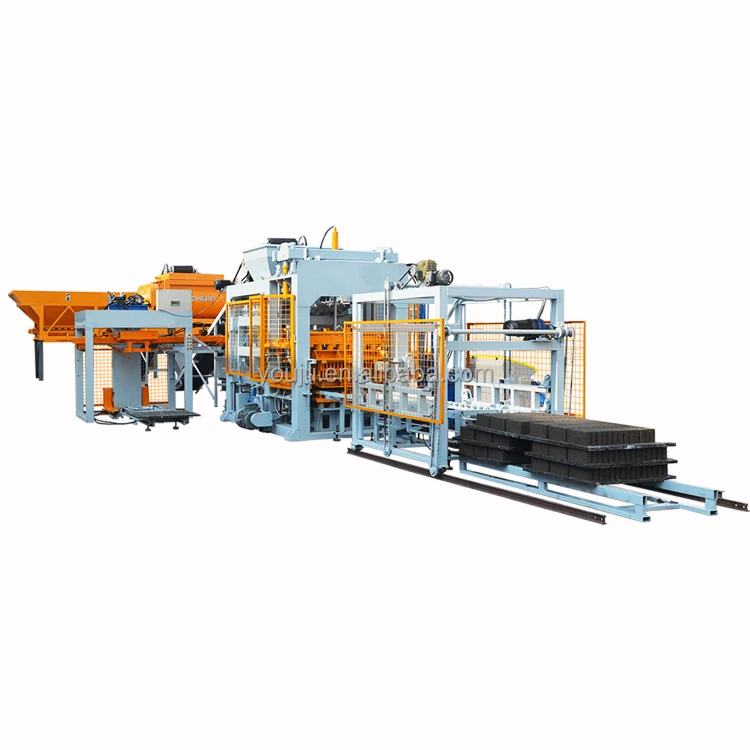 Automatic block machine