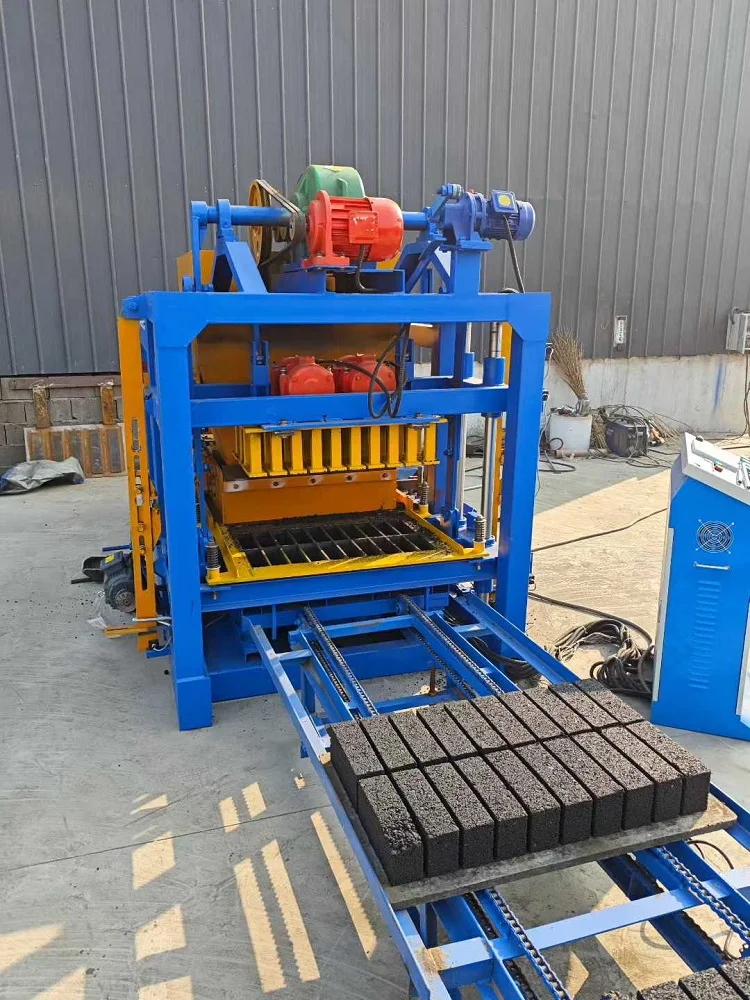
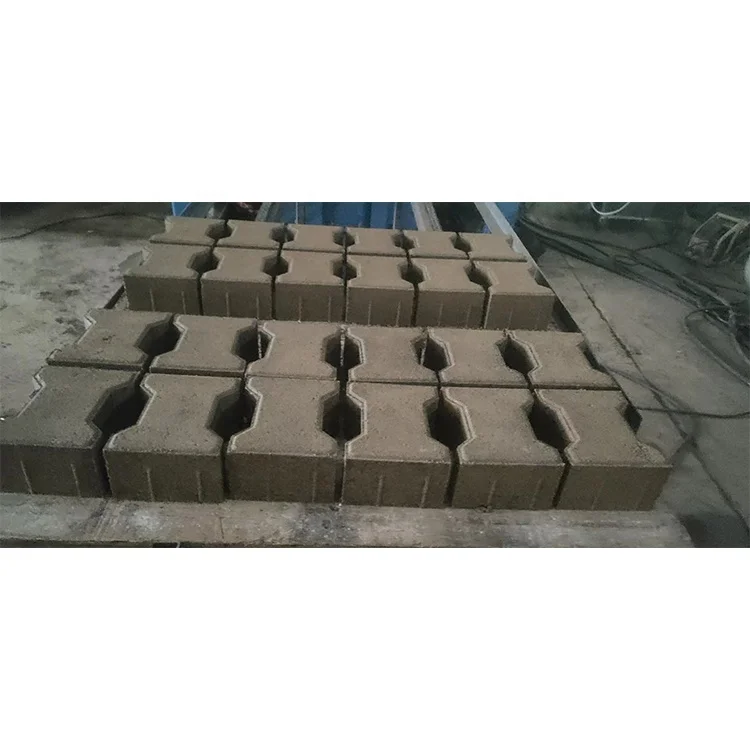
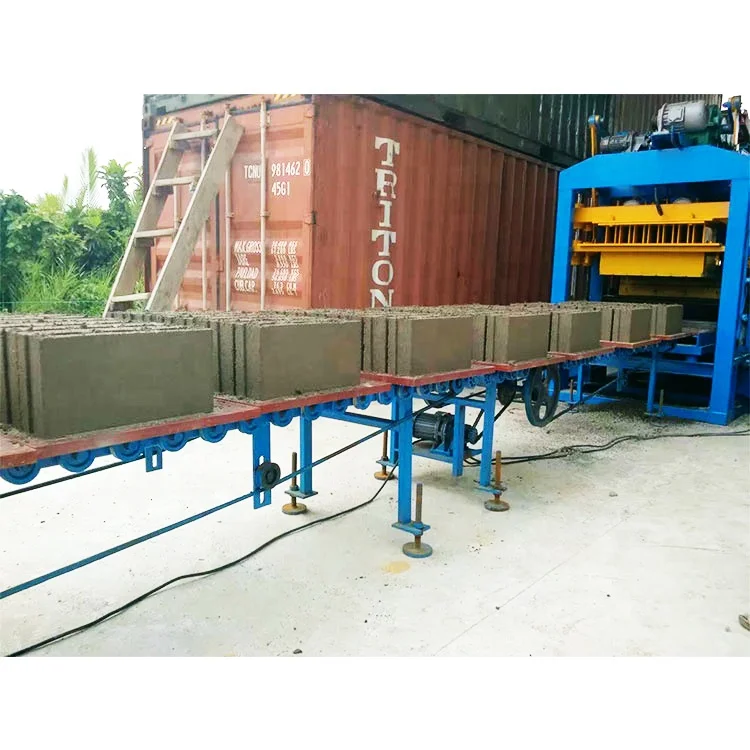
Matched system supply — the QTJ4-25 block machine, moulds, pallets and handling equipment are specified together against your local aggregate and target format rather than quoted as isolated components.
Technical Specifications
| Parameter |
Value |
| Model |
QTJ4-25 |
| Product Type |
Automatic Concrete Block Making Machine |
| Machine Power |
16.58 kW |
| Molding Cycle |
25 seconds |
| Capacity |
4600 pcs / 8 hours (basis not stated in source — confirm block format, material and thickness) |
| Machine Weight |
5000 kg |
| Overall Size |
6400 × 1500 × 2700 mm |
| Pallet Size |
850 × 480 mm |
| Control System |
PLC controlled fully automatic |
| Vibration System |
Vibration motor with large vibration box |
| Frame Construction |
Thick steel frame |
| Motor Brand |
Siemens motor |
| Hydraulic Pressure |
None — mechanical vibration based |
| Key Features |
Automatic pallet feeding, automatic material feeding and scraping, automatic block stacker |
| Voltage |
Configurable to local supply (confirm voltage and frequency before production) |
| Warranty |
One year with free parts supply |
| Standards |
CE declaration where applicable |
Application Suitability
| Application |
Material or Output |
| Hollow block production |
Concrete with crushed stone, sand and cement |
| Solid brick manufacturing |
Fly ash, sand, lime and cement blends |
| Paver stone production |
High-density concrete with fine aggregate |
| On-site contractor block making |
Locally sourced aggregate and cement for housing projects |
Why "4600 Blocks per Shift" Means Nothing Without a Format
Capacity figures detached from block format cause more buyer disappointment than any other specification error.
I spent years watching plants arrive at a site only to discover the quoted output assumed a thin solid brick while the buyer needed 200 mm hollow blocks. The cycle time stays at 25 seconds, but fewer cavities fit on each 850 × 480 mm pallet, and real daily output drops sharply. One medium-scale plant in our region ordered a machine of this tier based on a headline number and ended up producing less than half of what their business plan required, simply because nobody confirmed which block format the calculation assumed [NEED_CITE: capacity calculation methodology for concrete block machines]. An Automatic block machine manufacturer must state the format, wall thickness and mix design behind every output claim.

Placing the QTJ4-25 Within the Automatic Range
The QTJ4-25 occupies the mid-tier position in our automatic block machine range. It suits medium-sized block factories that have outgrown semi-automatic operation and need consistent daily output without taking on the maintenance burden of a full hydraulic press. The PLC-controlled cycle coordinates pallet feeding, material distribution, vibration and stacking so one operator can supervise the entire press section. For buyers comparing tiers, this model bridges the gap between entry-level workshop machines and high-capacity automatic lines.
Where Mechanical Vibration Fits in Your Plant
This machine uses a vibration motor paired with a large vibration box rather than hydraulic pressure. That design choice keeps maintenance simpler and eliminates the hydraulic oil, seals and pump servicing that a fully hydraulic press demands. For plants producing standard hollow blocks and solid bricks from well-graded local aggregate, mechanical vibration delivers the density needed for structural and non-structural applications [NEED_CITE: vibration compaction standards for concrete masonry units]. The trade-off is that ultra-high-density pavers may require a hydraulic tier above this one.
Reading the Specifications That Matter on the Shop Floor
The 16.58 kW total power tells you the electrical supply must include a dedicated circuit sized for starting current, not just running load. The 850 × 480 mm pallet size determines how many block cavities fit per cycle — a 400 × 200 × 200 mm hollow block typically yields four to six pieces per pallet, while a thinner solid brick can yield twelve or more, which is why capacity must be stated per format. The thick steel frame and 5000 kg machine weight absorb vibration forces over long production runs, reducing fatigue cracking that lighter frames develop within the first year. Mould changes on this pallet size take one operator a reasonable portion of a shift when the bolt pattern is standard, so plan your format rotation around full production days rather than hourly switches.
The Hidden Cost of Skipping Configuration Details
When voltage and frequency are not confirmed before production, the PLC display language, motor rotation direction and vibration timing all arrive wrong. Commissioning then takes days of rewiring and reprogramming instead of hours of calibration. Similarly, when pallet material is chosen without checking the curing area surface and the forklift already on site, pallets warp or crack within weeks, forcing an unplanned replacement order [NEED_CITE: pallet material selection for concrete block curing]. These delays cost more than the configuration conversation would have taken.
Why Buyers Source This Tier From Shandong Shiyue Intelligent Machinery
Block machinery is our single focus, so the QTJ4-25 arrives with moulds, pallets and handling equipment matched as one system. Machine configuration is set against your actual mix design and local aggregate, not a catalogue default. Mould design covers the formats your market sells, and custom drawings are available when standard cavities do not match your specification. Automation level is selectable — a buyer can start with the automatic pallet feeding and stacking included here and add further automation later. Installation support includes operator training so your team understands cycle settings from day one.
Documentation & Verification
- Line layout showing QTJ4-25 footprint with capacity stated per your target block format
- Machine specification sheet confirming 850 × 480 mm pallet and PLC language
- Mould drawing and format list for each block type you intend to produce
- Voltage, frequency and control language confirmation signed before production
- Factory test record run on your specified mix design and block format
Installation, Commissioning & Support
- Foundation pad must support the 5000 kg machine weight plus dynamic vibration loads across the 6400 × 1500 mm footprint
- Dedicated power circuit required for the 16.58 kW total load with voltage confirmed before dispatch
- Machine arrives assembled with pallet feeder and stacker; wiring and PLC language verified on site
- First production run supervised to match vibration duration and feed volume to your aggregate
- Operator training covers mould change procedure, cycle adjustment and daily maintenance checks
- Wear parts and mould list supplied so you can plan your first reorder before the original components wear out
What We Need to Size Your Line Correctly
Before quoting, share the block formats you intend to sell, including wall thickness for hollow blocks and surface finish for pavers. Confirm the aggregate available locally — crushed stone type, maximum particle size and whether fly ash or sand dominates the mix. Provide your site voltage, frequency and the PLC display language your operators will use. These details let us calculate realistic output per format and match pallet material to your curing setup.
Frequently Asked Questions
Q: What block format is the 4600 pieces per 8-hour shift capacity based on?
A: That figure is quoted without a stated format, so it must be recalculated for your specific block size, wall thickness and mix design. We provide a capacity table showing realistic output for each mould cavity layout on the 850 × 480 mm pallet before you commit to a purchase.
Q: How does the vibration system compare to hydraulic pressure machines?
A: The QTJ4-25 uses a mechanical vibration motor with a large vibration box instead of hydraulic pressure. This keeps maintenance simpler and avoids hydraulic oil and seal servicing. For standard hollow and solid blocks from well-graded aggregate, mechanical vibration achieves the required density. Ultra-high-density pavers may need a hydraulic tier.
Q: What automation features does this model include compared to semi-automatic options?
A: The QTJ4-25 adds automatic pallet feeding, automatic material feeding with scraping and an automatic block stacker, all coordinated by PLC. Semi-automatic machines require manual pallet handling and stacking, which increases labour and reduces batch consistency. This tier removes those manual steps from the operator.
Q: Which mould formats fit the 850 × 480 mm pallet size?
A: Standard formats include 400 × 200 × 200 mm hollow blocks, solid bricks in various thicknesses and interlocking pavers. Custom mould drawings can be produced to your market specifications. The format list and cavity layout are confirmed during the proposal stage so pallet area is used efficiently.
Q: What are the installation requirements for this machine tier?
A: The 6400 × 1500 × 2700 mm footprint needs a level concrete foundation rated for 5000 kg static load plus vibration. A dedicated electrical circuit must match the confirmed voltage and frequency. Overhead clearance of at least three metres allows the stacker to operate. Installation support and operator training are included.

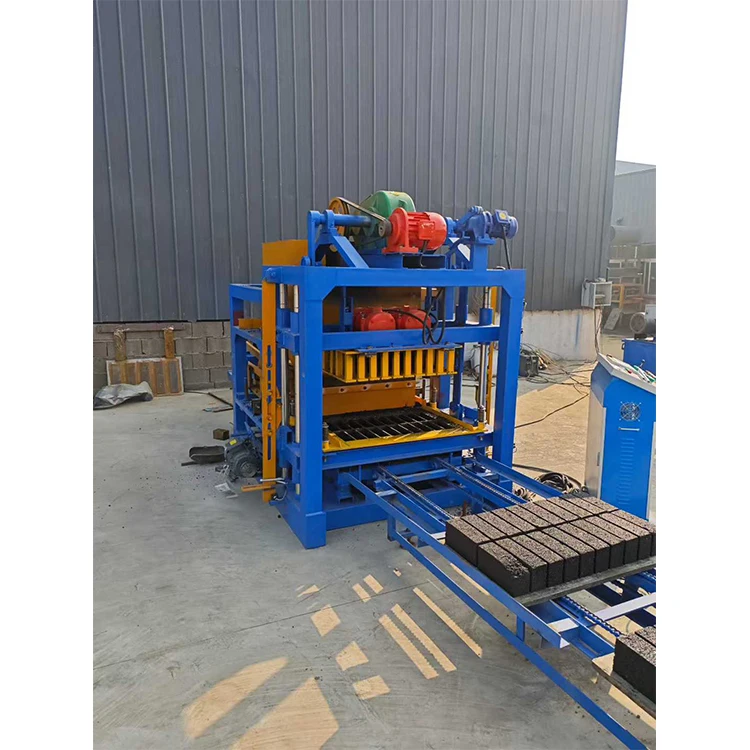
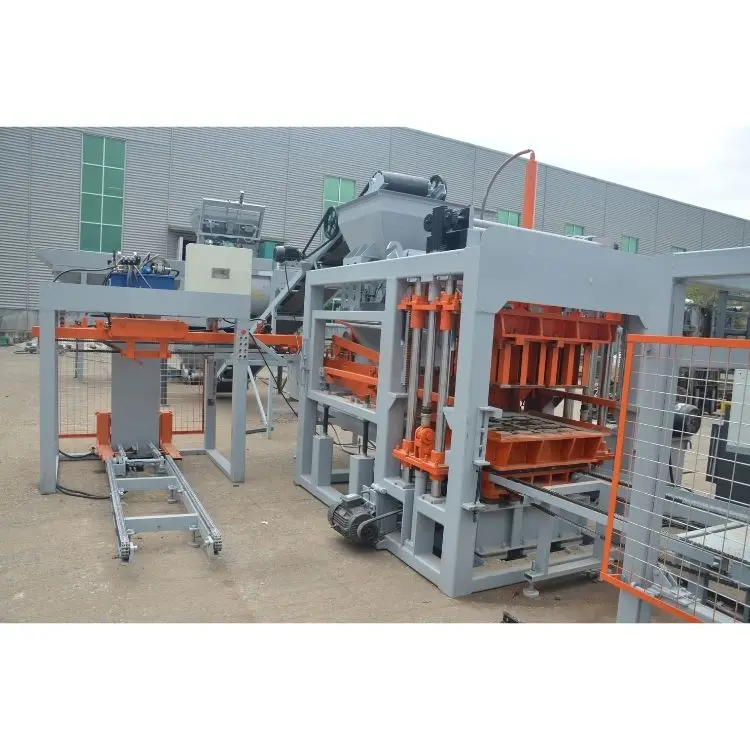 Automatic block machine