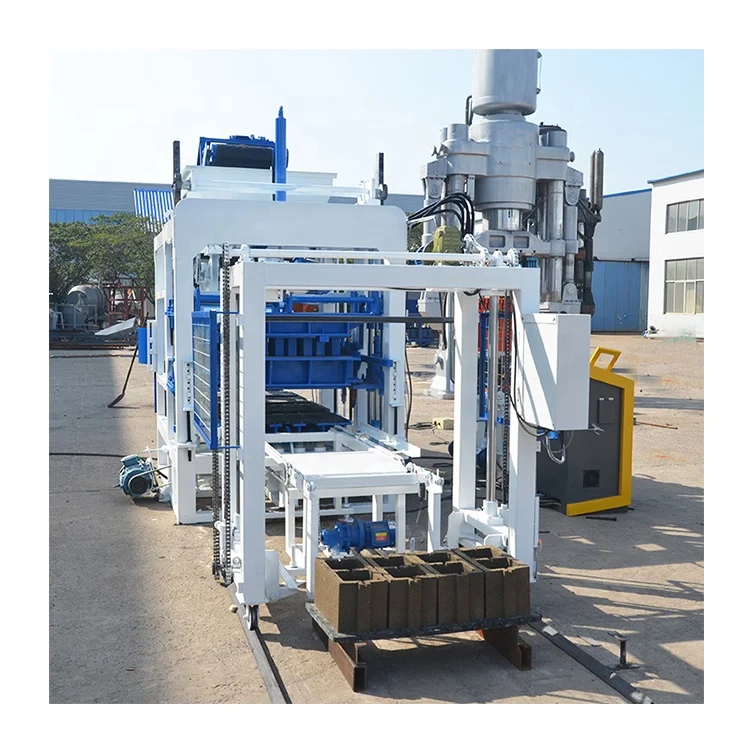
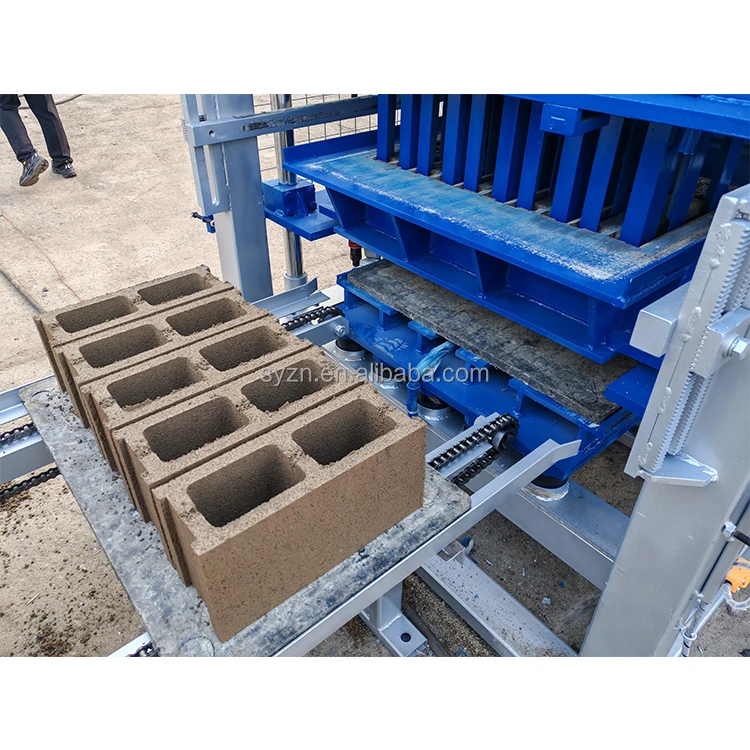
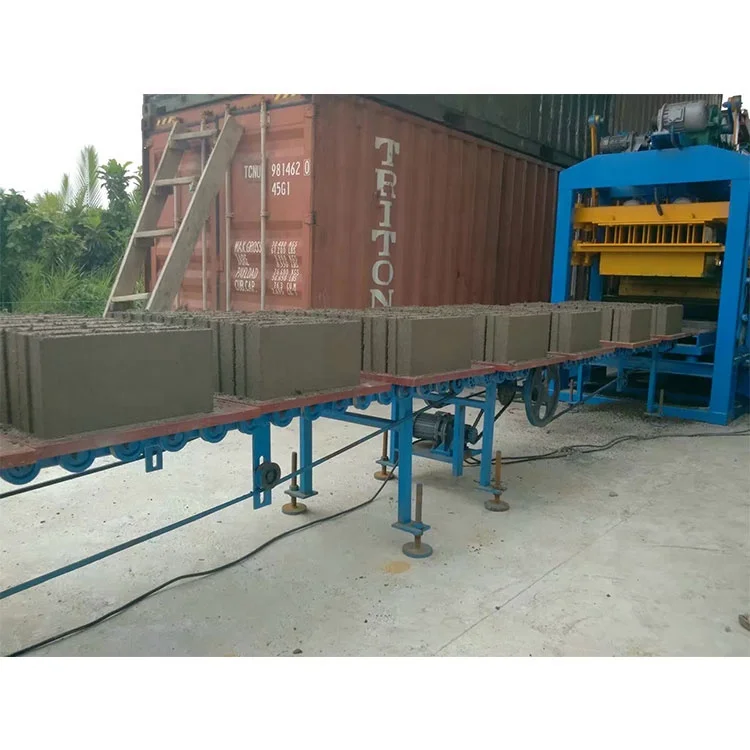
System-Matched Configuration — every QT6-15 line is specified against the buyer’s actual block format, local aggregate and target output, not pulled from a catalogue default.
Technical Specifications
| Parameter |
Value |
| Model |
QT6-15 |
| Product Type |
Automatic Concrete Block Making Machine |
| Molding Way |
Vibration and hydraulic pressing |
| Rated Pressure |
21 MPa |
| Molding Cycle |
15 s – 20 s |
| Pallet Size |
900 × 700 mm |
| Main Machine Weight |
6000 kg |
| Output – Hollow Block (400×200×200 mm) |
6 pcs/pallet, 1440 pcs/h, 11520 pcs/8h (basis: stated format and cycle) |
| Output – Paving Brick (200×100×60 mm) |
21 pcs/pallet, 5040 pcs/h, 40320 pcs/8h (basis: stated format and cycle) |
| Output – Solid Brick (240×115×53 mm) |
32 pcs/pallet, 7680 pcs/h, 61440 pcs/8h (basis: stated format and cycle) |
| Automation Level |
Simple line (mixer, belt conveyor, stacker) or fully automatic (silo, screw conveyor, cement scale, batching machine, pallet loader, pallet separator) |
| Control System |
PLC (basis to be confirmed) |
| Voltage & Frequency |
Customizable to local supply (basis to be confirmed) |
| Assembly State |
Stationary production line |
| Raw Materials |
Cement, sand, fly ash, stone powder, slag |
| Warranty |
1 year (excluding wear parts) |
Application Suitability
| Application |
Material or Output |
| Hollow block production for residential and commercial walls |
Cement, sand, fly ash, stone powder, slag |
| Paving brick manufacturing for walkways, driveways and public spaces |
Cement, sand, crushed stone powder |
| Solid brick production for load-bearing and partition masonry |
Cement, fly ash, slag, stone powder |
| Kerbstone and color pavement brick for municipal and landscape projects |
Cement, sand, pigment, aggregate |
| On-site block production for housing and development contractors |
Locally sourced aggregate matched to mix design |
What "11,520 Blocks per Shift" Actually Means for Your Plant
Capacity is only meaningful when tied to a specific block format, cycle time, and mix design.
Sellers frequently quote a single headline number for an automatic block machine manufacturer without naming the format it assumes, and buyers discover on commissioning day that their target product runs at a fraction of the stated output. I once spent a week re-commissioning a line in Latin America because the capacity figure on the contract assumed standard silica sand, while the local river aggregate carried a high clay content that slowed the cycle and cut daily volume roughly in half. That job reshaped how I present every output figure — each one anchored to a named format, a measured cycle, and a verified material [NEED_CITE: impact of aggregate clay content on block cycle time].

Where the QT6-15 Sits in the Full Machine Range
The QT6-15 occupies the mid-tier of a complete automatic block machine manufacturer lineup that stretches from small workshop presses to high-capacity fully automatic plants. Buyers setting up a first block plant or replacing an ageing press use this tier as a reference point before deciding whether to step up in automation or stay with a simpler configuration. The machine’s 900 × 700 mm pallet dimension is shared across several models in the range, so mould investments and pallet inventories remain compatible if production scales later.
Choosing Between Simple and Fully Automatic Configurations
A simple line pairs the press with a JS500 mixer, an 8 m belt conveyor and an automatic stacker — enough for steady daily volumes with a small crew. A fully automatic configuration adds a cement silo, screw conveyor, cement scale, batching machine, pallet loader and pallet separator, removing most manual handling from the cycle. The right choice depends less on budget alone and more on local labour availability, the curing area layout and the forklift capacity already on site [NEED_CITE: labour and automation trade-offs in block production]. Switching tiers later is feasible because the press and pallet size stay constant.
Pressure, Vibration and Pallet Size — How They Shape the Block
The 21 MPa rated hydraulic pressure works together with the vibration system to compact the mix into the mould cavity; pressure alone cannot achieve density if the vibration force is not matched to the aggregate particle size. A 15 s – 20 s molding cycle is the window in which both forces act, and shortening it without adjusting the mix risks low corner strength. The 900 × 700 mm pallet determines how many cavities fit per cycle — six for a 400×200×200 mm hollow block, twenty-one for a 200×100×60 mm paving brick — so pallet size directly governs pieces per hour for any given format. Heavier main machine weight of 6000 kg contributes to vibration damping, keeping the press stable through thousands of cycles per shift.
The Hidden Cost of Specifying the Wrong Tier
Choosing a fully automatic line for a market that only needs two block formats can leave half the automation stations idle, while a simple line pushed beyond its crew capacity leads to hand-stacking bottlenecks and pallet damage. Voltage mismatches discovered after arrival delay commissioning by weeks, and a PLC display in an unsupported language forces operators to rely on memory rather than on-screen prompts [NEED_CITE: voltage and frequency confirmation before machinery export]. Each of these mis-steps traces back to a configuration decision made before the order was placed.
Why Source This Range Here
Block machinery is the single focus of this manufacturing operation, so the press, mould, pallet and handling equipment are specified as one matched system rather than assembled from separate suppliers. Configuration starts from the buyer’s actual mix design and target block format, not a catalogue default. Mould design covers the formats the buyer’s market sells, including custom drawings for non-standard dimensions. Automation level is selectable, allowing a buyer to start with a simple line and add batching and pallet handling modules as volume grows. Installation support includes operator training on the specific PLC and hydraulic system fitted to the dispatched machine.
Documentation & Verification
- Line layout and capacity calculation stating the block format assumed for every output figure
- Machine specification sheet covering hydraulic pressure, vibration parameters, pallet size and cycle time per format
- Mould drawing and format list confirming cavity count and block dimensions
- Pallet specification matched to the buyer’s curing rack spacing and forklift fork width
- Voltage, frequency and PLC display language confirmation signed off before production
- Factory test record on the buyer’s chosen block format before container loading
Installation, Commissioning & Support
- Foundation plan drawn around the QT6-15 footprint and 6000 kg static load
- Dedicated power circuit sized for the confirmed voltage and total connected load
- Machine dismantled into press, mixer and conveyor sections for container loading
- First-run parameter setting using the buyer’s local aggregate and cement
- Operator training on PLC navigation, mould change procedure and daily lubrication points
- Wear parts and mould wear list supplied with recommended reorder intervals
What to Include in Your Inquiry
Provide the target block formats, required daily output per format, and the local aggregate type you plan to use. Share your site voltage, frequency, and preferred PLC display language so the control system is configured before production begins. Confirm the curing area dimensions and the forklift model already on site — these details determine pallet size and stacking layout.
Frequently Asked Questions
Q: How is output capacity verified, and which block format is each figure based on?
A: Every capacity figure is tied to a named block format, pallet cavity count and measured molding cycle. The QT6-15 table above lists hollow block, paving brick and solid brick separately, so you can match the number to the product you actually sell rather than relying on a single headline claim.
Q: What automation levels are available, and how does each affect plant footprint?
A: The range covers a simple line with mixer, belt conveyor and stacker, through to a fully automatic line adding silo, batching, pallet loader and separator. Footprint grows with each station, so the choice depends on available floor space, curing area layout and local labour costs.
Q: How do I confirm voltage, frequency and PLC display language before shipment?
A: These parameters are locked during the quotation stage. A written confirmation sheet listing supply voltage, frequency and PLC menu language is signed off before production starts, preventing commissioning delays caused by mismatched electrical standards or unreadable screens.
Q: What is included in the quotation versus what is optional?
A: The base quotation covers the press, mould and pallet set. Pallet handling, stacking, curing rack systems and raw material batching are quoted as line items so you can select the automation tier that fits your current volume and add modules later.
Q: How does the QT6-15 compare to other tiers for my production scale?
A: It occupies the mid-tier of the automatic block machine manufacturer range, balancing output and investment. Smaller plants may start one tier below; high-volume operations step up to larger pallet sizes. Because pallet dimensions are shared across adjacent models, format and mould compatibility is maintained if you scale later.

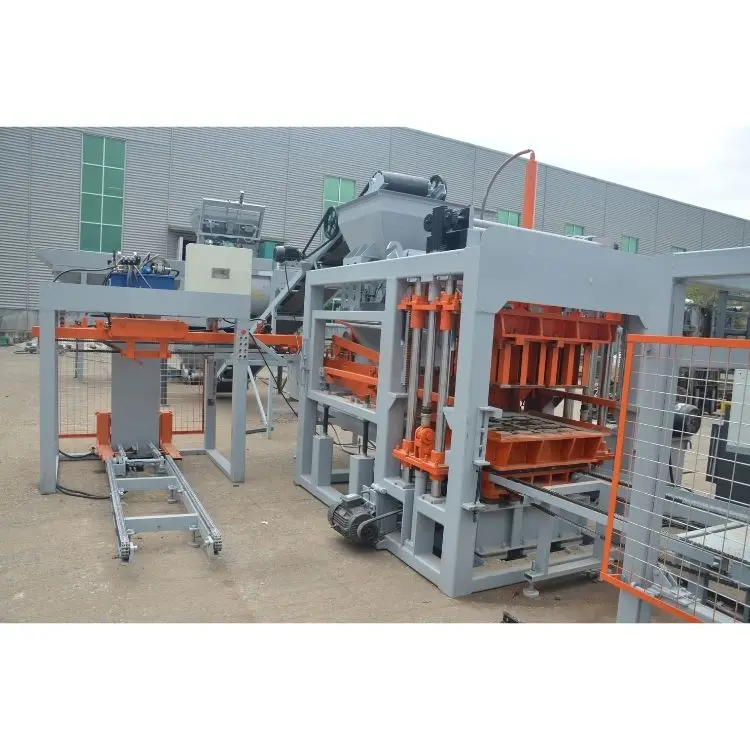
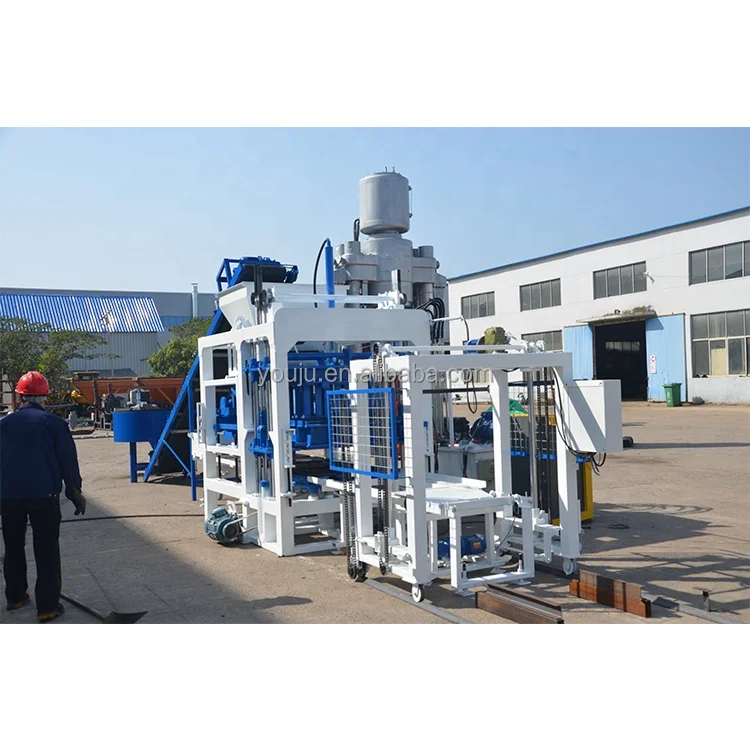 Automatic block machine