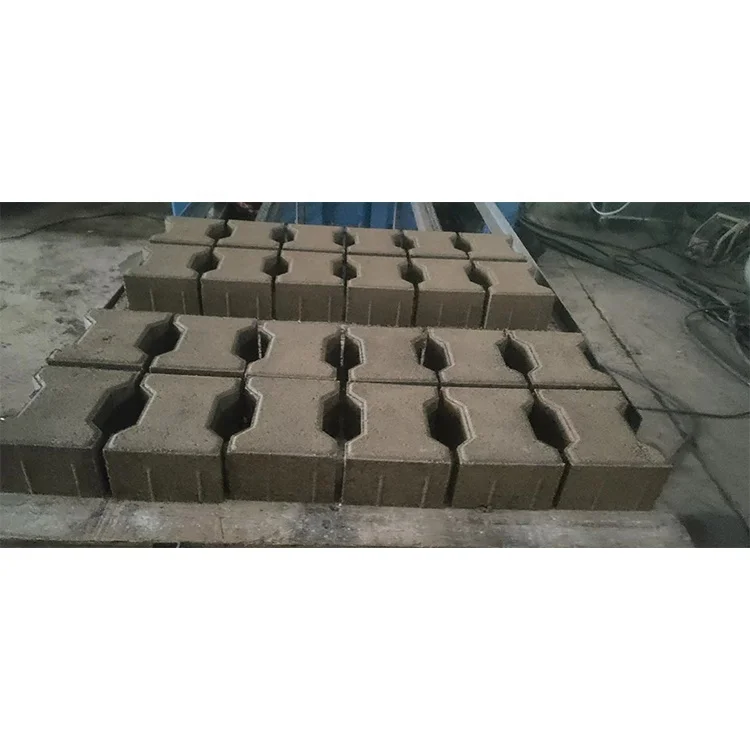
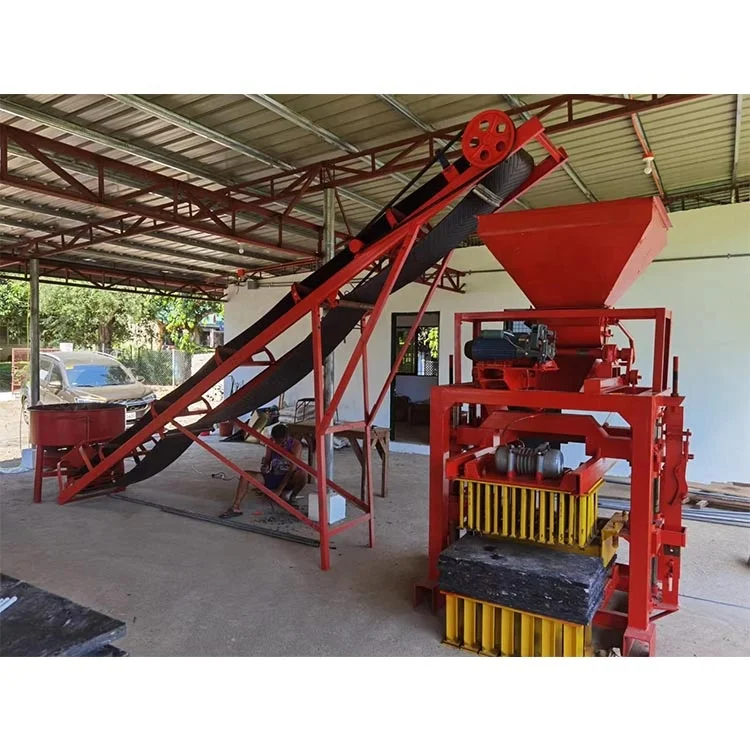
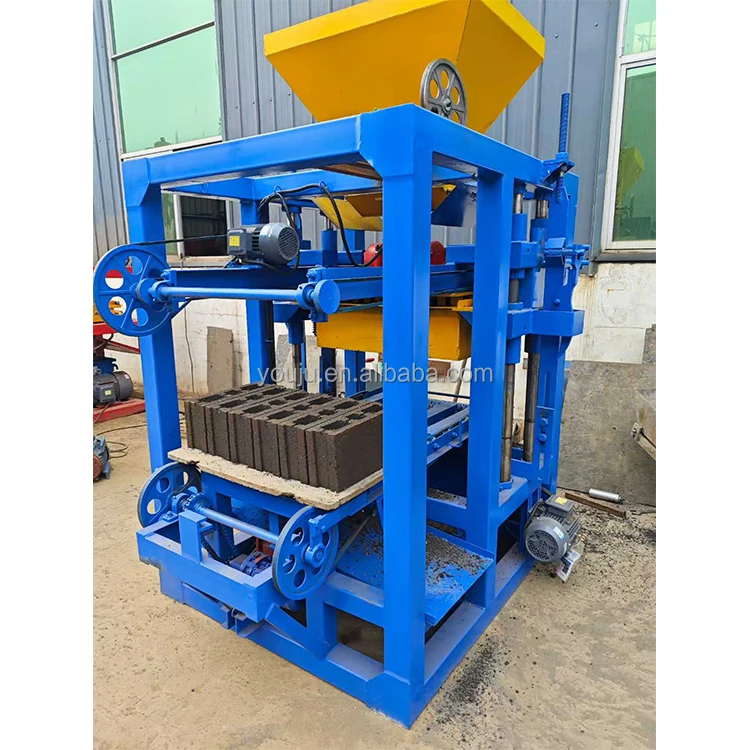
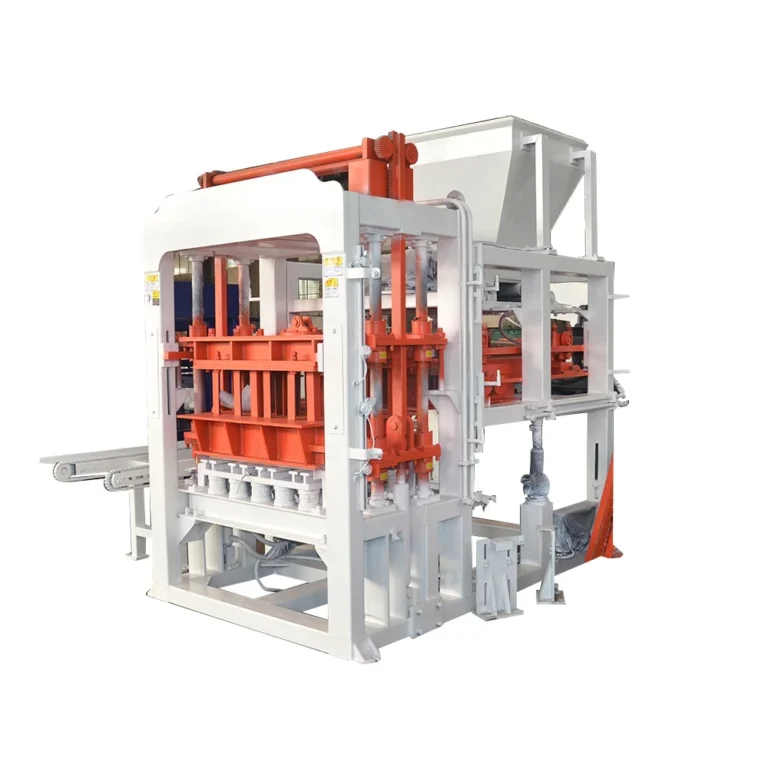
Single-focus machinery alignment — we configure the QTJ4-24 around your actual mix design and target block format rather than a catalogue default, so vibration, feed and cycle match what your site uses every day.
Technical Specifications
| Parameter |
Value |
| Model |
QTJ4-24 |
| Product Type |
Stationary Block Making Machine |
| Overall Dimensions (L×W×H) |
3600×1700×2560 mm |
| Pallet Size |
850×450 mm |
| Molding Cycle |
24–26 s (basis to be confirmed) |
| Overall Power |
11.95 kW |
| Vibration Force |
45 kN |
| Total Mass |
2 T |
| Molding Method |
Mechanical |
| Vibration Configuration |
2×3 kW lower vibrators + 2×1.5 kW upper vibrators |
| Reducer Type |
350-type (mold lifting) |
| Material Distribution |
Full-automatic spiral |
| Control System |
PLC controlled |
| Automation Level |
Semi-automatic |
| Material Compatibility |
Cement, sand, stone |
| Voltage & Frequency |
Configurable — confirm before shipment |
| Warranty |
1 year for whole machine (excluding spare parts) |
Application Suitability
| Application |
Material or Output |
| Hollow block production |
Cement, sand and crushed stone aggregate |
| Solid block production |
Cement and local fine aggregate blends |
| Paving block production |
Cement, sand and stone dust |
| Interlocking brick production |
Cement and graded stone mix |
| Small to medium block plants |
Fixed-plant operation with curing area |
| On-site contractor production |
Project-site block manufacturing with basic utilities |
What "24–26 Seconds per Cycle" Really Means for Your Daily Output
Cycle time only becomes honest when tied to the exact block format you sell.
Capacity figures quoted on a per-hour basis often assume a standard hollow block that may not match the format driving your revenue. When a buyer switches from the assumed format to a thinner paving block or a taller kerbstone, the molding cycle shifts because the vibration and pressing sequence must adapt to the new geometry. I have seen site managers arrive expecting a certain pallet count per shift and discover the real number is lower simply because the quoted cycle was based on a format they never intended to produce. A stationary block making machine manufacturer should always state which block format the cycle time references before asking for a deposit. [NEED_CITE:]

Where the QTJ4-24 Sits in the Stationary Range
The QTJ4-24 occupies the entry-to-mid tier of our stationary block machine lineup. It uses mechanical vibration with a full-automatic spiral feeder rather than the hydraulic pressure systems found on higher tiers. For a buyer setting up a first block plant or adding overflow capacity to an existing line, this tier keeps the footprint compact and the capital outlay contained while still delivering consistent pallet output.
Choosing Between Semi-Automatic and Fully Automatic Tiers
Buyers often ask whether to jump straight to a fully automatic hydraulic line. The answer depends on how much manual pallet handling and stacking your labour pool can absorb. The QTJ4-24 requires operators to move cured pallets and feed fresh ones, which keeps automation complexity low but means staffing must match your shift plan. If your growth path points toward higher volume within two years, starting on this semi-automatic tier and upgrading later is a practical sequence that several of our buyers have followed. [NEED_CITE:]
Vibration Force, Pallet Size and What They Mean on the Shop Floor
The 45 kN vibration force is delivered through four independent vibrators — two 3 kW units mounted below and two 1.5 kW units above the mold cavity. Dual-level vibration compacts the concrete mix from both directions, reducing voids and giving blocks a uniform density across their height. The 850×450 mm pallet size determines how many blocks fit per cycle and must align with the curing rack spacing and forklift tine width you already have on site. A mismatch here causes pallets to stack unevenly or forces you to buy a new forklift. The 11.95 kW overall power draw is modest enough for sites with a limited electrical supply, though voltage and frequency must be confirmed against your local grid before the control panel is wired.
The Cost of Skipping the Material Sample Step
I once commissioned a QTJ-class machine in Southeast Asia where the contractor fed river sand with high clay content straight into the hopper. The mix stuck to the spiral feeder, vibration could not fully compact the slurry, and daily output dropped to roughly half of what the cycle time suggested. Every spec on the nameplate was correct; the problem was that no material sample had been tested before shipment. Skipping that step turns a straightforward installation into weeks of parameter adjustment and frustrated crews. [NEED_CITE:]
Why Source This Stationary Block Making Machine Manufacturer
Block machinery is our single focus, which means the QTJ4-24 is specified as part of a matched system — mold, pallet and handling — not assembled from unrelated suppliers. We configure the vibration force and feed timing against your actual aggregate and cement ratio instead of relying on a default setting. Custom mold design is available for the formats your local market demands, drawn from your dimensional requirements. Automation level is selectable, so you can begin with semi-automatic operation and add stacking or batching automation when volume justifies it. Installation support includes operator training on the PLC interface and mold change procedure so your crew is self-sufficient from the first week.
Documentation & Verification
- Line layout drawing showing QTJ4-24 placement and pallet flow path
- Capacity calculation sheet stating the block format behind the 24–26 s cycle
- Pallet specification matched to your curing rack and forklift dimensions
- Voltage, frequency and PLC language confirmation form signed before wiring
- Factory test record on your specified mix and block format
- Wear parts and mold list with reorder part numbers
Installation, Commissioning & Support
- Foundation pad must support 2 T static load across the 3600×1700 mm footprint
- Dedicated electrical circuit rated for 11.95 kW with confirmed voltage and frequency
- Machine ships in bolted sections; reassembly and alignment verified on site
- First-run commissioning includes vibration tuning to your local aggregate density
- PLC language and display labels set to operator preference before power-on
- 350-type reducer and vibration motors covered under the one-year warranty
What to Share Before You Request a Quote
Send the exact block formats your market sells, along with dimensions and required compressive strength. Include a sample or lab report of your local sand and stone so we can match the vibration and feed settings before build. Let us know your available floor space, ceiling height, and curing area layout so the line drawing reflects reality. Finally, confirm your site voltage, frequency and preferred PLC display language so there are no surprises at commissioning.
Frequently Asked Questions
Q: What block format is the 24–26 s cycle time based on?
A: The cycle time must be confirmed against the specific block format, wall thickness and mix design you intend to run. A standard hollow block and a thin paving block will produce different cycle lengths because the vibration and pressing sequence adjusts to the cavity geometry. We provide a per-format calculation before quotation.
Q: Where does the QTJ4-24 sit compared to higher tiers?
A: It sits in the entry-to-mid range of our stationary block making machine manufacturer lineup, using mechanical vibration and spiral feeding rather than full hydraulic pressing. Buyers who need moderate daily output with a smaller footprint and lower capital choose this tier, while those targeting high-volume automatic production move to the hydraulic range.
Q: What electrical details must I confirm before shipment?
A: Voltage, frequency and PLC display language must be locked before the control panel is assembled. Sending the wrong voltage configuration causes commissioning delays and may require rewiring on site. We provide a confirmation form so these details are recorded in writing before production begins.
Q: Can I add automation or new molds later?
A: The QTJ4-24 is designed so that automatic pallet feeding, stacking or additional mold formats can be added as your output grows. The mechanical frame and PLC architecture support these additions without replacing the base machine, protecting your initial investment.

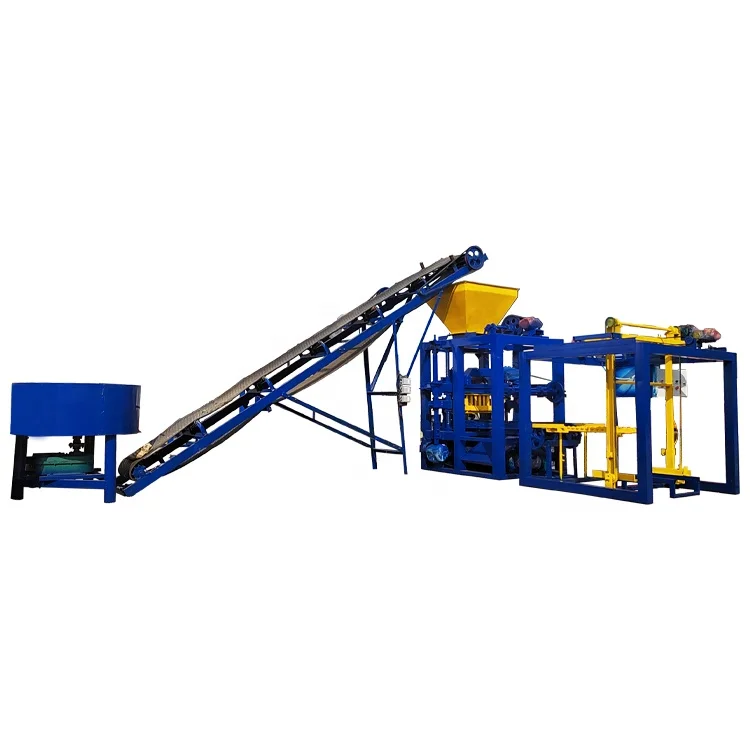
 Stationary block machine