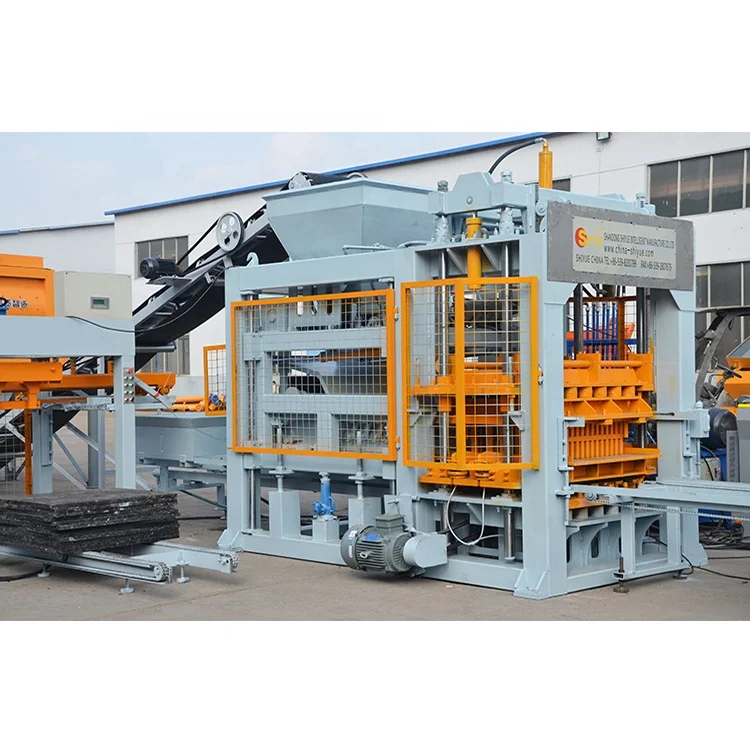
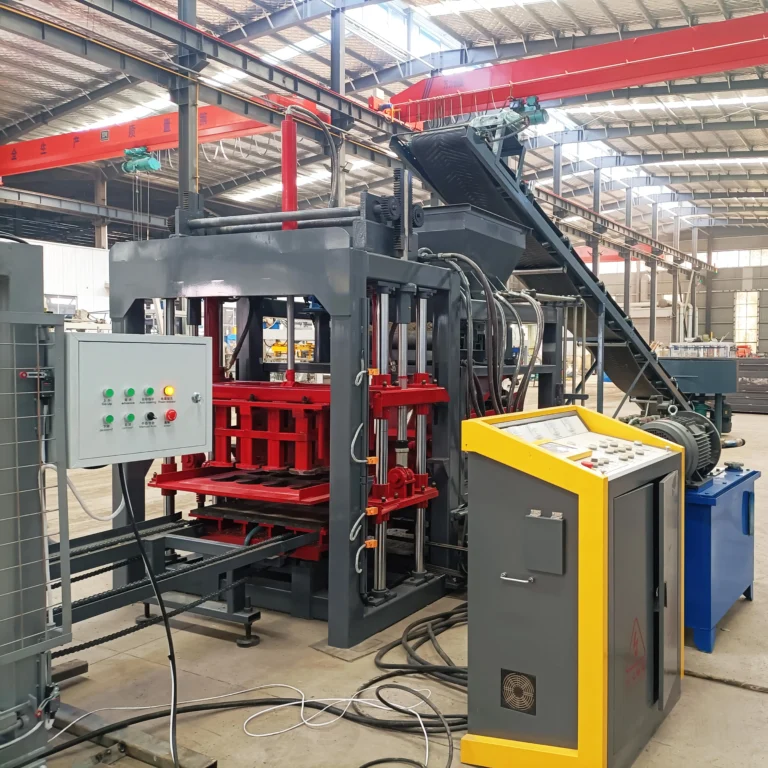
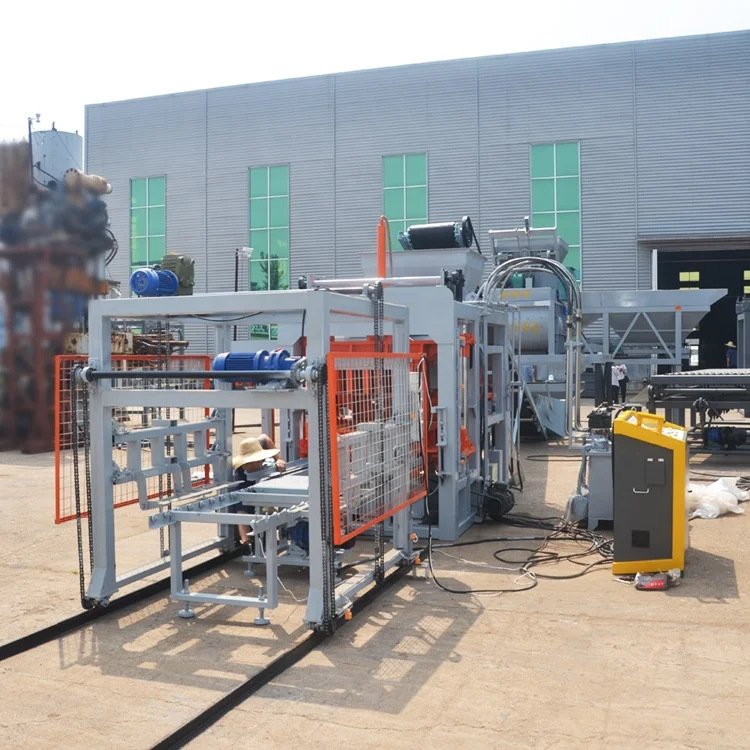
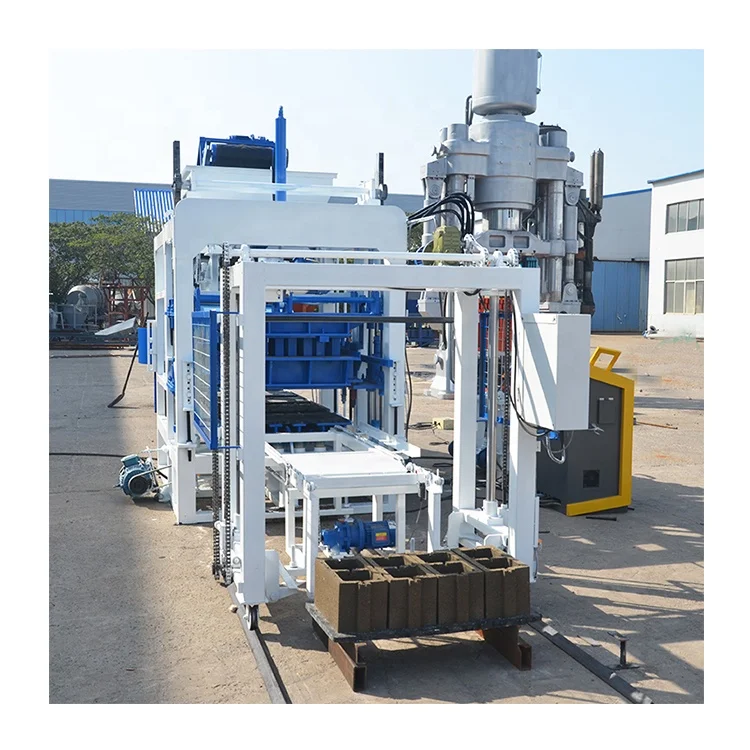
QT8-15 Automatic Block Making Machine | Manufacturer
Matched System Design — The QT8-15 fully automatic block machine is specified as a complete press, mould, pallet, and handling line rather than a standalone unit assembled from separate suppliers.
Technical Specifications
| Parameter |
Value |
| Product Type |
Fully Automatic Hydraulic Concrete Block Making Machine |
| Model |
QT8-15 |
| Overall Dimensions (L×W×H) |
8300 × 1860 × 3000 mm |
| Molding Cycle |
15–20 s |
| Vibration Force (Exciting Power) |
55 kN |
| Rated Power |
37.2 kW |
| Mixer Model |
JS750 |
| Pallet Size |
1020 × 900 mm |
| Net Weight |
8 T |
| Control System |
PLC control system |
| Hydraulic Station |
Included (pressure rating to be confirmed) |
| Output Capacity |
1920 pcs/hour (basis not stated in source — confirm block format and dimensions) |
| Automation Level |
Fully automatic (pallet feeder, block conveyor, block sweeper included) |
| Applied Products |
Paver, solid block, hollow block, curbstone (via mould change) |
| Raw Materials |
Crushed stone, sand, cement, dust, fly ash |
| Included Equipment |
Block making machine, hydraulic station, PLC control unit, block mould, material feeder, pallet feeder, block conveyor, spare parts and tools |
| Voltage & Frequency |
To be confirmed per target market |
| PLC Display Language |
To be confirmed per operator requirement |
| Certification |
CE declaration (where applicable, verify per unit) |
Application Suitability
| Application |
Material or Output |
| Concrete paver production |
Crushed stone, sand, cement with colour pigment |
| Hollow block manufacturing |
Cement, fly ash, sand, crushed aggregate |
| Solid block production for load-bearing walls |
Cement, sand, crushed stone at high vibration compaction |
| Curbstone and kerbstone forming |
Dense aggregate mix with hydraulic pressing |
| Porous and interlocking brick runs |
Graded fine aggregate with adjusted vibration profile |
What the QT8-15 Automatic Block Machine Manufacturer Quotation Often Leaves Out
The cycle time figure only matters when it is tied to the exact block format you intend to produce.
Most quotations for machines in this class state a single moulding cycle and a headline output number without specifying which block size that calculation assumes. A 15-second cycle on a small paver does not translate to the same throughput on a 200 mm hollow block. When the QT8-15 automatic block machine manufacturer proposal you receive omits the format behind the capacity claim, your real daily production can fall noticeably short of the plan. I have seen buyers commit to a delivery schedule based on a number that was never calibrated to their actual product. [NEED_CITE: block machine capacity calculation standards by format]

Where the QT8-15 Sits in the Full Machine Range
The QT8-15 automatic block machine manufacturer range places this model in the upper-mid tier — above semi-automatic workshop machines but below the highest-capacity lines that require a dedicated large-footprint plant. Buyers evaluating their first fully automatic setup or replacing a semi-automatic press typically find this tier offers a balance between output capability and investment level. The included pallet feeder, block conveyor, and sweeper remove manual handling steps that slow smaller machines without demanding the full stacking and cubing infrastructure of a top-tier line.
Matching the Line to Your Existing Infrastructure
Before placing an order, the pallet size of 1020 × 900 mm must be checked against your current curing area dimensions and the forklift capacity already on site. A pallet that does not fit your existing racks means building new curing infrastructure or losing production space. The JS750 mixer capacity is paired with the press cycle so the QT8-15 is not left idle waiting for the next batch — but this match assumes your raw material feed rate can sustain continuous operation. [NEED_CITE: concrete block plant layout and material flow planning]
How Pressure, Vibration, and Pallet Size Shape Block Quality
The 55 kN vibration force and the hydraulic station work together to compact the mix into the mould cavity. Vibration alone cannot achieve full density if hydraulic pressure is too low, and pressure alone will not distribute the mix evenly into deep hollow block cores without sufficient vibration amplitude. The 15–20 second moulding cycle reflects the time the press needs to complete one full press-and-release sequence on a standard format, but denser curbstone mixes often require a longer dwell. The 8 T machine weight contributes to frame stability during high-force vibration cycles, reducing fatigue cracking in the structure over years of operation. Pallet size directly determines how many blocks are produced per cycle and how those blocks move through the curing area afterward.
The Cost of Skipping Configuration Checks Before Order
When voltage and frequency are not confirmed before production begins, the motor and PLC arrive incompatible with the local grid, and commissioning stalls until a transformer or replacement drive is sourced. A machine configured for a mix design the buyer cannot obtain locally forces a material change that alters block strength and colour. Moulds ordered without a format list covering every product the local market demands leave the buyer unable to fulfill orders until additional moulds are manufactured and shipped — a delay measured in weeks, not days. [NEED_CITE: industrial equipment voltage and frequency compatibility for export markets]
Why Source the QT8-15 Through This Block Machine Range
The machine, mould, pallet, and handling equipment are specified as one matched system from a single manufacturer, eliminating the integration gaps that arise when components come from separate suppliers. Configuration is set against your actual mix design and local aggregate rather than a catalogue default, so vibration and pressure settings align with the material you can source. Mould design covers the block formats your market sells, with custom drawings available when standard moulds do not match. The automation level on the QT8-15 is selectable, allowing a buyer to begin with semi-automatic handling and add automatic stacking later. Installation support includes operator training so your team understands mould change procedures and PLC parameter adjustments from day one.
Documentation & Verification
- Line layout showing capacity calculation per specific block format for the QT8-15
- Hydraulic and electrical schematic with confirmed voltage and frequency values
- Mould drawing and format list covering every block type in your quotation
- Factory test record documenting cycle time on your target block size before dispatch
- Pallet specification sheet with material grade and load rating for 1020 × 900 mm pallets
- Operation and maintenance manual with wear parts list and replacement intervals
Installation, Commissioning & Support
- Foundation must support the 8 T machine weight across the 8300 × 1860 mm footprint with level tolerance
- Dedicated electrical circuit rated for 37.2 kW total draw with confirmed voltage and frequency
- Hydraulic station connections and pressure calibration performed during on-site commissioning
- PLC display language set to operator preference before the first production run begins
- Mould change training covering alignment pins and hydraulic clamp release on every format
- Wear parts inventory list with recommended reorder points for vibration pads and hydraulic seals
Preparing Your QT8-15 Inquiry
To receive a configuration that reflects your actual production needs, share the specific block formats your market requires along with target daily output per format. Confirm the voltage, frequency, and PLC language your operators will use. Describe your available raw materials and any existing curing racks or forklifts so the pallet and handling setup aligns with what is already on site.
Frequently Asked Questions
Q: How is the QT8-15 output capacity calculated, and which block format is the headline figure based on?
A: Output depends on block size, mix density, and moulding cycle. The quoted figure should state the exact block dimensions and material assumed. We calculate capacity per format so your daily target reflects the products you actually produce, not a single unverified number.
Q: Where does the QT8-15 sit in your full machine range compared to semi-automatic and mobile models?
A: It occupies the upper-mid tier, above semi-automatic workshop presses and mobile egg-laying machines, suited for buyers ready for fully automatic operation with included pallet feeder and conveyor but not yet requiring the largest high-capacity line footprint.
Q: What automation level does the QT8-15 include, and can I start semi-automatic and upgrade later?
A: The standard configuration is fully automatic with pallet feeder, block conveyor, and sweeper. Buyers can begin with manual pallet handling on a semi-automatic setup and add automatic stacking or cubing modules as production volume grows.
Q: How long does a mould change take on the QT8-15, and what formats are available?
A: Mould change time depends on the clamp system and operator familiarity. We provide the hydraulic clamp procedure and alignment specifications so changeover stays within a portion of a shift. Formats include paver, solid, hollow, and curbstone, with custom moulds available to buyer drawings.
Q: What voltage, frequency, and PLC language options are confirmed before shipment?
A: These are confirmed during the order stage to match your local grid and operator language. We document the agreed voltage, frequency, and PLC display language on the specification sheet before production begins, avoiding commissioning delays after arrival.

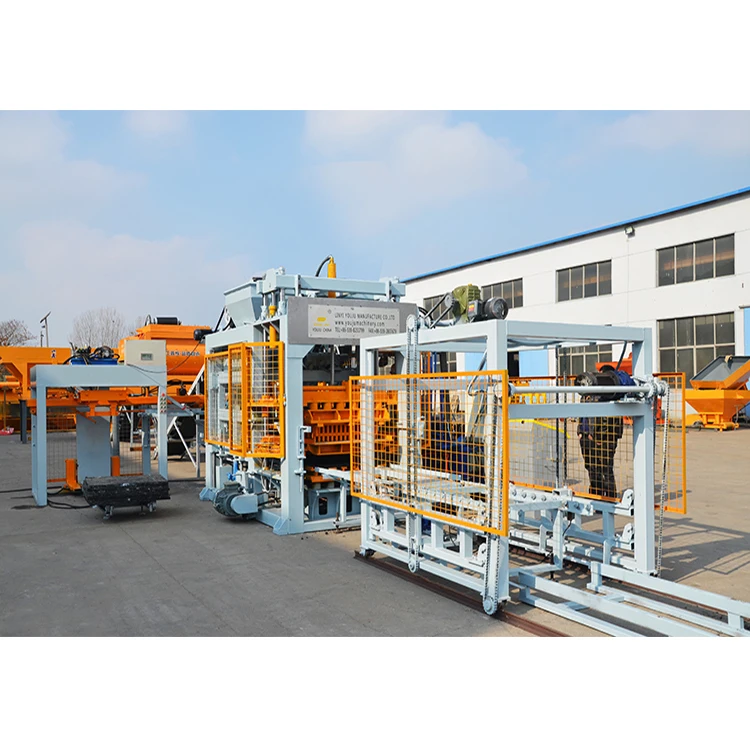
 High quality block machine