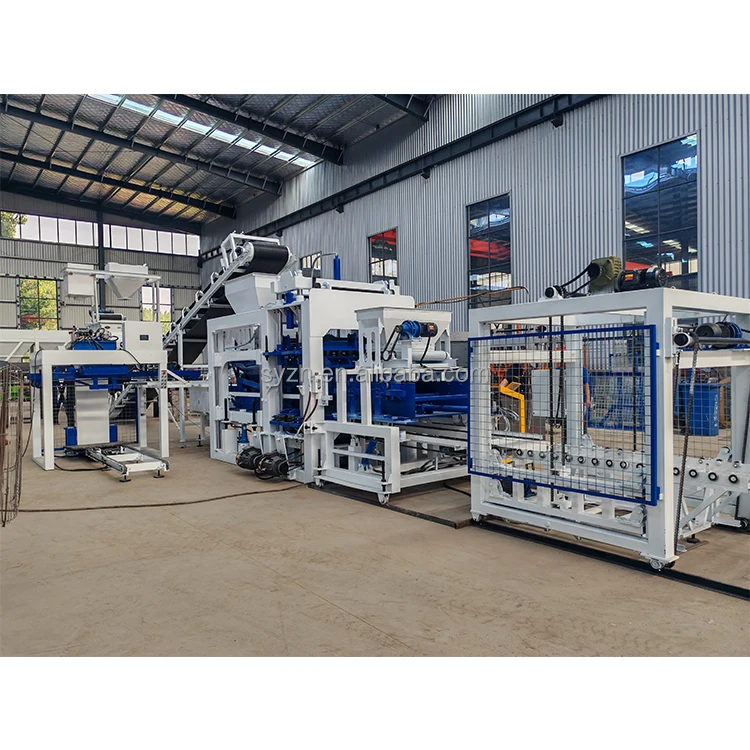
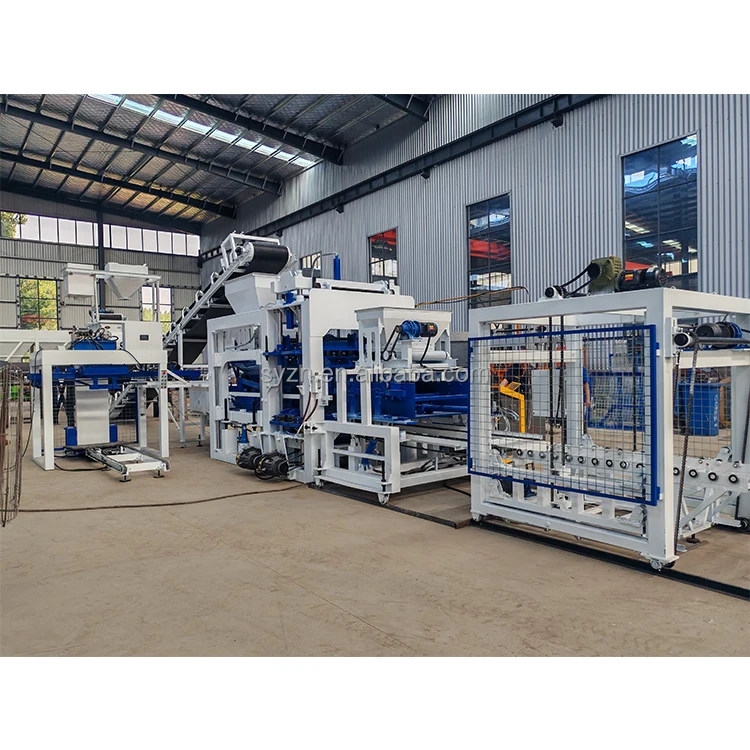
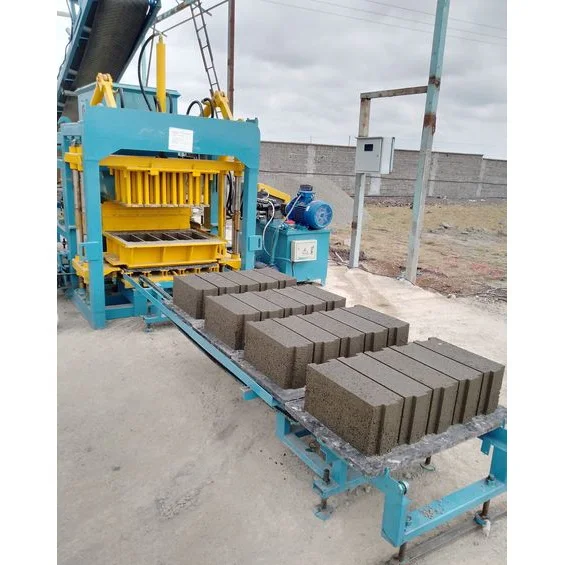
Matched System Sizing — every QT4-18 line layout is built around the buyer’s actual block format and local aggregate, so the hydraulic station, vibration force, pallet size and mixer are specified together rather than pulled from separate catalogues.
Technical Specifications
| Parameter |
Value |
| Model |
QT4-18 |
| Product Type |
Automatic Hydraulic Concrete Block Making Machine |
| Overall Dimensions (L×W×H) |
3900×1600×2300 mm |
| Molding Cycle |
15–25 s (basis not stated in source — confirm block format / material / thickness) |
| Vibration Force |
40–50 kN |
| Rated Power |
24 kW |
| Mixer Model |
JQ350 |
| Pallet Size |
850×550×25 mm |
| Net Weight |
3 T |
| Control System |
PLC control system |
| Hydraulic Station |
Included |
| Included Equipment |
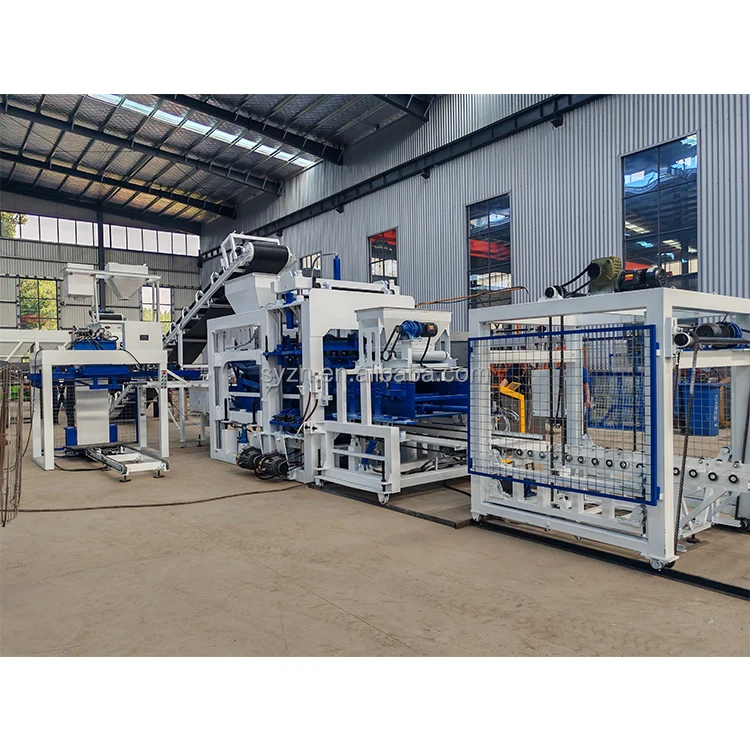
Block making machine, hydraulic station, PLC control system, pallet feeder, brick conveyor, block sweeper |
| Free Accessories |
Manual hydraulic trolley, spare parts and tools |
| Output Capacity |
1200–1680 pcs/hr (based on 400×200×200 mm hollow block, 15–20 s cycle) |
| Output Capacity |
1800–2400 pcs/hr (based on 400×150×200 mm hollow block, 15–20 s cycle) |
| Output Capacity |
3240 pcs/hr (based on 240×115×53 mm solid brick, 15–20 s cycle) |
| Daily Output (8 hr) |
9600–13440 pcs (based on 400×200×200 mm hollow block) |
| Daily Output (8 hr) |
14400–19200 pcs (based on 400×150×200 mm hollow block) |
| Daily Output (8 hr) |
16200–19440 pcs (based on 240×115×53 mm solid brick) |
| Automation Level |
Semi-automatic with PLC control |
| Applied Products |
Paver, solid block, hollow block, curbstone |
| Raw Materials |
Crushed stones, sand, cement, dust, fly ash |
| Assembly State |
Factory assembled, nude packing in 20GP container |
Application Suitability
| Application |
Material or Output |
| Hollow block production for walls and partitions |
Crushed stone, sand, cement, fly ash in 400×200×200 mm and 400×150×200 mm formats |
| Solid brick production for masonry structures |
Cement and fine aggregate forming 240×115×53 mm standard bricks |
| Paving block production for roads and walkways |
High-density crushed stone mix pressed on 850×550 mm pallets |
| Curbstone production for road edging |
Coarse aggregate and cement in kerbstone moulds |
Why "Cycles per Hour" Can Mislead a QT4-18 Block Making Machine Manufacturer Buyer
A single cycle figure means nothing without knowing which block format it assumes.
I once watched a site foreman stare at a pallet of half-cured hollow blocks and realise his daily count was barely half what the brochure promised. The machine was running fine; the cycle time quoted had been measured on a smaller solid brick, not the 400×200×200 mm hollow block his project needed. When you survey a full machine range, this mismatch is the most common reason buyers feel misled after delivery [NEED_CITE: common discrepancies between quoted and actual block output]. The QT4-18 sits in the mid-tier of the SHIYUE range, and its honest output spans from 1200–1680 pieces per hour based on a 400×200×200 mm hollow block up to 3240 pieces per hour based on a 240×115×53 mm solid brick. The difference is not a defect — it is physics. Larger formats take longer to fill, vibrate and release.

Where the QT4-18 Sits in the Full Range
The SHIYUE line-up begins with small mobile egg-laying machines for on-site work, moves through semi-automatic units for workshop production, and reaches high-capacity fully automatic plants with robotic stacking and cubing. The QT4-18 block making machine manufacturer offering occupies the middle ground: a fixed-plant hydraulic press with PLC control, included mixer and pallet feeder, but without the automatic stacker and cubing system of the top-tier lines. This positioning makes it a practical choice for a first fixed plant or a stepping stone before adding full automation downstream.
Choosing Between Semi-Automatic and Fully Automatic Configurations
Starting with semi-automatic does not lock a buyer into manual handling forever. The press itself is identical across automation levels; what changes is how pallets are fed, how wet blocks are stacked and whether curing racks are handled by conveyors or by hand. Many buyers begin with the QT4-18 QT4-18 block making machine manufacturer package and later add an automatic stacker when labour costs rise or daily output targets increase. The key is to plan the floor layout so that upgrade path remains open [NEED_CITE: plant layout considerations for future automation upgrades].
How Vibration Force and Hydraulic Pressure Shape Block Density
The QT4-18 delivers 40–50 kN of vibration force through the mould table while the hydraulic head applies downward pressure. These two forces must be balanced against the buyer’s actual mix design. A dry, well-graded crushed stone mix needs high vibration to compact into the mould corners, while a wetter fly-ash-heavy mix requires more hydraulic pressure and less vibration to avoid segregation. Getting this balance wrong is why some blocks crumble at the edges while others crack during curing — and why a factory test on the buyer’s own aggregate sample matters before the machine ships.
Pallet Size and Curing Area Compatibility
The 850×550×25 mm pallet dimension is not arbitrary. It determines how many blocks fit per cycle, how the pallets stack on curing racks, and which forklift can handle them. A buyer whose existing curing racks are sized for 900×600 mm pallets will face costly rack modifications if the machine arrives with a different format. Confirming pallet size against the curing area and material handling equipment already on site prevents a bottleneck that no amount of press speed can fix [NEED_CITE: pallet handling standards in concrete block production].
The Hidden Cost of Skipping Voltage and Language Confirmation
A machine built for 380 V / 50 Hz will not start on a 440 V / 60 Hz supply without a transformer, and a PLC screen in a language the operator cannot read turns troubleshooting into guesswork. These are not cosmetic details — they delay commissioning by days or weeks and can damage the hydraulic pump motor if the voltage mismatch is severe. Every QT4-18 configuration must have voltage, frequency and PLC display language confirmed in writing before production begins.
What Makes Sourcing from This QT4-18 Block Making Machine Manufacturer Different
Block machinery is the single focus here, so the press, mould, pallet and handling equipment are specified as one matched system. Configuration is set against the buyer’s actual mix design and local aggregate, not a catalogue default. Mould design covers the formats the buyer’s market actually sells, including custom drawings. Automation level is selectable, so a buyer can start semi-automatic and add stacking later. Installation support includes operator training so the crew knows how to change moulds and read the PLC before the first production shift ends.
Documentation & Verification
- Line layout and capacity calculation stating output per block format for your site conditions
- Machine specification sheet with confirmed voltage, frequency and PLC display language
- Mould drawing and format list including custom options for local block dimensions
- Factory test record and packing photographs before container loading
- Wear parts and mould list with part numbers for reordering
- Operation and maintenance manual in the operator’s working language
Installation, Commissioning & Support
- Foundation pad sized for 3900×1600 mm footprint with anchor bolt plan provided
- Dedicated 24 kW power circuit with confirmed voltage and frequency at site
- Factory-assembled press arrives in 20GP container for straightforward unloading
- First-run parameter tuning on buyer’s aggregate to set vibration and pressure balance
- Operator training covering mould change, PLC navigation and daily maintenance checkpoints
- Spare parts kit included; wear part reorder list provided at handover
Next Steps for an Accurate Configuration
To size the right machine tier and mould set, share your target block formats with dimensions, the daily output you need per format, and a sample or description of your local aggregate and cement type. Confirm your site voltage and frequency, the PLC language your operators prefer, and whether your existing curing racks and forklift match the 850×550 mm pallet. If you are comparing this mid-tier press against a higher-capacity line or a mobile unit, state your budget range and plant footprint so the proposal narrows the options accordingly.
Frequently Asked Questions
Q: How does QT4-18 output compare across block formats and where does it fit in the range?
A: Output varies by format — rated at 1200–1680 pcs/hr on 400×200×200 mm hollow blocks, up to 3240 pcs/hr on 240×115×53 mm solid bricks. It sits in the mid-tier of the SHIYUE range, above mobile and small semi-automatic machines, below fully automatic high-capacity lines with robotic stacking and cubing.
Q: What voltage, frequency and PLC language options are available?
A: Voltage and frequency are configured to your site supply before production starts, and the PLC display language is set to match your operators. Both must be confirmed in writing during the quotation stage to avoid commissioning delays after the machine arrives at your plant.
Q: Can I start semi-automatic and add full automation later?
A: Yes. The press and hydraulic station remain the same regardless of automation level. Upgrading later means adding an automatic pallet feeder, stacker and cubing system around the existing press, provided the original floor layout left space for these stations.
Q: What mould formats are available and can I order custom sizes?
A: Standard moulds cover 400×200×200 mm and 400×150×200 mm hollow blocks, 240×115×53 mm solid bricks, pavers and kerbstones. Custom moulds are designed to buyer drawings for local market formats that fall outside these standard dimensions.
Q: What is included versus what needs separate ordering?
A: The standard package includes the press, hydraulic station, PLC system, pallet feeder, brick conveyor, block sweeper, JQ350 mixer, manual hydraulic trolley and spare parts. Automatic stacking, curing rack handling and cubing systems are separate line items configured to your automation level choice.

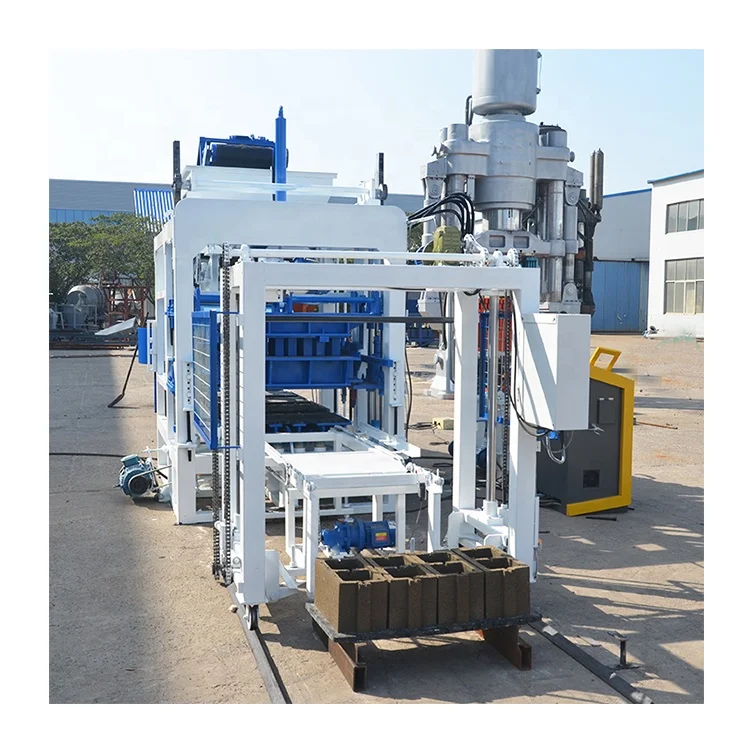
 High quality block machine