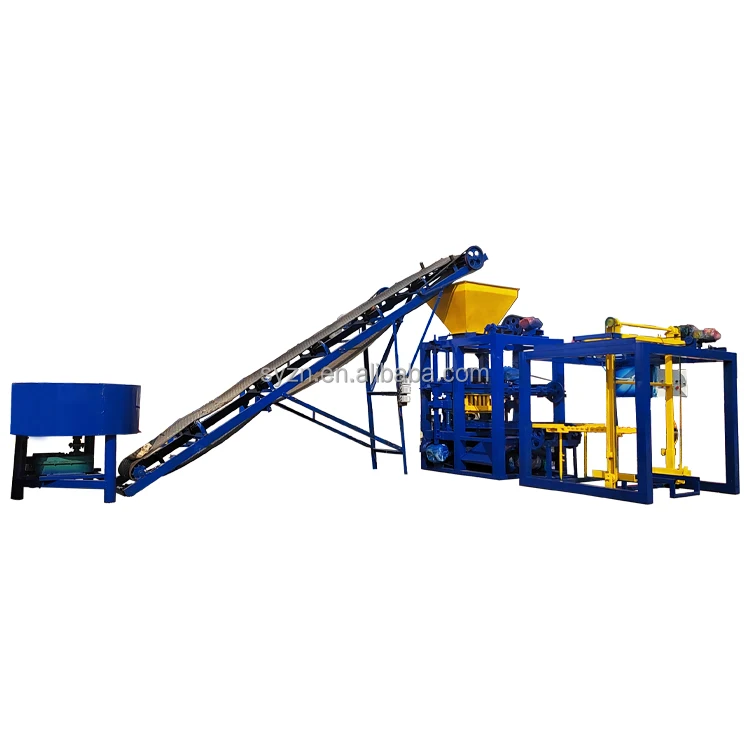
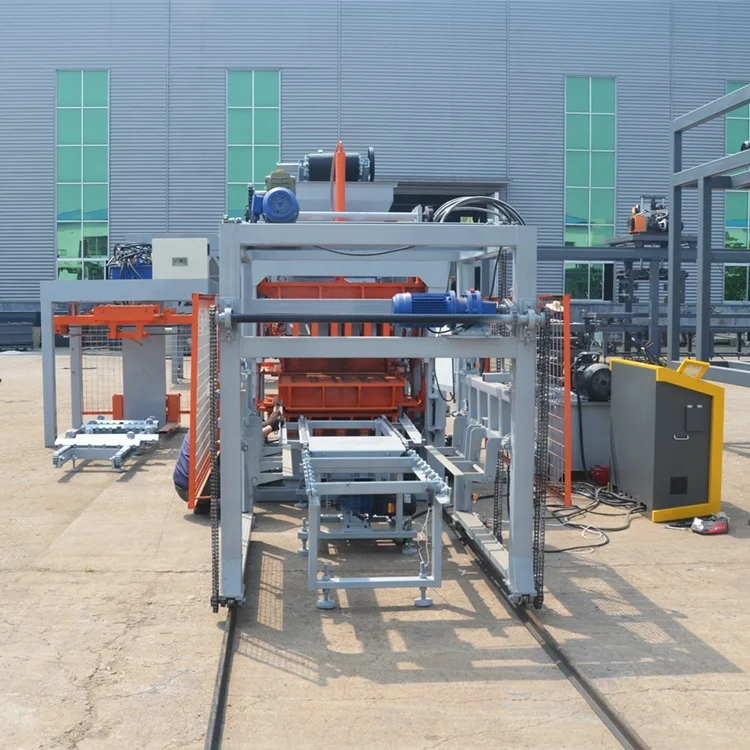
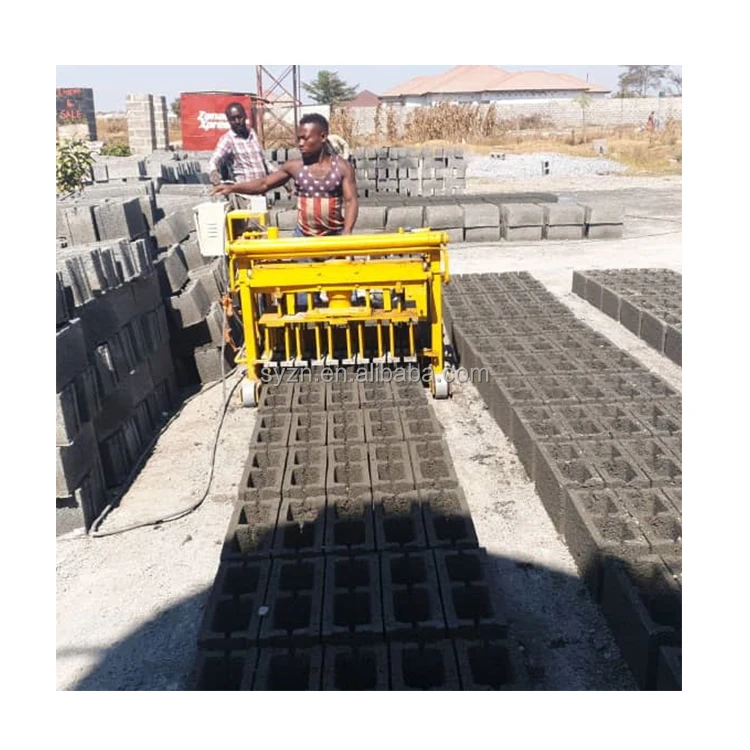
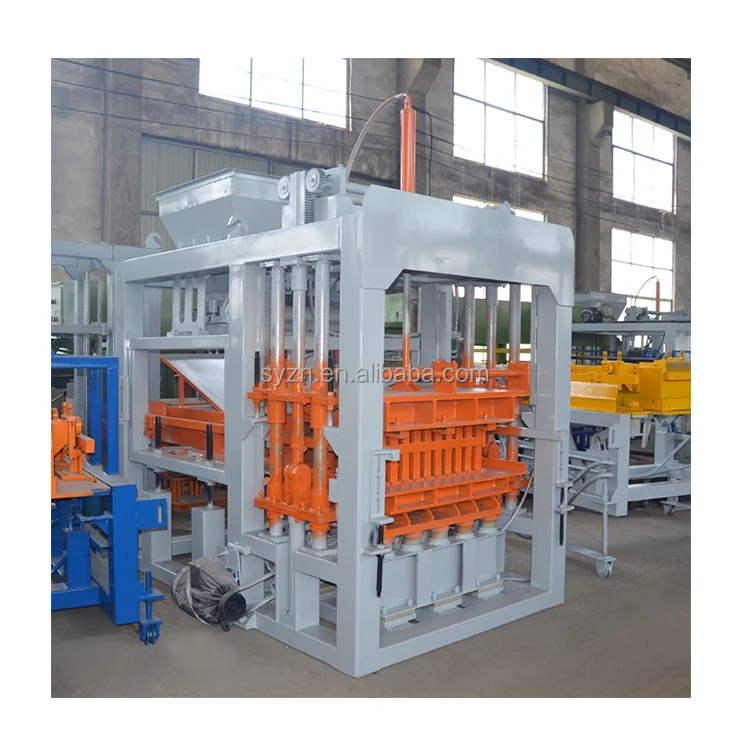
Matched System Design — The QT7-15 block machine, pallet size, mould cavities, and handling equipment are specified as one integrated line, not assembled from separate suppliers, so cycle times align across every station.
Technical Specifications
| Parameter |
Value |
| Model |
QT7-15 |
| Product Type |
Hydraulic Concrete Block Making Machine |
| Pallet Size |
1150×700 mm |
| Molding Cycle |
15–20 s |
| Overall Power |
45 kW |
| Vibration Force |
100 kN |
| Vibration Frequency |
0–60 Hz |
| Vibration Form |
Platform Vibration |
| Demolding Method |
Hydraulic |
| Control System |
PLC with touch screen interface |
| Output Capacity |
1260–1680 pcs/h based on 400×200×200 mm hollow block, 7 pcs/mould |
| Output Capacity |
1440–1920 pcs/h based on 400×150×200 mm hollow block, 8 pcs/mould |
| Output Capacity |
3888–4860 pcs/h based on 200×100×60 mm rectangular paving brick, 27 pcs/mould |
| Total Mass |
8 T |
| Machine Components |
Pallet feed machine, block making machine, storage hopper, conveyor, hydraulic unit, PLC control cabinet |
| Mould Change System |
Quick mould replacement for multi-format production |
| Remote Diagnostics |
Supported via PLC |
| Standards |
CE (declared where applicable) |
Application Suitability
| Application |
Material or Output |
| Hollow block production |
400×200×200 mm and 400×150×200 mm formats from crushed stone, sand, cement, and fly ash mixes |
| Rectangular paving brick |
200×100×60 mm interlocking and standard pavers from fine aggregate and cement blends |
| Multi-format concrete block plants |
Switching between hollow blocks and pavers on a single 1150×700 mm pallet platform |
| On-site construction production |
Producing blocks locally for housing and development projects with portable pallet circuits |
What "1500 Pieces per Hour" Actually Means for the QT7-15
Every capacity figure for the QT7-15 hydraulic block making machine full range is tied to a named block format and mould cavity count, so daily output projections hold up on the shop floor.
Many quotations list a single cycle rate and leave the buyer to assume that number applies to whatever block they plan to sell. In practice, a 7-cavity hollow block mould and a 27-cavity paving brick mould produce very different daily totals even on the same press. I have seen plants schedule two shifts based on a paving brick rate, only to discover their primary product is a hollow block that cycles slower and fills fewer pallets. [NEED_CITE: block format impact on realistic daily output calculations] The QT7-15 specification sheet separates each format, stating the mould cavity count and the 15–20 s cycle so capacity planning starts from real numbers.

Placing the QT7-15 Within the Output Tier Spectrum
The QT7-15 hydraulic block making machine full range occupies the mid-to-high automatic tier, sitting above small semi-automatic workshop presses and below the largest fully automatic lines that run continuous cubing and rack handling. Buyers comparing first-plant investment can see that this model delivers pallet-fed automatic production without the footprint and capital of a high-capacity plant. For block producers replacing an older semi-automatic press, the step up means continuous pallet cycling and PLC-controlled batching replace manual pallet handling and guesswork timing.
Automation Level and Where It Fits Your Plant
A buyer starting with semi-automatic pallet handling can specify the QT7-15 with manual pallet return and add automatic stacking later, because the PLC architecture and pallet feed machine are designed for staged expansion. This matters when the curing area or forklift fleet is not yet ready for full automatic cubing. [NEED_CITE: staged automation adoption in block production plants] The touch screen interface stores process data for each block format, so operators switching from hollow block to paving brick recall verified parameters instead of resetting vibration frequency and hydraulic pressure from memory.
Vibration Force, Pallet Size, and Mould Cavities Explained
The 100 kN vibration force at 0–60 Hz adjustable frequency works together with hydraulic demolding pressure to compact the mix into a dense, consistent block. Higher frequency suits fine-aggregate paving brick where surface finish matters, while lower frequency with sustained force drives coarse crushed stone into hollow block webs. The 1150×700 mm pallet supports 7 cavities for 400×200×200 mm hollow blocks and 27 cavities for 200×100×60 mm pavers, meaning the mould footprint is designed around the pallet rather than the other way around. Mismatched pallet and curing rack dimensions cause bottlenecks downstream, so confirming the pallet size against your existing forklift tine spacing and rack width before ordering prevents a handling redesign after arrival. The 45 kW overall power rating covers the hydraulic unit, vibration motor, conveyor, and PLC cabinet on a single supply circuit.
The Cost of Skipping Pallet and Voltage Confirmation
When pallet material and thickness are chosen without considering the curing environment, warping in high-humidity yards leads to uneven block height and increased reject rates at the stacking station. [NEED_CITE: pallet warping effects on block dimensional tolerance] Voltage and frequency left unconfirmed until the machine arrives can delay commissioning by days while a local electrician rewires the hydraulic unit motor or sources a step-down transformer. The PLC display language, if not specified, forces operators to navigate menus in an unfamiliar script during the critical first production week.
Why Source This Configuration Here
Block machinery is the single focus, so the QT7-15 press, 1150×700 mm pallets, moulds, and pallet feed machine are quoted as one matched system rather than sourced from separate vendors. Configuration starts from the buyer’s local aggregate and mix design, not a catalogue default, which means vibration frequency and hydraulic pressure are set to the material you can actually buy. Mould design covers the block formats your market sells, including custom drawings for non-standard pavers or kerbstones. Factory testing runs the chosen block format before shipment, producing a documented cycle time record rather than a generic rating. [NEED_CITE: factory acceptance testing standards for concrete block machinery] Remote diagnostics through the PLC allow fault tracing without waiting for a site visit.
Documentation & Verification
- Line layout showing pallet circuit, curing rack positions, and capacity calculation per block format
- Machine specification sheet confirming 1150×700 mm pallet, 100 kN vibration, and PLC language
- Mould drawing and format list with cycle time stated for each cavity count
- Factory test record demonstrating actual molding cycle on the buyer’s chosen block format
- Hydraulic and electrical schematic matching the as-built 45 kW configuration
- Packing photographs and customs documentation for container loading
Installation, Commissioning & Support
- Foundation pad leveled for 8 T total mass with anchor bolt pattern matching the 1150×700 mm pallet frame
- Dedicated 45 kW supply circuit with confirmed voltage and frequency before the hydraulic unit is energized
- PLC touch screen configured to operator language during on-site commissioning
- Mould change procedure trained on the buyer’s specific format list, targeting quick replacement times
- Wear parts list provided for hydraulic seals, vibration springs, and mould liners with reorder codes
- Remote diagnostics link tested between the PLC cabinet and the support desk before handover
What We Need to Size Your Line
To prepare a configuration proposal, share the block formats your market currently demands, the local aggregate type and gradation report, and the daily output you need per format. Confirm the voltage and frequency at your site, the PLC display language your operators read, and whether your existing curing racks and forklifts are sized for 1150×700 mm pallets. If you are replacing an older press, note the current pallet dimensions and handling method so the transition plan accounts for any differences.
Frequently Asked Questions
Q: How is QT7-15 capacity verified, and which block format is each output figure based on?
A: Every capacity figure states the block dimensions and mould cavity count. The 1260–1680 pcs/h rate assumes a 400×200×200 mm hollow block on a 7-cavity mould, while 3888–4860 pcs/h assumes a 200×100×60 mm paving brick on a 27-cavity mould, all within the 15–20 s molding cycle.
Q: Where does the QT7-15 sit in the Shiyue range compared to smaller and larger models?
A: It occupies the mid-to-high automatic tier, above semi-automatic workshop presses and below fully automatic lines with continuous cubing. Buyers can start with manual pallet return and add automatic stacking later through the PLC architecture.
Q: What pallet size does the QT7-15 use, and how does it align with my curing area?
A: The machine uses 1150×700 mm pallets. Confirming this dimension against your existing curing rack spacing and forklift tine width before ordering avoids a handling redesign after the machine arrives on site.
Q: What voltage, frequency, and PLC language options are confirmed before shipment?
A: Voltage, frequency, and PLC touch screen display language are confirmed during the quotation stage and verified on the machine specification sheet, so the electrical supply and operator interface are ready at commissioning.

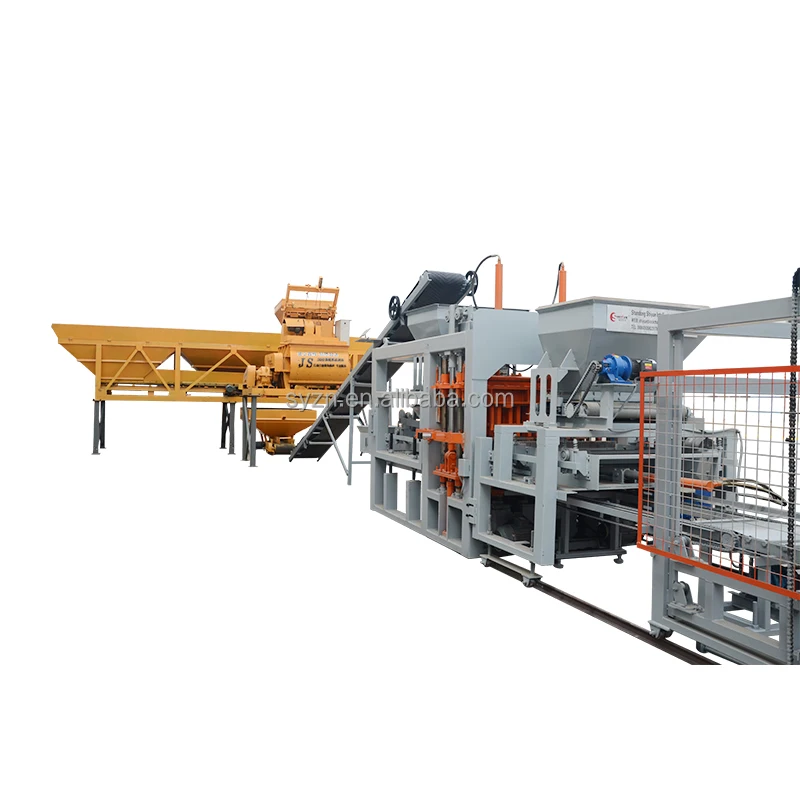
 High quality block machine