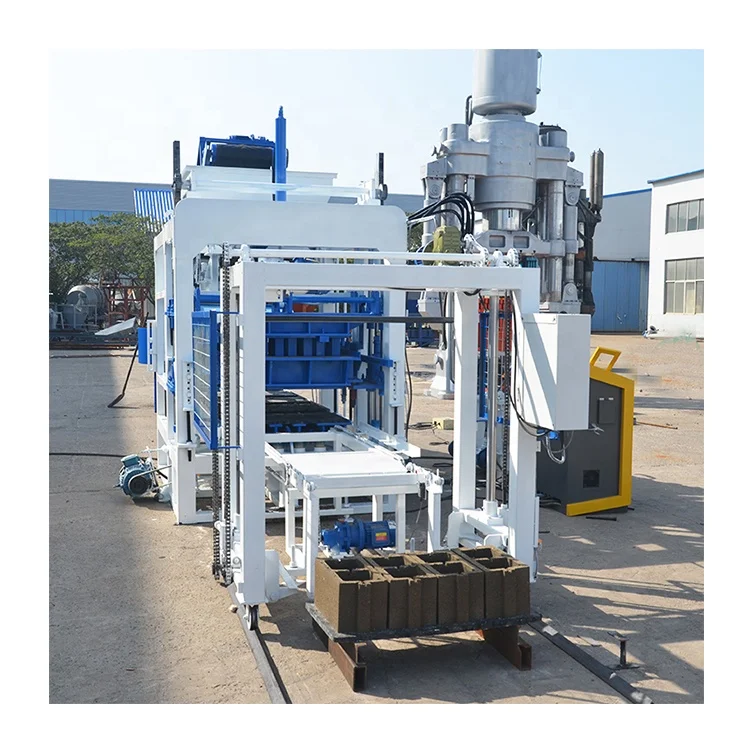
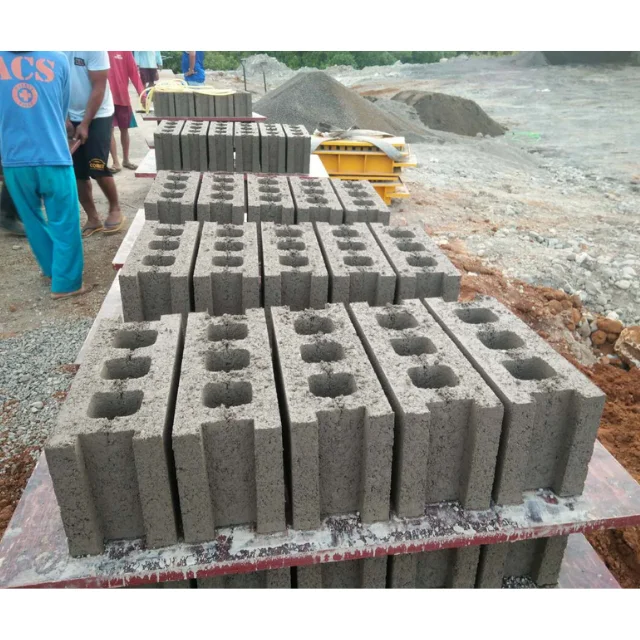
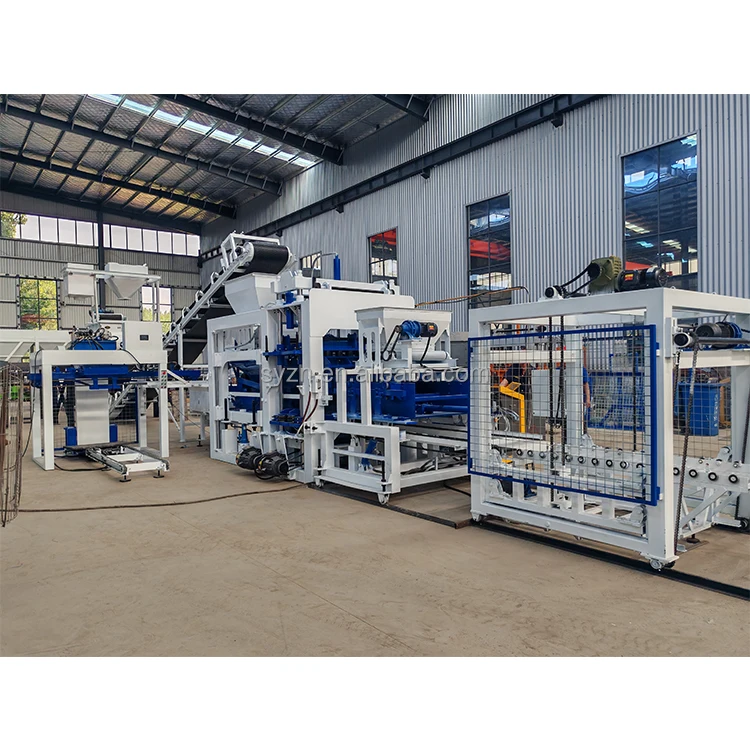
Matched System Configuration — The QT6-15 hydraulic block machine manufacturer delivers a press whose mould, pallet, hydraulic pressure and vibration frequency are specified as one coordinated set against your actual mix design rather than pulled from a standard catalogue.
Technical Specifications
| Parameter |
Value |
| Product Type |
Hydraulic Automatic Concrete Block Making Machine |
| Model |
QT6-15 |
| Overall Dimensions (L×W×H) |
8200 × 1700 × 2950 mm |
| Total Mass |
7 T |
| Overall Power |
37 kW |
| Vibration Form |
Platform Vibration |
| Vibration Frequency |
0–60 Hz |
| Vibration Force |
45 kN |
| Moulding Mode |
Automatic loading, vibration moulding |
| Demolding Method |
Hydraulic |
| Pallet Size |
880 × 850 mm |
| Molding Cycle |
15–20 s (basis not stated in source — confirm block format and material) |
| Control System |
PLC with touch screen, fault diagnosis, safe logic interlock circuit |
| Hydraulic System |
Independent integrated hydraulic station |
| Block Compressive Strength |
>15 MPa (basis not stated in source — verify against local aggregate) |
| Recommended Factory Area |
1200 m² |
| Warranty |
1 year for the whole machine (excluding spare parts) |
Application Suitability
| Application |
Material or Output |
| Hollow block production for structural walls |
Crushed stone, sand and cement with 400×200×200 mm or 400×150×200 mm formats |
| Solid brick production for infill and paving |
Fly ash, slag, and fine aggregate in 240×115×53 mm format |
| Rectangular and zigzag paver production |
High-density concrete mixes for 200×100×60 mm and 225×112.5×60 mm pavers |
| Regional block plant supply |
Medium-tier daily volume across multiple block formats on a single machine platform |
Why the Capacity Headline Never Tells the Whole Story
Every output number on this page is tied to a specific block size, mould cavity count, and cycle assumption.
Buyers frequently receive a single headline figure — "10,000 blocks per shift" — without being told which format that figure assumed. When a different block size goes into production, the real daily total can fall noticeably short. With the QT6-15, we state output per format: hollow block 400×200×200 mm at 6 pcs/mould, solid brick 240×115×53 mm at 32 pcs/mould, and pavers at 21 or 15 pcs/mould depending on the profile. Each figure rests on a 15–20 second or 20–25 second cycle range, and the actual cycle time depends on your mix design and local aggregate behaviour under vibration. [NEED_CITE: how aggregate grading affects concrete block cycle time] Without that context, comparing machines by a single output claim is meaningless. The QT6-15 hydraulic block machine manufacturer approach is to calculate capacity against the exact format you plan to sell before a quotation is issued.

Placing the QT6-15 Within the Full Machine Range
The QT6-15 occupies the mid-tier of the Shiyue automatic block machine lineup, sitting above workshop-scale semi-automatic presses and below high-capacity full-line systems. For a buyer surveying options, this model offers automatic PLC-controlled operation with platform vibration and hydraulic demolding at a plant footprint of roughly 1200 m². It serves as an entry point for entrepreneurs establishing a first fixed-plant block operation and as a step-up for contractors moving from mobile egg-laying machines to pallet-based production.
Understanding What Automation Covers at This Tier
At this tier, automation means the PLC manages the loading, vibration, and demolding sequence with a touch-screen interface and built-in fault diagnosis. The safe logic interlock circuit prevents out-of-sequence operations that could damage moulds or hydraulics. What remains configurable is the surrounding line: pallet feeding, stacking, and curing rack handling can be added as separate stations to match the press cycle so the machine is not left waiting between presses. [NEED_CITE: block plant line synchronization and bottleneck analysis] This modular approach lets a buyer start at the QT6-15 tier and expand the automation envelope later without replacing the press itself.
Reading the Specifications Against Your Production Reality
The 45 kN vibration force and adjustable 0–60 Hz frequency range work together with the independent hydraulic station to compact the mix under pressure. Hydraulic pressure sets the initial densification while vibration settles the aggregate into voids; if the vibration frequency is too high or too low for a particular aggregate grading, block strength becomes inconsistent across a shift. The 880 × 850 mm pallet size determines how many blocks are pressed per cycle and must align with the curing rack dimensions and forklift capacity already on site. Mould change time is another variable often overlooked — a machine that takes most of a shift to swap formats cancels out the flexibility the buyer paid for. The QT6-15 hydraulic block machine manufacturer specifies the mould change system and expected changeover duration so buyers can plan multi-format production runs realistically.
The Cost of Overlooking Configuration Details
When voltage, frequency, and PLC display language are left unconfirmed before production, a machine can arrive on site and sit idle while electrical panels are reworked or operators struggle with an unfamiliar interface. Similarly, specifying a pallet size without considering the curing area layout forces the buyer into inefficient manual handling. A mix design that works in the manufacturer’s test lab may not match the aggregate available at the buyer’s location, leading to weak blocks and rejected batches. [NEED_CITE: impact of local aggregate properties on concrete block compressive strength] These are not theoretical issues — they are the most common reasons a newly installed block line underperforms relative to the buyer’s expectations.
Why Buyers Specify Through Shiyue
Block machinery is the single focus here, so the press, mould, pallet, and handling equipment are configured as one matched system rather than assembled from unrelated suppliers. Capacity calculations are issued per block format, not as a single headline number, so buyers can compare options against the product their market actually demands. Mould design covers the specific formats each buyer needs, including custom drawings when a standard catalogue mould does not match local building codes. Voltage, frequency, and PLC language are confirmed before production begins, not discovered after the crate arrives. Factory testing runs the exact mould and pallet combination ordered, with records and photographs issued before the machine leaves the workshop.
Documentation & Verification
- Line layout and capacity calculation stating the block format assumed for each output figure
- Machine specification sheet confirming voltage, frequency, and PLC display language
- Mould drawing and format list provided for buyer approval before mould fabrication
- Factory test record with packing photographs issued prior to shipment dispatch
- Hydraulic and electrical schematic for on-site maintenance and troubleshooting reference
- Customs documentation support for destination-country import requirements
Installation, Commissioning & Support
- Foundation must accommodate the 8200 × 1700 mm footprint and 7 T operating mass with level tolerance
- Dedicated 37 kW electrical circuit with confirmed voltage and frequency before connection
- Independent hydraulic station positioned away from vibration zone for extended seal life
- PLC touch-screen parameters set to buyer’s mix design and target block format during commissioning
- Operator training covers mould change procedure, fault diagnosis interface, and daily greasing schedule
- Wear parts list and mould maintenance intervals provided with the operation manual
Before You Request a Quotation
To prepare a meaningful configuration, share the block formats your market sells, your target daily output per format, and a sample of the local aggregate you plan to use. Include your site’s voltage and frequency, the PLC display language your operators need, and whether you already have pallets and curing racks that the new line must work with. This information allows a capacity calculation that reflects your actual production scenario rather than a generic catalogue claim.
Frequently Asked Questions
Q: Where does the QT6-15 sit in the range compared to smaller and larger models?
A: The QT6-15 is the mid-tier automatic press in the Shiyue range, positioned above semi-automatic and mobile machines but below high-capacity full-line systems. It requires approximately 1200 m² of factory space and suits buyers who have outgrown manual pallet handling but are not yet ready for a fully automated stacking and cubing line. Investment and footprint scale accordingly across the tiers.
Q: How do I verify real daily output for my specific block format?
A: Request a capacity calculation that states the block dimensions, mould cavity count, and assumed cycle time for your format. A single headline output number is not useful because different formats produce very different totals per shift. The calculation should also note the mix design and vibration frequency assumed, since these affect how fast each cycle can run consistently.
Q: What voltage, frequency, and PLC language options are available?
A: Voltage and frequency must be confirmed before production begins so the electrical system matches your local grid. The PLC touch-screen display language is also set during manufacturing. These details are recorded on the machine specification sheet and verified during the factory test before shipment.
Q: Can I start with the QT6-15 and upgrade automation later?
A: Yes. The press itself supports integration with pallet feeding, automatic stacking, and curing rack handling stations that can be added as separate modules. Starting at this tier gives you automatic PLC-controlled pressing while leaving room to expand the surrounding line as production volume and labour conditions justify further automation investment.
Q: What is included in the quotation and what is optional?
A: The quotation covers the press, PLC control system, independent hydraulic station, and the specified mould. Pallets, pallet feeding systems, stacking equipment, and curing rack handling are separate line items because buyers have different existing infrastructure. Each optional station is priced individually so you can build the line configuration that matches your site.

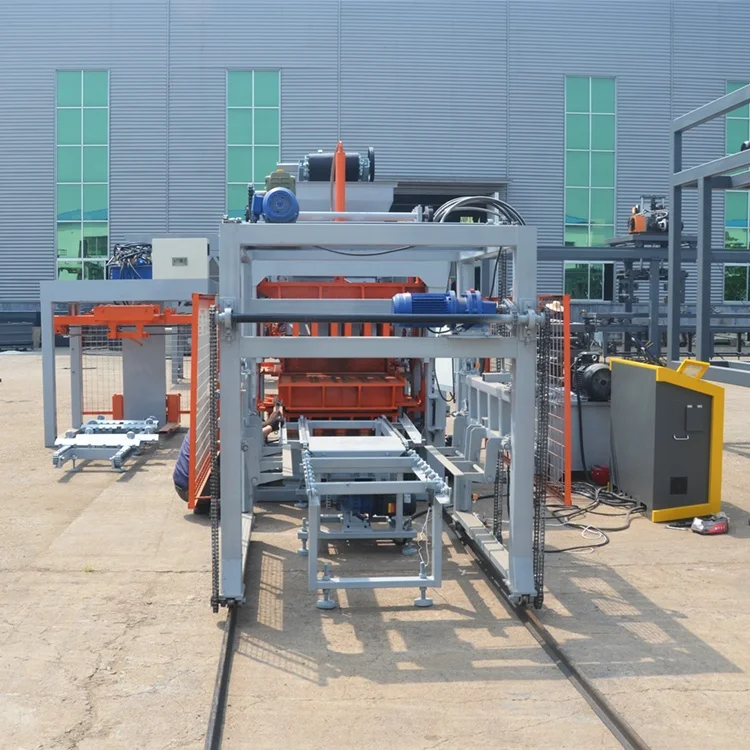
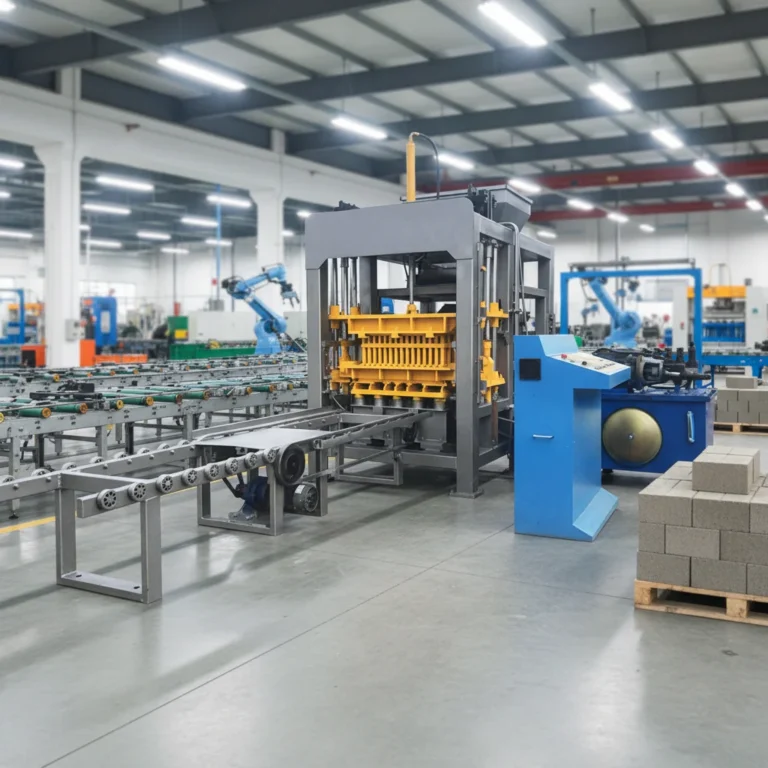 High quality block machine