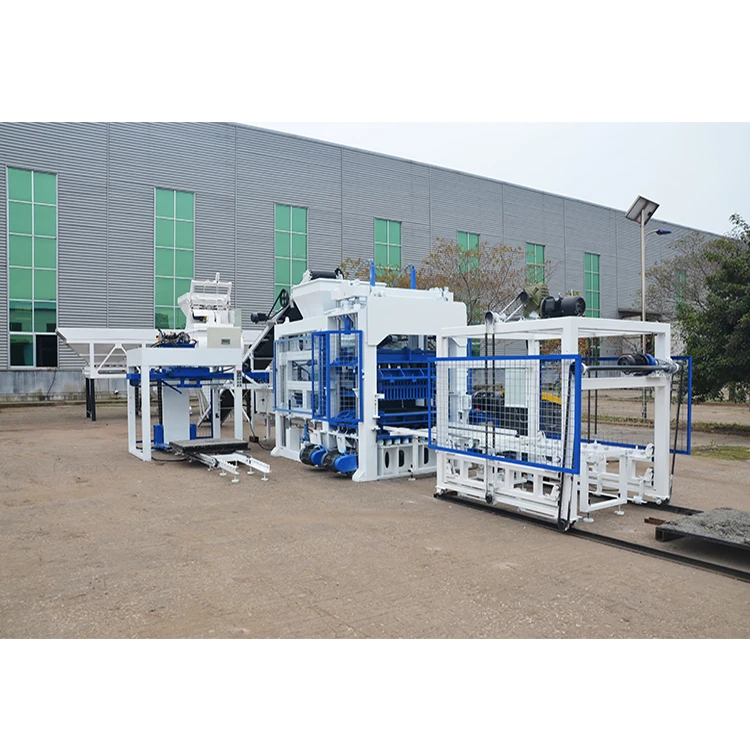
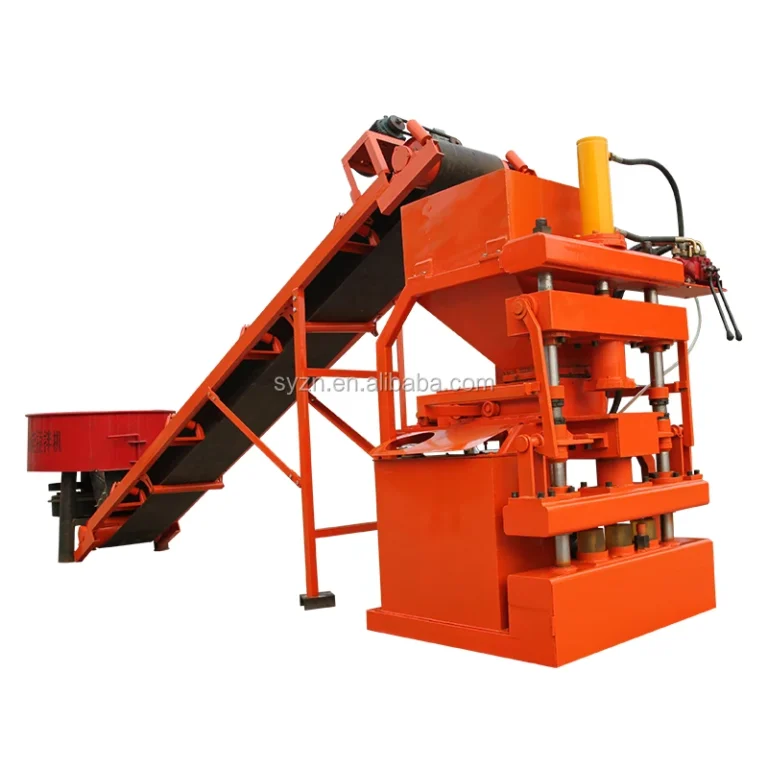
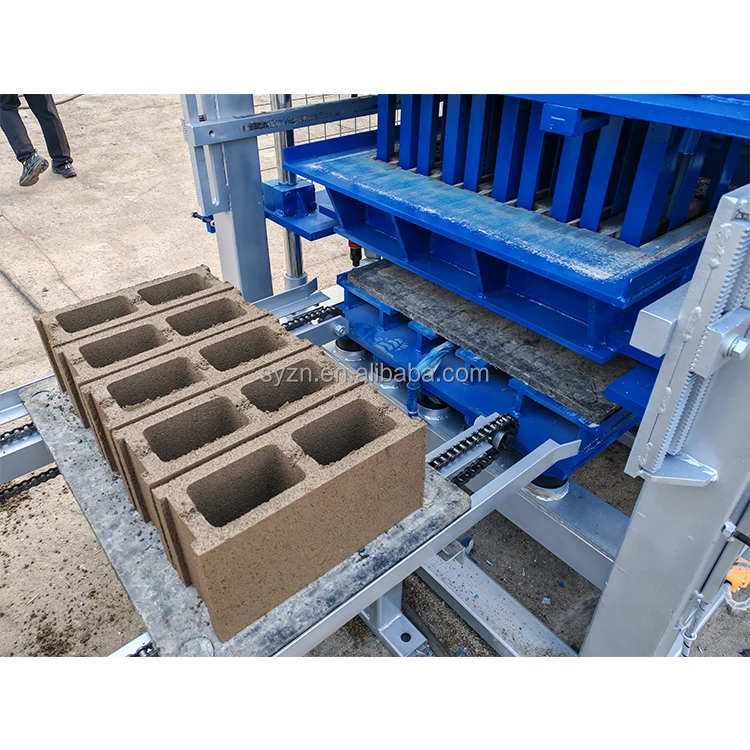
Mid-tier automation with format-specific capacity — Every output figure on the QT612 sheet is tied to a named block format and cycle time, so the daily throughput you plan against is the one you actually run.
Technical Specifications
| Parameter |
Value |
| Model |
QT612 |
| Product Type |
Hydraulic Vibration Block Making Machine |
| Overall Dimensions (L×W×H) |
7350×1780×2950 mm |
| Rated Pressure |
16 MPa |
| Main Vibration |
Platform vibration |
| Vibration Frequency |
4600 r/min |
| Pallet Size |
880×700 mm |
| Molding Cycle |
15–20 s |
| Overall Power |
30.5 kW |
| Automation Level |
Automatic |
| Output (Hollow Block 400×200×200 mm) |
1080 pcs/h, 8640 pcs/day (6 pcs/mould, 12–15 s cycle) |
| Output (Porous Brick 240×115×90 mm) |
2800 pcs/h, 22400 pcs/day (14 pcs/mould, 15–18 s cycle) |
| Output (Standard Brick 240×115×53 mm) |
6800 pcs/h, 54400 pcs/day (30 pcs/mould, 14–17 s cycle) |
| Mould Change |
Interchangeable moulds for multiple block formats |
| Raw Materials |
Crushed stone, sand, cement, fly ash, cinder, slag, gangue, gravel, perlite, industrial wastes |
| Standards |
CE, SGS, ISO 9001 |
Application Suitability
| Application |
Material or Output |
| Hollow block production for masonry walls |
Crushed stone, sand, cement blends at 400×200×200 mm format |
| Porous brick manufacturing for load-bearing structures |
Fly ash, cinder, slag mixed with cement at 240×115×90 mm |
| Standard solid brick for residential construction |
Sand, gravel and cement at 240×115×53 mm |
| Paving stone and kerbstone for infrastructure |
Dense aggregate mixes with higher cement ratios |
| Interlocking block for retaining walls and slopes |
Coarse aggregate and cement for dry-stack strength |
| Grass block and landscaping products |
Perlite or lightweight aggregate blends |
What "8,640 Blocks per Day" Actually Means for Your Plant
A capacity number only holds value when the block format, cycle time and mould cavity count are stated alongside it.
Many block making machine manufacturer catalogues quote a single hourly figure without naming the format behind it. A buyer sees a large number and plans a shift around it, only to discover on commissioning day that the quoted output assumed a small solid brick, not the 400×200×200 mm hollow block the local market demands. The real throughput for that format can be a fraction of the headline number, and the plant layout — curing racks, forklifts, pallet return conveyors — was sized for a volume that never materialises. [NEED_CITE: mismatch between catalogue capacity and format-specific output in block machinery procurement]
The QT612 addresses this by listing three distinct format outputs, each with its own mould cavity count and cycle range. When you evaluate where this model sits in the full block machine range, those format-specific figures let you compare it honestly against smaller semi-automatic units or larger high-capacity lines, rather than relying on a single misleading peak number.

Where the QT612 Sits in the Full Machine Range
The Shiyue lineup spans mobile egg-laying machines at the entry tier, semi-automatic presses for smaller plants, and fully automatic high-capacity lines with integrated stacking and cubing. The QT612 occupies the mid-to-high automatic tier, aimed at buyers who have outgrown manual pallet handling but do not yet need the output volume that a twin-table press delivers. Its 30.5 kW power draw and 7350 mm frame length place it within a plant footprint that most first-time block producers can accommodate without specialised foundations.
Scaling from Semi-Automatic Without Replacing the Line
A common path we see is a buyer starting with a semi-automatic press, adding pallets and curing racks by hand, then hitting a labour ceiling within the first year. The QT612 sits at the tier where automatic pallet feeding and stacking become standard, removing the heaviest manual steps. If production later demands higher volume, the supporting equipment — mixer, conveyor, curing rack system — can often be retained while the press itself is upgraded to a larger model in the range. [NEED_CITE: typical automation upgrade path in concrete block production plants]
Reading the Pressure and Vibration Specs Together
The 16 MPa rated hydraulic pressure and 4600 r/min platform vibration frequency must be evaluated as a pair. Hydraulic pressure compresses the mix into the mould cavity, while vibration settles the aggregate and eliminates voids. If vibration is high but pressure is low, the block surface finishes well but internal density remains uneven. If pressure is high but vibration is insufficient, the mix does not flow into mould corners, producing incomplete edges. The QT612’s combination targets consistent density across both hollow and solid formats, though the actual result depends on how well the mix design matches local aggregate characteristics.
The 880×700 mm pallet size is not an arbitrary choice. It aligns with standard curing rack dimensions and common forklift tine widths in export markets, meaning a buyer who already operates a block plant can integrate the QT612 without replacing existing pallet inventory or rack infrastructure. Pallet material — whether hardwood, bamboo or composite — should be confirmed against the curing environment and expected pallet lifespan before the order is placed.
The Cost of Skipping the Format Conversation
When a buyer selects a block machine based on price or a single headline output number without confirming which formats the local market actually purchases, two failures tend to follow. First, the mould inventory does not cover the products that sell, forcing an unplanned mould purchase weeks after startup. Second, the machine’s vibration and pressure settings were configured at the factory for a mix the buyer cannot source locally, leading to blocks that crack during curing or fail compressive strength tests. [NEED_CITE: frequency of block machine reconfiguration after installation due to mix mismatch] These are not warranty issues — they are specification gaps that could have been closed during the inquiry stage.
Why Buyers Source This Tier from Shiyue
Block machinery is the single focus of the Shiyue production facility, which means the QT612 press, its moulds, pallets and handling equipment are specified as one matched system rather than assembled from separate suppliers. Machine configuration is set against the buyer’s actual mix design and target block format, not pulled from a catalogue default. Mould design covers the formats the buyer’s market sells, with custom drawings available for non-standard profiles. Automation level is selectable, so a buyer can start at this tier and integrate additional handling stations as volume grows. Installation support includes operator training that covers mould change procedure, cycle adjustment and daily maintenance checkpoints. [NEED_CITE: single-supplier block line integration versus multi-vendor assembly]
Documentation & Verification
- Line layout drawing with capacity calculation stated per block format for the QT612
- Machine specification sheet confirming pallet size, hydraulic pressure and vibration ratings
- Mould drawing and format list covering every block type in the buyer’s product plan
- Voltage, frequency and PLC display language confirmation document before production
- Factory test record on the buyer’s specified block format before dispatch
- Packing photographs and customs documentation support for export shipment
Installation, Commissioning & Support
- Foundation plan sized to the QT612’s 7350×1780 mm footprint and dynamic vibration load
- Dedicated power circuit rated for the 30.5 kW overall draw at the buyer’s confirmed voltage and frequency
- Machine shipped in dismantled state with reassembly guide and labelled connection points
- First-run commissioning with cycle time and pressure adjustment on the buyer’s actual mix
- Operator training covering mould change, pallet feed sequence and daily lubrication schedule
- Wear parts list with hydraulic seal and vibration motor specifications for local sourcing
What to Include in Your Inquiry
To position the QT612 correctly within the range and size the supporting line around it, we need to know the primary block formats your market purchases and the daily volume target for each. Share your local aggregate types and any existing mix design you run, along with the voltage and frequency standard at your site. If you already operate curing racks or pallet return systems, provide their dimensions so the QT612 pallet and handling configuration can be matched to your plant layout.
Frequently Asked Questions
Q: How does the QT612 output tier compare to smaller semi-automatic and larger fully automatic models?
A: The QT612 sits in the mid-to-high automatic tier, producing hollow blocks at 1080 pcs/h based on a 400×200×200 mm format with a 12–15 s cycle. Smaller semi-automatic models require manual pallet handling and deliver lower throughput. Larger high-capacity lines add twin-table pressing and integrated cubing for substantially higher volume and a larger plant footprint.
Q: What block formats can one QT612 platform produce and what is realistic daily output for each?
A: The QT612 accepts interchangeable moulds for hollow blocks, porous bricks, standard bricks, pavers and interlocking formats. Daily output depends on the format: 8640 pcs/day for 400×200×200 mm hollow blocks, 22400 pcs/day for 240×115×90 mm porous bricks, and 54400 pcs/day for 240×115×53 mm standard bricks, each at its stated cycle time.
Q: What plant footprint and supporting equipment does the QT612 require compared to mobile machines?
A: The QT612 requires a fixed plant with a 7350×1780 mm machine footprint, plus space for mixer, pallet feed, curing racks and stacking area. Mobile egg-laying machines need less infrastructure but produce fewer formats and lower daily volume. The QT612’s supporting line is configurable to match existing curing rack and forklift setups.
Q: How do I choose between starting semi-automatic and upgrading to full automation later?
A: Semi-automatic suits lower initial investment and smaller daily targets, but labour costs rise as volume grows. The QT612’s automatic tier includes pallet feeding and stacking, reducing manual handling. Supporting equipment like mixers and conveyors can often be retained when upgrading the press later, protecting the initial investment.
Q: What investment level does the QT612 represent and what is included beyond the press?
A: The QT612 represents the mid-range investment tier within the Shiyue lineup. Beyond the press itself, the quotation typically covers the hydraulic and vibration system, interchangeable mould tooling, pallets sized to the 880×700 mm specification, and supporting handling equipment. Voltage, control language and automation level are confirmed per buyer requirements before production begins.

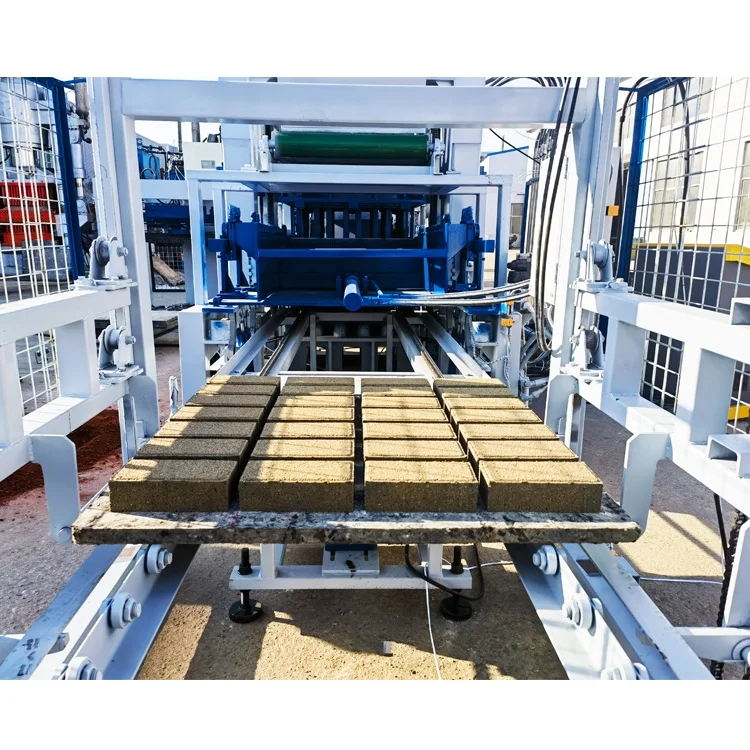
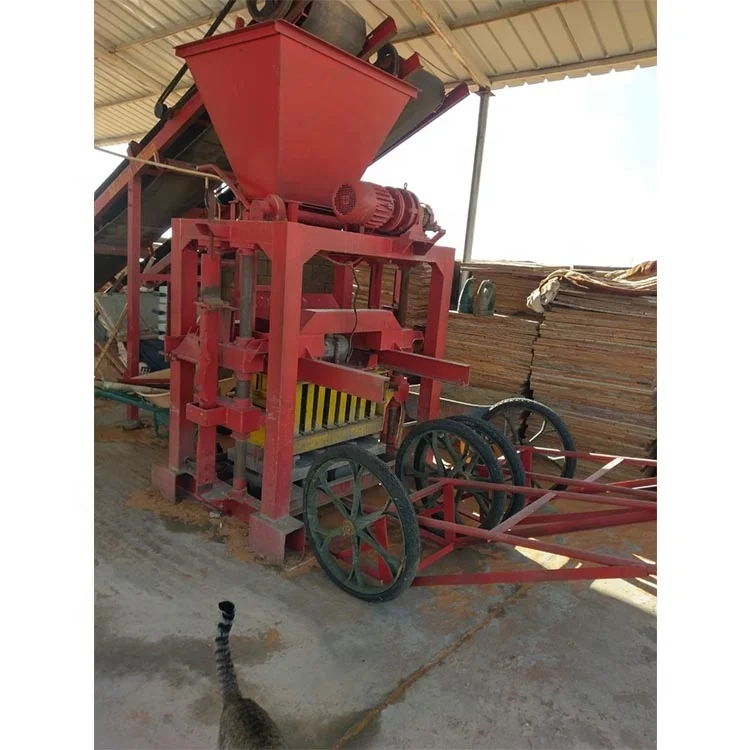 High quality block machine